
TL;DR

Get garden gear delivered free with Prime
- Fast, free delivery on millions of items
- Prime Video, Amazon Music and more included
- Member-only deals all year
Gardening Know How recommends five October tasks to prepare strawberry plants for winter: remove diseased foliage and weeds, manage runners, check soil moisture, protect crowns with mulch, and give container plants added shelter. The timing and approach depend on local climate, strawberry type and growing setup; the source does not guarantee a bumper crop.
Gardening Know How’s October strawberry-care report recommends five tasks to prepare plants for winter: clear damaged foliage and weeds, manage runners, check soil moisture, protect crowns with mulch, and shelter container-grown plants. The guidance matters because strawberry crowns sit at the soil line and can be exposed to winter damage, although the steps are advice—not a guarantee of next year’s harvest.
The report says to begin by removing brown, decayed or spotted leaves and clearing weeds. It advises taking diseased clippings off the bed rather than leaving them among plants, while avoiding a severe cutback: healthy leaves still support the crown, and June-bearing plants form next year’s flower buds as days shorten. Because strawberry roots are shallow, weeds should be pulled carefully rather than removed with deep hoeing or tilling.
Runner management depends on the type of strawberry and the condition of the bed. In established June-bearing rows, growers may keep a few healthy runners and direct daughter plants into gaps, then thin excessive growth so crowns are about 6 to 8 inches (15 to 20 centimeters) apart. For everbearing and day-neutral plants, the report recommends cutting fall runners so late-season growth remains focused on the existing crowns. The source notes that day-neutral plants generally produce fewer runners.
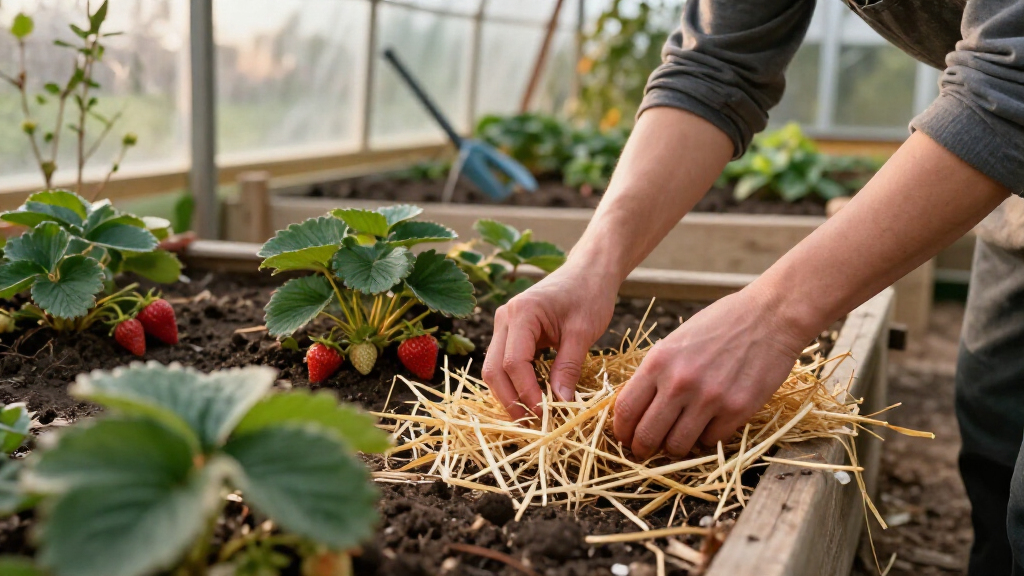
The remaining tasks focus on winter exposure. Check soil moisture before the ground freezes; shallow-rooted plants can be affected by dry soil, but the report does not give a fixed watering schedule. After plants enter dormancy, apply a protective mulch over the crowns, adjusting the timing to local conditions so plants are not covered too early while they are still actively growing. Finally, give containers, raised beds and towers more attention than in-ground rows: their roots are more exposed to cold, so move pots to a sheltered location or otherwise insulate them where practical.
Protecting Crowns Before Winter
The advice centers on the crown, the plant’s central growing point at soil level, where new leaves and flowers emerge. The report says freeze-and-thaw cycles can heave plants out of the soil and damage roots. Preventing that exposure may help plants survive winter, while clearing diseased foliage and controlling competition can reduce avoidable stress before dormancy.
These steps matter for home growers because a strawberry bed can look finished after harvest while its plants are still preparing for the next growing season. Care also differs by setup: soil around an in-ground row can provide more insulation than a pot or raised structure. The report presents the tasks as preparation, not proof that any particular routine will produce a specific yield.
Products Worth Considering

Philips Hue Secure Wired Video Doorbell, 2K, Black

Google Nest Learning Thermostat (4th Gen) with Nest Temperature Sensor (2nd Gen), Obsidian

Bose TV Speaker (2nd Gen) Compact Soundbar with Bluetooth and HDMI
As an affiliate, we earn on qualifying purchases.
Care Depends on Climate and Variety
October is not the same gardening window everywhere. The report describes colder USDA hardiness zones 3 to 6 as a time to prepare beds and containers ahead of freezing conditions. In warmer zones 8 to 10, it says fall can be suitable for planting new runners. These are broad regional pointers; local weather and the condition of the soil remain relevant.
The source covers June-bearing, everbearing and day-neutral strawberries, which do not all produce fruit or runners in the same way. It also distinguishes in-ground rows from plants in containers, raised beds and vertical towers. The report’s practical focus is on entering dormancy with healthy crowns and reducing winter exposure, rather than on a single calendar date that applies to every garden.
Local Frost Timing Still Matters
The report does not provide a single mulch depth, watering amount or date for completing each task. Those details depend on local frost timing, soil moisture, plant condition and growing setup. Its broad hardiness-zone guidance cannot substitute for checking conditions in a particular garden.
The supplied report text also does not include the full instructions for every one of its five steps, and it offers no trial data quantifying how much these practices affect yield. Claims that October care will produce a “bumper crop” should be treated as an aspiration in the source headline, not a confirmed outcome.
Complete Tasks Before Hard Freezes
Gardeners can inspect their strawberry beds as October conditions change, remove unhealthy growth and weeds, and decide which runners to keep according to plant type and spacing. They should monitor moisture and local forecasts, then apply winter protection when plants and weather are ready, rather than relying on a fixed date.
Before sustained freezes, check container plants separately and move or protect them where possible. The report’s next practical milestone is the onset of local winter conditions; it does not identify a specific follow-up announcement or promise a particular spring harvest.
Key Questions
What should I do to strawberry plants in October?
The report recommends clearing diseased foliage and weeds, managing runners, checking soil moisture, protecting crowns with mulch, and giving container plants extra shelter. Adjust the timing to local weather and your growing setup.
Should I cut back all strawberry leaves in fall?
No. The report advises removing brown, decayed or spotted leaves but keeping healthy foliage. It warns against aggressive fall cutbacks because healthy leaves support the crown.
Should I keep strawberry runners over winter?
For established June-bearing rows, the report says a few healthy runners can be directed into open gaps. It recommends removing fall runners from everbearing and day-neutral plants. Avoid overcrowding; the report gives a spacing guide of about 6 to 8 inches between crowns.
Do potted strawberries need extra winter protection?
Yes, the report says containers, raised beds and towers can face more cold exposure than in-ground rows. It recommends giving container plants added shelter, such as moving pots to a protected location where practical.
Will these steps guarantee a larger strawberry crop?
No. The report presents the tasks as ways to prepare plants for winter, but it does not provide evidence that they guarantee a particular yield. Results depend on conditions including climate, plant health and variety.
Source: gardeningknowhow.com