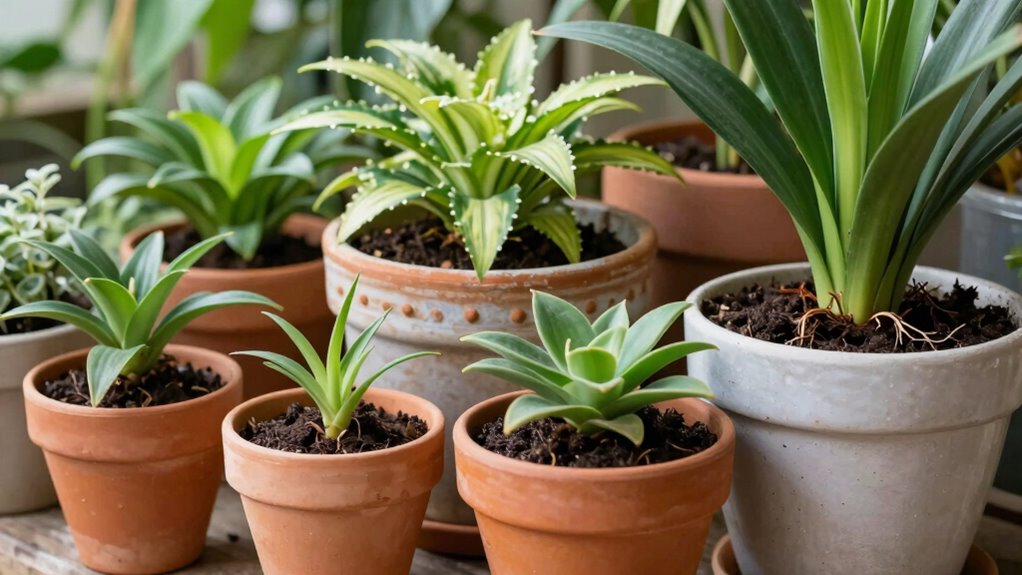

To choose the right pot size for your plant, watch for signs like roots growing out of drainage holes, plant toppling, or slowed growth. Consider your plant’s size, root development, and soil needs to find a container that offers enough space and good drainage. Avoid pots that are too big or small, as they can cause problems like overwatering or restricted growth. For more tips on selecting the perfect pot, keep exploring!

Get garden gear delivered free with Prime
- Fast, free delivery on millions of items
- Prime Video, Amazon Music and more included
- Member-only deals all year
Key Takeaways
- Assess root health and visibility; roots circling or emerging indicate the need for a larger pot.
- Match pot size to the plant’s current size and growth habit for optimal development.
- Ensure the pot has proper drainage and uses well-draining, aerated soil.
- Avoid overly large pots to prevent overwatering and root rot; choose appropriately sized containers.
- Regularly monitor root growth and soil conditions to adjust pot size as the plant matures.
As an affiliate, we earn on qualifying purchases.
How Do You Know Your Plant Needs a Bigger Pot?
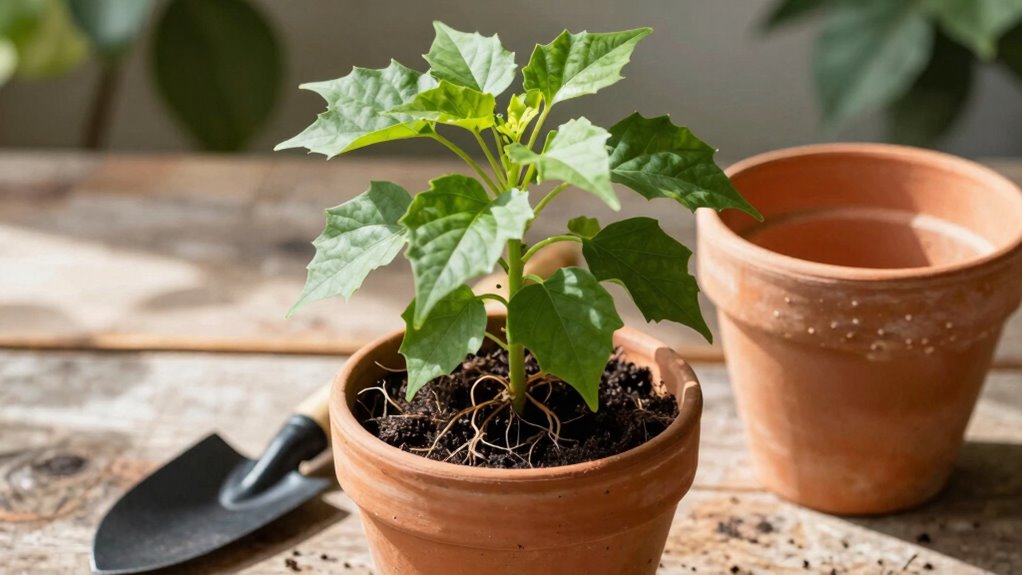
How can you tell if your plant needs a bigger pot? One clear sign is if the plant shows slowed growth or the soil dries out quickly, indicating root crowding. When roots become cramped, your plant struggles to absorb essential nutrients, affecting its overall health and plant nutrition. You might also notice roots growing out of the drainage holes or circling the pot’s surface, revealing it’s time for a larger container. A bigger pot reduces the risk of pests that thrive in overcrowded, damp soil. Plus, it gives your plant more space to develop healthy roots and access nutrients efficiently. Recognizing these signs early can prevent further stress and encourage healthy growth. Additionally, choosing the right pot size can significantly impact the plant’s overall vitality and long-term success. If you see these signs, upgrading to a bigger pot helps promote better growth and pest prevention, keeping your plant happy and thriving. Proper pot size is essential for optimal plant development and health.
What Factors Influence the Right Pot Size for Your Plant
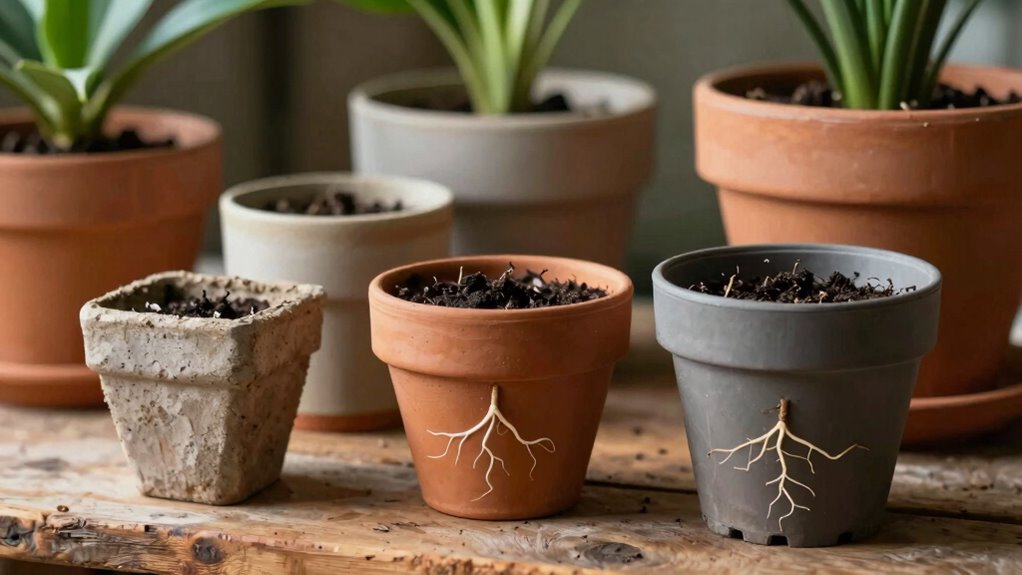
The size of your plant’s root system, along with its overall size and type, directly impacts the pot you choose. Good drainage and aeration are also essential to prevent overwatering and promote healthy growth. Considering these factors guarantees you pick a pot that supports your plant’s development effectively. Additionally, selecting a pot that encourages a positive growth mindset can help foster healthy development and resilience in your plant as it adapts to its environment. Understanding the emerging trends in digital publishing can also help you access innovative resources and tips for better plant care. To optimize plant health, it’s important to consider color accuracy in your watering and lighting conditions to ensure proper photosynthesis and growth. Recognizing the plant parts used in herbalism can also guide you in selecting containers that suit the specific needs of different plant components for optimal vitality.
Root Growth Space
Since root growth directly affects a plant’s overall health and stability, understanding the factors that influence how much space roots need is essential. Soil composition plays a key role; well-draining, aerated soil encourages healthy root expansion, while dense or compacted soil restricts growth. A healthy soil environment can significantly enhance root development. Additionally, choosing the right pot size helps with pest prevention by reducing overcrowding, which can create hidden spots for pests to hide and breed. If roots become cramped, plants can become stressed and more vulnerable to pests and diseases. Monitoring root development and adjusting pot size accordingly ensures roots have enough room to grow, supporting a healthy, pest-resistant plant. Incorporating landscaping principles into container gardening can also enhance root health by mimicking natural environments. Recognizing the impact of soil quality on root growth can further optimize your plant’s development, especially considering the role of AI tools in analyzing and predicting optimal growing conditions. Furthermore, selecting an appropriately sized pot can improve market reputation by promoting healthier plants and better growth outcomes.
Plant Size & Type
Choosing the right pot size depends largely on your plant’s size and type. Larger plants need bigger pots to support their growth, while smaller plants thrive in more compact containers. Consider your plant’s growth habit, as some may grow rapidly and require frequent repotting. The soil composition also influences pot size; lighter, well-draining soil can affect how much space your plant needs. Additionally, your watering schedule plays a role—plants that require frequent watering may need slightly larger pots to retain moisture without becoming waterlogged. Maintaining appropriate pot size helps prevent issues like root crowding or water retention problems, ensuring healthy plant growth. Understanding root development and the way roots spread can further guide you in selecting the ideal pot size for sustained growth. Proper pot selection is essential for promoting healthy root systems and overall plant vitality. Being aware of growth habits can help anticipate future needs and prevent the need for frequent repotting.
Drainage & Aeration
Proper drainage and aeration are key factors influenced by the size of the pot you select. A larger pot typically offers more space for soil, which can improve drainage and prevent water from pooling, reducing root rot. When considering soil composition, choose a well-draining mix that promotes aeration, especially in bigger pots. If your plant receives ample sunlight exposure, it’s essential to verify that excess water evaporates quickly; a larger container helps with this by providing better airflow around roots. Conversely, smaller pots may restrict drainage, leading to waterlogged soil if not managed carefully. Always select a pot with drainage holes and consider how sunlight impacts evaporation rates. Balancing pot size with these factors ensures your plant’s roots stay healthy and oxygenated, supporting vigorous growth.
How to Choose the Perfect Pot Diameter and Depth
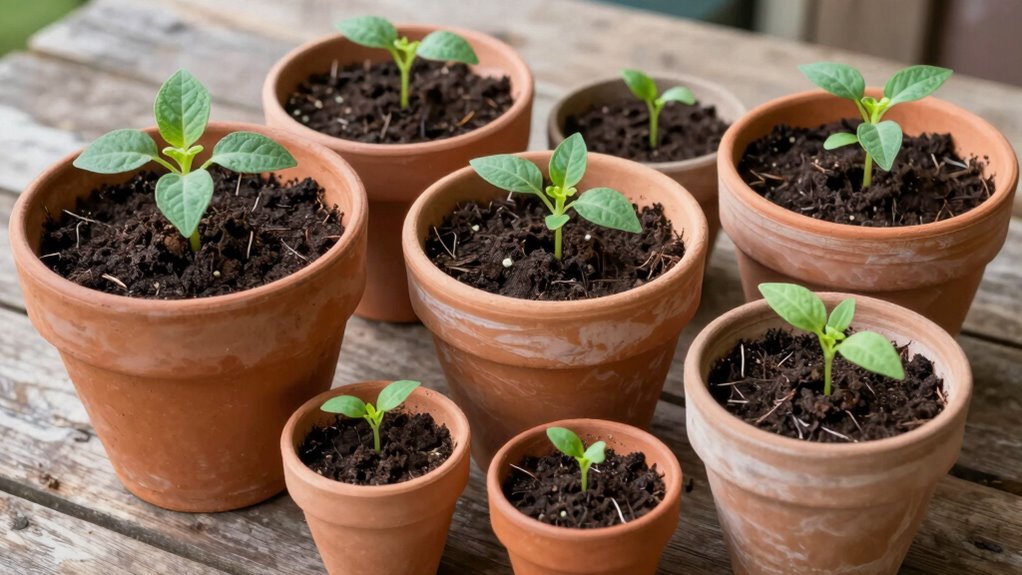
Selecting the right pot diameter and depth is essential for healthy plant growth. The size should match your plant’s root system, allowing room for growth without excess space that can lead to waterlogging. Consider decorative styles that complement your space and material choices that suit the environment—ceramic, plastic, or terracotta each offer different benefits. When choosing, think about these key points:
- Diameter should be about 1-2 inches larger than the root ball
- Depth should accommodate root length and growth
- Decorative styles influence the overall aesthetic
- Material choices impact weight, drainage, and insulation
Matching these factors guarantees your plant has enough space to thrive while enhancing your decor.
When Should You Repot Your Plant and Upgrade Its Pot?
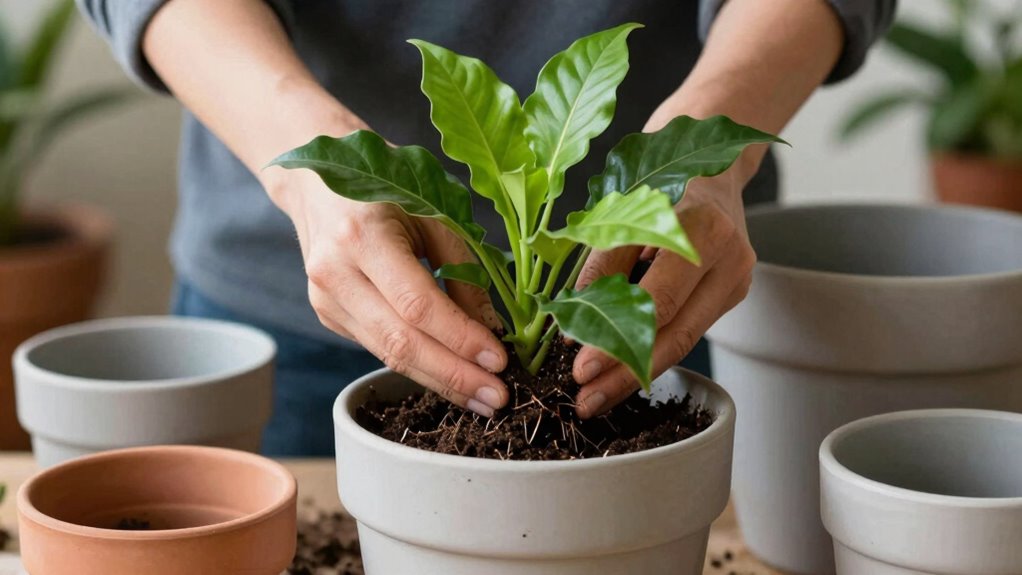
You should consider repotting your plant when you notice root crowding or the roots growing out of the drainage holes. If growth slows down despite proper care or you find yourself watering more frequently, it’s likely time for an upgrade. Addressing these signs promptly helps guarantee your plant continues to thrive. Incorporating creative storytelling into your plant care routine can also enhance your connection with your plants and motivate timely repotting. Additionally, choosing the right wood type for your plant pot can improve durability and aesthetic appeal, making your repotting process both functional and stylish. Being aware of plant health indicators can help you better determine the ideal time to repot and ensure your plant’s ongoing vitality. Regularly observing your plant’s growth patterns can further aid in recognizing the optimal repotting window. Recognizing seasonal changes can also be beneficial, as certain times of year are better suited for repotting to support healthy growth.
Signs of Root Crowding
When roots begin to circle tightly or grow out of the drainage holes, it’s a clear sign that your plant needs a bigger home. Root circling can lead to pot instability and restrict growth, making it essential to repot. You might notice the roots becoming dense and tangled at the surface or through the drainage holes. If your plant seems top-heavy or is leaning, it’s another indicator that it’s outgrowing its current pot. Check for the following signs:
- Roots emerging from drainage holes
- Dense, tangled root mass near the surface
- Plant toppling or leaning
- Reduced soil moisture retention
- Proper scrubbing techniques can help prevent soil compaction and promote healthier root systems. Additionally, understanding root crowding and its effects can guide you in choosing the right pot size to support healthy growth. Addressing root crowding by upgrading to a larger pot guarantees better pot stability and healthy growth, preventing root bound issues before they become severe.
Growth Slowdown Indicators
A slowdown in your plant’s growth is a strong sign it may need a larger pot. When roots become crowded, soil aeration decreases, limiting oxygen flow to the roots and stunting growth. You might notice the plant stops growing taller or produces smaller leaves. Additionally, a tight pot can trap excess moisture, creating a breeding ground for pests and diseases. Upgrading to a bigger pot helps improve soil aeration, encouraging healthier root development. It also makes pest prevention easier, as you can better inspect and manage potential infestations. If your plant shows these signs, don’t delay repotting. Moving it to a slightly larger container promotes vigorous growth, keeps pests at bay, and guarantees your plant stays healthy and happy.
Frequent Watering Needs
- Soil drains quickly, requiring more frequent watering
- Roots are visible or circling the pot’s surface
- Water doesn’t retain moisture as long
- Container materials affect watering frequency
Why Material and Drainage Are Key in Pot Selection
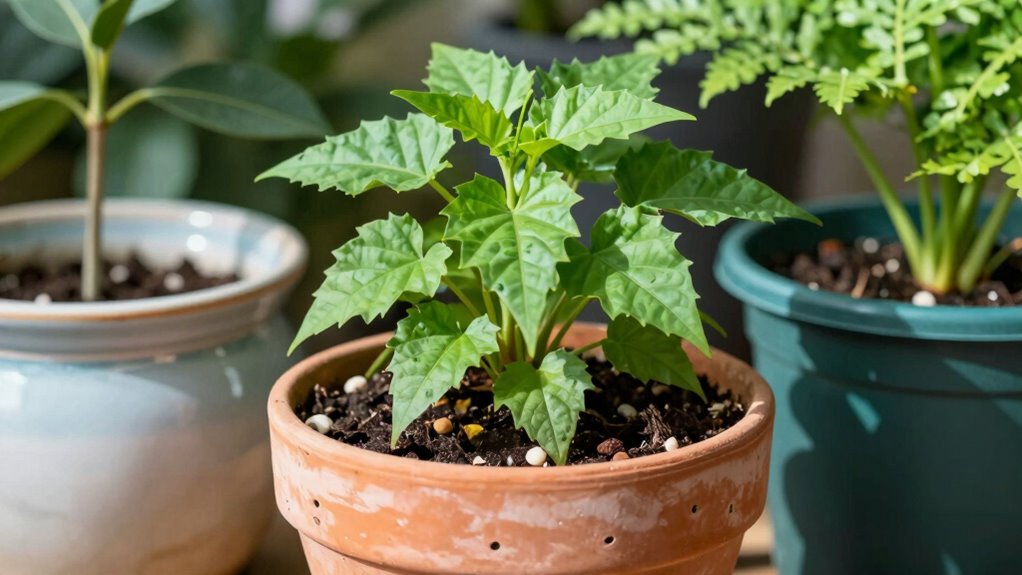
Choosing the right pot material and ensuring proper drainage are essential steps in supporting healthy plant growth. Material considerations affect how your plant interacts with its environment. For example, clay pots are porous, helping excess moisture evaporate, which reduces root rot risk. Plastic pots, on the other hand, retain moisture longer, making them ideal for moisture-loving plants. Drainage importance cannot be overstated—poor drainage leads to waterlogged soil, suffocating roots and causing diseases. Look for pots with drainage holes to allow excess water to escape. Proper drainage also promotes healthy root development and prevents overwatering issues. By selecting a material suited to your plant’s needs and ensuring adequate drainage, you create a stable environment that supports robust growth and overall significance.
Common Mistakes to Avoid When Choosing Pot Sizes
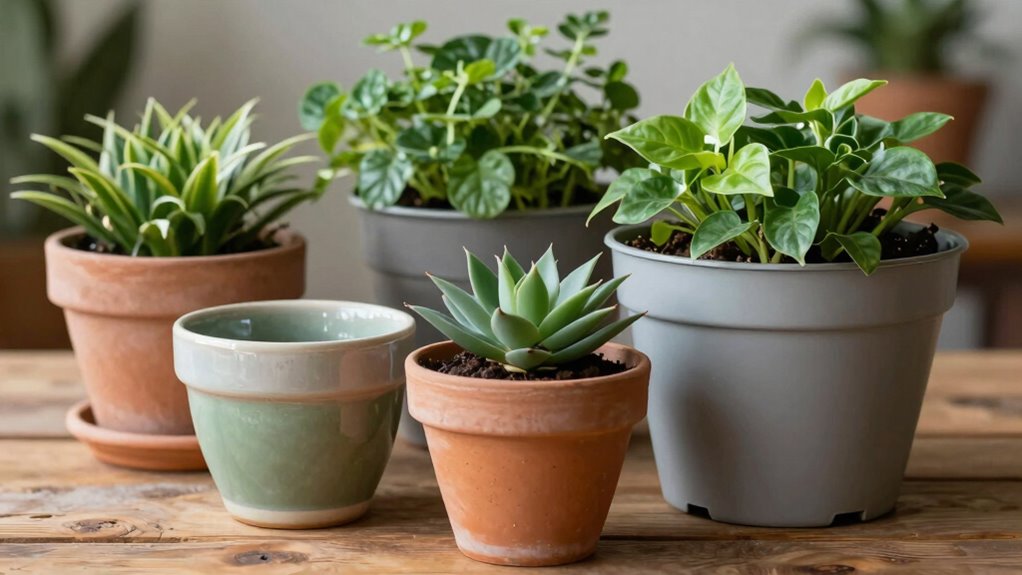
One common mistake is selecting a pot that’s too large for your plant, which can lead to overwatering and root rot. When the pot is oversized, excess soil retains moisture longer, disrupting soil composition and increasing watering frequency unnecessarily. This can drown roots and cause health issues. Additionally, choosing a pot that’s too small limits root growth, stunting the plant’s development. To avoid these pitfalls, focus on selecting a pot that matches your plant’s current size. Pay attention to proper soil composition to guarantee good drainage and aeration. Remember, adjusting watering frequency based on the pot size and soil moisture levels is essential for healthy growth.
Choosing the right-sized pot and proper soil ensures healthy growth and prevents overwatering or root rot.
- Picking a pot that’s too large or small for your plant
- Ignoring soil composition and drainage needs
- Overwatering or underwatering due to incorrect pot size
- Neglecting the plant’s growth stage when choosing a pot
Tips for Repotting and Promoting Healthy Root Growth
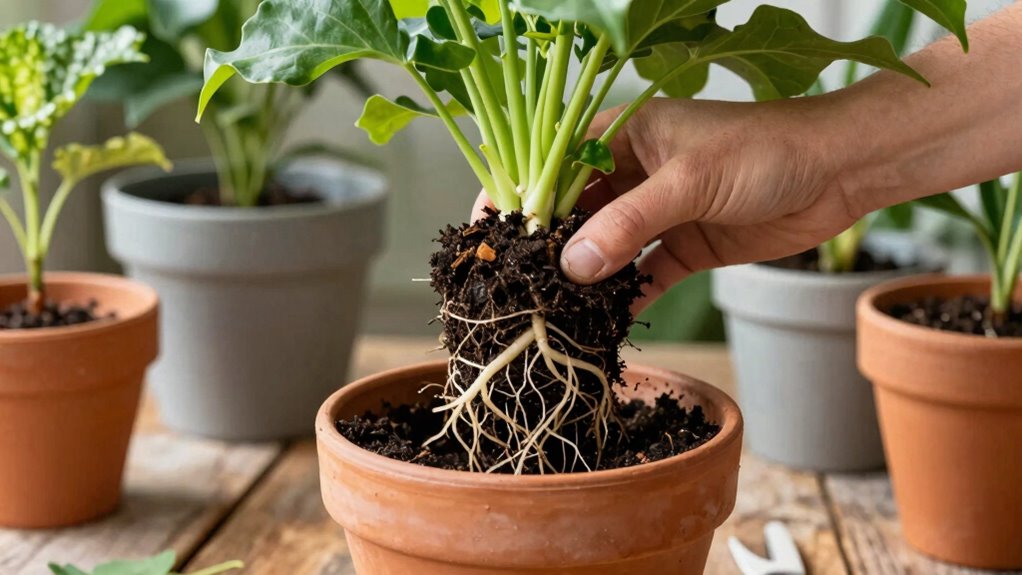
Repotting is a crucial step in maintaining healthy root growth, especially when your plant outgrows its current container. To promote strong roots, gently loosen the root ball and trim any circling or dead roots. Use fresh soil suited to your plant’s needs, and choose a pot with drainage holes. When selecting new containers, consider pot aesthetics and decorative containers that complement your space. Proper repotting encourages growth and enhances visual appeal.
| Step | Action | Tips |
|---|---|---|
| Loosen Roots | Carefully tease roots apart | Avoid damaging healthy roots |
| Choose Pot | Select a container slightly larger | Match pot aesthetics with decor |
| Repotting Process | Fill with fresh soil, position plant | Water thoroughly after repotting |
Signs Your Plant Needs a Smaller or Larger Pot
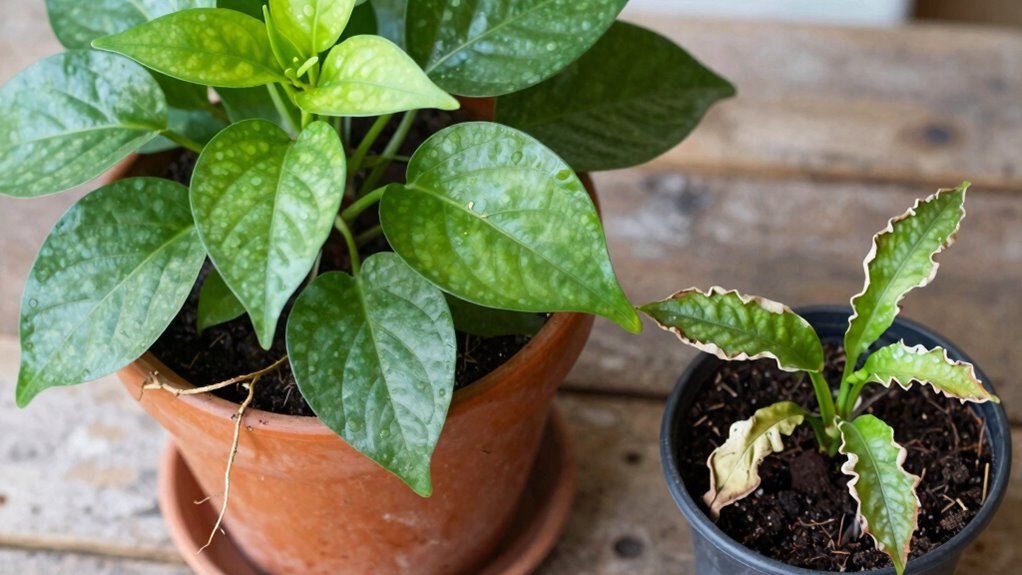
Knowing when your plant needs a smaller or larger pot can prevent root problems and support healthy growth. If your plant shows signs of distress, it might be time to evaluate its container size and soil mixture. A plant in a too-small container may become root-bound, with roots circling the pot. Conversely, a plant in a too-large container might struggle with water retention and poor aeration. Look for these signs:
- Roots growing out of drainage holes
- Soil dries out quickly or stays too moist
- Stunted growth or yellowing leaves
- Water pooling on the soil surface after watering
Adjust the plant container size accordingly to ensure proper root development and soil health, promoting vigorous growth.
Frequently Asked Questions
How Often Should I Check My Plant’s Root Growth?
You should check your plant’s root growth every 4 to 6 weeks through root inspection. Regular growth monitoring helps you identify if roots are becoming tangled or circling the pot, indicating it’s time to repot. When you see roots emerging from drainage holes or the plant becomes top-heavy, it’s a sign to examine more closely. Staying attentive ensures healthy growth and prevents root-bound issues.
Can Choosing the Wrong Pot Size Harm My Plant?
Choosing the wrong pot size can choke your plant’s growth like a tight collar. Too small, and roots become cramped, choking off nutrients and water, while too large, and excess moisture can drown roots. Poor plant drainage caused by an ill-suited pot material worsens this, risking root rot. Make sure your pot size matches your plant’s needs, with proper drainage, for a healthy, thriving green companion.
What’s the Best Way to Measure My Plant’s Root System?
To measure your plant’s root system, gently remove it from the current pot to examine the root depth and spread. Look for roots circling the edges, which indicate the root ball is crowded. Check soil drainage around the roots—healthy roots need well-draining soil to prevent waterlogging. Carefully measure the maximum root length and note the root depth to select a pot that provides enough space for healthy growth.
How Does Seasonal Change Affect Pot Size Needs?
As seasons gently shift, your plant’s dance of seasonal growth and root expansion calls for a pot that adapts. In warmer months, roots stretch and explore, needing a slightly larger home to thrive. Come cooler periods, smaller pots can encourage restful growth. Pay close attention to signs like root crowding and water retention, adjusting pot size accordingly. This mindful approach nurtures healthy, resilient plants throughout the changing seasons.
Are There Specific Pot Sizes for Different Plant Types?
Yes, different plant types often require specific pot sizes. For example, succulents thrive in smaller pots with excellent soil drainage, while larger flowering plants need bigger containers for healthy root development. You should choose a pot that supports proper root growth without constraining it, ensuring good soil drainage to prevent root rot. Selecting the right size helps your plants grow strong and healthy by supporting ideal root development.
Conclusion
Choosing the right pot size isn’t just a task—it’s the key to revealing your plant’s potential. Think of your plant as a story waiting to unfold; a too-small pot stifles its growth, while a too-large one drowns it. By paying attention to signs, factors, and proper techniques, you’ll nurture a thriving green companion. Remember, a well-chosen pot is the silent partner in your plant’s journey to flourish—don’t let it be the missing piece of the puzzle.
Fall Picks
fall essentials
As an affiliate, we earn on qualifying purchases.