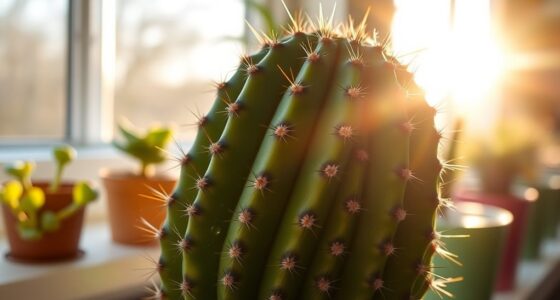
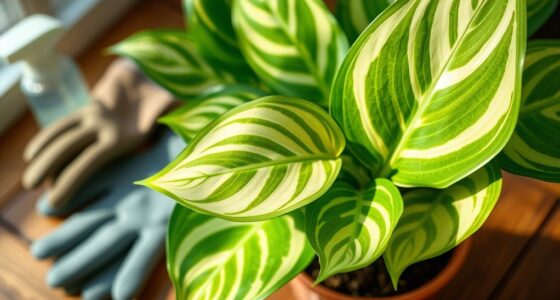
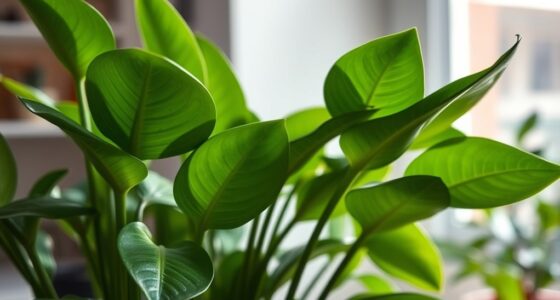
In low-light apartments, you can brighten your space with green houseplants like pothos, snake plants, and ZZ plants. These plants require minimal sunlight, making them perfect for darker corners and shelves. They also improve your air quality and add a calming touch to your home. If you’re curious about pet-friendly options or tips for caring for these plants, there’s plenty more to discover to create a lush, inviting environment.
Key Takeaways
- Choose low-light tolerant plants like pothos, snake plants, and ZZ plants for vibrant greenery in dim spaces.
- Incorporate various shades of green, from dark to light, to add depth and visual interest to your apartment.
- Ensure proper placement away from direct sunlight, utilizing indirect or filtered light sources for healthy growth.
- Select pet-friendly green plants such as Boston ferns and spider plants to enjoy greenery safely around pets.
- Maintain consistent care with regular watering and dusting to maximize air purification and aesthetic benefits.

Have you ever wondered why green houseplants are so popular? The answer lies in their ability to transform even the dullest, low-light apartments into vibrant, invigorating spaces. Houseplants are more than just decorations; they’re natural air purifiers that improve indoor air quality, making your living environment healthier and more inviting. Plus, if you’re a pet owner, you’ll be pleased to know there are many pet-friendly plants that won’t pose a risk to your furry friends. This combination of aesthetic appeal and health benefits explains why so many people incorporate green plants into their homes, even in areas with limited sunlight.
In low-light apartments, choosing the right plants is essential. Not all green houseplants thrive in shade, but many varieties are well-suited for darker corners, shelves, or windows with minimal sunlight. For instance, plants like pothos, snake plants, and ZZ plants require very little light and are remarkably easy to care for. These plants not only add a soothing splash of green but also contribute to better indoor air quality by absorbing toxins and releasing oxygen. Their adaptability makes them perfect for apartments where natural light is scarce, yet fresh, clean air remains a priority.
If you’re concerned about your pets, you’ll be happy to find several pet-friendly options. Plants like Boston ferns, spider plants, and certain varieties of succulents are non-toxic to cats and dogs. Incorporating these into your space means you can enjoy the benefits of greenery without worrying about accidental ingestion. Pet-friendly plants tend to be easy to care for and resilient, making them suitable for busy households or those new to plant care. Keeping your furry friends safe while improving your indoor environment becomes effortless when you choose the right plants.
Besides their air-purifying qualities, these plants can boost your mood and productivity, especially when your apartment doesn’t get much sunlight. Greenery adds a calming, natural touch that can reduce stress and create a more inviting atmosphere. In low-light conditions, it’s best to position your plants away from direct sunlight but where they can still receive indirect or filtered light. Regular watering and occasional dusting keep them healthy, ensuring they continue to purify the air and brighten your space.
Frequently Asked Questions
How Often Should I Water Low-Light Houseplants?
You’re wondering how often to water your low-light houseplants. Generally, a consistent watering schedule is key for proper plant hydration. In low-light conditions, plants tend to need less frequent watering—about once every 1-2 weeks. Check the top inch of soil; if it feels dry, it’s time to water. Avoid overwatering, which can lead to root rot, and always guarantee proper drainage for healthy plant growth.
Can Low-Light Plants Improve Indoor Air Quality?
Did you know that NASA found certain houseplants can remove up to 87% of indoor air pollutants in 24 hours? Low-light plants, like snake plants or pothos, still provide great air purification benefits. By strategically placing them near sources of pollution, you enhance air quality even in dim spaces. So, yes—adding these plants can improve indoor air quality, making your environment healthier and more inviting.
What Is the Best Fertilizer for Shady Houseplants?
You’re wondering what’s the best fertilizer for shady houseplants. You should choose balanced fertilizer types like liquid or slow-release options, which provide essential nutrients without overfeeding. Follow an application schedule of once every 4-6 weeks during the growing season, reducing frequency in winter. This routine guarantees your low-light plants stay healthy, vibrant, and well-nourished while adapting to their shaded environment.
Are There Pet-Safe Low-Light Houseplants?
You’re asking if there are pet-safe low-light houseplants. Yes, there are! Look for pet-safe plants like spider plants, Boston ferns, and certain low-light succulents, which thrive without much sunlight. These options keep your pets safe while adding greenery to dim spaces. Always verify specific plant safety, but these choices are generally considered non-toxic and perfect for low-light apartments, giving you vibrant, pet-friendly greenery.
How Do I Prevent Pests on Low-Light Houseplants?
Many believe pests are less likely in low-light environments, but prevention is key. You can proactively manage pest prevention by inspecting your plants regularly and isolating new ones. Natural remedies like neem oil or insecticidal soap can effectively combat pests without harmful chemicals. Keep your leaves clean, avoid overwatering, and guarantee good airflow. These steps help keep pests at bay and maintain healthy, thriving houseplants in your low-light space.
Conclusion
With shades of green, your apartment transforms—vibrant leaves, calming hues, and lush textures all thrive in low light. You nurture resilience, embrace growth, and create a sanctuary filled with life. As your plants flourish, so does your space—more inviting, more peaceful, more alive. Keep watering, keep tending, keep loving. Your green haven awaits, ready to brighten every corner with the quiet beauty of nature’s resilience—because, in the end, growth is always within your reach.