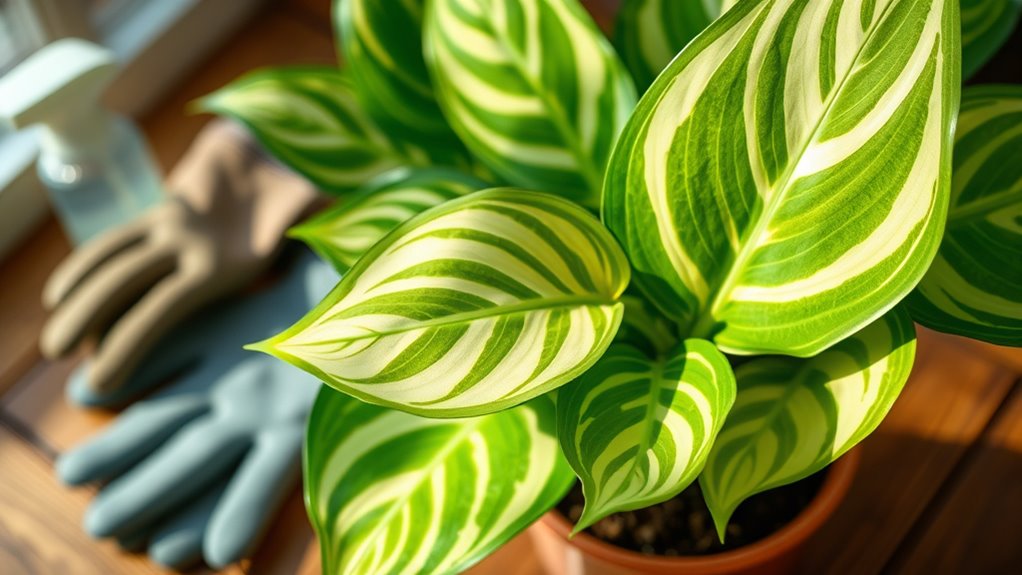

To care for dieffenbachia safely, place it in bright, indirect light and water only when the top inch of soil is dry. Prune with clean, sharp tools, wearing gloves to prevent sap contact, and remove dead or leggy stems to promote growth. Always wash your hands after handling or pruning, and keep the plant away from children and pets. If you want to make certain both safety and lush foliage, there’s more useful advice if you keep exploring.

Get garden gear delivered free — and shop member deals
- Fast, free delivery on millions of items
- Access to Prime Big Deal Days deals on October 6–7
- Prime Video, Amazon Music and more included
Key Takeaways
- Keep Dieffenbachia out of reach of children and pets due to its toxicity from calcium oxalate crystals.
- Handle with gloves when pruning or repotting to avoid skin irritation from plant sap.
- Prune by cutting above leaf nodes and remove dead or yellow leaves to promote healthy growth.
- Water only when the top inch of soil is dry and provide bright, indirect light for optimal health.
- Regularly clean tools and wipe cut areas to prevent sap residue and reduce the risk of pests or infections.

Dieffenbachia, commonly known as Dumb Cane, is a popular indoor plant prized for its lush, attractive foliage. Its large, variegated leaves can brighten up any room, but it’s important to remember that this plant comes with toxicity warnings. The sap of Dieffenbachia contains calcium oxalate crystals, which can cause irritation if ingested or if it contacts your skin or eyes. Keep this in mind if you have children or pets, as accidental ingestion can lead to swelling, difficulty swallowing, or other symptoms. To guarantee safety, always wash your hands thoroughly after handling the plant, especially before touching your face. When placing Dieffenbachia in your home, choose a location out of reach of children and pets, and be cautious when pruning or repotting to avoid accidental contact with the sap.
Pruning is essential for maintaining the health and appearance of your Dieffenbachia, but it requires careful technique. Start by using clean, sharp scissors or pruning shears to make precise cuts. Before you begin, wear gloves to prevent skin irritation from the sap. Focus on removing dead or yellowing leaves at the base of the stem, which helps promote new growth and keeps the plant looking tidy. If the plant becomes overgrown or leggy, prune back the stems to encourage bushier growth. Always make cuts just above a leaf node or a healthy leaf joint to promote quick healing and new growth. Be mindful when pruning larger stems, as the sap can spill out; wiping the cut area with a damp cloth afterward can help remove any residual sap. Regular pruning also allows you to monitor the plant’s overall health, catching pests or diseases early. Additionally, understanding the cybersecurity vulnerabilities associated with digital plant care tools can help protect your personal data while managing your indoor garden.
In addition to pruning, you should regularly check your Dieffenbachia for signs of stress or pests. Keep the plant in bright, indirect light and water it only when the top inch of soil feels dry. Proper watering and adequate light can reduce stress and make pruning easier. When you prune, avoid removing more than a third of the plant at once to prevent shock and ensure it recovers smoothly. Remember, consistent care combined with safe handling practices will keep your Dieffenbachia both beautiful and safe. If you ever need to remove larger sections of the plant, do so carefully, and always clean your tools afterward to prevent spreading any sap or potential pests. By following these pruning techniques and being aware of toxicity warnings, you can enjoy your Dieffenbachia’s lush foliage without worry.
As an affiliate, we earn on qualifying purchases.
Frequently Asked Questions
Can Dieffenbachia Be Grown Outdoors Year-Round?
You can’t grow dieffenbachia outdoors year-round in most climates because it needs protection from cold temperatures. During winter, you’ll need outdoor winter protection, like bringing it inside or providing a greenhouse. Also, use pest management strategies to keep pests at bay when it’s outside. In warmer months, it thrives outdoors, but when temperatures drop, you must move it indoors or provide adequate shelter to prevent damage.
How Often Should I Prune My Dieffenbachia?
Did you know that regular pruning can boost your dieffenbachia’s growth by up to 30%? You should prune your dieffenbachia every 4-6 weeks during active growing seasons. Use proper trimming techniques by sterilizing scissors and cutting just above a leaf node. This keeps the plant healthy, encourages bushier growth, and prevents leggy stems. Don’t forget to remove any yellowing leaves promptly for ideal health.
What Are the Signs of Overwatering in Dieffenbachia?
You’ll notice watering issues like yellowing or browning leaves, which are common signs of overwatering your dieffenbachia. Leaf discoloration, especially with drooping or soft leaves, indicates excess moisture. You might also see mold or a musty smell around the soil. To prevent this, guarantee you’re not watering too frequently, let the top inch of soil dry out, and make sure your pot has good drainage.
Is It Safe to Use Dieffenbachia as Cut Flowers?
Using dieffenbachia as cut flowers isn’t safe because of safety concerns. The plant’s sap is toxic and can cause skin irritation or more serious health issues if it contacts your skin or is ingested. When creating flower arrangements, avoid including dieffenbachia to protect yourself and others, especially children or pets. Always handle it with care, and wash your hands afterward to minimize any risk from its toxic properties.
How Do I Propagate Dieffenbachia?
To propagate dieffenbachia, you can use propagation methods like root division or stem cuttings. For root division, carefully remove the plant from its pot and separate the root clumps, ensuring each has healthy roots and a stem. Plant the divisions into fresh soil and water thoroughly. Stem cuttings also work; cut a healthy stem, let it callus, then plant it in moist soil until roots develop.
Conclusion
By following these care and safety tips, you can enjoy your dieffenbachia’s lush beauty without worry. Imagine a new plant owner, Sarah, who kept her plant out of reach of her curious toddler, preventing any accidental poisoning. With proper placement and care, your dieffenbachia will thrive and remain a safe, stunning addition to your home. Stay attentive to its needs, and you’ll both enjoy the plant’s vibrant presence for years to come.
Fall yard work Picks
leaf blowers
As an affiliate, we earn on qualifying purchases.