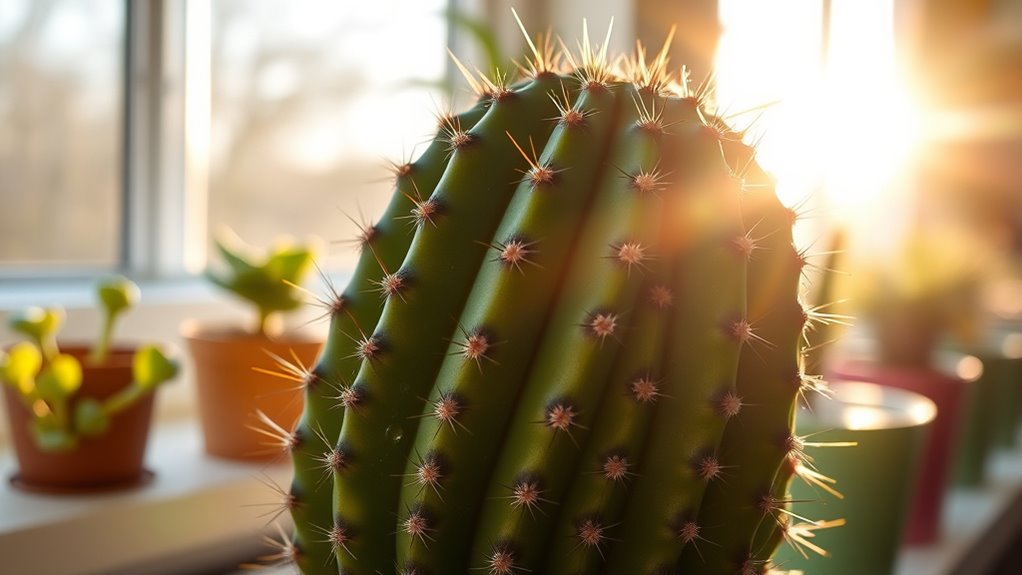

To care for your indoor cactus, guarantee it gets plenty of bright, direct sunlight—ideally at least 4-6 hours a day near a south- or west-facing window. Water only when the top inch of soil is dry, typically every 2-4 weeks during active growth, and cut back in winter to about once a month. Keep an eye on soil moisture and adjust watering if your indoor air is dry. Continue, and you’ll discover more tips for keeping your cactus healthy.
Key Takeaways
- Place cacti in south- or west-facing windows for at least 4-6 hours of direct sunlight daily.
- Water thoroughly when the top inch of soil is dry, approximately every 2-4 weeks during the growing season.
- Reduce watering to monthly or less in winter to prevent overwatering and root rot.
- Ensure good drainage and always empty excess water from saucers to avoid waterlogging.
- Adjust watering frequency based on indoor humidity and avoid low-light locations away from windows.
Have you ever wondered how to keep your indoor cactus healthy and thriving? The key lies in understanding its specific needs, especially when it comes to watering schedule and light requirements. Unlike many houseplants, cacti are adapted to survive in dry, sunny environments, so getting these aspects right can make all the difference in their growth and longevity.
First, let’s talk about light requirements. Your indoor cactus thrives with plenty of bright, direct sunlight. Position it near a south- or west-facing window where it can soak up at least four to six hours of direct sun each day. If natural light is limited, supplement with a grow light to mimic the intense sunlight cacti crave. Avoid placing your cactus in low-light spots or away from windows, as insufficient light hampers photosynthesis, leading to pale, elongated growth and weakened plants. Remember, consistent light exposure is essential; sudden changes can stress your cactus, causing it to drop spines or become discolored.
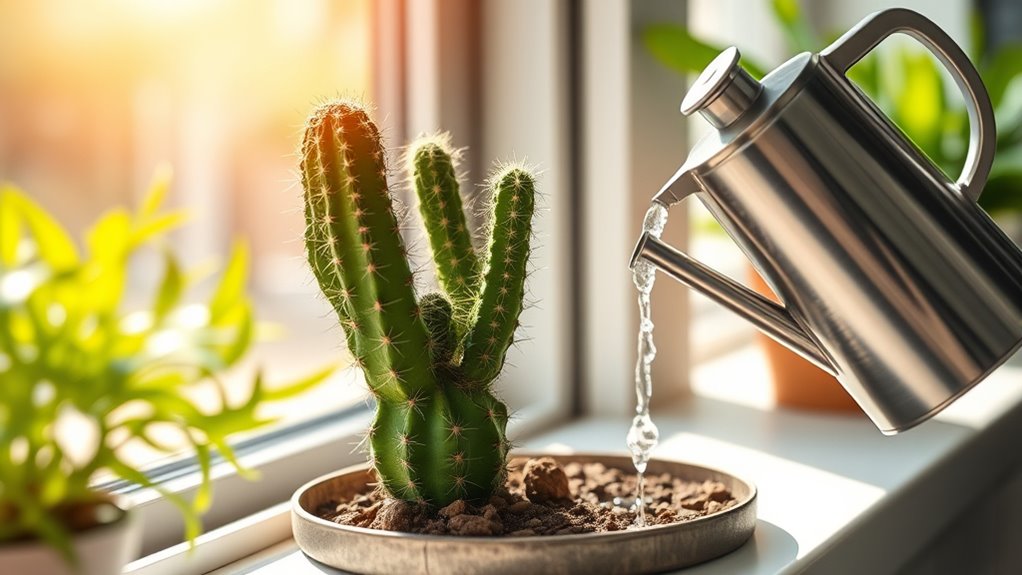
Now, turning to watering schedule, it’s imperative to mimic the cactus’s natural dry environment. During the growing season—spring and summer—water your cactus thoroughly, but only when the top inch of soil feels completely dry. This often means watering every two to four weeks, depending on your indoor climate. In winter, reduce watering frequency considerably, sometimes to once a month or less, since the plant enters dormancy and needs less moisture. Overwatering is the number one mistake, leading to root rot and fungal issues, so err on the side of dryness. Ensure your pot has good drainage, and always empty excess water from the saucer to prevent soggy roots.
Maintaining proper lighting conditions and watering habits is vital, as they directly influence your cactus’s ability to photosynthesize and stay healthy. Consistency is key in both light and watering. When you keep a steady routine, your cactus’s health improves, and it’s less likely to suffer from stress or disease. Check soil moisture regularly by touching the surface; don’t rely on a schedule alone. Adjust your watering based on the season and indoor conditions—hot, dry air from heaters, for example, may require more frequent watering, while humid environments may need less.

Aokrean Grow Lights for Indoor Plants, Full Spectrum Plant Light with Base
- Stable Stand Design: Requires pot to press for stability
- Easy Installation: Insert in soil or use stand
- Multiple Lighting Modes: White, warm white, red, and mix
As an affiliate, we earn on qualifying purchases.
As an affiliate, we earn on qualifying purchases.
Frequently Asked Questions
How Do I Identify Overwatering Signs in My Indoor Cactus?
You can spot overwatering signs in your indoor cactus by checking for soft, discolored, or mushy spots, especially at the base. Watch out for cactus root rot, which results from excess water, leading to rotting roots and a foul smell. Overwatering symptoms also include yellowing or wilting, and the soil staying wet long after watering. If you notice these, cut back on watering and improve drainage to save your cactus.
What Temperature Ranges Are Ideal for Indoor Cactus Growth?
You should keep your indoor cactus in a temperature range of 65-80°F, ensuring ideal growth. Temperature regulation and humidity control are key—avoid drafts, sudden temperature drops, or excessive moisture in the air. Maintaining this range helps prevent stress, encourages healthy growth, and keeps your cactus thriving. Consistently monitoring and adjusting your environment creates the perfect conditions for your cactus to flourish indoors.
Can I Use Tap Water for Watering My Cactus?
You can use tap water for your cactus, but tap water concerns include minerals and chemicals like chlorine that may harm it over time. To reduce these risks, let the water sit out for 24 hours to allow chlorine to evaporate or use water treatment methods like filtering or dechlorinating drops. This guarantees your cactus receives clean water and stays healthy, promoting better growth indoors.
How Often Should I Fertilize My Indoor Cactus?
You should fertilize your indoor cactus about once a month during the growing season, typically spring and summer. Some people worry about overfeeding, but cacti have modest nutrient requirements. Stick to a balanced, diluted cactus fertilizer to follow a proper fertilizer schedule, ensuring your plant gets the nutrients it needs without overdoing it. During fall and winter, skip fertilizing to let your cactus rest and avoid unnecessary stress.
What Are Common Pests That Affect Indoor Cacti?
You should watch for common pests like mealybugs, spider mites, scale insects, and aphids that can affect your indoor cactus. To prevent pests, practice regular pest prevention by inspecting your plant and keeping it healthy. If pests appear, try natural remedies like neem oil, insecticidal soap, or rubbing alcohol to treat infestations. Consistent care and early detection help keep your cactus pest-free and thriving indoors.
Conclusion
So, you’ve mastered the art of caring for your indoor cactus—who knew that giving it just the right light and water could turn a prickly plant into a thriving centerpiece? Ironically, what seems so simple actually demands your attention and patience. But don’t worry, with a little effort, you’ll soon enjoy a stunning, low-maintenance plant that’s almost as tough as you are—proof that sometimes, the hardest part is just waiting for your cactus to thrive.