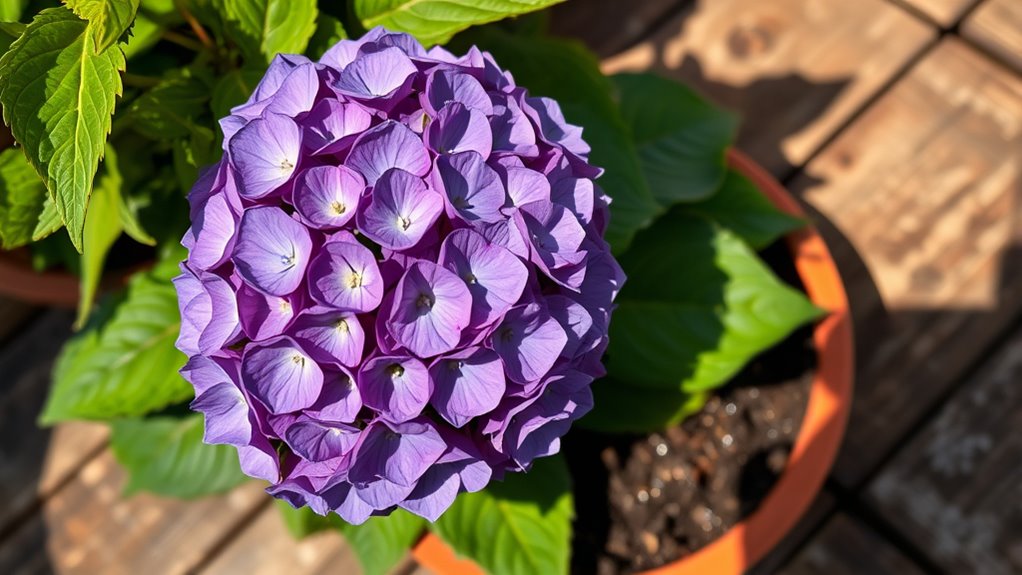
To care for hydrangeas in pots and small yards, make certain they’re planted in well-draining, fertile soil and use high-quality potting mix for containers. Prune dead or damaged stems early and shape older branches for lush blooms. Keep the soil consistently moist, especially during hot weather, and add mulch to retain moisture. Fertilize every few weeks with a balanced, slow-release fertilizer. If you’re interested in creating a thriving hydrangea display, you’ll find tips to boost their health and vibrant blossoms.

Get garden gear delivered free with Prime
- Fast, free delivery on millions of items
- Prime Video, Amazon Music and more included
- Member-only deals all year
Key Takeaways
- Use well-draining, fertile soil with proper pH to promote vibrant flower colors and healthy growth.
- Ensure containers have drainage holes and are appropriately sized for root development.
- Regularly water to keep soil moist, especially in hot weather, and mulch to retain moisture.
- Prune dead or damaged stems early, and shape hydrangeas to encourage abundant blooms.
- Fertilize every few weeks with a balanced, slow-release fertilizer suited for flowering shrubs.

Hydrangeas are stunning, versatile flowering shrubs that can brighten any garden, but they require proper care to thrive. If you’re growing them in pots or small yards, paying attention to pruning techniques and soil preparation is essential. Pruning helps maintain the plant’s shape, encourages healthy growth, and promotes abundant blooms. When pruning, you’ll want to remove dead or damaged stems early in the season, typically in late winter or early spring. For mophead and lacecap hydrangeas, cut back about one-third of the older stems at the base to stimulate new growth. For panicle and smooth hydrangeas, pruning can be more aggressive—cutting back to shape them and remove older, less productive branches. Always use clean, sharp tools to make clean cuts, which helps prevent disease and encourages quick healing.
Soil preparation forms the foundation for healthy hydrangeas. They thrive in well-draining, fertile soil that retains moisture but doesn’t stay soggy. Before planting or potting, mix in organic matter such as compost or peat moss to improve soil structure and provide essential nutrients. Test your soil’s pH to determine the best approach for color control; acidic soils (pH below 6) will produce blue flowers, while alkaline soils (pH above 7) tend to yield pink blooms. For container plants, use a high-quality potting mix designed for flowering shrubs, and consider adding soil amendments to boost fertility. When setting up your hydrangea in a pot, ensure the container has drainage holes to prevent waterlogging, which can lead to root rot.
Watering habits are just as important as soil prep and pruning. Hydrangeas in pots dry out faster than those in the ground, so check the soil moisture regularly. Keep the soil consistently moist during the growing season, especially in hot, dry weather. Mulching around the base of the plant helps retain soil moisture, regulate temperature, and suppress weeds. During the growing season, fertilize your hydrangea every few weeks with a balanced, slow-release fertilizer formulated for flowering shrubs. This provides the necessary nutrients to promote vibrant blooms and healthy foliage.
hydrangea potting mix for flowering shrubs
As an affiliate, we earn on qualifying purchases.
As an affiliate, we earn on qualifying purchases.
Frequently Asked Questions
What Are the Best Companion Plants for Hydrangeas?
You should plant shade lovers like ferns, hostas, and astilbes as the best companion plants for hydrangeas. These flowering companions thrive in similar conditions, enhancing your garden’s visual appeal. They provide lush foliage and delicate blooms that complement hydrangeas’ large, showy flowers. Together, they create a harmonious, shaded garden scene that’s both vibrant and serene, making your space more inviting and lively.
How Do I Prevent Pests on My Potted Hydrangea?
You won’t want pests to ruin your beautiful hydrangea, so start by choosing pest-resistant varieties to minimize issues. Keep a close eye on your plant, and if pests appear, act quickly with organic pest control methods like neem oil or insecticidal soap. Regular inspections, proper watering, and good airflow also help prevent infestations. Stay vigilant—early detection is your best defense against stubborn pests.
Can Hydrangeas Be Grown Indoors Successfully?
Yes, you can grow hydrangeas indoors successfully. Place your indoor hydrangea near a bright, indirect light source to meet its light requirements, avoiding direct sunlight that can scorch leaves. Guarantee good airflow and maintain consistent watering, keeping the soil moist but not waterlogged. Regularly fertilize during the growing season, and consider misting the leaves to boost humidity. Proper placement and care help your indoor hydrangea thrive.
How Often Should I Fertilize Potted Hydrangeas?
A stitch in time saves nine, and that applies to fertilizing your potted hydrangeas too. You should fertilize them every 2 to 3 weeks during the growing season, adjusting based on their response. Follow a consistent watering schedule to keep the soil moist, which helps absorption. Over-fertilizing can harm your plant, so stick to this routine and watch your hydrangea flourish beautifully.
What Are Common Signs of Hydrangea Disease?
You can identify hydrangea disease by looking for spots, wilting, or discolored leaves, which indicate trouble. Watch for powdery mildew or leaf spots that affect healthy foliage, signaling infection. If your hydrangea’s leaves turn yellow, brown, or fall prematurely, it might be diseased. Early disease identification helps you treat problems promptly, keeping your plant healthy and vibrant. Regular inspection and maintaining good airflow can prevent many common issues.
Conclusion
Caring for hydrangeas in pots and small yards is rewarding when you understand their needs. With proper watering, pruning, and placement, you can enjoy their stunning blooms year after year. Did you know that hydrangeas can produce over 2,000 flowers in a single season? By following these simple tips, you’ll guarantee your hydrangeas thrive and become a beautiful focal point in your garden or balcony. Happy gardening!
Fall yard work Picks
leaf blowers
As an affiliate, we earn on qualifying purchases.