TL;DR
An Amateur Gardening report describes six ways to support garden plants using items that may already be at home, from an old ladder to fallen branches. The ideas suit different needs, from supporting a lightweight climber to steadying a single small stem; each item should be checked for stability and matched to the plant.
Amateur Gardening has outlined six ways to support garden plants using items people may already own, including an old ladder, a wire wastebasket, reusable straws, chopsticks, fallen branches and string attached to an existing structure. The report offers alternatives to buying new supports, while stressing that the right option depends on the plant’s size and how it grows.

Get garden gear delivered free with Prime
- Fast, free delivery on millions of items
- Prime Video, Amazon Music and more included
- Member-only deals all year
The suggestions address common problems as plants grow: tall perennials can flop over paths, climbers may need something to scramble over, and heavy flower heads can pull stems down. The guide recommends matching the support to the job rather than treating every item as interchangeable. A single slim stake may steady one delicate stem, while a climber or spreading perennial needs broader support.
For climbers, the report suggests leaning a stable old ladder against a wall or fence and guiding stems around its rungs. It also proposes turning an open-wire wastebasket upside down over a floppy perennial, with its rim pushed into the soil so stems can grow through the gaps. The report advises avoiding baskets that are badly rusted, unstable or sharp-edged.
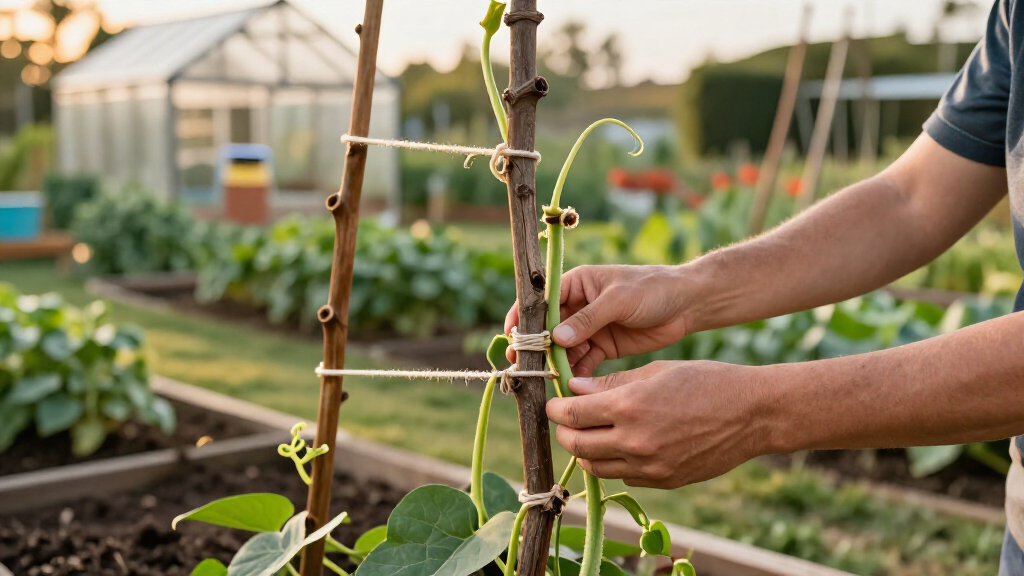
For smaller plants, a reusable metal straw or wooden chopstick can act as a narrow stake. The guide says to place it beside the stem and tie the plant loosely, leaving room for growth. Straight, sturdy branches can be set around a perennial or used individually, while garden twine can be strung across a sturdy fence or railing to support a lightweight climber. These are practical suggestions, not a guarantee that a particular support will suit every plant or site.
Support Plants Without New Purchases
The ideas may help gardeners avoid buying a separate support for every leaning stem or climbing plant, and give usable household items a second purpose. Their usefulness will depend on what is already available and the demands of the plant: a straw or chopstick can steady a small plant, but the report explicitly says these narrow stakes are not suitable for a tall perennial or vigorous climber.
Choosing a sound, secure support also matters for plant health and safety. An unstable ladder may be strained by wind-catching foliage, while a loose or sharp-edged basket can present hazards. The guide’s core advice is to check an item before placing it in the garden and to use ties loosely enough that stems can continue to grow.
Products Worth Considering

Levoit Core 600S-P Smart Air Purifier for Large Rooms

iRobot Roomba Max 875 Robot Vacuum and Mop

Blueair Blue Signature SP4i Air Purifier for Large Rooms
As an affiliate, we earn on qualifying purchases.
Six Supports for Different Plants
The report frames the ideas around the change in plant growth from spring into late summer and early fall, when stems may become taller, heavier or more prone to falling outward. Instead of recommending one universal structure, it offers options that range from individual stakes to a framework around a plant or a larger climbing frame.
Its six proposals are an old ladder, an inverted wire wastebasket, a metal straw, chopsticks, fallen branches and string attached to an existing fixed structure. The first two offer broader support, the straw and chopsticks are intended for young or small plants, and branches or twine can be arranged to fit the available space. The report does not provide prices, measured savings or comparative tests of how long each support lasts.
“The trick is to match what you find to the kind of support your plant actually needs.”
— Amateur Gardening report
Limits of the Household Options
The report does not specify which plant species are best suited to each support, how much weight a given structure can bear or how long materials will last outdoors. It also provides no cost comparison, so the amount a gardener might save is not quantified. Results will depend on factors such as the item’s condition, soil and weather, as well as the plant’s mature size.
The final suggestion is to tie twine between existing points on a fixed structure, but the supplied source text ends before giving the full instructions. It therefore does not establish a recommended spacing or layout for the lines.
Check Fit as Plants Grow
Gardeners using these ideas can start by identifying whether a plant needs a stake, a surrounding cage or a framework for climbing, then choose an item that is sound and firmly placed. Ties should be loose, and supports should be checked as stems grow and foliage adds weight. The report gives no follow-up testing or further publication date; its guidance is to adjust or replace a support if it proves inadequate.
Key Questions
What household items can support garden plants?
The report lists an old ladder, wire wastebasket, reusable metal straw, chopsticks, fallen branches and garden twine connected to an existing sturdy structure.
Can a metal straw support a large plant?
No. The guide recommends metal straws for small container plants or individual delicate stems and says they are not strong enough for a tall perennial or vigorous climber.
How can I use a wire wastebasket as a support?
Turn an open-wire basket upside down over a spreading perennial and push its rim securely into the soil. Avoid baskets that are unstable, badly rusted or have sharp sections.
What should I check before using a ladder or branch?
Check that a ladder is stable and secured against a wall, fence or other support. For branches, choose solid pieces without visible rot or disease and anchor them firmly, particularly around heavier plants.
Source: rss