TL;DR

Get garden gear delivered free with Prime
- Fast, free delivery on millions of items
- Prime Video, Amazon Music and more included
- Member-only deals all year
A Gardening Know How report shares three steps its writer’s professional gardener husband recommends before the first frost: move tender plants to suitable shelter, group hardy outdoor pots in a protected spot and insulate exposed containers. These steps can reduce cold exposure, but insulation does not make frost-sensitive plants safe to leave outdoors.
Gardening Know How has published advice for preparing container plants before the first frost, recommending that gardeners move tender plants to shelter, group outdoor pots and insulate containers. The guidance, attributed to the report’s writer’s husband, a professional gardener, focuses on reducing cold exposure to plants and their roots, which can be more vulnerable in pots than in the ground.
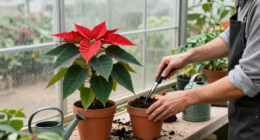
The first step is to identify which plants can tolerate outdoor winter conditions and which need winter protection. The gardener advises moving tender plants before frost is forecast, while the weather is still mild enough for them to adjust. Depending on their light needs, plants may go indoors or into a frost-free greenhouse, conservatory or garage. The report also recommends checking foliage, stems and potting mix for pests before bringing plants inside, and moving plants gradually where possible.
For containers that will remain outdoors, the advice is to group pots in a sheltered place, such as beside a protected wall. The grouping can limit exposure to cold winds and make pots easier to protect, but it does not make tender plants frost-proof. Containers should be grouped according to similar plant needs, with drainage holes kept clear. Pot feet or bricks can raise pots slightly to help excess water drain.
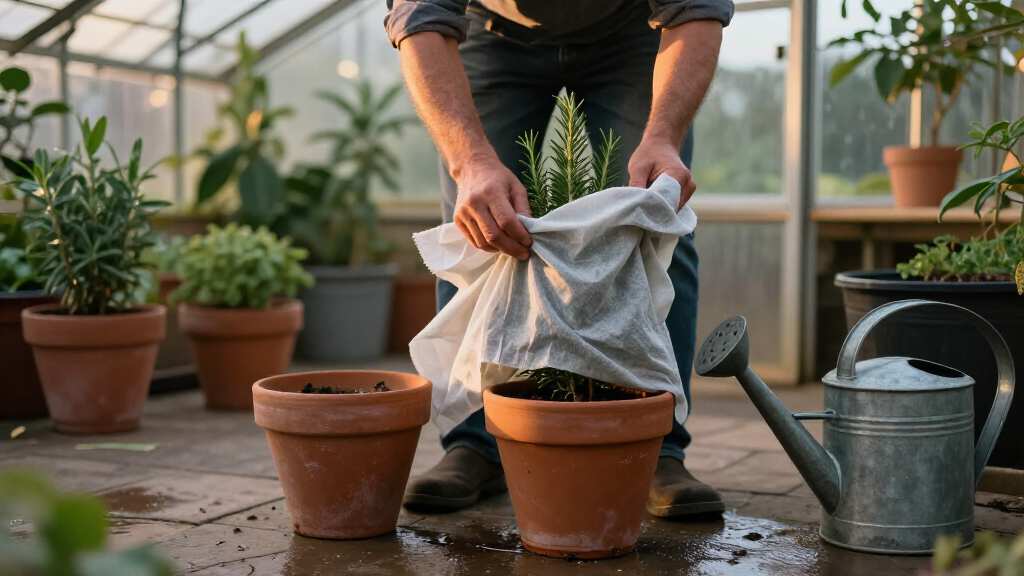
The third step is to protect plants from frost by insulating the container and root zone. The professional gardener suggests wrapping pots with bubble wrap or hessian and adding mulch to the compost surface. The report lists well-rotted garden compost, manure, bark chips, straw and shredded leaves as possible mulch materials. Keep mulch away from stems and crowns, and preserve drainage. Terracotta pots can be vulnerable to cracking when moisture freezes and expands, the report says.
Protecting Roots in Exposed Pots
Container plants face a different winter risk from plants in the ground: their roots are surrounded by a pot exposed to cold air, rather than insulated by the earth around them. That makes the container and its root zone part of the winter-preparation task, not just the visible foliage. Wind exposure and waterlogged compost can add stress during cold weather.
The recommendations offer practical measures gardeners can take before temperatures fall, but they are not a guarantee that plants will survive winter. Moving frost-sensitive plants remains the key step when they cannot tolerate freezing conditions. Grouping and insulation can help reduce exposure for suitable outdoor plants; they do not change a plant’s cold tolerance.
Products Worth Considering

Philips Hue Festavia Outdoor Globe String Lights, 8 Bulbs, 22 ft

Google Nest Learning Thermostat (3rd Gen), Stainless Steel, with 3 Temperature Sensors and elago Wall Plate

Bose Lifestyle Ultra Soundbar and Ultra Subwoofer Bundle
As an affiliate, we earn on qualifying purchases.
Why Potted Plants Need Preparation
The report frames its advice around the approach of the first frost and says winter conditions can be unpredictable. It refers to ongoing El Niño as a reason temperatures may be erratic, but provides no forecast details or climate data. The article’s practical focus is therefore on preparation rather than predicting a particular frost date.
Its recommendations come from the writer’s account of advice from her husband, described as a professional gardener. They are presented as general guidance, not as a plant-by-plant hardiness assessment. Local conditions and each plant’s needs matter: the report says the right approach depends on the plant, the container and how cold local winters become.
Limits of the Frost Advice
The source does not identify the specific plant varieties, local frost dates or temperature thresholds to use when deciding which plants can remain outside. It also does not provide measured results showing how much pot wrapping or mulch changes root temperatures or improves survival. The advice is general, and its effectiveness will depend on the plant and local winter conditions.
The report mentions El Niño and unpredictable winter temperatures but gives no supporting forecast, location or date. It is not clear from the supplied source when the article was published or whether its weather comments refer to a specific region. The guidance should not be read as a local forecast or a guarantee against frost damage.
Prepare Before Temperatures Drop
Gardeners can use the recommendations as a checklist before their local first frost: identify plants that need shelter, move them while conditions are still mild, and group suitable outdoor pots in a protected area. Then wrap exposed containers and apply mulch while keeping drainage open and mulch clear of stems and crowns.
Because the report does not give a universal frost date or temperature threshold, the next step is to check local forecasts and the cold tolerance of individual plants. Frost-sensitive plants still need a frost-free location; insulation and grouping are additional protections for containers that can remain outside.
Key Questions
What are the three steps recommended before the first frost?
The report recommends moving tender plants to suitable shelter, grouping outdoor pots in a protected spot and insulating exposed containers with wrapping and mulch.
Does wrapping a pot make a tender plant frost-proof?
No. The report says insulation can protect roots from temperature fluctuations but does not make a frost-sensitive plant frost-hardy. Plants unable to tolerate freezing temperatures should be moved somewhere sheltered or frost-free.
Where should outdoor pots be grouped?
Group suitable containers in a sheltered spot, such as beside a protected wall. Keep drainage holes clear, avoid waterlogged locations and raise pots slightly on pot feet or bricks if needed.
What can be used to insulate container plants?
The report suggests wrapping pots with bubble wrap or hessian and adding mulch such as bark chips, straw, shredded leaves, well-rotted garden compost or manure. Keep mulch away from plant stems and crowns.
When should tender container plants be moved?
The gardener quoted in the report recommends planning ahead and moving tender plants while the weather is still mild, rather than waiting until frost is forecast.
Source: rss