
TL;DR
Researchers at the University of Florida are studying whether pain self-management and ergonomic changes can help address back pain among horticulture workers. Early findings reported by the study lead point to improvements in pain and perceived task difficulty, but the source does not provide numerical results or details about the study’s size and duration.
University of Florida researchers are studying whether pain self-management and workplace ergonomic changes can address back pain among nursery and landscape workers, an issue that workers and industry stakeholders described as common enough to work through. The study’s lead researcher says preliminary findings show improvements in pain and work task difficulty, though detailed results have not been provided in the source report.
The study is being conducted by scientists with the Southeastern Coastal Center for Agricultural Health and Safety, based at UF, with faculty from the university’s College of Public Health and Health Professions and Department of Family, Youth and Community Sciences. Its focus is whether approaches workers can use to manage pain, alongside changes to work practices or ergonomics, can help address back pain in horticulture.
In the first phase, the research team consulted people connected to the nursery and landscape industry, including workers, supervisors and insurance consultants. Those stakeholders said workers often continue working despite pain. Interviews also pointed to seasonal and weather-related shifts in workload, which the researchers say make practical solutions important for both employees and employers.
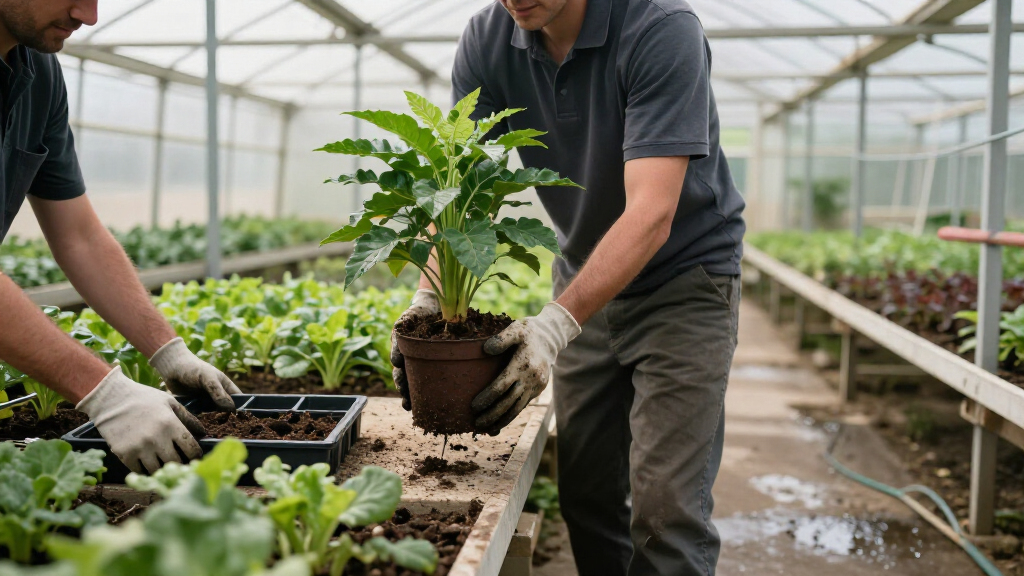
Workers described tasks involving lifting heavy plants, carrying materials and digging, as well as spending time bent over or in awkward positions. Participants said that continuing to work through pain may have longer-term costs, including injury, burnout, reduced productivity and difficulty retaining experienced staff. The report does not give a quantified estimate of how many workers are affected.
Lead researcher Kim Dunleavy, a clinical professor in UF’s Department of Physical Therapy, said the consequences extend beyond workers’ discomfort. “Not only is back pain debilitating for workers who rely on their bodies for income, reduced productivity, losing experienced workers, and overall costs for injury have major consequences for companies,” Dunleavy said. She also raised concerns about reliance on pain medication, including opioids, muscle relaxers and over-the-counter medicines, and their potential negative health side effects.
The Cost of Working Through Pain
Back pain can affect workers whose jobs depend on lifting, carrying and other physical tasks, while also affecting employers through lost productivity, injury costs and staff retention. Stakeholders consulted in the study described a pattern in which workers keep working despite discomfort. That account suggests pain may remain present on the job even when it does not immediately result in an absence.
The study also raises a workplace health question: whether workers can get useful support before pain becomes a more serious or lasting problem. Dunleavy said participants identified a need for greater awareness and more guidance on injury prevention, while formal training is often limited. The research is examining approaches intended to fit the conditions of horticulture work, where workloads can change with the season and weather.
Medication use is another concern raised by the study lead. Dunleavy said back pain can lead workers to rely on prescription medicines such as opioids or muscle relaxers, or on over-the-counter pain medicines. The report does not establish how often horticulture workers use these medications or measure related health effects. It does, however, identify medication risks as one reason the team is exploring pain-management options and prevention strategies.
Any workplace intervention would have to work in the conditions workers described and be acceptable to both employees and employers. Participants said prevention would not necessarily require major changes to workplace practices, but they called for solutions tailored to the industry. The study could help inform that discussion, although the report gives no detailed intervention protocol or evidence that a particular approach has been adopted across the industry.
Top picks for "university florida study"
As an affiliate, we earn on qualifying purchases.
How the UF Study Took Shape
The project began with a first phase of engagement with people in the nursery and landscape sector. The research team included industry stakeholders in its early work, asking about workers’ experiences and the circumstances that shape their tasks. The report says this phase surfaced a shared concern: many workers continue their jobs while experiencing back pain.
Those early conversations also highlighted variable workloads tied to seasons and weather. A strategy that suits one work period may not fit another, according to the issues raised in interviews. Workers described demanding physical tasks and said short-term decisions to work through pain can carry longer-term costs. The account presents those points as findings from interviews and stakeholder input, not as a measurement of every horticulture workplace.
The study is led by Kim Dunleavy, a clinical professor in UF’s Department of Physical Therapy. The research brings together faculty associated with public health, physical therapy and family, youth and community sciences through the Southeastern Coastal Center for Agricultural Health and Safety. Its stated purpose is to assess self-management of pain and ergonomic modifications, with attention to whether those approaches are practical in the industry.
According to Dunleavy, participants appreciated that their companies made it possible for them to take part. She said they also emphasized the value of having options to continue working while reducing pain. The source report directs readers to a fuller account of the study and findings on the UF/IFAS website, but the material provided here does not include a study publication or a complete research timeline.
““Not only is back pain debilitating for workers who rely on their bodies for income, reduced productivity, losing experienced workers, and overall costs for injury have major consequences for companies.””
— Kim Dunleavy, study lead and clinical professor in UF’s Department of Physical Therapy
Results Await Further Detail
Dunleavy described the preliminary findings as encouraging, citing improvements in pain and work task difficulty. The source report does not provide the size or scale of those changes, the number of participants, the study’s duration, or the methods used to assess improvement. It is therefore not possible from the available account to judge how large or lasting the reported changes may be.
The report also does not specify which self-management practices or ergonomic modifications were tested, whether all participants received the same approaches, or how outcomes were compared. It does not state whether the preliminary findings have been published in a peer-reviewed journal. The reported improvements are attributed to the study lead and should be read as preliminary.
It remains unclear how widely the findings may apply across different horticulture jobs, workplaces and seasons. The interviews covered workers and industry stakeholders, but the report does not describe the sample in enough detail to establish how representative it is. It also does not quantify the prevalence of back pain, medication use, injury or missed work in the industry.
Further Study Findings
The research team’s next steps and publication schedule are not specified in the source report. Additional findings would help readers understand which strategies were assessed, how workers used them and whether the reported improvements persisted over time. More detail on participant numbers, methods and outcome measures would also put the preliminary results in clearer perspective.
For now, the study lead says the early results point to the potential value of simple pain-management options, injury-prevention guidance and workplace awareness. The report says the findings highlight the need to discuss medication risks and to tailor strategies to horticulture work before pain becomes more serious or long term. Whether the researchers will recommend particular practices, or when full results will be available, remains unknown.
Key Questions
What is the University of Florida study examining?
It is examining whether self-management of pain and ergonomic modifications can help address back pain among workers in the horticulture industry, including nursery and landscape work.
What did the preliminary findings show?
Study lead Kim Dunleavy reported improvements in pain and work task difficulty. The source report does not give numerical results or explain how large or lasting the improvements were.
Why do workers in the report experience back strain?
Workers described lifting heavy plants, carrying materials, digging and working in bent or awkward positions. The report also says workloads vary with seasons and weather.
Has the study established how common back pain is in horticulture?
No prevalence estimate is included in the source report. Stakeholders in the study’s first phase said many workers continue working despite pain, but the report does not quantify how many workers are affected.
When will full results be available?
The source report does not give a timeline for full results or describe a publication schedule. It points readers to a fuller account on the UF/IFAS website.
Source: rss