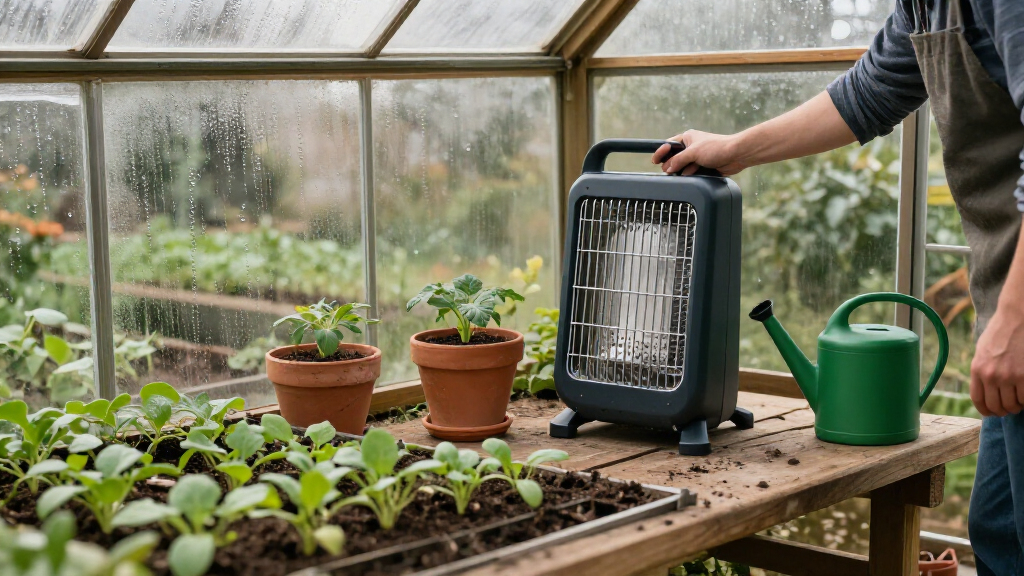

TL;DR
Portable greenhouse heaters raise or stabilize temperatures to help protect plants from cold, but the right choice depends on greenhouse heat loss, the minimum temperature your plants need, and available power or fuel. Reduce drafts first, match heater capacity to the space, use a thermostat and temperature sensor near your plants, and follow the appliance label, ventilation, clearance, and electrical instructions.
A heater can hum all night while the tomato seedlings beside it still shiver. In a greenhouse, warm air does not automatically mean warm plants: drafts, thin glazing, and cold corners can pull heat away faster than a small unit can replace it.

Get garden gear delivered free with Prime
- Fast, free delivery on millions of items
- Prime Video, Amazon Music and more included
- Member-only deals all year
Portable greenhouse heaters help protect plants from cold by raising or stabilizing temperatures. They are useful for overwintering tender plants, starting seedlings early, or extending your growing season, but the right choice depends on your structure and what you grow.
This guide explains the main heater types, how to size and place a heater, and how to cut heat loss before your energy bill climbs. You’ll also find practical safety steps, including when fuel-burning heaters need ventilation and why you should check the product label before use.
Match heater type to the job: whole-space warming, targeted radiant heat, or a warm root zone.
Size around greenhouse heat loss, expected outdoor lows, and plant needs, not floor area alone.
Seal suitable gaps and use covers before paying to replace heat that escapes.
Place an independent temperature sensor beside the plants, away from heater airflow and drafts.
Follow the product label, electrical rating, clearance rules, and ventilation instructions; check before leaving any heater on overnight.
Choose a heater type that fits your greenhouse and routine
Portable greenhouse heaters can warm the air, heat nearby surfaces, or protect a small root zone; the best type depends on the area you need to heat and the power or fuel you can use. An electric fan heater can warm greenhouse air quickly, while an electric radiant heater directs warmth toward plants and surfaces. A heat mat warms seed trays without heating the whole structure.
Think of greenhouse heating like lighting a room: a ceiling lamp spreads light broadly, while a reading lamp focuses it on one chair. If your main goal is to raise seedlings in one corner, a heat mat or carefully placed radiant heater may suit the job better than warming every pane of glass. If you overwinter several tender plants across the greenhouse, you may need a system that warms a larger area.
| Heater type | Where it helps | What to check |
|---|---|---|
| Electric fan | Quickly warming air across a suitable space | Damp-condition rating, electrical supply, and airflow |
| Electric radiant | Targeted warmth for plants or surfaces | Placement and cooler pockets beyond its reach |
| Propane or natural gas | Heating where electrical access is limited | Required ventilation, approved fuel, and safe storage |
| Paraffin or kerosene | Some small greenhouse setups | Fuel checks, maintenance, ventilation, and added moisture |
| Heat mat | Seed trays and roots | It does not keep the whole greenhouse above freezing |
For example, if you sow peppers on a single bench in early spring, a propagation heater can warm the trays without heating empty floor space. Each heater has limits, though, and the next step is working out how much warmth your greenhouse loses.
Products Worth Considering

Google Nest Thermostat E Smart Thermostat with Temperature Sensor Bundle – White

Bose TV Speaker (2nd Gen) Compact Soundbar with Bluetooth, HDMI-ARC, and Remote

Sonos Beam Gen 2 Dolby Atmos Soundbar, Black
As an affiliate, we earn on qualifying purchases.
Size the heater around heat loss, not just floor area
Choose heater capacity based on your greenhouse’s volume, glazing, air leaks, insulation, local coldest nights, and the minimum temperature your plants need. Floor area alone does not capture the heat escaping through a tall roof, loose door, or thin panes. Manufacturer sizing charts offer a starting point, but check the conditions behind their recommendations.
Take a small, single-glazed greenhouse with a loose sliding door. Even a heater that seems large for its floor space may struggle when a cold wind pushes air through the gap overnight. On a milder night, that same heater might keep a compact, sheltered structure comfortably above the temperature a particular plant needs.
Before buying more capacity, look for places where heat leaks out. Seal suitable gaps, keep the door closed, insulate appropriate walls, and use internal covers or thermal screens where they suit your setup. These measures can help protect plants by slowing heat loss, though they do not replace a heater when your plants need temperatures above what the structure can hold.
Use a minimum–maximum thermometer or independent sensor to see what really happens overnight. Place it near the plants you’re protecting, away from direct heater airflow and cold drafts. If a thermometer beside your seedlings shows a lower reading than the one at the door, that difference tells you where the next adjustment should happen.
Keep the heat where your plants need it
To heat efficiently, first reduce heat loss, then warm only the plants or area that needs protection. A thermostat can switch a heater on and off as temperatures change, but it cannot compensate for a drafty structure or a unit that lacks capacity. Sensor placement matters: a sensor sitting in the heater’s hot airflow can report a comfortable temperature while the far bench stays cold.
Try this sequence before the next cold night:
- Find your plants’ minimum temperature. Check reliable care guidance for each type and growth stage; don’t assume every greenhouse plant needs tropical warmth.
- Check the greenhouse. Close doors, seal suitable gaps, and decide whether a cover or thermal screen can reduce heat loss.
- Place the heater as directed. Keep the clearances in its instructions, with space from leaves, plastic, water, and other combustibles.
- Position the sensor near the plants. Keep it away from the heater’s direct airflow and obvious cold drafts.
- Check readings on a cold night. Use the minimum reading to see whether the setup held the temperature you need.
For instance, if your sensor sits above a fan heater and the seedlings on the opposite bench still feel chilled in the morning, move the sensor to the crop area before deciding the whole greenhouse needs a bigger heater. The reading should reflect the plants’ conditions, not just the heater’s surroundings.
Where you only need to protect trays or a few pots, targeted heating can use less energy than warming the full greenhouse. That choice depends on the plants, the layout, and how evenly you can keep the protected area warm.
Follow the label to reduce electrical, fire, and fuel risks
A greenhouse heater is safe to use only when its instructions, rating, and setup match the damp, plant-filled space. Greenhouses bring water, humidity, leaves, plastic, and electrical equipment together. Check that an electric heater is suitable for the conditions, use properly rated electrical equipment, and follow the manufacturer’s installation and clearance requirements.
Keep the unit clear of watering splash, foliage, seed packets, plastic coverings, and anything else that could touch a hot surface or airflow. Avoid improvised extension-cord setups. For example, don’t run a household cord through a puddled doorway because the only outlet is outside; use equipment and installation methods appropriate to the heater and site.
Fuel-burning heaters, including propane, natural-gas, paraffin, and kerosene models, require the ventilation specified by the manufacturer. Combustion can produce carbon monoxide and other products, consume oxygen, and add water vapor. Extra moisture can encourage condensation, and damp leaves can make disease more likely.
Use only the fuel and appliance approved for your setting. Follow the label and operating instructions, including ventilation and unattended-use guidance. Keep fuel stored safely, and use protective equipment if the product label calls for it during handling or maintenance.
A heater described as “portable” may be movable within a greenhouse without being suitable for outdoor exposure. Check the product rating and instructions before placing it where rain or splashing could reach it. Also check whether the heater’s instructions allow overnight operation; never assume a portable unit can run unattended.
Work out running costs before the first cold snap
Your heating cost depends on energy use, hours of operation, thermostat settings, and local electricity or fuel prices. A heater that runs continuously through a cold spell can cost far more than one that cycles on and off in a better-insulated space. A thermostat can reduce unnecessary heating, but it does not make an undersized heater powerful enough to overcome major heat loss.
Picture two growers with similar small greenhouses. One seals a loose door and heats the whole structure to a temperature well above the needs of their overwintering plants; the other uses a thermostat and protects only the plants that need extra warmth. Their bills can differ because they’re heating different areas to different temperatures for different lengths of time.
Before relying on a setup, check the heater’s power or fuel consumption and compare it with local prices. Think about how many hours it may run on your coldest nights, then watch actual runtime and temperature readings once it’s operating. Product specifications and energy prices vary by location, so an advertised efficiency claim alone cannot tell you your cost.
Current heating approaches also include digital thermostats and remote sensors, targeted warming for benches or root zones, and pairing heaters with thermal screens or renewable electricity. These are broad trends, not a guarantee that a particular model will save money. For example, a remote sensor may help you spot a temperature drop, but unreliable connectivity or poor sensor placement can make its readings less useful than a simple thermometer beside the plants.
Use a night check to catch cold spots before plants suffer
A frost-free reading at the heater does not prove that every plant is protected. Temperature varies with drafts, distance, bench height, and how heat moves through the structure. Check conditions where your most cold-sensitive plants actually sit, especially on a clear, cold night.
Imagine you’ve moved potted citrus to the greenhouse for winter. The thermometer beside the heater reads above freezing at bedtime, but a second sensor near the far wall records a lower minimum by dawn. The difference points to a cold pocket; shifting the sensor, improving the cover, or adjusting heater placement may address it before you decide to buy a bigger unit.
Use a minimum–maximum thermometer or independent sensor and note both the overnight low and the heater’s behavior. If a unit runs for long periods without keeping the plant area at its required minimum, check for leaks, poor circulation, or a mismatch between capacity and heat loss. If the reading holds comfortably, you may be able to lower the thermostat toward the plants’ actual needs.
Temperature goals vary by plant species and growth stage, so there is no single greenhouse setting for every crop. A seedling, a dormant plant, and a tender tropical specimen may have different needs. Keep notes through a cold spell: a simple record of outdoor lows, greenhouse readings, and heater runtime can make next winter’s setup easier to judge.
Frequently Asked Questions
What size greenhouse heater do I need?
It depends on greenhouse volume, glazing, insulation, drafts, outside lows, and your plants’ temperature needs. Use the manufacturer’s sizing guidance as a starting point, then monitor temperatures near the plants on a cold night. A leaky small greenhouse can need more heat than its floor area suggests.
Can a portable heater keep a greenhouse frost-free overnight?
It can if the heater has enough capacity for the greenhouse’s heat loss and its controls maintain the needed temperature. Results depend on outdoor conditions and heater placement, so check an independent thermometer near the plants. Frost protection for one bench does not prove the whole greenhouse stayed above freezing.
Is an electric or gas greenhouse heater better?
Electric heaters avoid on-site fuel combustion but need a suitable electrical supply and equipment rated for the conditions. Gas heaters can work where power access is limited, but they require approved fuel, safe storage, and the ventilation specified by the manufacturer. Your structure and site determine which tradeoffs fit.
Can I leave a greenhouse heater on overnight?
Follow the appliance instructions and leave it on overnight only if its manufacturer permits that use. Use a reliable thermostat, keep the required clearances, and check that the power or fuel setup suits the site. Do not assume a portable label means unattended operation is allowed.
Do fuel-burning greenhouse heaters need ventilation?
Yes. Follow the heater’s ventilation requirements. Combustion can produce carbon monoxide and other products, use oxygen, and add moisture that encourages condensation. Use only the appliance and fuel approved for the intended setting.
How can I heat a greenhouse more cheaply?
Reduce heat loss with suitable gap sealing, insulation, thermal screens, or internal covers, then heat only the area or plants that need protection. Use a thermostat and compare likely operating time against local energy prices. A thermostat can cut unnecessary runtime, but it cannot make an undersized heater overcome major heat loss.
Conclusion
Choose the smallest safe setup that keeps the plants you care about above their required minimum. Reduce drafts, target warmth where it helps, and use a sensor near the crop to see whether your plan works on a genuinely cold night.
A greenhouse should smell of damp soil and green leaves, not leave you guessing at dawn. Let the temperature reading beside your plants—not the heater’s promise—guide your next move.