
TL;DR
Planet Natural’s garden-tool guide outlines a 30-minute first pass to sort equipment, clean sound tools and identify repairs before storage. It stresses that the session is a limit for initial sorting, not a promise that tools will be fully repaired, dry or disinfected by the end.
Planet Natural has published a 30-minute garden-tool clean-up guide that asks gardeners to sort equipment by its next safe action: clean and store it, repair it, or take it out of service for assessment. The guide says the time limit is for a first pass, not a guarantee that tools will be dry, repaired or fully disinfected when the session ends.

Get garden gear delivered free with Prime
- Fast, free delivery on millions of items
- Prime Video, Amazon Music and more included
- Member-only deals all year
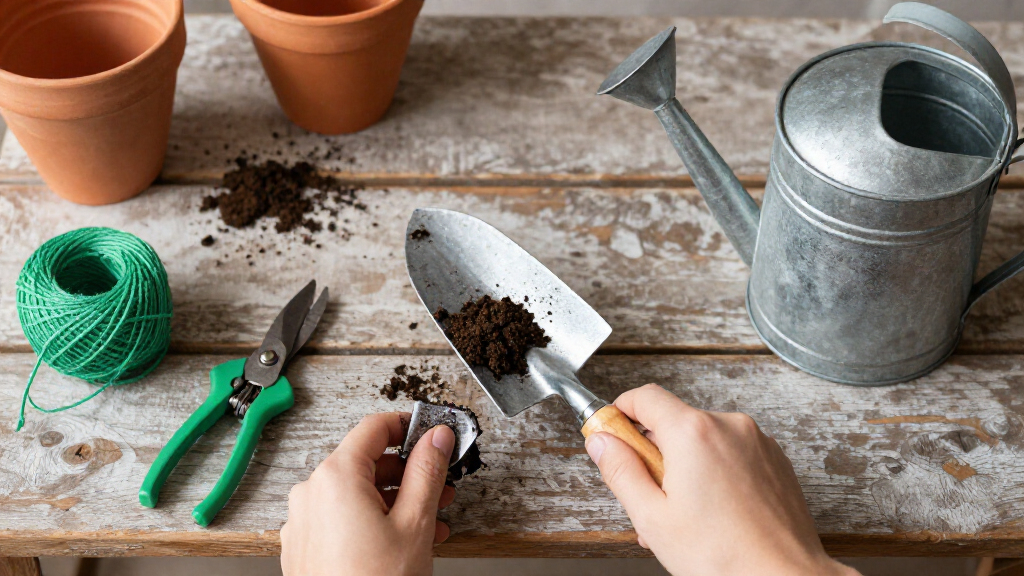
The guide recommends starting at a stable, well-lit work surface with a stiff brush, cloths, mild detergent, water and the maintenance instructions for cutting tools. It advises protecting hands from sharp edges, wearing eye protection when brushing rust or debris, and keeping children and pets out of the work area. Tools with ordinary soil or removable residue can go into the cleaning group; dull blades, worn springs and loose fasteners need repair or sharpening. Cracked handles, split sockets, badly corroded metal, missing safety catches and uncertain bent parts should be marked for assessment or replacement.
For a spade, the report says to remove soil from both the blade and the socket, wash as needed, and dry the tool thoroughly before applying a light coating of suitable tool oil according to the maker’s directions. Light surface rust may be removed carefully, but deep pitting or a weakened blade needs assessment; cleaning cannot restore missing metal. Sharpening is a separate task, and the correct method depends on the tool.
For pruners, clean debris and sap from the cutting head and pivot, then inspect the latch, spring, blade alignment and movement. The report advises following the manufacturer’s service instructions before taking parts apart. A failed latch needs a safe temporary cover and repair, rather than loose storage. A fork should be checked unloaded for cracks, rot, loose hardware and damaged tines. The guide cautions against testing a questionable handle by levering or digging with it.
Safer Tools Before Storage
The sorting step is a safety measure as well as maintenance: a loose handle or failed latch can turn a stored tool into a hazard if someone assumes it is ready to use. Marking a questionable item makes its condition visible to other people who share the shed or garden. It also separates repairs that may be manageable from damage that needs proper assessment or replacement.
The guide’s time limit helps make the work approachable, but it does not compress tasks that require drying, parts or treatment time. Keeping cleaning, repair and disinfection distinct reduces the chance that a tool is put away with hidden damage or mistaken for ready-to-use equipment.
Products Worth Considering

Shark AV2501S AI Ultra Robot Vacuum with Matrix Clean and Self-Empty Base

Dyson Ball Animal 2 Total Clean Upright Vacuum Cleaner, Blue

Philips Hue Bridge Pro Starter Kit with 4 A19 E26 Color Smart Bulbs
As an affiliate, we earn on qualifying purchases.
Cleaning Is Not Disinfection
The report distinguishes removing dirt and sap from disinfecting a tool to address plant-pathogen risks. Visible debris should be removed before disinfection, and the appropriate product and method can depend on the disease and tool materials. The report points readers to University of Minnesota tool-disinfection guidance and recommends checking local nursery or manufacturer advice.
For any product, its label supplies the directions for compatible surfaces, application, required wet contact time, rinsing, protective equipment, ventilation and disposal. A quick wipe may not meet a product’s specified contact time. The guide warns against mixing disinfectants with cleaners or other chemicals; alcohol products are flammable, and bleach can corrode cutting edges. It does not prescribe an improvised chemical recipe.
Repairs Depend on Inspection
The supplied report does not identify a publication date or provide results from a test of the 30-minute routine. It also does not specify one repair method for every tool: manufacturer instructions and the condition of each item determine whether a part can be serviced safely. The guide says gardeners should set unfamiliar sharpening or uncertain repairs aside for later assessment rather than rely on a quick fix.
Disinfection requirements also remain product- and disease-specific. The report does not name a single disinfectant or treatment time for all tools; readers need to check the actual product label and relevant plant-health guidance.
Complete the Repairs Later
After the first pass, gardeners can finish drying cleaned tools, apply suitable protection to metal, and address repairable parts using the maker’s instructions. Tools marked unsafe should remain out of service until repaired or assessed. If disinfection is needed, the task continues for the full label-directed contact time and any required rinsing and drying.
The report frames the session as a way to leave a specific repair list, not to finish every job in one sitting. Its next steps are practical: store sound, clean tools safely; arrange parts or service for repairable equipment; and keep items with structural damage or uncertain condition out of circulation.
Key Questions
Does the 30-minute session mean every tool will be ready for storage?
No. Planet Natural describes it as a first-pass time limit. Tools may still need to dry, be repaired or complete a product’s required disinfection treatment.
Which garden tools should be taken out of service?
The report says to mark items such as tools with cracked handles, split sockets, badly corroded metal, missing safety catches or uncertain bent parts for assessment or replacement.
Does cleaning a tool disinfect it?
No. Cleaning removes visible soil and sap; disinfection is a separate step for addressing plant-pathogen risks. Follow disease-specific guidance and the product label.
Can I use the same cleaner or chemical on every tool?
The guide does not recommend assuming products or tools are interchangeable. Check the product label and manufacturer instructions, do not mix chemicals, and account for material compatibility, ventilation and protective equipment.
Source: planetnatural.com