
TL;DR
Real estate professionals say neglected maintenance—such as dead shrubs, overgrown weeds, broken fences and abandoned equipment—can make a yard look uncared for. Opinions about ornaments, artificial turf and other design choices vary, and the source offers no data quantifying their effect on property values.
A home-and-garden report has catalogued yard features that can weaken curb appeal, with real estate professionals pointing to overgrown weeds, dead plants, clutter, damaged fences and abandoned equipment as common signs of neglect. The report also stresses that reactions to garden ornaments, artificial turf and other style choices vary, so an unconventional yard is not automatically an eyesore.

Get garden gear delivered free with Prime
- Fast, free delivery on millions of items
- Prime Video, Amazon Music and more included
- Member-only deals all year
The distinction the report draws is between visible disrepair and differences in taste. Erik Leland, identified as a real estate broker, said a simple yard can look good if it is maintained. He said a meadow-style yard or pollinator garden can work when it has defined paths and maintained edges, rather than appearing unmanaged.
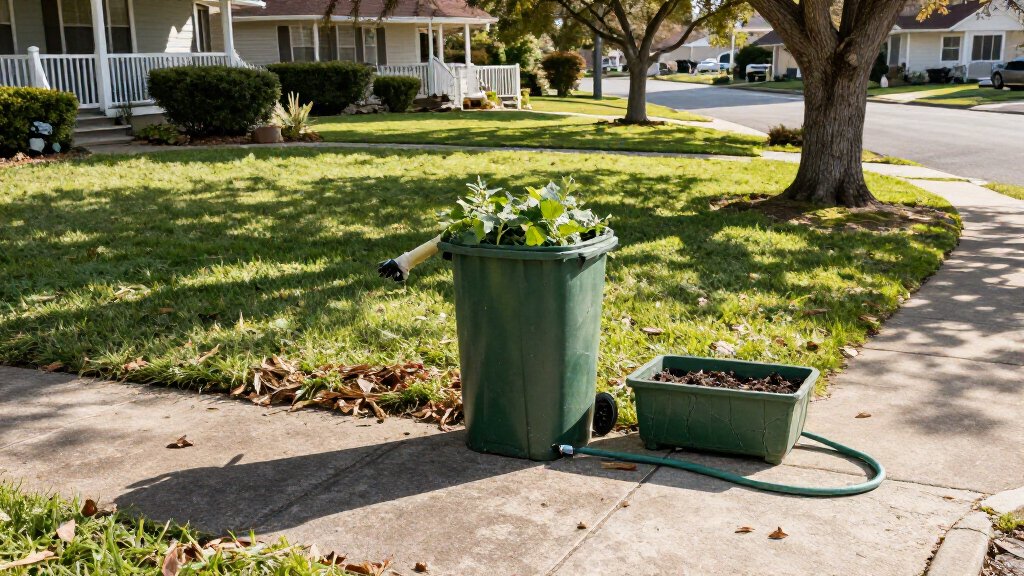
Dead shrubs and trees, piles of unused furniture or lumber, broken lawn equipment, and leaning or rotting fences are among the maintenance issues cited. Real estate agent Ben Mizes said dead shrubs can create a broader impression that a property is not being cared for. Realtor Dell Jeanty said clutter around a home can make neighbors feel uneasy and that an organized yard can make a street seem cleaner and more welcoming.
The article also lists garbage bins left out between collection days, neglected sheds or play structures, and nonworking vehicles or campers as potential problems. Leland suggested removing an outdoor structure that is not worth repairing. For fences, real estate expert Cameron Walker said a fence need not be new to look presentable: painting or repairs may improve its appearance.
Yard Eyesores That Ruin Your Curb Appeal
Real estate professionals say visible neglect can make a home look uncared for. A maintained yard can still reflect personal style.
Signs of neglect
These visible maintenance problems can weaken a yard’s first impression.
Dead or overgrown
Dead shrubs, trees and overgrown weeds can make upkeep seem neglected.
Unused items
Furniture, lumber and broken equipment can leave the yard looking disorganized.
Damaged features
Leaning fences and neglected sheds or play structures may signal disrepair.
Abandoned outdoors
Nonworking vehicles or campers can detract from the home and nearby properties.
Upkeep before redesign
Small maintenance steps can make a yard feel more orderly without changing its style.
Remove clutter or store bulky items out of sight where feasible.
Address dead plants and keep paths and edges defined.
Fix damaged fences or remove outdoor structures that are not worth repairing.
Maintenance vs. personal taste
A yard need not have a uniform lawn to look cared for.
- Keep a pollinator garden’s paths and edges defined.
- Repair or paint a fence to improve its appearance.
- Group decorations to keep the yard organized.
- People disagree about ornaments and inflatables.
- Some dislike artificial turf even when well installed.
- No single yard style suits everyone.
What the report can tell you
The advice comes from real estate professionals and describes perceptions, not measured market effects.
| Question | What the report says |
|---|---|
| Does it quantify home-value effects? | No price data or estimates are provided. |
| Are these local rules? | No. Local and HOA requirements can vary. |
Maintenance Shapes First Impressions
A yard is among the first parts of a home visitors and passersby see, so visible upkeep can affect how cared-for a property appears. The professionals quoted in the report argue that small maintenance tasks—clearing clutter, trimming plants or fixing a damaged fence—can make a property feel more orderly without requiring a full redesign.
The article says abandoned vehicles and equipment can detract from both a home’s appearance and that of nearby properties. It also suggests that an organized yard can improve the look of a street. These are expert observations, not quantified findings: the source supplies no measured estimates of effects on sale prices or property values.
For homeowners, the practical point is that curb appeal does not require a uniform lawn or expensive landscaping. A deliberate, maintained design may serve the same purpose. That leaves room for pollinator gardens and personal decorations while making clear that repair and basic organization are different from questions of taste.
Products Worth Considering

Levoit Core 400S-P Smart Air Purifier for Large Rooms

Bose Smart Ultra Dolby Atmos Soundbar

Dyson Cyclone V10 Origin Cordless Vacuum
As an affiliate, we earn on qualifying purchases.
Where Upkeep Ends and Taste Begins
The report frames curb appeal as subjective: a neighbor may enjoy garden gnomes or plastic flamingos while someone else finds them distracting. Its examples include lawn statues, novelty decorations, inflatables and artificial turf. Even when these features are maintained, people may disagree about whether they look attractive.
Several professionals recommend moderation or placement that keeps the yard visually organized. Walker said decorations can add personality but may look cluttered when there are too many. Mizes said a collection of ornaments may be better appreciated when grouped in a defined area. For artificial turf, Mizes pointed to uneven seams and poor installation as problems, while acknowledging that some people dislike the material regardless of workmanship.
The source does not set universal rules for yard design or report a new regulation, market study or local enforcement action. It is practical advice assembled from real estate professionals, with examples ranging from routine maintenance to highly personal decorating choices.
“A yard that is basic is not a problem as long as it is well kept.”
— Erik Leland, real estate broker
No Universal Curb-Appeal Standard
What counts as an eyesore remains a matter of opinion for features such as ornaments, artificial turf and holiday inflatables. The report does not provide survey results showing how common these views are, nor does it quantify the effect of any listed feature on home prices or sale times.
It also gives no location-specific rules for yard maintenance, vehicle storage, fences or decorations. Homeowners should not assume the examples describe local code or homeowners association requirements; those rules can vary. The source offers general professional opinions, not an assessment of any particular property.
Practical Steps for Homeowners
The advice in the report points first to visible maintenance: remove or repair broken items, address dead plants, keep paths and edges defined, and attend to damaged fences. Homeowners with usable but bulky possessions can organize them or store them out of sight where feasible. For structures beyond repair, Leland recommends removal rather than leaving a derelict shed or play structure in place.
Decoration choices are less straightforward. The report’s experts recommend limiting competing focal points and grouping ornaments, but they do not argue that every yard must follow the same aesthetic. Homeowners can weigh personal preference against the effect of clutter and check any applicable local or HOA requirements. The article provides no timeline for a further study or policy change; its guidance is general rather than tied to a developing event.
Key Questions
Which yard problems are described as signs of neglect?
The report cites overgrown weeds, dead shrubs or trees, clutter, damaged fences, neglected structures, and abandoned vehicles or equipment as features that can make a property look uncared for.
Does a yard need a closely mowed lawn to look maintained?
No. Broker Erik Leland said a meadow-style yard or pollinator garden can look intentional when paths are defined and edges are maintained.
Are garden ornaments always considered eyesores?
No. The report describes decorations as a matter of personal taste. Its real estate professionals say too many competing ornaments can create a cluttered appearance, while a smaller or grouped collection may be easier to appreciate.
Does the report show that these features reduce home values?
No. It says abandoned vehicles and other neglected features can hurt curb appeal and may affect perceptions of a property, but it provides no price data or quantified property-value estimates.
Source: familyhandyman.com