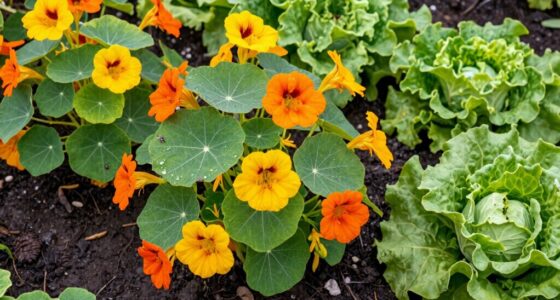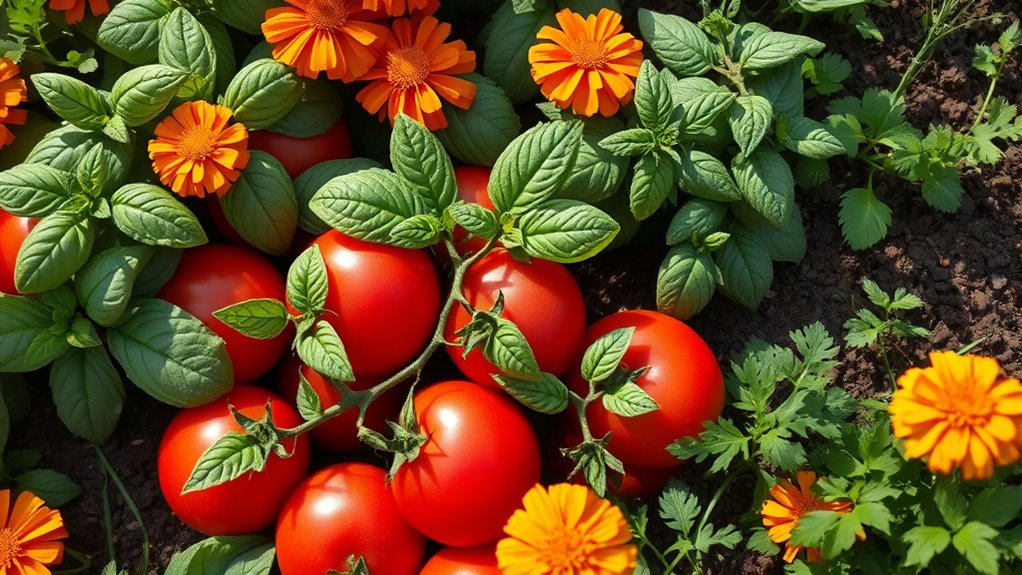

Plantting companion plants like marigolds, basil, and borage around your tomatoes helps repel pests, improve soil, and provide shade. Marigolds ward off nematodes and beetles, while borage attracts pests away and enriches the soil with nutrients. Basil can boost tomato flavor and health. These plants create a balanced, pest-resistant environment that promotes healthier, more productive tomato growth. Keep exploring to discover even more effective pairings for a thriving garden.

Get garden gear delivered free with Prime
- Fast, free delivery on millions of items
- Prime Video, Amazon Music and more included
- Member-only deals all year
Key Takeaways
- Marigolds repel nematodes and beetles, protecting tomato plants from pests.
- Borage attracts beneficial insects and enriches soil with essential nutrients.
- Basil improves tomato flavor and helps deter pests like aphids and whiteflies.
- Leguminous plants such as beans and peas fix nitrogen, naturally fertilizing tomatoes.
- Sunflowers and corn provide shade, reducing heat stress and protecting tomatoes from sunscald.

Planting companion plants alongside your tomatoes can boost their health and yield by naturally repelling pests, improving soil quality, and providing shade. When you choose the right companions, you create a balanced garden ecosystem that minimizes the need for chemical interventions. One of the key benefits is pest control; certain plants emit odors or compounds that deter common tomato pests like aphids, whiteflies, and tomato hornworms. Marigolds, for example, release substances that repel nematodes and beetles, helping keep your tomatoes safe from infestations. Borage also acts as a trap crop for pests, drawing them away from your main crop while enriching the soil with nutrients like potassium and calcium, which are essential for tomato growth.
Soil enrichment is another indispensable aspect when selecting companion plants. Some plants actively improve soil quality, making it more fertile and better suited for tomatoes. Leguminous plants like beans and peas fix nitrogen from the atmosphere, transferring it into the soil through their roots, which feeds your tomatoes naturally. This reduces the need for synthetic fertilizers and promotes healthier, more vigorous plants. Additionally, herbs like basil and cilantro can enhance soil microbial activity, creating a more fertile environment for root development. These herbs not only contribute to pest control but also boost the overall soil health, leading to stronger, more productive tomato plants.
Providing shade is an often-overlooked benefit of certain companion plants. Taller plants like corn or sunflowers can cast partial shade over your tomatoes during the hottest parts of the day, reducing heat stress and water loss. This is especially beneficial in warmer climates or during heatwaves. By strategically planting these taller companions nearby, you help your tomatoes maintain better moisture levels and prevent sunscald on fruits, resulting in higher quality and quantity of harvest.
Marigold plants for pest control
As an affiliate, we earn on qualifying purchases.
As an affiliate, we earn on qualifying purchases.
Frequently Asked Questions
Can Companion Planting Help Prevent Tomato Pests Naturally?
Yes, companion planting can help prevent tomato pests naturally. By using pest deterrent strategies like planting basil or marigolds nearby, you create a natural barrier that confuses or repels pests. This organic pest control method reduces your reliance on chemicals and promotes a healthy garden. You’ll find that integrating these plants into your tomato bed encourages a balanced ecosystem, helping you maintain pest-free tomatoes more effectively.
Which Herbs Are Best to Plant Alongside Tomatoes?
You should consider planting herbs like basil, oregano, and thyme alongside your tomatoes. These herb combinations offer excellent companion planting benefits, helping to repel pests and improve flavor. Basil, in particular, is known to enhance tomato growth and deter insects. By choosing the right herbs, you naturally support your tomato plants’ health while enjoying fresh, aromatic herbs in your garden.
Are There Any Plants That Should Be Avoided With Tomatoes?
You should avoid planting certain plants with tomatoes due to planting restrictions that could hinder growth or cause issues. For example, brassicas like cabbage and broccoli can attract pests that harm tomatoes, reducing mutual benefits. Also, avoid planting fennel nearby, as it tends to inhibit tomato growth. By understanding these restrictions, you guarantee your plants thrive together and maximize mutual benefits in your garden.
How Do Companion Plants Improve Tomato Flavor?
Imagine opening the secret to richer tomato flavor—companion plants do just that. They improve tomato flavor through natural *tomato flavor enhancement* by providing essential *companion plant nutrients* like nitrogen and trace minerals. These plants also repel pests and attract beneficial insects, creating a healthier environment. By choosing the right companions, you boost your tomatoes’ taste naturally, making your garden produce more vibrant, flavorful fruits without extra chemicals or effort.
What Is the Ideal Planting Distance for Companions?
When considering the ideal planting distance for companions, you should follow spacing guidelines that promote healthy growth and good airflow. Typically, you’ll want to space companion plants about 12 to 24 inches apart, depending on their size and growth habits. Proper planting density helps prevent disease, encourages strong roots, and maximizes your garden space, ensuring your tomatoes and their companions thrive together without competing for nutrients.
Conclusion
By choosing the right companion plants, you enhance your tomato garden’s health and flavor. While some plants like basil bring out the best in tomatoes, others like weeds threaten to overshadow them. You’re balancing the vibrant, fragrant companions against the persistent weeds and pests. With thoughtful pairing, your garden becomes a harmonious symphony of growth and flavor. It’s a delicate dance—one that rewards you with a bountiful, thriving tomato harvest.
Fall yard work Picks
leaf blowers
As an affiliate, we earn on qualifying purchases.