To use nasturtiums as a trap crop, plant them near your vulnerable main crops in well-drained, sunny spots with good airflow. Choose pest-resistant or colorful varieties to attract pests like aphids, whiteflies, and flea beetles away from your main plants. Regularly monitor the nasturtiums for pest activity and manually remove pests or use organic remedies if needed. Incorporate strategic placement and maintenance to maximize their effectiveness, and you’ll discover more ways to control pests naturally.

Get garden gear delivered free — and shop member deals
- Fast, free delivery on millions of items
- Access to Prime Big Deal Days deals on October 6–7
- Prime Video, Amazon Music and more included
Key Takeaways
- Plant nasturtiums near vulnerable crops to attract pests away from main plants.
- Choose brightly colored or fragrant varieties to maximize pest attraction.
- Space nasturtiums 10-12 inches apart for optimal pest diversion.
- Regularly monitor and remove pests from nasturtiums to prevent transfer to main crops.
- Rotate trap crop locations annually to prevent pest adaptation and buildup.
nasturtium pest-resistant varieties
As an affiliate, we earn on qualifying purchases.
As an affiliate, we earn on qualifying purchases.
What Are Nasturtiums and How Do They Help With Pest Control?

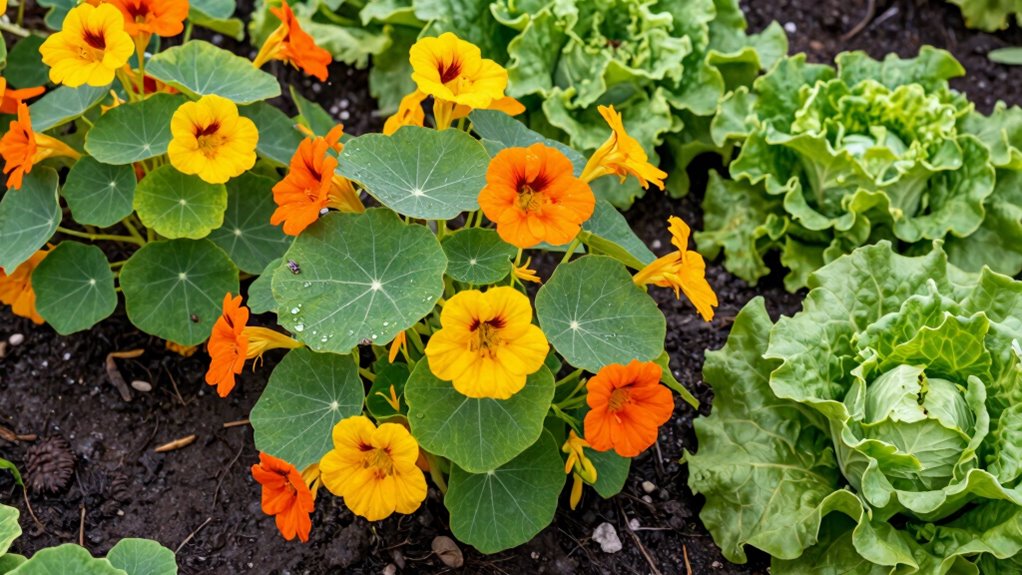
Have you ever wondered how certain plants can help protect your garden naturally? Nasturtiums are a perfect example. These vibrant flowers are not just beautiful; they serve as effective companion planting tools for pest prevention. When you plant nasturtiums alongside vegetables like tomatoes, cucumbers, or cabbage, they attract pests away from your main crops. Aphids, whiteflies, and flea beetles prefer nasturtiums, so pests gather on them instead. This keeps your vegetables safe and reduces the need for chemical treatments. Plus, nasturtiums grow quickly and are easy to maintain. Using them as a trap crop leverages natural pest behavior, making pest prevention more manageable and eco-friendly. It’s a simple, effective way to support a healthy, thriving garden. Additionally, understanding plant-based pest control techniques can help you develop a more sustainable gardening practice. Incorporating integrated pest management strategies can further enhance your efforts and reduce reliance on chemical solutions. Recognizing the benefits of trap cropping can help you create a more resilient garden ecosystem. Incorporating natural pest repellents can also boost your integrated approach.
Choosing the Best Nasturtium Varieties for Your Garden

Choosing the right nasturtium varieties can make a noticeable difference in your garden’s pest management and overall appearance. When selecting, look for pest-resistant varieties that thrive as trap crops, attracting pests away from your main plants. Consider these options:
Selecting pest-resistant nasturtium varieties enhances garden health and beauty while naturally managing pests.
- Compact varieties for small spaces
- Brightly colored types for visual appeal
- Fragrant varieties that enhance companion planting
- Fast-growing options to establish quickly
These varieties not only serve as effective trap crops but also complement your garden’s ecosystem. Pest resistant varieties can reduce the need for chemical interventions, making your garden more eco-friendly. Additionally, selecting proper planting techniques can further boost the effectiveness of your nasturtiums. Understanding which best varieties for pest control are available can help you optimize your planting strategy. Recognizing the importance of colorful, pest-attracting blooms can enhance pest diversion and improve your overall pest management approach. By choosing the right nasturtiums, you enhance both pest control and aesthetic value, creating a thriving, balanced garden environment. Proper plant selection is essential for maximizing the benefits of trap cropping in your garden.
How to Plant Nasturtiums for Maximum Pest Attraction

To attract pests effectively, pick a planting site that’s close to your main crops but still has good sunlight and drainage. Space your nasturtiums properly so they’re accessible to pests without crowding, and plant them at the right time when pests are active. This timing is crucial for effective pest attraction and maximizing your trap crop’s efficiency. Proper indoor air quality and humidity control can also help in maintaining a healthy garden environment, reducing the likelihood of unintended pest infestations. Incorporating emerging trends in pest management can also enhance your trap cropping strategy for better results. Additionally, understanding essential car repair tips can be useful if you need to maintain your garden tools or equipment used in pest control. Regular monitoring of your trap crops can provide valuable insights into pest behavior and help refine your sound therapy techniques for better pest control outcomes.
Choosing Optimal Planting Sites
Selecting the right location is essential for maximizing pest attraction when planting nasturtiums as a trap crop. You want a spot that’s easily accessible to pests but also supports effective companion planting. You can also consider pest-resistant varieties for durability and effectiveness. Choose an area near your vulnerable crops, but not so close that pests can easily jump to your main plants. Look for well-drained soil with plenty of sunlight, as nasturtiums thrive in these conditions. Use pest resistant varieties for durability, and consider planting in beds or borders where pests are likely to land. Keep the nasturtiums visible and attractive to pests, like aphids or beetles, to lure them away from your main crops. Proper placement boosts pest suppression and enhances your garden’s overall health. Incorporating smart yard care strategies, like monitoring pest activity with automated systems, can further improve your pest management approach. Additionally, understanding pest behavior can help you better position your trap crops for maximum effectiveness. To optimize your planting site, consider how pest movement patterns influence pest distribution across your garden. Recognizing pest migration habits can help you set up more successful trap crop strategies.
Proper Spacing and Timing
Proper spacing and timing are key to ensuring your nasturtiums effectively attract pests away from your main crops. Plant them with enough space—about 10 to 12 inches apart—to promote healthy growth and maximize pest attraction. Timing is essential; sow nasturtiums early in the season, ideally after the soil warms, to establish a robust trap crop before pests emerge. Use companion planting strategies by placing nasturtiums near vulnerable plants to lure pests away. Additionally, incorporate soil enrichment techniques, like organic compost, to boost plant health and flowering. Well-timed, properly spaced nasturtiums create a more effective pest diversion, improving your garden’s overall health and reducing damage to your main crops. Incorporating proper planting techniques can help monitor pest activity and optimize your pest management strategy.
Managing Nasturtiums to Keep Them Pest-Healthy
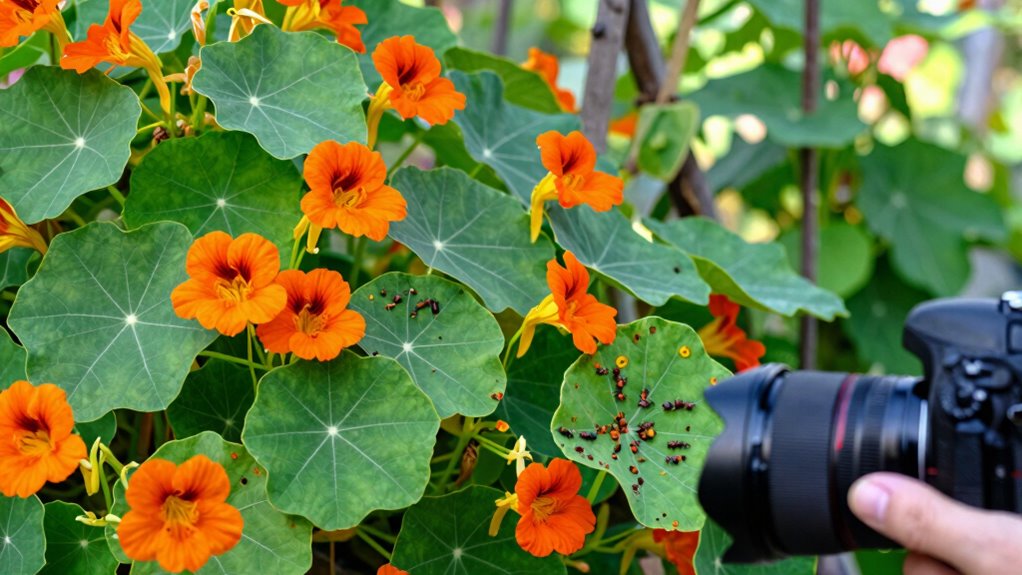
To keep your nasturtiums pest-healthy, you need to focus on proper watering techniques and soil conditions. Make sure you water consistently without overdoing it, and choose well-draining soil to prevent root rot. Regular pest monitoring helps you catch problems early and keep your plants thriving. Incorporating integrated pest management strategies can further enhance plant health and reduce pest issues. Additionally, understanding media literacy can help you identify trustworthy sources of gardening advice and avoid misinformation. Using eco-friendly garden gear like organic fertilizers and recycled materials can also support healthier plant growth and sustainability. Being aware of plant health maintenance practices, such as proper fertilization and pest control, can significantly improve your nasturtiums’ resilience against common pests and diseases.
Proper Watering Techniques
Ensuring your nasturtiums receive the right amount of water is essential for keeping them healthy and resistant to pests. Proper watering supports soil preparation and promotes vigorous growth, which benefits companion planting. Water deeply when the top inch of soil feels dry, avoiding overwatering that can lead to root rot. Consistent moisture encourages pest-resistant foliage and vibrant blooms. Keep these tips in mind:
- Water early in the day to reduce fungal issues
- Use mulch to retain soil moisture
- Avoid watering leaves to prevent disease
- Adjust frequency based on weather conditions
Maintaining proper watering habits helps nasturtiums thrive as a trap crop, attracting pests away from your main plants while staying healthy and pest-resistant.
Suitable Soil Conditions
Healthy soil is the foundation for thriving nasturtiums that effectively serve as a trap crop. To guarantee ideal growth, you should improve soil quality with appropriate soil amendments, such as compost or organic matter, to enhance drainage and nutrient availability. Nasturtiums prefer slightly acidic to neutral soil; thus, performing a pH adjustment might be necessary if your soil is too acidic or alkaline. Conduct a soil test to determine your pH level and make adjustments with lime or sulfur as needed. Well-prepared soil promotes healthy roots and robust plants, making them more attractive to pests and better at trapping them. Regularly maintaining suitable soil conditions helps keep nasturtiums pest-healthy and effective in your integrated pest management strategy.
Pest Monitoring Strategies
Monitoring pests on your nasturtiums is vital to maintaining their effectiveness as a trap crop. Regular inspections help you catch pest issues early and prevent infestations from spreading. Use visual checks to spot aphids, whiteflies, or caterpillars, and look for signs of damage like holes or discolored leaves. Incorporate companion planting and biodiversity enhancement by attracting beneficial insects that prey on pests. To keep nasturtiums healthy and pest-free, consider these strategies:
- Check plants weekly for pests and damage
- Introduce beneficial insects like ladybugs
- Rotate trap crops to prevent pest buildup
- Use organic sprays if needed, avoiding chemicals that harm beneficials
These pest monitoring strategies ensure your nasturtiums remain vibrant and effective as a natural pest management tool.
How to Monitor and Respond to Pests on Nasturtiums
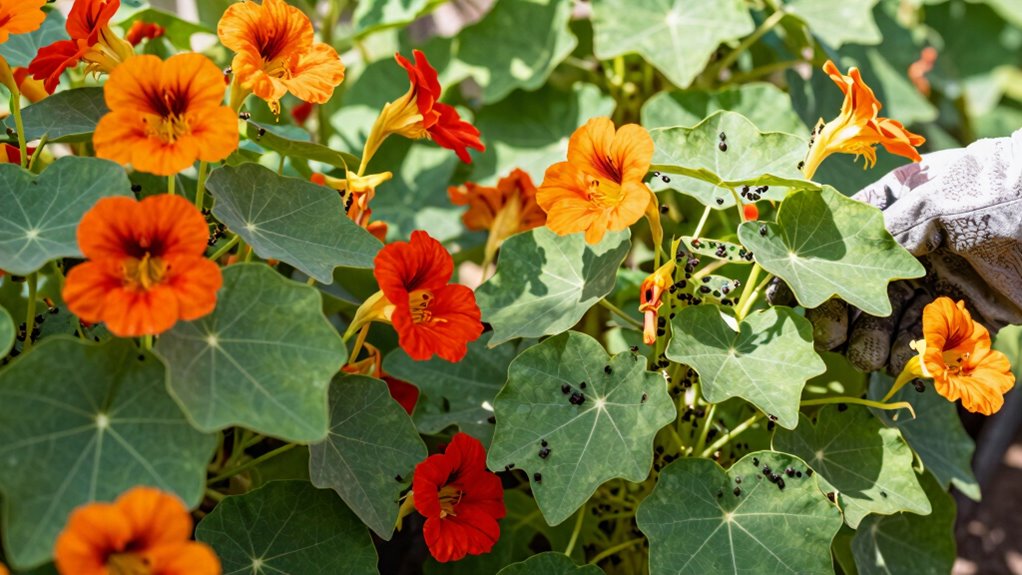
To effectively protect your nasturtiums, you need to keep a close eye on them for signs of pests. Regularly inspect leaves for holes, discoloration, or sticky residue, which can indicate aphids or whiteflies. Use companion planting techniques—planting herbs like basil nearby can deter pests naturally. Organic gardening methods are essential; avoid chemical sprays and opt for homemade solutions like neem oil or insecticidal soap if you notice pests. Maintain your garden tidy to reduce hiding spots, and remove any heavily infested leaves promptly. Monitoring frequently allows you to respond quickly, preventing pests from spreading. By staying vigilant and employing organic gardening practices, you help ensure your nasturtiums remain healthy and effective as a trap crop.
Safely Removing Pests From Nasturtiums
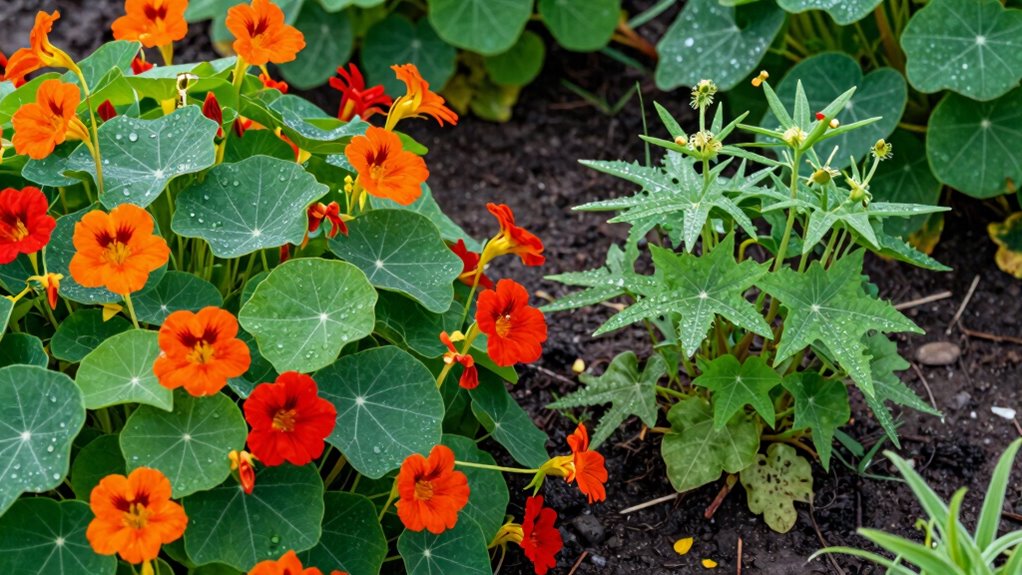
You can keep pests in check by manually removing them when you spot them on your nasturtiums. Using natural repellents like neem oil or insecticidal soap can also help prevent infestations. Make sure to regularly monitor your plants to catch pests early and keep your garden healthy.
Manual Pest Removal Techniques
Manual pest removal is a straightforward and eco-friendly way to protect your nasturtiums from pests. By inspecting your plants regularly, you can catch problems early and remove pests before they spread. Use your hands or small tools to gently pick off aphids, caterpillars, or beetles. To make this even more effective, consider planting pest-resistant varieties alongside your nasturtiums or using companion planting to deter pests. These strategies reduce pest attraction naturally. When removing pests, focus on the undersides of leaves and stems, where they often hide. Keep your garden clean by removing debris and fallen leaves, which can harbor pests. Regular maintenance and early intervention are key to keeping your nasturtiums healthy and pest-free.
Natural Pest Repellents
Natural pest repellents offer a safe and effective way to protect your nasturtiums without resorting to harsh chemicals. By using companion planting, you can naturally deter pests that target nasturtiums, reducing the need for chemical interventions. Incorporate plants like marigolds, garlic, or basil nearby to repel aphids, whiteflies, and other common pests. In organic gardening, these natural repellents work synergistically, creating a pest-resistant environment. You can also spray a homemade garlic or neem oil solution directly onto your nasturtiums to keep pests at bay. Regularly rotating these companion plants and natural sprays helps maintain a pest-free garden while supporting healthy growth. This approach keeps your nasturtiums safe, promotes biodiversity, and aligns with organic gardening principles.
Regular Plant Monitoring
Regularly monitoring your nasturtiums is the most effective way to catch pests early and keep your plants healthy. By inspecting your plants frequently, you can quickly identify pest presence and prevent infestations. Proper pest identification helps determine which pests are targeting your plants, making removal safer and more effective. Use your observations to decide if you need to hand-pick pests or apply natural remedies. Incorporate companion planting strategies to attract beneficial insects that naturally control pests. Keep an eye out for signs like chewed leaves or sticky residue. Regular checks also help you understand pest behavior, enabling targeted removal. Remember, early detection minimizes damage and reduces the need for chemical interventions, supporting a healthy, pest-resistant garden.
Integrating Nasturtiums Into Your Overall Pest Management Plan

To effectively incorporate nasturtiums into your pest management strategy, you need to view them as a complementary tool rather than a standalone solution. Use companion planting to maximize their benefits, pairing nasturtiums with vegetables vulnerable to pests. This approach attracts pest insects away from your main crops, enhancing pest diversity and reducing the likelihood of outbreaks. Incorporate nasturtiums early in your planting schedule to establish a pest diversion zone. Regularly monitor pest activity, adjusting your strategies as needed. Keep in mind that nasturtiums work best as part of an integrated pest management plan that includes crop rotation, healthy soil practices, and natural predators. This holistic approach guarantees a sustainable, effective defense against pests while supporting overall garden health.
Benefits of Using Nasturtiums as Natural Pest Control
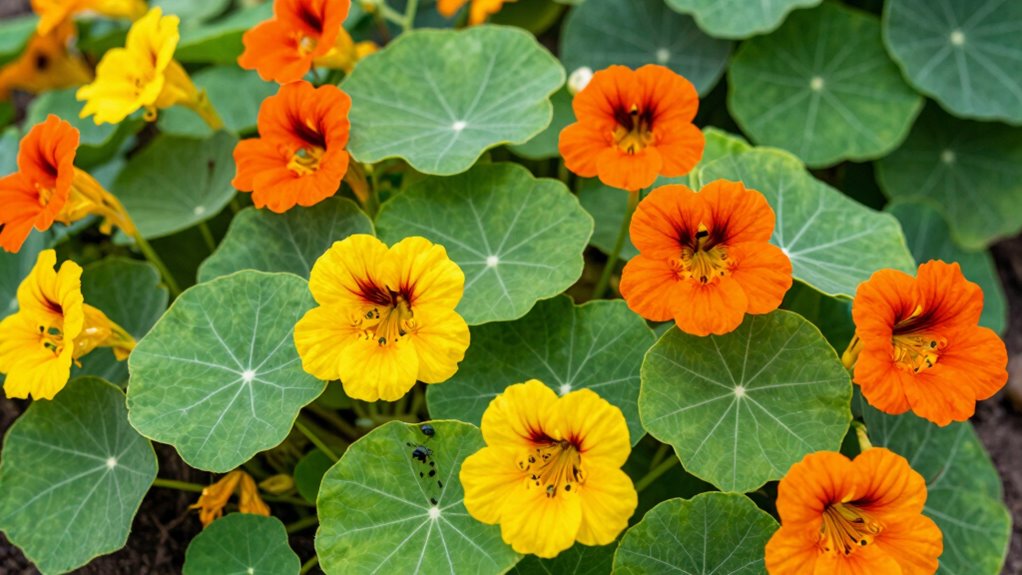
Nasturtiums offer a valuable benefit as a natural pest control method by attracting pests away from your main crops. They act as effective trap crops, drawing pests like aphids and whiteflies, protecting your vegetables and herbs. Plus, nasturtiums enhance companion planting by improving biodiversity and reducing pest populations naturally. They also attract pollinators such as bees and butterflies, supporting your garden’s health and productivity. Incorporating nasturtiums helps create a balanced ecosystem, reducing the need for chemical pesticides. With their vibrant flowers and pest-repelling qualities, they serve as a dual-purpose addition to your garden. Overall, using nasturtiums as natural pest control boosts plant health, encourages beneficial insects, and promotes sustainable gardening practices.
Troubleshooting Common Nasturtium Trap Crop Problems
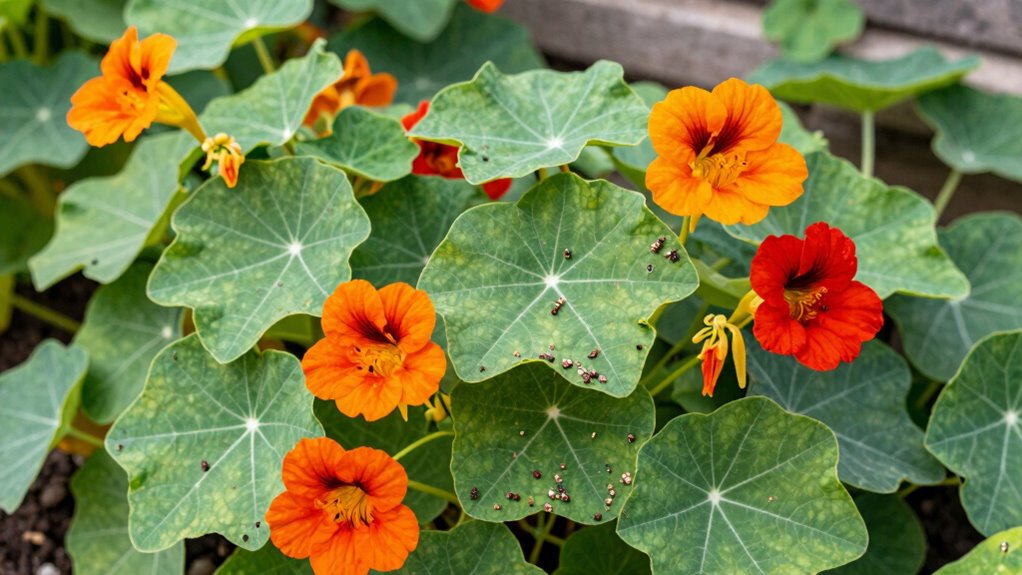
Even with their many benefits, nasturtiums as trap crops can sometimes face issues that undermine their effectiveness. Poor compost management can lead to unhealthy plants that attract fewer pests or become susceptible to diseases. Make certain you routinely add balanced compost to support robust growth. Additionally, garden design plays a vital role; overcrowding or poor spacing can hinder airflow, encouraging mold or pest infestation. Regularly inspect your nasturtiums for signs of stress, such as yellowing leaves or wilting, and adjust watering or fertilization accordingly. If pests overwhelm the plants, consider rotating their placement or planting them in a different part of your garden to disrupt pest cycles. Maintaining healthy nasturtiums ensures they attract pests away from your main crops effectively.
Enhancing Your Garden’s Ecosystem With Nasturtiums

Incorporating nasturtiums into your garden can markedly boost its overall health and biodiversity. They attract beneficial insects, improve soil quality, and support natural pest control. To maximize these benefits, consider using soil amendments to enrich the soil around your nasturtiums, promoting healthy growth and stronger plants. Practice companion planting by pairing nasturtiums with vegetables like tomatoes and cucumbers, which benefit from pest deterrence. Nasturtiums also attract pollinators, leading to better fruit and flower production. Additionally, their vibrant foliage adds visual appeal to your garden landscape. By integrating nasturtiums strategically, you create a resilient ecosystem that supports diverse plant life, reduces pests naturally, and enhances soil health—all essential for a thriving garden.
Frequently Asked Questions
Can Nasturtiums Attract Pests Away From Vegetable Crops?
Yes, nasturtiums can attract pests away from your vegetable crops through pest attraction. They act as a companion planting strategy, drawing pests like aphids and whiteflies to themselves instead of your vegetables. By planting nasturtiums nearby, you create a pest trap crop that protects your main crops. This natural pest management method helps reduce damage without chemicals, making your garden healthier and more productive.
How Close Should Trap Crops Be Planted to Main Plants?
You should plant trap crops like nasturtiums about 1 to 2 feet away from your main plants. Adequate plant spacing guarantees pests are attracted to the trap crop without crowding your vegetables. Keep trap crop proximity close enough to lure pests effectively, but not so close that they interfere with your main crops’ growth. Regularly monitor pest activity to adjust spacing if needed for maximum pest control.
Are There Any Plants That Shouldn’t Be Grown Near Nasturtiums?
You should avoid planting beans and cabbage near nasturtiums, as they can hinder companion planting benefits. While nasturtiums act as pest repellents and attract beneficial insects, some plants might compete for nutrients or attract pests that affect nasturtiums adversely. To maximize their pest-repelling potential, plant nasturtiums alongside herbs like dill or marigolds, but steer clear of plants that may attract pests or interfere with their pest-repellent qualities.
How Long Does It Take for Nasturtiums to Attract Pests?
Ever wonder how quickly nasturtiums attract pests? Usually, within 1 to 2 weeks of flowering, you’ll notice pest attraction. The flowering timing draws pests like aphids and whiteflies, making nasturtiums effective as a trap crop. Keep an eye on them during this period, as their pest attraction can help protect your other plants. Regular monitoring guarantees you catch pests early and manage the situation effectively.
Can Nasturtiums Be Used as a Companion Plant for Pest Prevention?
Yes, you can use nasturtiums as a companion plant for pest prevention. They act as natural pest deterrents, attracting aphids, whiteflies, and beetles away from your main crops. By planting nasturtiums nearby, you create a barrier that confuses pests and reduces infestations. Incorporate them into your companion planting strategy to enhance your garden’s health naturally, making nasturtiums a valuable ally in pest management.
Conclusion
By incorporating nasturtiums into your garden, you not only attract pests away from your main crops but also enjoy the beautiful blooms they offer. It’s almost like nature’s little coincidence—your vibrant trap crop turns into a natural pest magnet, saving your vegetables without extra effort. With a bit of planning and care, you’ll discover how these colorful plants can work quietly in the background, creating a healthier, more balanced garden ecosystem you can truly be proud of.
Fall Picks
fall essentials
As an affiliate, we earn on qualifying purchases.