
TL;DR

Get garden gear delivered free — and shop member deals
- Fast, free delivery on millions of items
- Access to Prime Big Deal Days deals on October 6–7
- Prime Video, Amazon Music and more included
Researchers at Suntory Global Innovation Center in Japan have genetically engineered a rose rated as violet blue, solving a decades-old plant science challenge by adding co-pigment genes alongside blue pigment genes. The flowers stayed stable for seven years in greenhouses and three years in Colombian fields.
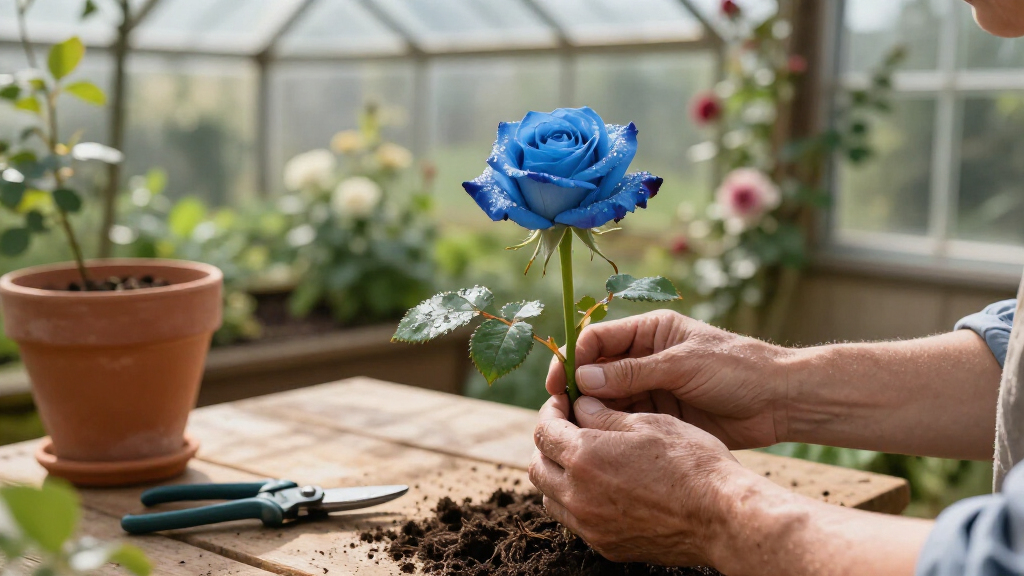
Researchers at the Suntory Global Innovation Center in Kyoto, Japan, have genetically engineered a rose whose flowers are rated as violet blue on a standard flower color chart, the company announced August 25 at the 32nd International Horticultural Congress in Kyoto. The achievement solves a longstanding problem in plant science: roses lack both the enzyme needed to make blue pigments and the helper molecules that turn those pigments a true blue.
The advance builds on work that began in 2004, when Suntory researchers first inserted a gene for an enzyme that produces a blue pigment called delphinidin into a rose. Those flowers came out purplish, demonstrating that blue pigment alone is not enough to produce a blue flower.
In the new work, the team inserted four genes from other blue-flowering species into a light pink rose. A gene from Canterbury bells (Campanula medium) allowed the engineered roses to produce multiple blue pigments, while two genes from wishbone flowers (Torenia x hybrida) and one from clustered gentian (Gentiana triflora) made enzymes that produce nearly colorless helper molecules known as flavone C-glycosides.
According to the company, the combination of the blue pigment malvidin with a helper molecule called isoorientin produced bluer flowers than roses making only delphinidin. The researchers found that the higher the level of co-pigments in the petals, the bluer the flowers appeared. The engineered bushes continued producing blue flowers for seven years in greenhouse tests in Japan and three years in field trials in Colombia, Suntory reported.
Why Blue Roses Were So Difficult
Naturally blue flowers such as irises produce blue pigments like delphinidin, but they also rely on co-pigment molecules that stabilize the pigments and make them appear deeper blue. Roses have neither capability naturally — they make red and yellow pigments but lack the required enzymes — which is why true blue roses were long considered impossible and why conventional breeding never produced one.
The result matters beyond floriculture. Demonstrating that a combination of pigment and co-pigment genes can shift flower color into the blue range gives plant scientists a working template for engineering color in other species that lack the necessary biochemical pathways. For the cut-flower industry, a genuinely blue rose would be a novel commercial product, since existing “blue” roses sold today are dyed or lavender-toned varieties.
Two Decades of Suntory Rose Engineering
Suntory’s rose program has run for more than two decades. In 2004, the company’s researchers in Kyoto genetically modified a rose to produce delphinidin — the first time roses were engineered to make a blue pigment — but the resulting flowers were purplish rather than blue, according to reporting by Science News.
That earlier result pointed researchers toward the co-pigment mechanism used by naturally blue flowers. The newly announced roses, presented at the Kyoto congress, are the culmination of that line of work: engineered with four foreign genes rather than one, and tested across multiple years and growing conditions in Japan and Colombia before the announcement.
“The combination of the blue pigment malvidin with a helper called isoorientin made bluer flowers than roses producing only delphinidin.”
— Suntory Global Innovation Center (company announcement)
How Blue Is the Final Rose
The engineered roses are rated as violet blue based on a flower color chart — not a pure or saturated blue. The research team itself hopes to further enhance the hue, indicating the current color is not the final target. It is not clear from the announcement how closely the flowers resemble the deep blue of flowers such as gentians or irises, nor has the company detailed the exact shade measurements beyond the chart rating.
Commercial availability also remains unaddressed. The announcement covered scientific results and multi-year field performance, but Suntory did not state when or whether the blue rose would be sold, what regulatory approvals might be required in various markets, or what the plants would cost.
Refining the Shade Toward True Blue
The researchers say they aim to further enhance the hue, pushing the violet blue rating toward a deeper blue. Continued greenhouse and field trials are likely as the team works to raise co-pigment levels in the petals, since their findings show that higher co-pigment concentrations produce bluer flowers.
Any path to commercial release would also involve additional testing and, in many jurisdictions, regulatory review of a genetically modified ornamental plant. No timeline for either has been announced.
Key Questions
Are these roses truly blue or purple?
They are rated as violet blue on a standard flower color chart — bluer than earlier engineered roses that produced only delphinidin, but not a pure saturated blue. The researchers say they want to enhance the hue further.
How did scientists make the rose blue?
They inserted four genes from other blue-flowering plants — Canterbury bells, wishbone flowers, and clustered gentian — into a light pink rose. These genes let the rose produce blue pigments plus colorless co-pigment helper molecules that stabilize the pigments and deepen the blue tone.
Why couldn’t breeders simply grow a blue rose?
Roses naturally make red and yellow pigments but lack the enzyme needed to produce blue pigments, and they also lack the genes for the co-pigments required for a blue hue. Conventional breeding could not introduce pathways the rose family does not possess.
Are the engineered roses stable over time?
According to Suntory, the rose bushes continued producing blue flowers for seven years in greenhouse tests in Japan and three years in field trials in Colombia.
When can the public buy a blue rose?
That is not yet clear. The announcement covered the scientific achievement and field performance, but Suntory has not stated when or whether the rose will be commercially released.
Source: hn
Fall Picks
fall essentials
As an affiliate, we earn on qualifying purchases.