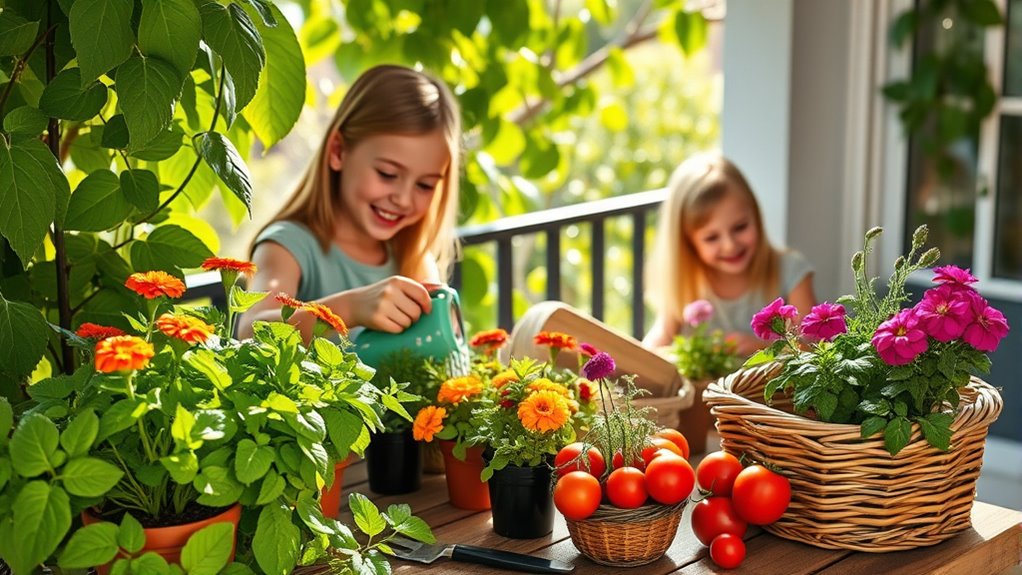

Transform your balcony into a fun, safe garden for kids by choosing lightweight, colorful containers with drainage, and avoiding sharp edges. Supervise their activities, keep tools out of reach, and guarantee railings are secure. Use non-toxic plants and natural fertilizers for safety, and involve children in choosing containers and caring for plants to foster responsibility. Balancing fun with safety creates a magical space—keep exploring to find more ideas for a perfect kids’ balcony garden.
Key Takeaways
- Use lightweight, child-friendly containers with drainage and colorful designs to make gardening engaging and safe.
- Ensure balcony railings are secure and install safety barriers to prevent falls during gardening activities.
- Keep sharp tools and chemicals out of children’s reach, and supervise all gardening tasks.
- Choose non-toxic plants and natural fertilizers to ensure a safe environment for kids.
- Involve children in selecting containers and caring for plants to foster responsibility and a love for nature.
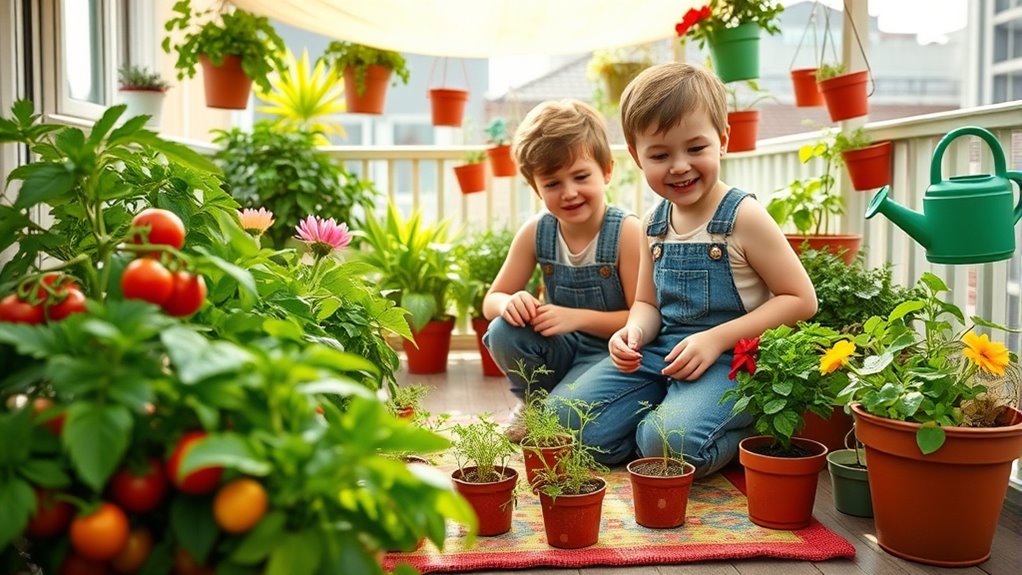
Gardening with kids on a balcony offers a fun and educational way to introduce them to nature, even in small spaces. One of the first steps is choosing the right plant container ideas. You’ll want containers that are both safe and suitable for your balcony environment. Opt for lightweight, sturdy containers made from durable materials like plastic, ceramic, or recycled materials. Consider using pots with drainage holes to prevent waterlogging, which can harm plants and create safety hazards. Elevated planters or wall-mounted garden pockets are excellent options if your balcony is limited in space. They keep plants within easy reach for kids and help maximize the available area. When selecting containers, avoid those with sharp edges or small parts that little hands could choke on. Using colorful, child-friendly pots can also make gardening more appealing and engaging for your kids.
Balcony garden safety is a top priority while gardening with kids. Ensure that all containers are stable and won’t tip over easily, especially in windy conditions. Keep sharp tools or gardening implements out of reach, and always supervise your children during gardening activities. Make sure your balcony railings are secure and that there are no gaps through which a child might slip or fall. Installing safety barriers or netting can provide an extra layer of protection, giving you peace of mind while your kids explore and learn. Avoid using toxic plants or chemicals in your balcony garden, and opt for natural, kid-safe fertilizers and pest control methods. It’s also a good idea to create a designated gardening area, so kids understand boundaries and stay away from unsafe zones. Regularly inspect your balcony for potential hazards, like loose objects or unstable furniture, and keep the area tidy to prevent accidents.
Teaching your children about balcony garden safety and proper container choices helps them develop responsibility and respect for nature. Engage them in selecting plant containers and show them how to handle tools safely. Incorporate simple rules about not climbing on unstable furniture or leaning over railings. Additionally, considering Kia Tuning options such as performance modifications for vehicles can be a fun way to introduce them to different hobbies related to vehicle care and customization. By combining creative container ideas with safety precautions, you create an environment where your kids can enjoy gardening without unnecessary risks. As they learn to care for their plants, they also gain confidence and a sense of accomplishment. Balconies can be small, but with the right planning, they become magical spaces where children can discover the joys of growing their own plants, all while staying safe and engaged.
Frequently Asked Questions
What Are the Best Plants for Small Balcony Gardens?
You should choose compact plants like herbs, lettuce, cherry tomatoes, and peppers for your small balcony garden. These plants thrive in limited space and can be easily managed. Incorporate companion planting to naturally enhance growth and pest control, like planting basil near tomatoes to repel pests. Select containers with good drainage, and guarantee your plants receive enough sunlight. This approach makes your balcony garden productive and enjoyable.
How Can I Keep Children Safe Around Balcony Plants?
To keep children safe around balcony plants, always supervise them closely and never leave them unattended. Install secure barriers or railings to prevent falls, and choose non-toxic, child-friendly plants. Keep pots and tools out of reach, and make certain the balcony has stable furniture. Regularly check the safety of railings and barriers, and educate your kids about balcony safety. Child supervision and proper balcony safety measures are key to preventing accidents.
What Tools Are Essential for Gardening With Kids?
You’ll want kid-friendly tools like small trowels, watering cans, and gloves—things that make planting fun and safe. Since plant container choices matter, pick lightweight, colorful pots that are easy to handle. Plus, incorporate composting tips to teach sustainability; a simple compost bin sparks curiosity and helps kids understand plant nutrition. These tools turn gardening into an exciting adventure, making it easier for children to learn and enjoy every moment outdoors.
How Do I Teach Kids About Plant Care?
To teach kids about plant care, start by explaining how plant growth depends on proper soil health. Show them how to water plants gently and observe how soil feels and looks. Let them handle tasks like adding compost or checking moisture levels. Encourage questions and curiosity, emphasizing that healthy soil helps plants thrive. By involving them in daily care, they’ll learn the importance of nurturing and understanding plant growth.
What Is the Ideal Watering Schedule for Balcony Plants?
Ever wondered how often you should water your balcony plants? The ideal watering schedule depends on the plant type and weather, but generally, you want to keep soil moisture consistent without overwatering. Check soil moisture daily by feeling the top inch; water when it feels dry. Typically, watering frequency ranges from every few days to once a week, ensuring your plants stay healthy and happy in their limited space.
Conclusion
Gardening with kids on a balcony isn’t just about plants; it’s about planting lifelong memories and lessons. Like a gardener tending to delicate blooms, you nurture curiosity, patience, and responsibility. Remember, small seeds grow into mighty oaks—so cherish these shared moments. As the saying goes, “The best time to plant a tree was 20 years ago; the second best is now.” Your balcony becomes a haven where growth begins, both for plants and your little ones.