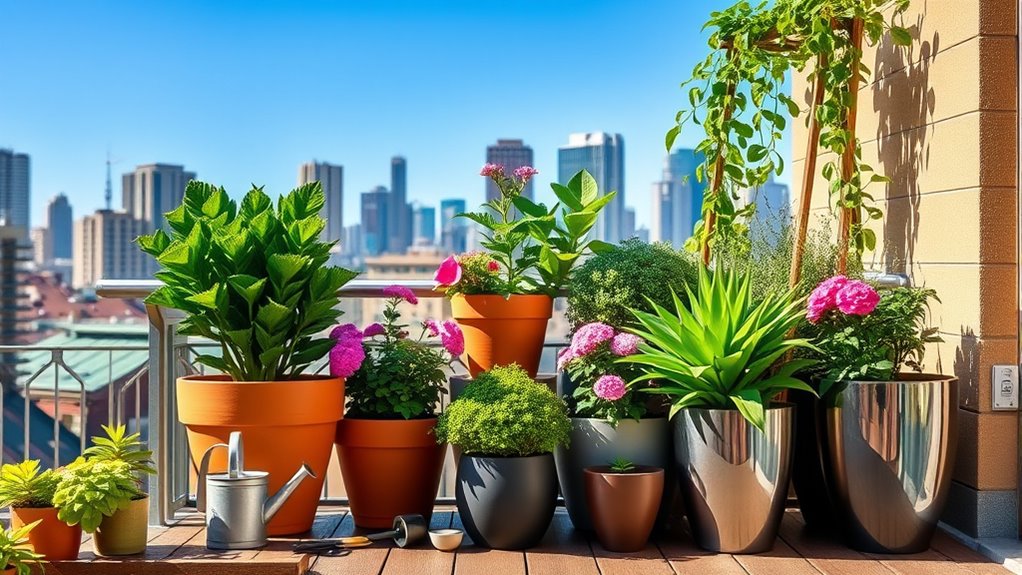

To start balcony container gardening, choose suitable containers with drainage holes and fill them with high-quality potting mix mixed with compost. Keep plants healthy by ensuring good airflow, proper watering, and regular cleanup to prevent pests and diseases. Inspect your plants frequently for signs of pests and use organic remedies like neem oil if needed. Maintaining proper spacing and airflow encourages healthy growth and helps keep pests away, and if you keep going, you’ll learn more about creating a thriving garden.
Key Takeaways
- Choose lightweight, drainage-equipped containers suitable for balcony space and plant size.
- Use high-quality potting mix enriched with compost to ensure healthy growth.
- Regularly inspect plants for pests, and maintain good airflow to prevent diseases.
- Water plants consistently, avoiding overwatering or underwatering, to keep them healthy.
- Practice organic pest control methods and keep the balcony clean for a vibrant, pest-free garden.

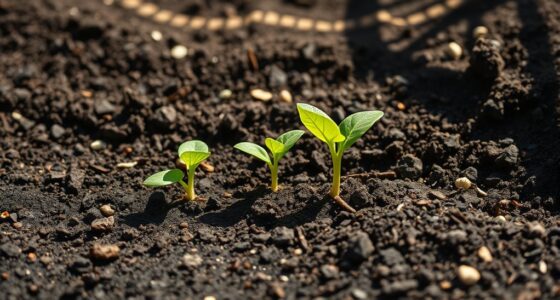
If you’re looking to transform your balcony into a lush, green oasis, container gardening offers a simple and flexible solution. Before you start planting, however, it’s essential to focus on soil preparation. The right soil sets the foundation for healthy plants and vibrant growth. Use high-quality potting mix designed for container gardening, as it provides good drainage and aeration. You can also mix in compost or organic matter to enrich the soil with nutrients. Avoid using garden soil from the ground because it’s often too heavy and may contain pests or diseases that can harm your plants. When preparing your containers, ensure they have drainage holes to prevent waterlogging, which can lead to root rot. Fill each container with your prepared soil mix, leaving a couple of inches at the top to make watering easier and to prevent soil from spilling out.
Once you’ve set up your containers, it’s crucial to consider pest management from the start. Container gardens are more accessible to pests because they’re so close to your living space, and pests can quickly spread if not controlled. Regularly inspect your plants for signs of pests such as holes in leaves, sticky residues, or visible insects. To manage pests effectively, start with natural prevention methods—like introducing beneficial insects or using organic pest deterrents such as neem oil or insecticidal soap. Keep your plants healthy by avoiding overwatering or underwatering, as stressed plants are more vulnerable to pests. Also, make sure to keep your containers clean by removing dead leaves or debris, which can harbor pests and diseases. Maintenance and cleaning of your containers can help prevent pest buildup and promote healthier growth.
Another key part of pest management is maintaining good airflow around your plants. Proper spacing and pruning can help reduce humidity and prevent fungal diseases, which often attract unwanted pests. If you notice a pest infestation, act quickly. Remove affected leaves or plants if necessary, and apply organic treatments rather than chemical pesticides, which can harm beneficial insects and pollinators. Consistent monitoring and early intervention are your best strategies for keeping pests at bay. Remember, a healthy, pest-free plant is more resilient and less likely to fall prey to issues that can compromise your entire balcony garden.
Frequently Asked Questions
Which Plants Are Best for Shaded Balcony Areas?
For shaded balcony areas, you should choose shade-loving plants that thrive in low light conditions. Opt for plants like ferns, impatiens, and hostas, which do well in low light containers. These plants will brighten up your space and add greenery without needing direct sunlight. Make sure to select the right containers with good drainage, and water them appropriately to keep your shaded balcony lush and vibrant.
How Do I Prevent Pests in Container Gardens?
To prevent pests in your container garden, focus on effective pest control strategies. You should regularly inspect your plants for signs of pests and remove any affected leaves. Use organic deterrents like neem oil, insecticidal soap, or companion planting to keep pests at bay. Maintain healthy plants by ensuring proper watering and drainage, which makes them less attractive to pests. Consistent monitoring and natural methods help you protect your garden without harmful chemicals.
What Are the Best Watering Practices for Balcony Plants?
Think of watering your balcony plants as tending a delicate dance. You should establish a consistent watering schedule, ensuring each container gets just enough moisture without overdoing it. Always check container drainage; if water pools, roots can rot. Water deeply when the top inch of soil feels dry, and avoid frequent light watering. This rhythm keeps your plants healthy and thriving, like a well-choreographed performance.
How Can I Maximize Limited Balcony Space Effectively?
To maximize your limited balcony space, embrace vertical gardening and container stacking. Use wall-mounted planters or hanging baskets to free up floor space, and stack containers to create multi-level planting areas. Choose compact or cascading plants that grow well in small containers. By layering your plants vertically, you optimize space and add visual interest, making your balcony lush and functional without feeling crowded.
What Are Eco-Friendly Fertilizing Options for Containers?
You can choose eco-friendly fertilizing options like composting methods such as worm composting or using homemade compost to enrich your containers naturally. Additionally, opt for organic pest control methods like neem oil or insecticidal soap to protect your plants without chemicals. These practices not only nourish your balcony garden sustainably but also promote healthy, thriving plants while minimizing environmental impact.
Conclusion
Think of your balcony as a tiny island awaiting your care. With a little effort and patience, you can transform it into a lush paradise, full of vibrant life and color. Just like a gardener tending to their plants, your nurturing hands will turn this small space into a thriving sanctuary. Embrace the journey, and soon you’ll see your balcony bloom with beauty—proof that even the smallest islands can become breathtaking worlds with a little love.