
To guarantee safety, choose raised bed mixes made from certified contaminant-free soil, specifically designed for urban gardening. Avoid native soil, as it may contain heavy metals like lead or cadmium from pollution sources. Use organic amendments and barrier techniques to further reduce risk and prevent toxins from spreading. Regular testing helps monitor contaminant levels over time. If you want to learn more about creating a safe, healthy environment for your plants, keep exploring these strategies.

Get garden gear delivered free — and shop member deals
- Fast, free delivery on millions of items
- Access to Prime Big Deal Days deals on October 6–7
- Prime Video, Amazon Music and more included
Key Takeaways
- Use certified, urban-specific raised bed mixes formulated to minimize contamination risks.
- Incorporate organic amendments like compost that bind heavy metals and reduce bioavailability.
- Avoid native or untreated soils; rely on tested, safe commercial soil blends for urban gardening.
- Install physical barriers or liners to prevent contaminant leaching from surrounding soil into raised beds.
- Regularly test soil in raised beds to monitor contaminant levels and ensure ongoing safety for plants.
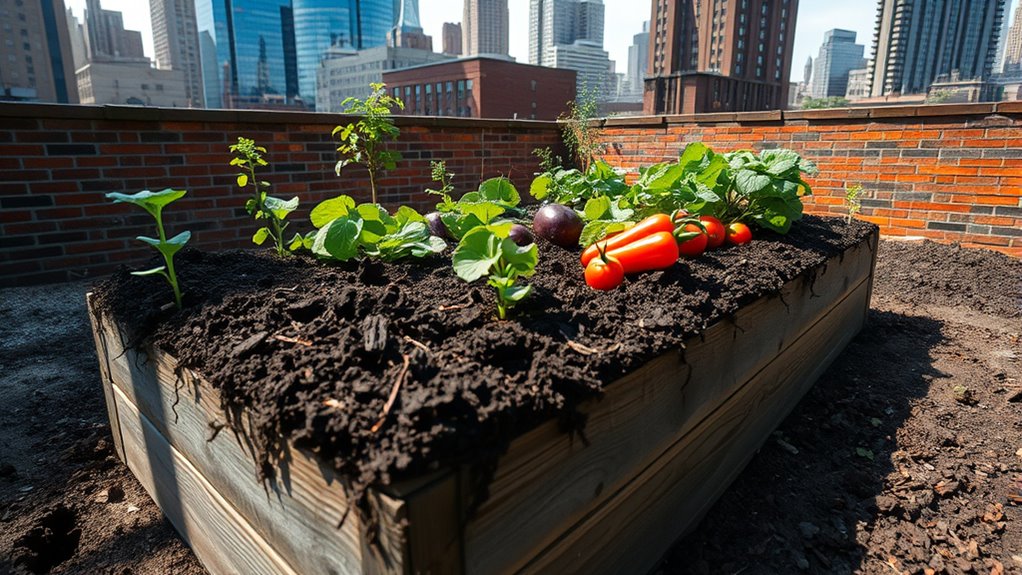
Have you ever wondered what lurks beneath the city streets? Beneath busy roads, parks, and neighborhoods, soil often harbors a variety of contaminants stemming from industrial activity, vehicle emissions, or improper waste disposal. If you’re considering creating a raised bed garden in an urban environment, understanding how to guarantee your plants grow in safe, healthy soil is essential. That’s where soil remediation and contaminant mitigation come into play. These processes are crucial for transforming potentially hazardous soil into a safe medium for growing food or flowers, especially in areas with known contamination issues.
Soil remediation involves removing or neutralizing pollutants present in the soil. In urban settings, contaminated soil can contain heavy metals like lead and cadmium, hydrocarbons, pesticides, or other pollutants. Before filling your raised bed, it’s important to evaluate the soil’s history and test for these contaminants. Once identified, you can take steps to remediate the soil, such as soil washing, excavation, or the addition of amendments that immobilize toxins. These techniques help reduce the risk of contaminants leaching into your plants or entering the food chain. Proper soil remediation guarantees that your garden space becomes a safe environment, free from the dangers posed by urban pollutants.
Evaluate your soil’s history and test for contaminants before creating a safe, healthy urban garden.
Contaminant mitigation is another key aspect of creating a safe raised bed mix. It involves implementing strategies to prevent contaminants from affecting your plants or spreading to surrounding areas. For example, layering your raised bed with a barrier material can prevent soil-borne toxins from migrating upward or through drainage. Using clean, uncontaminated soil or compost as the main component of your raised bed mix is also a form of mitigation, effectively diluting any residual contaminants in the underlying soil. Additionally, incorporating organic matter like compost can help bind heavy metals, reducing their bioavailability. This not only protects your plants but also minimizes potential health risks associated with urban soil contaminants. Furthermore, choosing certified safe soil and amendments specifically formulated for contaminated urban environments can further enhance safety and reduce risks.
Choosing the right soil mix is critical. Opt for high-quality, certified safe soil and amendments designed for gardening in contaminated areas. Avoid using native soil that might carry pollutants, and instead rely on commercial raised bed mixes specifically formulated with contaminant mitigation in mind. This approach minimizes your exposure to harmful substances and safeguards your plants from absorbing toxins. Keep in mind that ongoing testing and monitoring are essential, especially if your urban garden is built on land with a history of industrial use. Regular checks ensure that your soil remains safe over time, giving you peace of mind and confidence in your gardening efforts.
As an affiliate, we earn on qualifying purchases.
Frequently Asked Questions
How Long Does It Take for Contaminants to Degrade in Raised Bed Mixes?
Contaminant degradation in raised bed mixes varies, but it often takes several months to years, depending on the contaminant type and soil conditions. You can speed up soil remediation by adding organic matter and ensuring proper drainage. Regular testing helps monitor progress. Be patient, as some contaminants break down gradually. In the meantime, use safe, tested soil mixes to protect your plants and health.
Are There Specific Plants That Are More Tolerant to Soil Contaminants?
Like Robin Hood choosing his allies, you’ll find native plants excel at tolerating soil contaminants. These hardy species often thrive where others struggle, making them ideal for phytoremediation techniques. You should consider plants like goldenrod or switchgrass, which naturally extract and stabilize pollutants. By selecting tolerant native plants, you help restore soil health while enjoying a lush, productive garden—transforming the land’s burdens into beauty and bounty.
Can I Use Compost From My Yard in Contaminated Urban Soils?
You should avoid using yard compost from your yard in contaminated urban soils because of potential contamination risks. Yard compost can contain heavy metals, pesticides, or other pollutants that may be present in urban environments. To keep your plants safe, consider sourcing compost from reputable suppliers or making your own compost in a controlled manner. This way, you reduce the risk of introducing harmful contaminants into your garden.
What Are the Signs of Soil Toxicity in Plants Grown in Raised Beds?
You’ll notice soil toxicity signs in plants when they show stunted growth, yellowing leaves, or unusual spots. These plant symptoms indicate poor soil health and potential contamination. Pay attention to weak or dying plants, as these are common indicators of toxic soil conditions. Regularly testing your raised bed soil helps identify issues early, ensuring you maintain a healthy environment for your plants and prevent long-term soil health problems.
How Often Should I Test My Raised Bed Soil for Contaminants?
Think of your raised bed soil like a health check-up; you should test it at least once a year. Regular soil testing frequency helps catch contaminants early, preventing them from sneaking into your crops. Establish a contaminant monitoring schedule that fits your garden’s history and local risks. If you notice changes or suspect pollution, test more often. Staying vigilant keeps your garden safe and flourishing.
Conclusion
While city soils may have their quiet stories to tell, choosing safe raised bed mixes allows your garden to flourish peacefully. Think of it as giving your plants a gentle, nurturing embrace, free from hidden worries. By being mindful and using quality soil, you create a serene haven where veggies and flowers can thrive happily, whispering their gratitude. In this nurturing space, your urban oasis blossoms softly, embracing nature’s delicate harmony.
Halloween Picks
halloween
As an affiliate, we earn on qualifying purchases.