To care for your potted rosemary indoors, make sure it gets at least 6 hours of bright, direct sunlight daily, placing it near a south-facing window or adding a grow light if needed. Water thoroughly but let the top inch of soil dry out between waterings, avoiding standing water to prevent root rot. Use well-draining soil and a pot with drainage holes. Consistent care will keep your rosemary healthy and fragrant—learn more about fine-tuning its indoor needs.

Get garden gear delivered free with Prime
- Fast, free delivery on millions of items
- Prime Video, Amazon Music and more included
- Member-only deals all year
Key Takeaways
- Water when the top inch of soil feels dry, ensuring thorough watering with drainage to prevent root rot.
- Place the pot in a bright spot with at least 6 hours of direct sunlight daily, using a south-facing window or grow light.
- Use well-draining soil and ensure the pot has drainage holes to avoid water pooling and promote healthy roots.
- Adjust watering frequency seasonally, watering more in spring/summer and less during cooler months.
- Monitor plant health regularly for signs of inadequate light or over/under-watering, and move the plant accordingly.
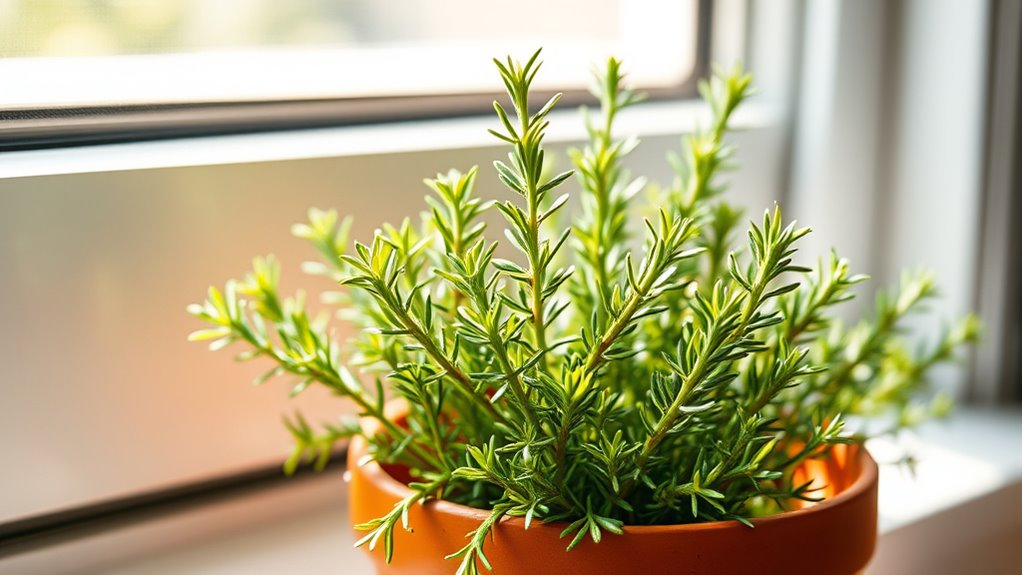
A potted rosemary plant can thrive indoors with the right care. One of the most essential aspects is establishing a proper watering schedule. Rosemary prefers its soil to dry out somewhat between waterings, so you shouldn’t water it on a strict schedule but rather based on the soil’s moisture level. Check the top inch of soil; if it feels dry, it’s time to water. When you do water, give the plant a thorough soak until excess water drains from the bottom of the pot. Avoid letting the plant sit in standing water, as this can lead to root rot. During the growing season, which is typically spring and summer, you might need to water more frequently, perhaps once a week. In the cooler months, cut back on watering since rosemary slows its growth and requires less moisture. Consistency is vital; irregular watering can cause stress and affect the plant’s health. Also, ensure your pot has drainage holes to prevent water from pooling at the bottom. Proper watering helps prevent issues like root rot, which can be detrimental to your plant’s health. Sunlight requirements are equally vital for a healthy potted rosemary indoors. Rosemary loves bright, direct sunlight, so placing it near a south-facing window usually works best. Aim to give your plant at least six hours of direct sunlight each day. If natural light is limited, especially during winter, consider supplementing with a grow light to confirm it gets enough light. Insufficient sunlight can cause the plant to become leggy, with spindly stems and sparse foliage, while too little light can also diminish its aromatic qualities. Conversely, too much direct sunlight can scorch the leaves, so if you notice browning or bleaching, move the plant slightly away from the window or provide some sheer shade during the hottest part of the day. Positioning your rosemary in a spot with plenty of sunlight encourages lush, fragrant growth and keeps the plant healthy and vigorous. Remember that indoor conditions can vary, so monitor your plant regularly for signs of inadequate sunlight or watering issues and adjust accordingly.
indoor rosemary plant grow light
As an affiliate, we earn on qualifying purchases.
As an affiliate, we earn on qualifying purchases.
Frequently Asked Questions
Can Rosemary Thrive in Low-Light Indoor Environments?
Rosemary struggles to thrive in low-light indoor environments. It needs bright indoor lighting to grow healthy, so you should place your plant near a south-facing window or where it gets ample sunlight. If natural light is limited, consider supplementing with grow lights. Proper plant placement guarantees your rosemary gets the light it requires, helping it stay healthy and vibrant indoors. Without sufficient light, it may become leggy or lose its flavor.
How Often Should I Water My Potted Rosemary Indoors?
Ever wonder how often you should water your rosemary? Usually, you’ll want to water your potted rosemary when the top inch of soil feels dry, which is roughly every 1-2 weeks. Keep an eye on soil moisture to avoid overwatering, as rosemary prefers well-drained soil. Don’t forget, environmental factors like light and temperature can affect watering frequency, so adjust accordingly for healthy, thriving plants.
What Temperature Ranges Are Ideal for Indoor Rosemary?
You should keep your indoor rosemary in temperatures between 65°F and 75°F to guarantee healthy growth. Maintain moderate humidity levels, around 40-60%, to prevent drying out or mold. Good soil drainage is vital—use a well-draining potting mix to avoid waterlogged roots, which can stress the plant. Keep the environment consistent, and your rosemary will thrive indoors, rewarding you with fragrant, lush foliage.
How Do I Prevent Pests on My Indoor Rosemary Plant?
Think of your indoor rosemary as a fortress needing guards. To prevent pests, you act as the vigilant defender. Regularly inspect your plant for signs of trouble, and keep it healthy with proper watering and sunlight. Use organic treatments like neem oil or insecticidal soap when pests appear, acting swiftly to keep the invaders at bay. With consistent pest prevention, your rosemary stays strong and aromatic.
When Should I Prune My Potted Rosemary Indoors?
You should prune your potted rosemary indoors regularly to maintain healthy growth. Aim for a pruning schedule of every 4 to 6 weeks, trimming back the tips to encourage bushier growth and regulate size. Prune after the plant has finished flowering or when you notice leggy stems. Proper pruning keeps your rosemary healthy, aromatic, and visually appealing while preventing it from becoming too woody or overgrown.
Conclusion
With a little attention, your potted rosemary will thrive indoors, turning your home into a fragrant herb garden. Remember, just like the wise old trees that stand tall through seasons, patience and care will reward you with fresh, aromatic leaves whenever you need them. Keep an eye on watering, sunlight, and pruning, and your rosemary will become a steadfast companion, whispering secrets of the garden as it grows. Embrace the journey, and let your green thumb flourish.
Fall yard work Picks
leaf blowers
As an affiliate, we earn on qualifying purchases.