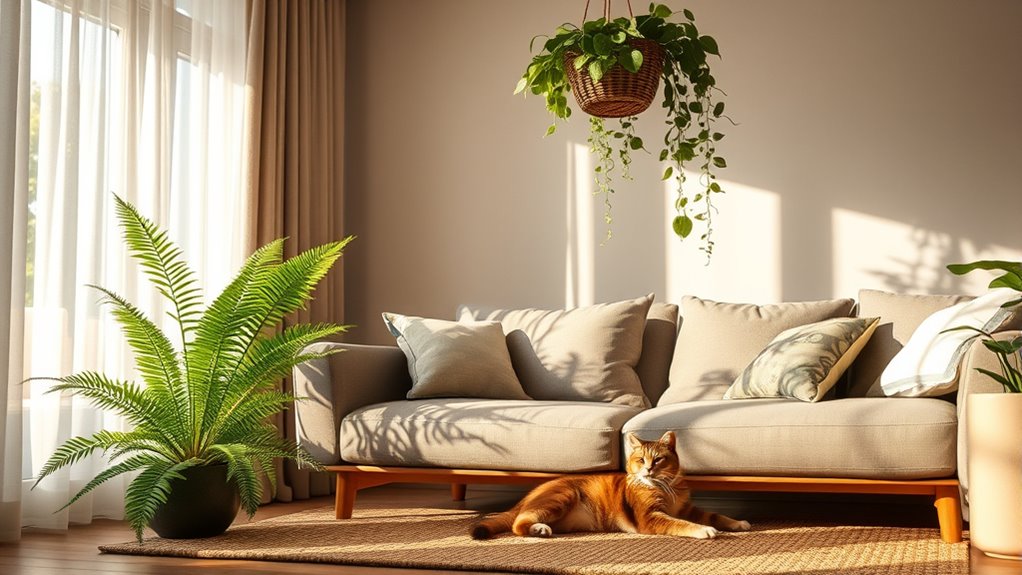

To create harmony between your indoor pets and plants, choose pet-safe greenery like spider plants and Boston ferns, and keep them out of your pet’s reach with hanging or elevated planters. Observe your pet’s behavior and provide toys to divert their attention from plants. Be cautious with soil and plant placement to prevent accidental ingestion or damage. For more tips on ensuring safety and balance, explore how proper arrangement and plant choices can make your home pet-friendly.
Key Takeaways
- Choose pet-safe, non-toxic plants like spider plants and succulents to prevent health hazards.
- Place plants on hanging planters or high shelves out of your pet’s reach.
- Observe your pet’s behavior and provide toys to discourage plant chewing or digging.
- Keep soil and plant parts inaccessible to avoid ingestion and related health issues.
- Select and position plants thoughtfully to create a safe, aesthetically pleasing indoor environment.
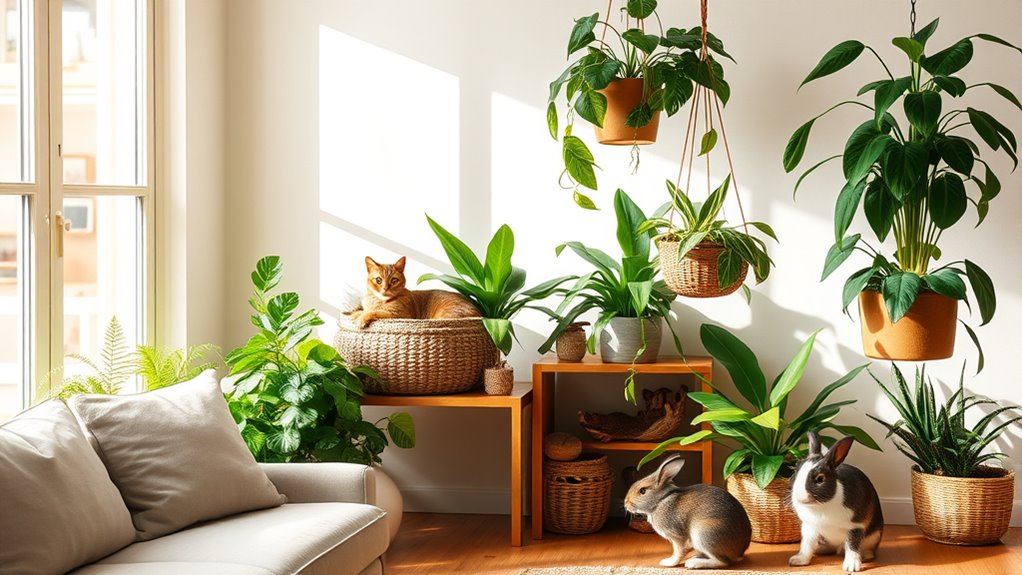
Have you ever wondered how to create a harmonious indoor space that includes both pets and plants? Achieving this balance requires thoughtful planning, especially when it comes to pet safety and plant selection. You want your home to be a lush, vibrant environment without risking your pet’s health or well-being. The key is to choose plants that are safe for your furry friends and to arrange them thoughtfully so they coexist peacefully.
Start by researching pet-safe plants. Not all greenery is suitable for homes with animals. Many common plants, like lilies, philodendrons, or poinsettias, can be toxic if ingested, causing symptoms ranging from mild discomfort to serious health issues. To avoid potential hazards, opt for pet-friendly options such as spider plants, Boston ferns, or certain succulents. These plants are generally non-toxic and safe if your pet nibbles on them. Remember, even pet-safe plants should be placed out of reach if your pet tends to chew or dig, preventing accidental ingestion of soil or plant parts that could cause choking or upset stomach.
Research pet-safe plants and keep them out of reach to protect your furry friends.
When selecting plants, consider their placement carefully. Use hanging planters or elevated shelves to keep plants out of paw’s way. This prevents your pets from knocking plants over, which can lead to broken pots or spilled soil. Additionally, avoid placing plants near pet feeding areas or in spots where they might be tempted to chew. Creating designated zones for your plants and pets helps minimize accidental contact and keeps both safe.
Another aspect of pet safety involves knowing your pet’s behavior. If your cat or dog is particularly curious or prone to chewing, you might want to choose plants with less enticing textures or smells. Providing alternative entertainment, like toys or designated play areas, can also help divert their attention away from your plants. Regularly inspecting your plants for signs of nibbling or damage allows you to address issues early before they become a problem.
Maintaining a safe indoor environment isn’t just about choosing the right plants. It’s also about understanding each plant’s needs and your pet’s habits. By selecting pet-safe plants and positioning them thoughtfully, you create a space where both can thrive without worry. Incorporating appropriate plant choices can significantly reduce risks and contribute to a safer home environment. This approach not only enhances your home’s aesthetics but also ensures your pets remain healthy and happy. With a little effort and awareness, you can enjoy a lush, pet-friendly indoor garden that brings fresh beauty and life into your home while keeping everyone safe.
Frequently Asked Questions
How Can I Prevent My Pets From Eating Poisonous Plants?
To prevent your pets from eating poisonous plants, focus on toxic plant avoidance strategies. Keep harmful plants out of their reach or place them in pet-proof containers that are difficult for pets to access. Train your pets not to chew on plants, and provide safe alternatives like toys or pet-friendly plants. Regularly check for plant damage, and educate yourself about which plants are toxic to guarantee your furry friends stay safe.
What Are the Best Pet-Friendly Indoor Plants?
You want the best pet-friendly indoor plants, so focus on pet plant compatibility to keep your pets safe. Choose plants like spider plants, Boston ferns, or areca palms, which are non-toxic to pets. For safe plant placements, keep these plants in high or inaccessible spots, ensuring your pets can’t reach or chew them. This way, you create a harmonious environment where both your pets and plants thrive.
How Do I Train Pets to Avoid Damaging Plants?
To train your pets to avoid damaging plants, start with consistent training techniques, set clear boundaries, and use positive reinforcement. Pet proofing strategies like using deterrents, placing plants out of reach, and providing appealing alternatives help reinforce good behavior. Be patient and persistent, and always reward your pets when they respect your plant space. This approach creates a harmonious environment where both your pets and plants thrive.
Are There Specific Plants That Repel Pests Naturally?
You ask if specific plants repel pests naturally, and yes, many beneficial plants have natural pest control properties. For example, marigolds and basil release scents that deter insects, helping you manage pests without chemicals. Incorporating these plants into your home creates a natural pest control environment, enhancing your space’s harmony. Using beneficial plant properties not only keeps pests at bay but also promotes a healthier, balanced indoor ecosystem.
How Can I Create a Safe Zone for Plants and Pets?
Think of your home as a balanced ecosystem. To create a safe zone for your plants and pets, carefully plan plant placement away from curious paws. Use pet barriers like gates or repellents to keep pets from sensitive plants. I once placed a tall, pet-proof screen around my favorite fern, and it thrived while my cat stayed curious but safe. This approach keeps your home harmonious and secure.
Conclusion
As you bring your pets and plants together, harmony becomes more than just a goal — it becomes an ongoing journey. With every new addition, you might wonder which surprises await or what unexpected challenges could arise. Will your furry friend embrace the new greenery, or will it test your patience? The secret lies in your careful choices and mindful care. Stay attentive, and you’ll discover that this delicate balance holds endless possibilities — and perhaps, a few surprises.