Companion planting for containers and balconies helps you maximize space and grow healthier plants naturally. By pairing herbs like basil with vegetables or marigolds with root crops, you can boost growth, attract beneficial insects, and ward off pests without chemicals. These combinations also improve soil health and increase yields. With thoughtful plant pairings, your compact garden becomes more resilient and productive. Keep exploring to discover more tips on creating a thriving, pest-resistant balcony oasis.

Get garden gear delivered free with Prime
- Fast, free delivery on millions of items
- Prime Video, Amazon Music and more included
- Member-only deals all year
Key Takeaways
- Use companion planting to naturally deter pests and attract beneficial insects in container gardens.
- Pair plants like basil with tomatoes to enhance growth and ward off pests.
- Incorporate marigolds and aromatic herbs to improve soil health and reduce soil-borne pests.
- Arrange plants to maximize space, improve air circulation, and support healthy, vigorous growth.
- Select compatible plants to boost yields and simplify maintenance in limited balcony or container spaces.
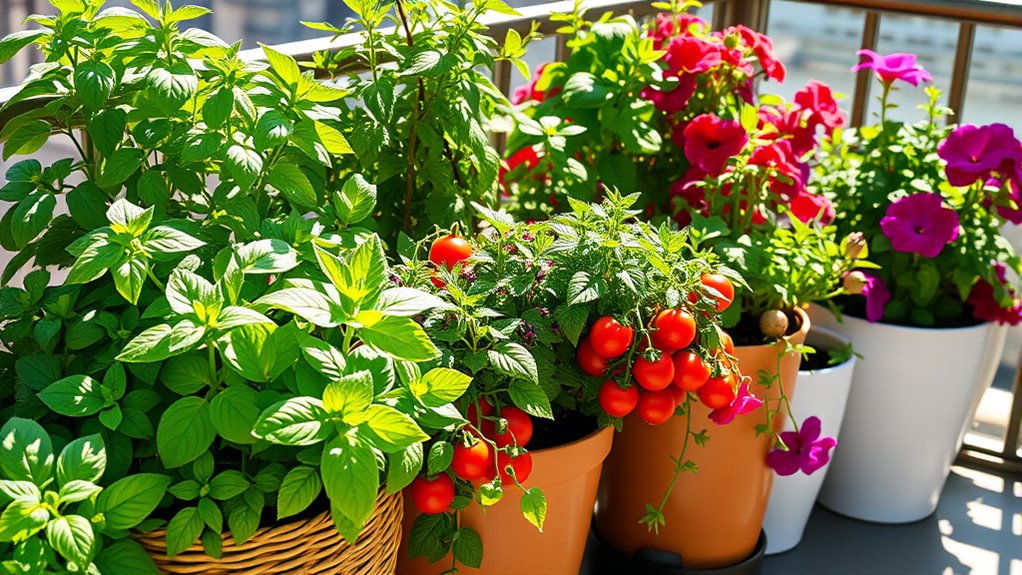
Planting companion species together in containers and on balconies isn’t just about saving space—it’s a smart way to boost your garden’s health and productivity. When you’re engaging in urban gardening, every square inch counts, and using companion planting strategies can make a significant difference. One of the main benefits is pest management; certain plants naturally repel common pests or attract beneficial insects that help keep your garden healthy. For example, planting basil near tomatoes can deter aphids and whiteflies, reducing the need for chemical pesticides. Similarly, marigolds are excellent companions because they ward off nematodes and other soil-borne pests, protecting your root crops and herbs.
Companion planting boosts urban garden health by naturally deterring pests and attracting beneficial insects.
In an urban environment, where space is limited and pests can spread quickly, companion planting becomes even more valuable. Containers and balconies are often exposed to a variety of pests, and relying solely on chemical controls isn’t ideal or sustainable. Instead, by choosing the right plant combinations, you create a natural pest management system that minimizes damage and promotes healthier growth. You can pair aromatic herbs like mint and dill with vegetables to confuse pests and keep them at bay. Plus, these herbs attract beneficial insects such as ladybugs and pollinators, which further improve your garden’s resilience and productivity.
Another advantage of companion planting in small urban spaces is that it helps maximize yields. When you combine plants thoughtfully, they can support each other’s growth, improving soil health and nutrient uptake. For instance, legumes like beans or peas can fix nitrogen in the soil, benefiting leafy greens or root vegetables planted nearby. This symbiosis reduces the need for synthetic fertilizers and creates a more sustainable gardening system. You’ll notice healthier, more vigorous plants that produce more abundant harvests, even in confined spaces.
Furthermore, companion planting simplifies your urban gardening routine. Instead of managing separate beds or sections, you can design container arrangements that serve multiple functions. You’ll find that certain plant pairings also improve air circulation and reduce humidity, which discourages fungal diseases and pests. You become more attuned to your plants’ needs and can adapt your combinations over time, creating a dynamic, thriving balcony or container garden. Additionally, understanding the Technical Aspects of Emailing can help you share your gardening successes with a wider community or gather advice from fellow urban gardeners to refine your techniques.
companion planting containers kit
As an affiliate, we earn on qualifying purchases.
As an affiliate, we earn on qualifying purchases.
Frequently Asked Questions
Can Companion Planting Work in Small Balcony Containers?
Yes, companion planting can work in small balcony containers. You can optimize space by choosing plants that thrive together, considering urban microclimates which may affect growth. Be mindful of container root competition; plant compatible species with similar water and nutrient needs. By selecting the right combinations and monitoring soil conditions, you’ll encourage healthy growth and better pest control, making your balcony garden both productive and vibrant.
How Often Should I Rotate Plants for Optimal Companion Benefits?
You should rotate your plants every 4 to 6 weeks on a consistent plant rotation schedule to maximize companion benefits. This helps prevent pest buildup and promotes healthy growth. Keep an eye on pest control timing; early intervention can prevent infestations. By maintaining a regular rotation, you guarantee your container garden stays balanced, healthy, and productive, making your companion planting efforts more effective and enjoyable.
Are There Specific Plants That Repel Pests Naturally in Containers?
You can use plants like marigolds, basil, and nasturtiums for natural pest control in containers. These plants repel common pests and attract beneficial insects, helping to keep your garden healthy. By incorporating them into your container garden, you create a balanced ecosystem that reduces the need for chemical pesticides. Regularly plant these pest-repelling species to maintain ongoing natural pest control and encourage beneficial insect activity in your space.
What Is the Best Soil Type for Mixed Companion Plantings?
You should use a well-draining soil mix for mixed companion plantings, combining compost, peat moss or coconut coir, and perlite or coarse sand. This soil composition offers good aeration and prevents waterlogging, which is essential for healthy roots. Make certain it meets drainage requirements by testing that excess water flows freely. Adjust the mixture based on specific plant needs, and always choose a container with drainage holes to support ideal growth.
Can Companion Planting Increase Container Garden Yields Significantly?
Companion planting can boost your container garden’s bounty by blending beneficial plant compatibility and encouraging companion diversity. When you pair plants with compatible needs and natural symbiosis, you’ll see considerable increases in yields, improved pest control, and healthier growth. This strategic symphony of plant partnerships creates a symbiotic system that maximizes space and resources, making your container garden more productive and resilient. So, yes, companion planting can indeed substantially increase your garden’s yields!
Conclusion
By embracing companion planting on your containers and balcony, you create a harmonious environment that naturally boosts your garden’s health. It’s like giving your plants a gentle nudge toward thriving together, without relying on harsh chemicals. With a little planning and care, you’ll discover a lush, thriving space that whispers of balance and beauty. So, why not let your balcony become a quiet sanctuary where nature’s subtle symphony unfolds effortlessly?
Halloween Picks
halloween
As an affiliate, we earn on qualifying purchases.