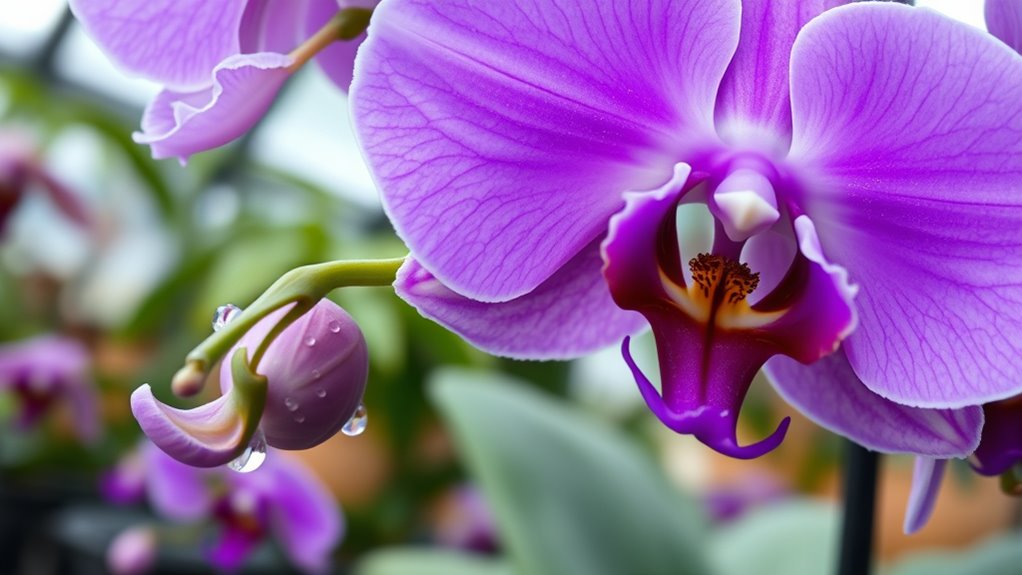

To encourage your orchids to rebloom, make sure you give them a proper rest period by slightly reducing watering after flowering and avoiding fertilizer until new growth appears. Maintain consistent care by keeping the potting mix well-draining and supporting healthy root development through repotting if needed. Once new shoots or buds form, resume regular watering and feed with a balanced orchid fertilizer. With patience and proper attention, you’ll discover how to bring your orchids back into full bloom.

Get garden gear delivered free with Prime
- Fast, free delivery on millions of items
- Prime Video, Amazon Music and more included
- Member-only deals all year
Key Takeaways
- Ensure the orchid has completed its rest period with proper care and minimal watering to promote new growth.
- Resume regular watering and fertilize with a balanced, diluted orchid fertilizer once new buds or shoots appear.
- Maintain optimal environmental conditions—bright, indirect light and appropriate humidity—to encourage blooming.
- Repot into fresh, well-draining medium if the current mix is compacted or retains excess moisture.
- Be patient; consistent care and favorable conditions can stimulate the orchid to produce a second, vibrant bloom.
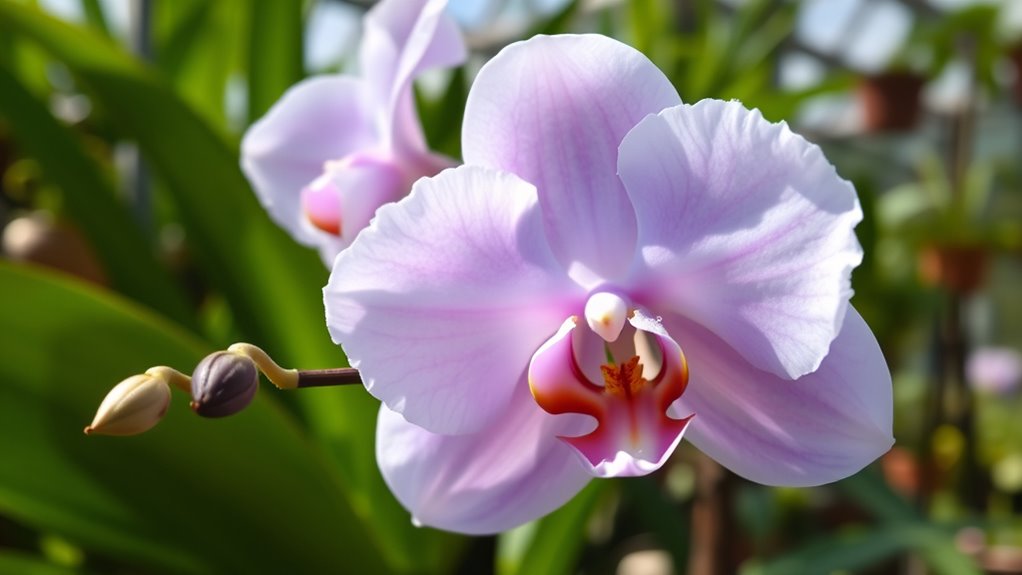
Ever wondered how to encourage your orchid to bloom again? Achieving a second bloom isn’t just about luck; it’s about understanding your plant’s needs and providing the right care. One of the most important factors is establishing an appropriate watering schedule. Orchids dislike overwatering, which can lead to root rot, but they also need consistent moisture to stay healthy. You should water your orchid thoroughly when the top inch of the potting mix feels dry to the touch. During active blooming periods, this might mean watering once a week, but in cooler months or if your home is more humid, you can extend the interval. Always ensure excess water drains away completely, preventing soggy roots. Adjust your watering schedule based on your environment and the specific needs of your orchid species.
Another key to encouraging re-blooming lies in the potting mix you use. Orchids thrive in a well-draining, aerated potting medium that mimics their natural habitat. Typically, orchids prefer a potting mix made from bark, charcoal, and perlite, which allows air to circulate around the roots and prevents water retention. If your current mix is compacted or retains too much moisture, it’s time to repot with a fresh, suitable blend. Proper potting mix not only supports healthy root growth but also influences flower production. When repotting, gently remove your orchid from its current container, carefully shake off old potting mix, and trim any dead or rotting roots. Then, place it into a clean, slightly larger pot with fresh mix, ensuring the roots are spread out and covered lightly.
Consistently maintaining the right watering schedule and using an appropriate potting mix creates an environment where your orchid can recover from its flowering cycle and prepare for a new one. After blooming, many orchids enter a rest period where they store energy in their pseudobulbs or roots. During this time, reduce watering slightly and avoid fertilizing until new growth appears. Proper care during this phase helps the plant build strength for its next flowering. Once you notice new shoots or buds forming, resume your regular watering routine and consider feeding your orchid with a balanced, diluted orchid fertilizer to boost blooming potential. Patience is key—re-blooming can take a few months, but with attentive care, your orchid will reward you with another stunning display.
Frequently Asked Questions
How Long Does It Typically Take for an Orchid to Rebloom?
The blooming timeline for orchids varies depending on the species and growth stages, but generally, it takes about 6 to 12 months for an orchid to rebloom. After the initial bloom, your orchid needs time to rest and recover, typically entering a dormant period. During this phase, proper care like adequate light, watering, and fertilization helps encourage new growth, leading to a future bloom. Patience is key in this process.
Can Any Orchid Variety Be Encouraged to Rebloom?
Think of your orchid as a story waiting to continue. Not every orchid variety, like every story, is destined for a second chapter. Through careful orchid hybridization and understanding its natural blooming season, you can encourage some orchids to bloom again. While some are enthusiastic to repeat their performance, others might need more patience. With proper care and timing, you can inspire many orchids to surprise you with a second bloom.
What Are Common Mistakes That Prevent Orchids From Reblooming?
You might be making common mistakes that prevent your orchids from reblooming, like watering issues or light misjudgments. Overwatering can cause root rot, while underwatering stresses the plant, both hindering blooming. Additionally, placing your orchid in insufficient light or too much direct sunlight can disrupt its cycle. Make certain you water appropriately and provide bright, indirect light to encourage a healthy rebloom. Avoid these mistakes for better flowering success.
Does Fertilizing Frequency Affect the Reblooming Process?
Think of your orchid’s reblooming as a delicate dance; the right fertilizer schedule keeps it moving smoothly. Too much fertilizer can overwhelm the plant, while too little can starve it of reblooming nutrients. Regular feeding, about once a week with a balanced orchid fertilizer, helps provide essential nutrients at the right time. This promotes healthy growth and encourages a second bloom, ensuring your orchid thrives and blooms again.
How Can Temperature Fluctuations Influence Orchid Reblooming?
Temperature fluctuations can critically influence your orchid’s reblooming. Sudden temperature stress may delay or hinder blooming, so it’s essential to maintain stable conditions. You should also focus on humidity control, as consistent humidity levels support healthy growth and flowering. By minimizing temperature swings and managing humidity, you create an ideal environment that encourages your orchid to rebloom naturally and beautifully.
Conclusion
With a little patience and the right care, you’ll find your orchid blooming again like a phoenix rising from the ashes. Remember, each bloom is a sign of your dedication and love for your plant. Keep providing the proper light, water, and temperature, and watch your orchid surprise you with its resilience. Just like a good story that keeps you hooked, your orchid’s second bloom will remind you that beauty can return when you least expect it.
Fall yard work Picks
leaf blowers
As an affiliate, we earn on qualifying purchases.