Incorporating plants into your living room decor instantly creates a calming, lively atmosphere. Start by choosing plants that suit your light and humidity levels, and select decorative planters that match your style. Arrange taller plants in corners or against walls, and cluster smaller ones on shelves or tables for visual interest. Regular care will keep your greenery thriving. If you want tips on arranging and caring for your indoor garden, there’s more to discover below.
Key Takeaways
- Choose plants that suit your living room’s lighting and space for easy maintenance and healthy growth.
- Use decorative planters that complement your interior decor to enhance visual appeal.
- Arrange taller plants in corners or against walls to create depth and balance in the room.
- Cluster smaller plants on shelves, coffee tables, or window sills for a curated, lush look.
- Incorporate various textures and styles of planters to add character and personalize your green space.

Creating a living room garden transforms your indoor space into a lush, relaxing oasis. When you decide to incorporate plants into your decor, you’re not just adding greenery—you’re creating a vibrant environment that can boost your mood and improve air quality. To make this happen, mastering indoor plant care is essential. Each plant has unique needs, so take time to learn about watering schedules, light requirements, and humidity levels. For example, some plants thrive in bright, direct sunlight, while others prefer low light conditions. Understanding these needs helps your plants flourish, ensuring your living room remains lively and healthy. Proper care also means avoiding overwatering, which can lead to root rot, and making sure your plants are not exposed to drafts or sudden temperature changes. Consistent attention to these details results in a thriving garden that adds character and tranquility to your space. Additionally, choosing appropriate lighting solutions can significantly improve plant growth and health, especially in indoor environments with limited natural sunlight.
Choosing the right decorative planters is just as important as selecting the plants themselves. The planters you pick set the tone for your living room garden—whether you prefer sleek modern styles, rustic charm, or colorful, eclectic designs. When selecting decorative planters, consider the size and shape of each plant; a tall, leafy plant might look great in a large, statement pot, while smaller succulents fit well in tiny, decorative containers. Drainage is key, so choose planters with holes or add a layer of gravel at the bottom to prevent water from accumulating. The material of the planters also influences the overall aesthetic—ceramic, terracotta, or even metallic options can complement your existing decor. Don’t shy away from mixing and matching different styles and textures to create visual interest. Incorporating decorative planters not only enhances the aesthetic appeal but also helps you organize your plants neatly, making maintenance easier and your space more cohesive.
As you build your living room garden, remember that arrangement matters. Position taller plants in corners or against walls to create depth, and cluster smaller plants together on shelves or coffee tables for a curated look. Regularly rotating plants ensures even growth and prevents them from leaning toward the light source. Keep an eye on your indoor plant care routine, adjusting watering and light as needed. With a thoughtful selection of decorative planters and attentive care, your living room transforms into a personalized green sanctuary that invites relaxation and conversation. By paying attention to these details, you’ll find that your indoor garden becomes a cherished part of your home, offering beauty, calm, and a touch of nature’s serenity every day.
Frequently Asked Questions
How Do I Choose Plants Suitable for Low-Light Living Rooms?
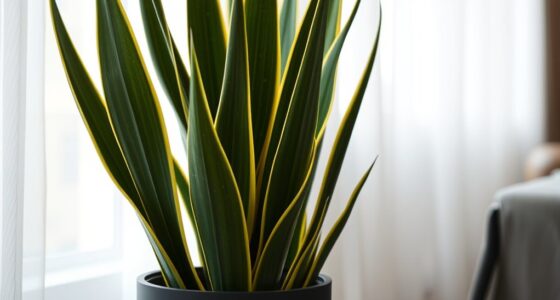
When choosing plants for low-light living rooms, consider their indoor lighting needs and how well they adapt to dim conditions. Look for varieties like snake plants, pothos, or ZZ plants, which thrive with minimal sunlight. Remember, proper plant care routines matter—water them sparingly and avoid overwatering. By selecting the right plants and maintaining consistent care, you’ll bring green life into your space without needing bright light.
What Are the Best Plants for Air Purification in a Living Room?
Imagine you’re in the 1920s, thinking about air purification—fancy, right? For your living room, opt for plants like snake plants, pothos, and peace lilies. They excel at filtering toxins and improving air quality. When selecting plants, consider their ability to thrive indoors and purify the air. These choices brighten your space and keep the air fresh, making your living room both stylish and healthier.
How Often Should I Water My Living Room Plants?
You should establish a consistent watering schedule to maintain ideal plant hydration. Typically, most living room plants need watering once a week, but this can vary based on the plant type, size, and indoor conditions. Check the soil regularly; if it feels dry about an inch deep, it’s time to water. Overwatering can harm your plants, so guarantee proper drainage and avoid letting roots sit in water.
How Can I Prevent Pests on Indoor Garden Plants?
To prevent pests on your indoor garden plants, start by choosing pest-resistant plants whenever possible. Keep your plants healthy with proper watering and lighting, as strong plants resist pests better. Use natural pest control methods like neem oil or insecticidal soap to manage issues early. Regularly check your plants for signs of pests, and remove infected leaves promptly. This proactive approach keeps your garden vibrant and pest-free.
What Are Tips for Arranging Plants to Maximize Space?
To maximize space with your plants, focus on smart plant placement and shelf styling. Arrange taller plants near the back or corners and use varying heights to create visual interest. Incorporate wall-mounted planters or tiered shelves to free up surface space. Group similar plants together for a cohesive look, ensuring each gets enough light. This approach optimizes your room and makes your indoor garden feel vibrant and organized.
Conclusion
By weaving greenery into your living room, you’re planting more than just plants—you’re cultivating a sanctuary of serenity and energy. Let each leaf be a whisper of nature’s grace, filling your space with life and love. As your plants thrive, so will your spirit, turning your home into a lush oasis where beauty and calm grow side by side. Embrace this living art, and watch your space bloom with endless possibility.