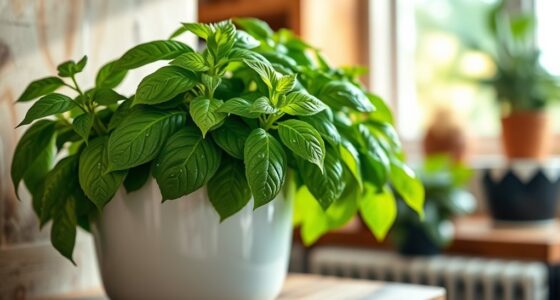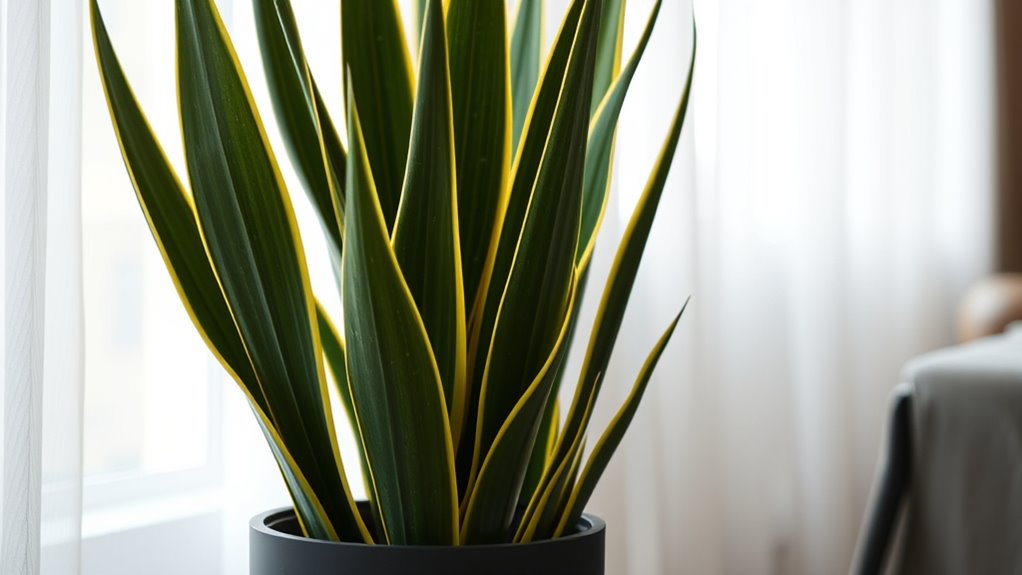

To care for your snake plant in low light, place it near filtered windows or shaded corners where it can thrive without direct sun. Water only when the top inch of soil feels dry, which is typically every few weeks, and reduce watering in winter. Use well-draining soil mixes with sand or perlite, and avoid overwatering to prevent root rot. Keep these tips in mind, and you’ll discover how easy it is to keep your plant healthy and beautiful.

Get garden gear delivered free with Prime
- Fast, free delivery on millions of items
- Prime Video, Amazon Music and more included
- Member-only deals all year
Key Takeaways
- Snake plants thrive in indirect, low to moderate light, making them ideal for shaded or low-light areas.
- Water only when the top inch of soil is dry, reducing watering frequency during winter.
- Use well-draining soil mixes with sand, perlite, charcoal, or pumice to prevent root rot.
- Propagate easily through leaf cuttings or root divisions for quick plant expansion.
- Minimal maintenance and drought tolerance make snake plants perfect for low-light, low-water environments.
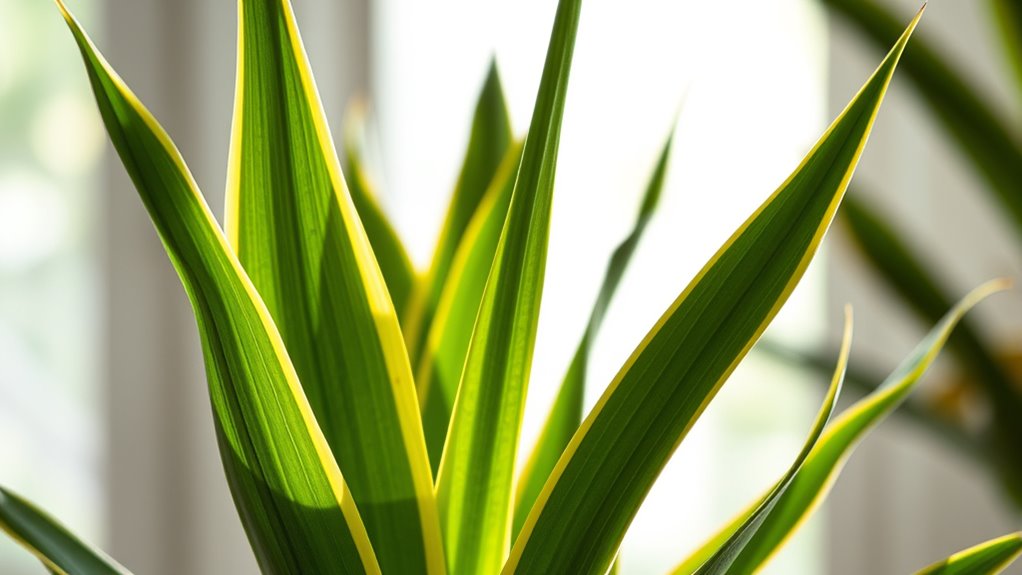
Snake plants are among the easiest houseplants to care for, making them ideal for beginners. Their resilience and low-maintenance nature mean you can enjoy their striking appearance without much fuss. One of the best features of snake plants is how straightforward it is to propagate new plants, which allows you to expand your collection or share plants with friends. Propagation techniques primarily involve dividing the root clumps or using leaf cuttings. To propagate via division, carefully remove the plant from its pot and gently separate the root clusters, ensuring each division has healthy roots and leaves. Plant each division in a well-draining soil mixture, and water sparingly until the new plant establishes. For leaf cuttings, cut a healthy leaf near the base, let it callous for a day or two to prevent rot, then insert it into soil. Keep the soil lightly moist, and patience is key, as it may take several weeks for roots to develop. Understanding plant resilience can help you better care for your snake plant and optimize its growth potential.
When it comes to soil mixture recommendations, your goal is to create a well-draining environment that prevents water from sitting around the roots. A good mix combines standard potting soil with coarse sand or perlite to improve drainage. You can also add some charcoal or pumice to further enhance aeration. Avoid heavy, water-retentive soils that can lead to root rot, especially since snake plants thrive in dry conditions. When repotting or planting new divisions, ensure the container has drainage holes, and fill it with this optimized soil mixture. This will help maintain healthy root systems and promote robust growth.
Caring for your snake plant in low-light conditions is simple—although they can tolerate a variety of lighting, they flourish in indirect, low to moderate light. Keep in mind that even though they’re adaptable, placing them near a window with filtered light or in a shaded corner will keep them healthy without overexposing them to harsh sunlight. Water your snake plant only when the top inch of soil feels dry, usually every few weeks, depending on your environment. Their drought-tolerance makes it easy to resist overwatering, which is a common mistake. During winter, reduce watering further, as growth slows down. With these straightforward propagation techniques and soil mixture recommendations, your snake plant will thrive, adding a touch of greenery effortlessly to your space.
snake plant low light indoor plant
As an affiliate, we earn on qualifying purchases.
As an affiliate, we earn on qualifying purchases.
Frequently Asked Questions
How Often Should I Repot My Snake Plant?
You should repot your snake plant every 2 to 3 years, following a repotting schedule that matches its growth. When choosing a container, pick one slightly larger with drainage holes to prevent water buildup. Repotting helps refresh the soil and gives your plant room to grow. Keep an eye on roots poking out of the drainage holes or if growth slows down, indicating it’s time for a new container.
What Are Common Pests That Attack Snake Plants?
You might notice pests like spider mites, mealybugs, or scale insects attacking your snake plant. To identify these pests, look for tiny webs, cottony spots, or sticky residue. Pest identification is vital for effective treatment. Use natural remedies such as neem oil, insecticidal soap, or diluted alcohol to get rid of these pests. Regularly inspecting your plant helps catch infestations early and keeps your snake plant healthy.
Can Snake Plants Tolerate Overwatering?
Overwatering your snake plant is like drowning a delicate boat—too much water can harm it. You should water sparingly, about once every 2-6 weeks, depending on your home’s humidity and temperature. Make sure your soil drains well to prevent water from pooling around the roots. Proper watering frequency combined with good soil drainage keeps your snake plant healthy, thriving without the risk of root rot.
How Do I Prune My Snake Plant Properly?
To prune your snake plant properly, start by using clean, sharp scissors or pruning shears. Follow pruning techniques by cutting the leaves at the base, removing any yellow or damaged leaves first. Trimming tips include avoiding over-pruning, which can stress the plant, and always cutting above a node. Regularly check for dead or unhealthy foliage and prune as needed to encourage healthy growth and maintain its sleek appearance.
Is It Safe to Keep Snake Plants Around Pets?
Yes, it’s safe to keep snake plants around pets, but you should be cautious. Snake plant safety is a concern because it contains saponins, which are toxic to pets if ingested. To protect your furry friends, place the plant out of their reach or consider alternative plants that are non-toxic. Always monitor your pets and educate yourself on pet toxicity to prevent accidental poisoning.
Conclusion
With minimal effort, your snake plant can thrive even in low-light spots, proving that beauty doesn’t demand constant attention. Remember, a little care goes a long way—”A stitch in time saves nine.” Keep an eye on watering habits and avoid overdoing it, and you’ll enjoy its sleek, air-purifying presence for years to come. Embrace patience and consistency, and your snake plant will reward you with its resilient charm.
Fall Picks
fall essentials
As an affiliate, we earn on qualifying purchases.