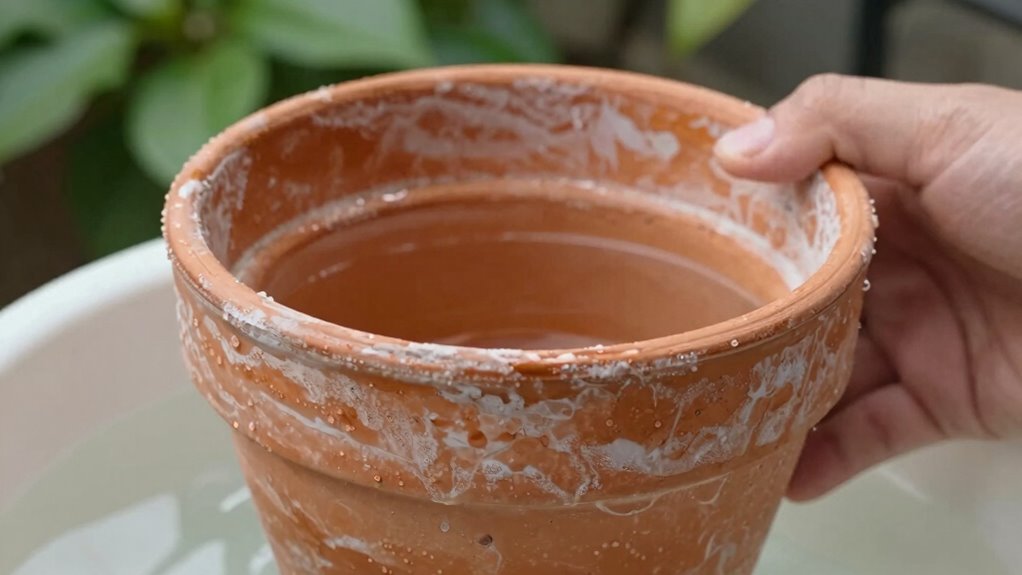

To clean mineral buildup from your plant pots, start by inspecting for white, chalky deposits and remove remaining soil. Soak the pots in a mixture of water and vinegar for 15-30 minutes to loosen deposits. Use a soft brush or cloth to gently scrub away stubborn stains, then rinse thoroughly. To keep your pots mineral-free long-term, you’ll want to follow simple preventive tips and maintenance steps—more details to help you keep your pots in top shape.

Get garden gear delivered free with Prime
- Fast, free delivery on millions of items
- Prime Video, Amazon Music and more included
- Member-only deals all year
Key Takeaways
- Remove excess soil and soak the pot in vinegar-water solution to loosen mineral deposits.
- Use soft brushes or sponges to gently scrub away buildup without scratching the surface.
- Ensure drainage holes are clear and add gravel at the bottom to improve water flow and prevent mineral accumulation.
- Regularly rinse pots and adjust watering habits to reduce mineral deposits and promote healthy plant growth.
- Consider using filtered or distilled water and maintaining proper soil pH to minimize future mineral buildup.
As an affiliate, we earn on qualifying purchases.
How to Spot Mineral Buildup on Your Plant Pots
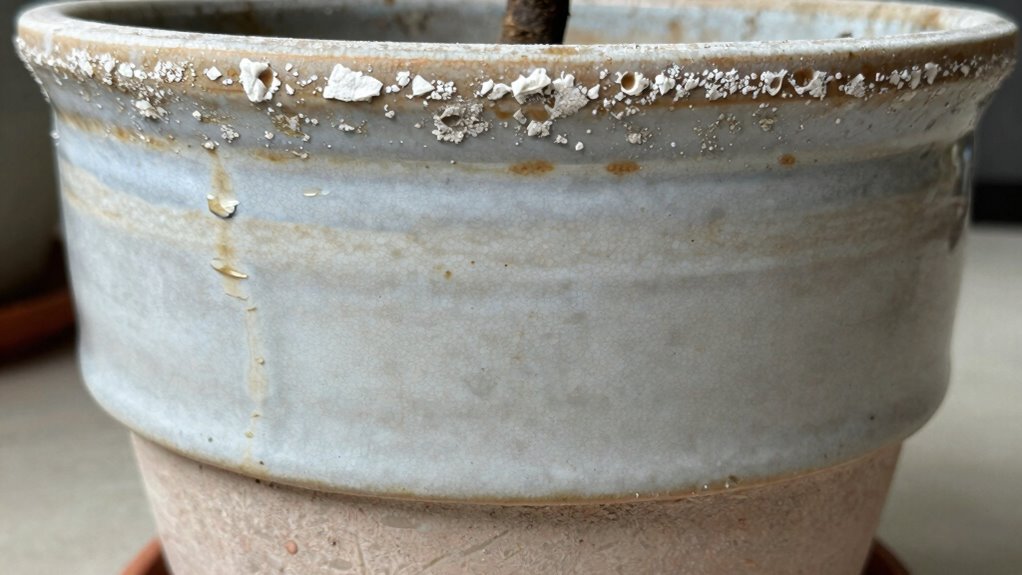
Mineral buildup on your plant pots often appears as white, chalky deposits or crusty stains on the surface. To accurately identify it, consider soil testing and water quality, as high mineral content in either can cause buildup. If your water is hard or contains many dissolved minerals, it’s more likely to leave deposits. Soil testing can reveal excessive mineral levels that contribute to the problem. Look closely at the pot’s exterior—if you see a powdery or crusty layer, it’s a sign of mineral accumulation. Also, check the drainage holes; mineral deposits often clog them. Recognizing these signs early helps you take steps to prevent further buildup, ensuring your plants stay healthy and your pots remain clean. Color accuracy in water quality can also influence mineral deposit formation on plant containers. Monitoring water mineral content regularly can help prevent future buildup and keep your plants thriving. Understanding your water’s hardness levels can further aid in managing mineral deposits effectively. Being aware of water quality variations helps in selecting appropriate watering practices to minimize mineral residue.
Preparing Your Pots and Tools for Cleaning
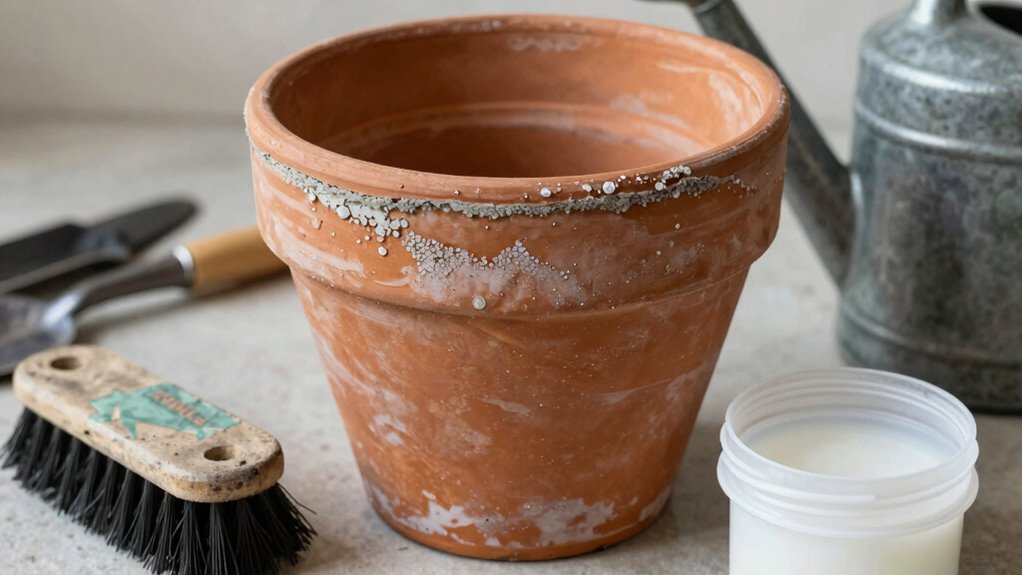
Before you start cleaning, it’s important to prepare your plant pots and tools to make the process smoother and more effective. Begin by inspecting the pot material and selecting appropriate cleaning methods—ceramic, plastic, or clay may require different approaches. Clear out any remaining soil, ensuring soil aeration isn’t compromised during cleaning. This helps prevent further buildup and keeps the roots healthy. Use gloves and gather necessary tools, such as brushes or scrapers, to remove loose mineral deposits easily. For stubborn buildup, soaking the pot in water or a mild vinegar solution can loosen deposits before scrubbing. Proper preparation minimizes mess and protects your tools, setting a solid foundation for thorough cleaning and maintaining your pots’ longevity. Incorporating sustainable cleaning practices can also reduce environmental impact during the process. Additionally, understanding the importance of creative storytelling for branding can inspire eco-friendly tips and methods to share with fellow plant enthusiasts. Being aware of common cabling issues can also help you avoid damage during cleaning if your pots are near any wiring or electrical components. To further enhance your cleaning routine, researching Gold IRA markets can provide insights on secure investments that align with your long-term sustainability goals.
Step-By-Step: How to Remove Mineral Deposits From Pots
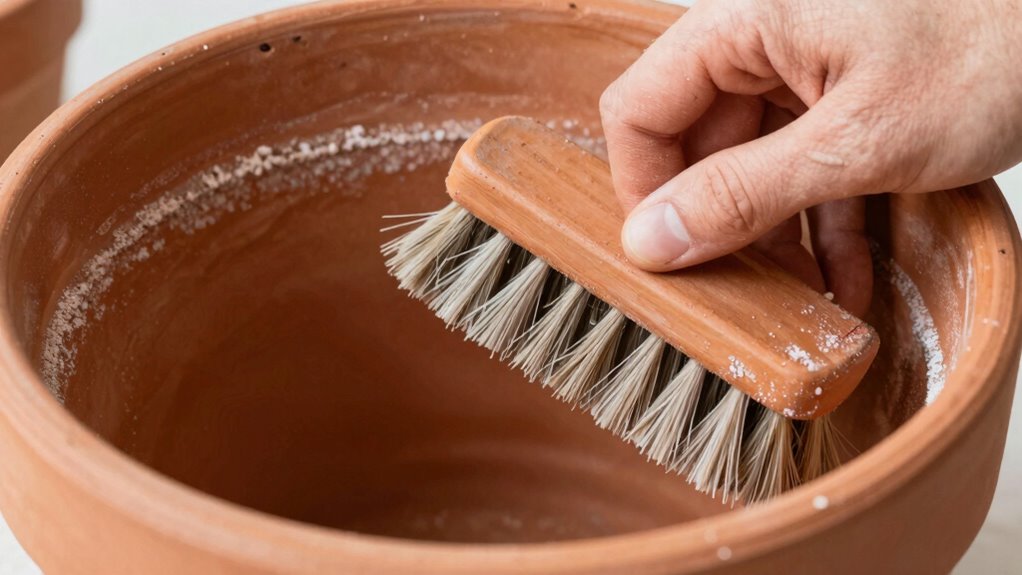
To effectively remove mineral deposits from your plant pots, start by filling the pot with a mixture of equal parts white vinegar and water. Let it sit for 15-30 minutes to loosen the buildup. After soaking, scrub the inside with a brush or sponge to lift stubborn deposits. Rinse thoroughly with clean water to remove any residue. While cleaning, consider soil testing to guarantee your plant’s health isn’t impacted by mineral levels. Adjust your watering habits—avoid overwatering and let the topsoil dry out between watering sessions to prevent future buildup.
- Use a soft brush or sponge to avoid scratching the pot
- Rinse thoroughly to remove all vinegar and loosened deposits
- Monitor soil testing results to optimize watering practices
Natural and Commercial Ways to Prevent Mineral Buildup
Preventing mineral buildup starts with mindful watering habits and choosing the right soil. Use filtered water when possible, and avoid overwatering to minimize mineral deposits that can tarnish plant pot aesthetics. Maintaining proper soil pH balance also helps reduce mineral accumulation and promotes healthy plant growth. Being aware of caregiver emotional health can also help gardeners stay attentive and consistent in their maintenance routines. Here’s a quick overview:
| Natural Methods | Commercial Solutions |
|---|---|
| Regularly flush pots with water to prevent buildup | Use commercial descaling products designed for pots |
| Use organic mulch to absorb excess minerals | Apply pH-adjusting soil amendments to optimize soil pH |
| Choose soil with balanced nutrients | Use water-softening systems for consistent watering |
| Incorporate natural chelators like lemon juice | Use commercial pH testers for better monitoring |
| Avoid hard tap water when possible | Use mineral-specific plant care products |
Additionally, selecting soils with appropriate mineral content can help minimize buildup over time, leading to healthier plants and cleaner pots. Incorporating soil testing can further assist in maintaining optimal mineral levels and preventing excess accumulation. Being mindful of watering practices also plays a vital role in reducing mineral deposits and ensuring the longevity of your plant pots.
Tips for Keeping Your Plant Pots Clean and Mineral-Free Long-Term
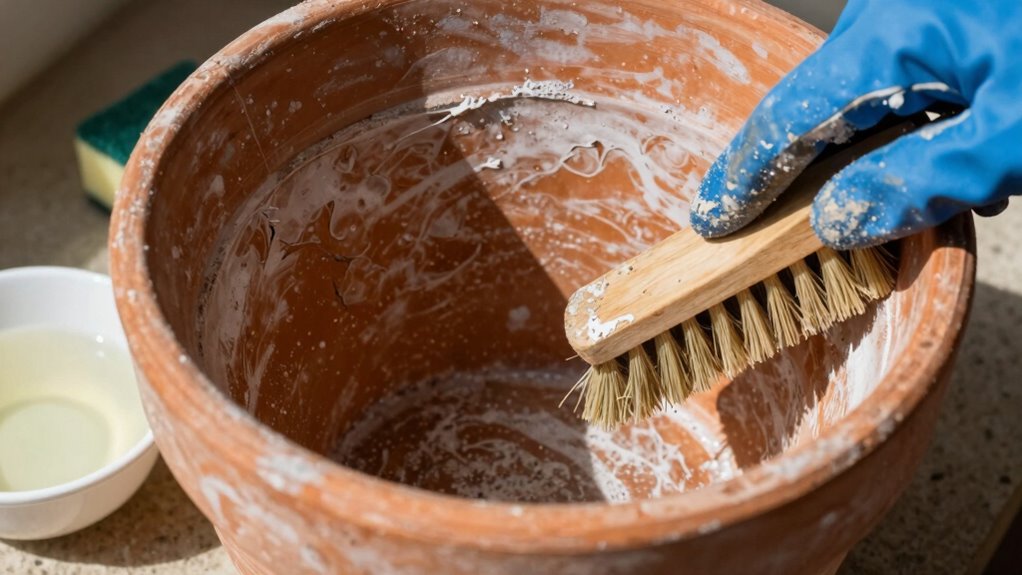
To keep your plant pots clean and mineral-free over time, establish a regular cleaning schedule to prevent buildup. Use soft tools to scrub away residues gently and avoid damaging the pot’s surface. Additionally, make sure proper drainage to reduce mineral accumulation and keep your plants healthy. Maintaining good indoor air quality by controlling humidity levels can also help prevent excess mineral deposits from forming on your pots, as humidity control influences how minerals settle and accumulate. Incorporating eco-friendly natural pools in your outdoor space can also contribute to a healthier environment and reduce the need for harsh cleaning agents. Regularly monitoring and adjusting your watering practices can further minimize mineral deposits by reducing excess water that can lead to buildup. Proper solar system safety measures, such as ensuring that outdoor watering areas are well-drained and protected from mineral-rich runoff, can also support longer-term cleanliness of your plant pots. Additionally, integrating smart appliances that monitor water quality can help detect mineral levels and prevent excessive buildup.
Regular Cleaning Schedule
Establishing a regular cleaning schedule is essential for maintaining your plant pots free of mineral buildup over time. Consistent care helps prevent issues caused by fertilizer excess and imbalanced soil pH, which can accelerate mineral deposits. By setting a routine, you keep the pots in good condition and ensure healthy plants.
To stay on track:
- Clean your pots at least once a month to remove salt and mineral residues.
- Check soil pH regularly to avoid mineral buildup caused by imbalances.
- Avoid over-fertilizing, which contributes to mineral deposits and soil issues.
A consistent schedule minimizes long-term problems, keeps your pots looking fresh, and promotes healthy plant growth. Staying proactive ensures mineral buildup doesn’t become a persistent problem.
Use of Soft Tools
Using soft tools is essential for maintaining your plant pots without causing scratches or damage that can trap dirt and mineral deposits. Soft cloths are perfect for wiping away surface grime and mineral buildup without damaging the pot’s finish. When you need to scrub stubborn spots, opt for gentle scrubbing with a sponge or a soft-bristled brush. Avoid abrasive tools like steel wool or harsh scrubbers that can scratch the material and create areas where minerals can accumulate. Regularly using soft cloths and gentle scrubbing ensures your pots stay clean and free of mineral buildup. This approach not only prolongs the life of your pots but also keeps your plants healthy by preventing mineral deposits from affecting their roots. Incorporating Proper cleaning techniques is also key to preventing water damage and maintaining the longevity of your plant containers. To further enhance your cleaning routine, consider using appropriate household products, which can help dissolve mineral deposits more effectively. Using gentle cleaning methods can help preserve the integrity of your pots over time, especially when combined with knowledge about best vacuums for dust removal, which emphasize gentle yet effective cleaning practices. Additionally, choosing non-abrasive cleaning tools helps prevent unnecessary wear on delicate surfaces.
Proper Pot Drainage
Proper pot drainage is essential for preventing mineral buildup over time. When your pots drain well, it promotes soil aeration and reduces excess salts that can accumulate from frequent watering. To keep your plants healthy and mineral-free, consider adjusting your watering frequency—watering only when the top inch of soil feels dry helps prevent over-saturation. You can also improve drainage by adding gravel or coarse sand at the bottom of the pot or choosing containers with drainage holes. Regularly inspecting and cleaning these holes ensures water flows freely. Additionally, avoid letting water sit in the saucer for long periods. Good drainage practices promote healthy roots, minimize mineral deposits, and keep your plant pots clean long-term. Incorporating proper drainage methods can further enhance your efforts and ensure long-lasting plant health. Ensuring your pots have adequate drainage efficiency supports these practices and prevents mineral buildup over time.
Troubleshooting Mineral Buildup and Repair Tips
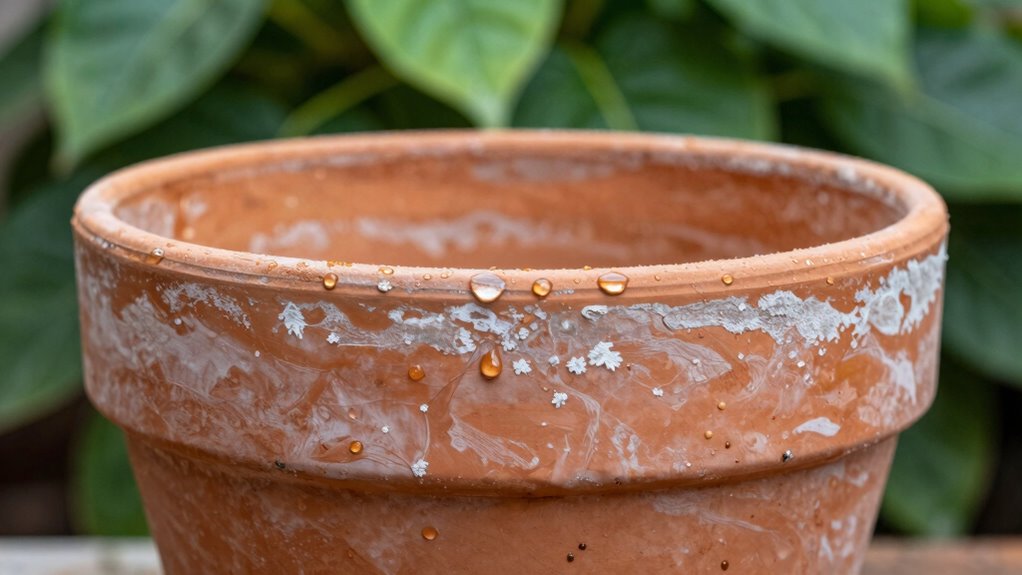
Mineral buildup can quickly become a frustrating problem, especially if you notice white deposits or crusty residues forming on your plant pots. To troubleshoot, first check your water quality; hard water with high mineral content often worsens buildup. Using filtered or distilled water can help prevent future issues. Adjusting the soil pH is also key—if your soil is too alkaline, minerals tend to accumulate more rapidly. Test and modify soil pH as needed to create a less favorable environment for mineral deposits. If buildup persists, remove the affected soil and clean the pot thoroughly. Regularly rinsing your pots and monitoring water quality can prevent recurring problems, saving you time and effort in maintaining healthy, mineral-free plant containers.
Frequently Asked Questions
How Often Should I Clean Mineral Buildup From My Plant Pots?
You should clean mineral buildup from your plant pots every few months to maintain healthy plants. Regularly check for deposits and, when needed, remove the soil for replacement and scrub the pot with a brush to remove stubborn deposits. This process prevents mineral buildup from affecting plant growth and keeps your pots looking fresh. Consistent maintenance guarantees your plants stay healthy, and your pots remain clean and attractive.
Can Mineral Buildup Harm My Plants’ Health?
Mineral buildup can harm your plants’ health by affecting soil pH adjustments, making nutrients less available. Excess minerals can lead to root rot or nutrient deficiencies. To prevent this, you should regularly clean your pots with organic cleaning solutions to remove buildup. Doing so helps maintain proper soil conditions, ensuring your plants stay healthy and thrive. Regular maintenance is key to avoiding long-term damage caused by mineral deposits.
Are Certain Plant Types More Prone to Mineral Deposits?
Are certain plant types more prone to mineral deposits? Absolutely. Some plants, like succulents and cacti, are more susceptible due to their delicate roots and specific soil needs. Plant type susceptibility varies with soil composition effects, as mineral-rich water accelerates buildup. If you notice white crusts, consider adjusting watering habits and choosing plants suited to mineral-heavy soil. Proper care can minimize buildup and keep your plants healthy.
What Are Environmentally Friendly Cleaning Options?
You can use eco-friendly solutions and natural cleaning methods to remove mineral buildup from your plant pots. For instance, mix equal parts of white vinegar and water to create a safe, effective cleaner. Scrub gently with a soft brush or sponge, then rinse thoroughly. Baking soda paste also works well for stubborn deposits. These natural options are environmentally friendly, non-toxic, and safe for your plants, making your cleaning routine sustainable.
How Can I Prevent Mineral Buildup in Outdoor Pots?
To prevent mineral buildup in outdoor pots, you should monitor soil pH regularly and adjust it as needed, since imbalanced pH can cause minerals to accumulate. Incorporate organic solutions like compost or mulch to improve soil health and reduce mineral deposits. Also, use rainwater instead of tap water, which often contains minerals, and make certain of proper drainage to prevent water from pooling, which can lead to buildup over time.
Conclusion
By banishing buildup with basic brushes, bold baking soda, and clever cleaning, you’ll keep your plant pots pristine and pristine. Regular rinsing, routine repairs, and mindful moisture management make maintenance manageable, avoiding stubborn stains and mineral messes. With these tips, you’ll transform tired, tarnished containers into tidy, thriving terrariums — turning tedious chores into triumphant triumphs. Take charge, stay consistent, and watch your pots stay perfect, prolonging their beauty and your plant’s health effortlessly.
Fall yard work Picks
leaf blowers
As an affiliate, we earn on qualifying purchases.