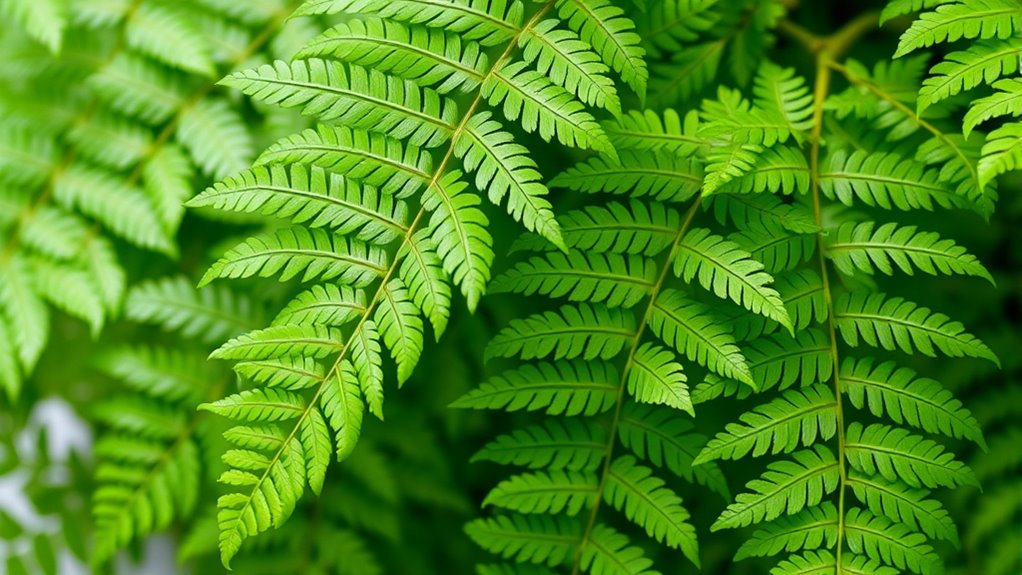
To prevent crispy fronds on your Boston fern, make certain you water thoroughly when the top inch of soil feels dry and avoid overwatering to prevent root rot. Maintain high humidity by misting or using a humidifier, and prune dead or yellowing fronds to promote healthy growth. Proper light and consistent care help keep fronds lush and vibrant. Keep these tips in mind, and you’ll soon enjoy a thriving, non-crispy fern that’s full of life.
Key Takeaways
- Maintain consistent, thorough watering, ensuring the soil is moist but not soggy, to prevent fronds from drying out and crunching.
- Increase humidity by misting or using a humidifier, as dry air causes fronds to become brittle and crispy.
- Prune dead or brown fronds at the base to promote healthy, vibrant growth and prevent further dryness.
- Avoid overexposure to direct sunlight; bright, indirect light helps keep fronds lush and prevents dehydration.
- Check soil moisture regularly and adjust watering frequency seasonally, especially reducing watering in winter to maintain proper hydration.
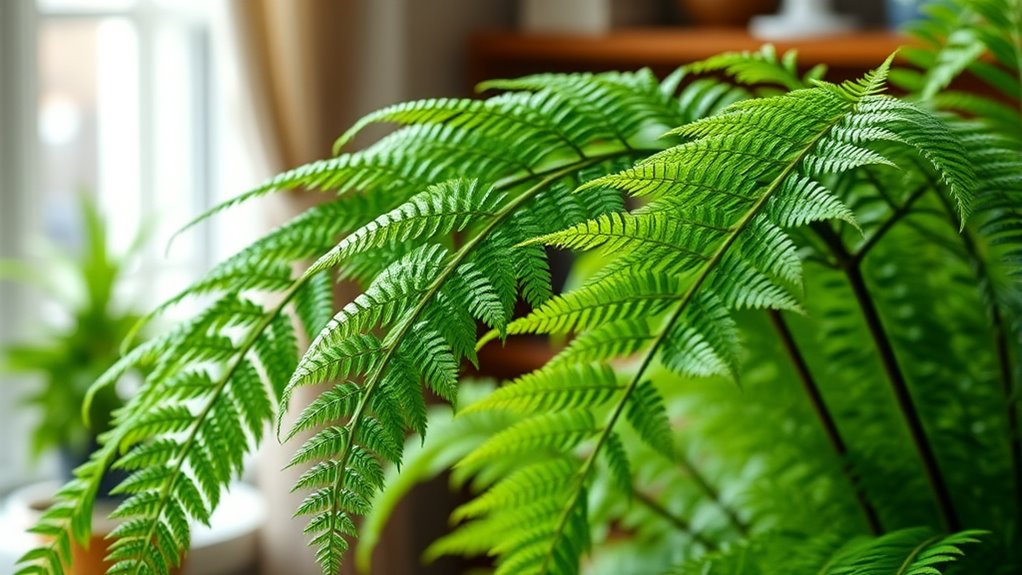
Boston ferns are a popular choice for adding lush greenery to your home, but they require specific care to thrive. One of the most important aspects of caring for your fern is establishing a consistent watering schedule. These plants love humidity and moist soil, but overwatering can lead to root rot, while underwatering causes fronds to turn brown and crispy. To get it right, check the top inch of soil regularly; if it feels dry, it’s time to water. When watering, do so thoroughly until water drains from the bottom of the pot, ensuring even moisture distribution. In the winter months, you might need to reduce watering slightly, but never allow the soil to completely dry out. Using room-temperature water is best, as cold water can shock the roots.
Pruning techniques are equally crucial in maintaining a healthy Boston fern. Regular pruning encourages new growth, removes dead or yellowing fronds, and keeps the plant looking full and vibrant. When you prune, use clean, sharp scissors or pruning shears to cut back any fronds that are browning or damaged. Cut at the base of the frond where it joins the crown, and avoid pulling or tearing the foliage, as this can cause stress or disease. It’s a good idea to trim back fronds that have lost their vitality, especially if they’re turning brown at the tips, but be cautious not to over-prune—leave enough foliage to support the plant’s overall health.
Maintaining proper watering and pruning helps your Boston fern develop lush, green fronds without the crunch that comes from neglect or improper care. Keep an eye on humidity levels as well; these plants thrive in a humid environment, so mist the fronds regularly or place a humidifier nearby if your home is dry. Consistent care, including a sensible watering schedule and strategic pruning, ensures your fern remains vibrant and healthy. Remember, patience is key—your fern will respond positively to gentle, attentive care, growing into a beautiful centerpiece that adds life and color to your space. With a little effort and attention to detail, you’ll enjoy a thriving Boston fern that stays lush and verdant, free from the brittle, crispy fronds that signal trouble.
Frequently Asked Questions
How Often Should I Mist My Boston Fern to Prevent Frond Crunch?
You should mist your Boston Fern daily to maintain proper humidity control and prevent frond crunch. Regular misting keeps the air moist, which is essential for healthy, non-crunchy fronds. During dry or heated months, increase misting frequency to twice a day if needed. Consistent humidity helps the fern stay lush and vibrant, so monitor your plant and adjust misting accordingly for ideal care.
Can I Grow a Boston Fern Outdoors Year-Round?
You can grow a Boston fern outdoors year-round only if you live in USDA zones 9 through 11. In cooler or more variable climates, outdoor maintenance becomes tricky due to seasonal changes, which can threaten the fern’s health. To keep it thriving, bring it inside during winter or provide a sheltered, shaded spot. So, check your zone first – successful outdoor growth depends on your local climate.
What Are Common Pests That Affect Boston Ferns?
You should watch out for common pests like spider mite infestations and scale insect problems on your Boston fern. Spider mites cause tiny yellow or brown spots and fine webbing, while scale insects appear as small, immobile bumps on the fronds. Regularly inspect your fern, keep humidity high, and wipe leaves with a damp cloth. If you notice pests, treat your fern promptly with insecticidal soap or neem oil to keep it healthy.
How Do I Revive a Browning Boston Fern?
To revive a browning Boston fern, start by checking your watering tips—ensure you’re keeping the soil consistently moist but not soggy. Use well-draining soil with organic matter to promote healthy roots. Increase humidity around the plant and trim any dead or brown fronds. Proper watering and quality soil are key; they help restore your fern’s vibrancy and prevent further browning. Keep a close eye on moisture levels for best results.
Is It Okay to Prune My Boston Fern Heavily?
Thinking of giving your Boston fern a heavy prune? Go for it, but don’t go overboard—your fern isn’t a hedge! Prune selectively, removing dead or brown fronds, and keep soil pH in check. Use appropriate fertilizer recommendations to promote healthy regrowth. Heavy pruning can stress the plant, so balance is key. After all, even ferns appreciate a little TLC, not a deforestation project.
Conclusion
With a little love and attention, your Boston fern will flourish like a lush green waterfall, bringing life and serenity to your space. Keep the fronds moist and vibrant, and watch your plant dance with energy. Remember, caring for your fern is like tending to a gentle friend — patient and nurturing. Before you know it, your fern will be a thriving masterpiece, a gust of fresh, leafy air that brightens every corner of your home.