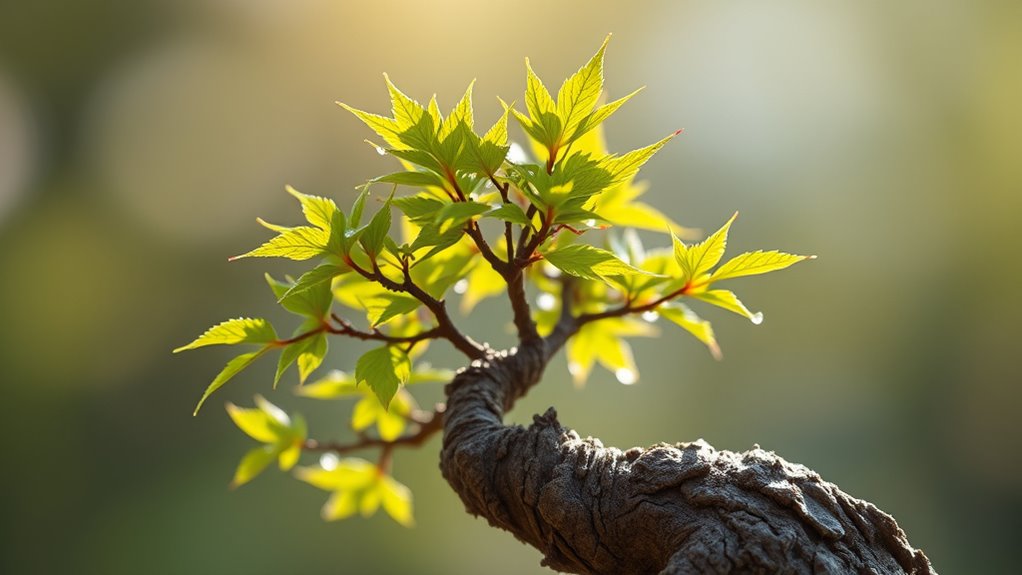
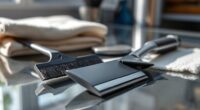
To care for your maple bonsai, focus on careful pruning to shape the tree and promote dense, tiny foliage. Use sharp tools and remove dead or crossing branches to keep it healthy and beautiful. Choose well-draining soil made of akadama, pumice, and lava rock to prevent root issues and maintain moisture. Consistent pruning and proper soil management make your miniature tree thrive. Continue exploring to discover how to nurture your bonsai into a charming masterpiece.

Get garden gear delivered free with Prime
- Fast, free delivery on millions of items
- Prime Video, Amazon Music and more included
- Member-only deals all year
Key Takeaways
- Regularly prune to shape the maple and promote dense, miniature foliage for a captivating bonsai appearance.
- Use sharp, clean tools and focus on gentle cuts to avoid stressing the tree.
- Maintain well-draining soil with akadama, pumice, and lava rock to ensure healthy root growth.
- Remove dead or crossing branches to improve airflow and overall aesthetic.
- Repot periodically, trimming roots and replacing soil to prevent compaction and support vitality.

Maple bonsai trees are stunning additions to any collection, but they require specific care to thrive. One of the most vital aspects of maintaining their health and beauty involves understanding proper pruning techniques and soil requirements. When it comes to pruning, you want to be strategic. Regular trimming helps shape the tree, promotes dense foliage, and encourages healthy growth. Use sharp, clean tools to prune back new shoots, focusing on maintaining the natural form of the maple. Remove any dead, crossing, or diseased branches to prevent issues and improve airflow. Remember, gentle, precise cuts are better than aggressive trimming, which can stress the tree. As you prune, consider the overall aesthetic and the natural growth pattern of the maple, aiming for a balanced, proportionate appearance. Consistent pruning also stimulates the development of smaller leaves, which enhances the miniature look that makes bonsai so captivating. Proper soil management is essential for healthy roots and overall vitality. In addition to pruning, soil plays a vital role in your maple bonsai’s health. The right soil must provide excellent drainage while retaining enough moisture for the roots to thrive. A typical soil mix for maple bonsai includes akadama, pumice, and lava rock, which offer a good balance of aeration and water retention. Avoid heavy, compacted soils that can suffocate roots or cause waterlogging, leading to root rot. You might also incorporate organic matter like pine bark or composted material to support nutrient retention. Before planting or repotting, ensure the soil is well-draining by testing its permeability. A good rule of thumb is to check if water quickly passes through the soil without pooling; if it does, you’re on the right track. During repotting, gently loosen the roots and trim any that are overly long or damaged, then replace the soil carefully to avoid compacting it around the roots. Additionally, understanding soil composition can greatly improve your bonsai’s growth and health.
As an affiliate, we earn on qualifying purchases.
Frequently Asked Questions
Can Maple Bonsais Survive Indoors Year-Round?
You might wonder if maple bonsais can survive indoors year-round. While they can thrive with enough indoor lighting, you’ll need to make seasonal adjustments, like providing extra light during winter. Guarantee your bonsai gets bright, indirect sunlight daily, and maintain proper humidity and watering. With attentive care and adjustments, your maple bonsai can stay healthy indoors all year, but always monitor its condition and adapt as needed.
What Is the Ideal Humidity Level for Maple Bonsais?
Many believe that high humidity levels benefit bonsais, but accurate moisture control is key. For maple bonsais, maintaining humidity levels around 50-60% provides ideal conditions, preventing dryness or mold. Too much moisture can cause root rot, while too little stresses the plant. Regularly monitor humidity and adjust with a humidity tray or misting, ensuring your tree stays healthy and thrives in its environment.
How Often Should I Repot My Maple Bonsai?
You should repot your maple bonsai every 2-3 years, depending on its growth rate. During repotting, adjust your watering schedule to prevent overwatering or drought stress. Use proper pruning techniques to maintain its shape and health. Repotting gives your tree fresh soil, encourages root growth, and prevents root-bound conditions. Keep an eye on its development, and don’t wait too long—timely repotting keeps your bonsai thriving.
Are There Specific Pests That Target Maple Bonsais?
Did you know that over 1,000 insect species can attack trees? When caring for your maple bonsai, pest prevention is key. You should be aware of common pests like aphids, spider mites, and scale insects. Regular insect identification helps you catch problems early, preventing damage. Keep an eye out for sticky residue or discolored leaves. Early intervention guarantees your bonsai stays healthy and thriving.
Can I Grow a Maple Bonsai From Seed Indoors?
You can grow a maple bonsai from seed indoors, but it requires patience and proper care. Start with seed germination, keeping the seeds moist and warm to encourage sprouting. Place your seedlings where they get ample indoor lighting, ideally near a south-facing window or under grow lights. Consistent watering and careful attention to temperature help your maple seedlings thrive, eventually shaping them into beautiful bonsais.
Conclusion
As you tend to your maple bonsai, you’ll notice how its delicate leaves mirror the changing seasons, much like the shifting sunlight filtering through a nearby window. With proper care, your tiny tree becomes a charming centerpiece, quietly thriving amidst your daily routines. One day, as you gently prune its branches, you’ll realize that nurturing this miniature marvel has become a soothing, almost poetic ritual—turning everyday moments into a beautiful dance of growth and patience.
Fall yard work Picks
leaf blowers
As an affiliate, we earn on qualifying purchases.