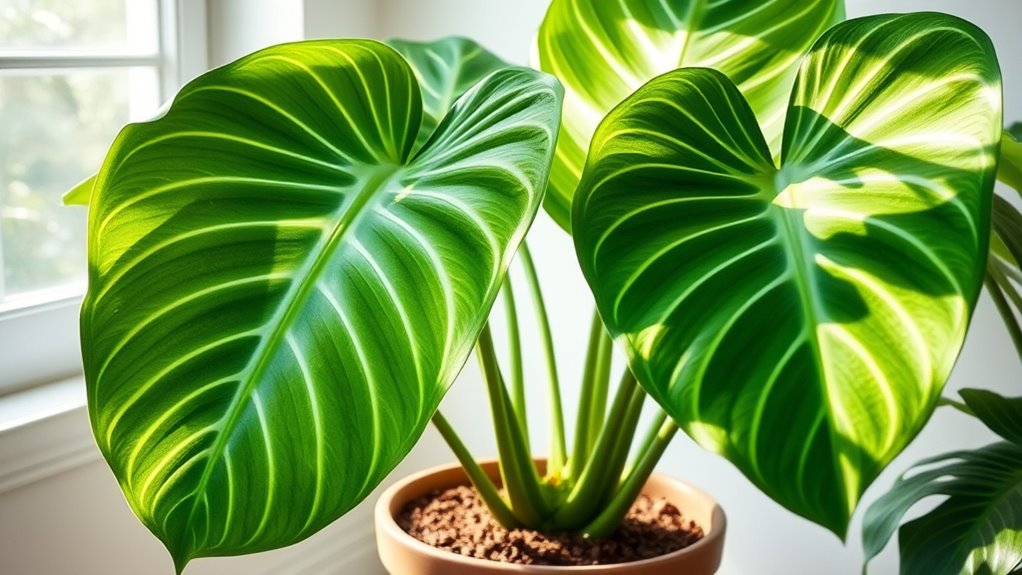

To care for your indoor Alocasia, water it when the top inch of soil feels dry, keeping the soil consistently moist but not waterlogged. Place it in bright, indirect light and guarantee good airflow to prevent pests. Regularly prune dead or damaged leaves and fertilize every few weeks during the growing season with half-strength, water-soluble fertilizer. With proper watering, lighting, and pruning, your plant will thrive—learn more to keep it healthy and vibrant.

Get garden gear delivered free — and shop member deals
- Fast, free delivery on millions of items
- Access to Prime Big Deal Days deals on October 6–7
- Prime Video, Amazon Music and more included
Key Takeaways
- Provide bright, indirect light and ensure good airflow for healthy growth.
- Water when the top inch of soil feels dry, avoiding overwatering and waterlogging.
- Fertilize every few weeks during the growing season with diluted, balanced water-soluble fertilizer.
- Regularly prune dead or yellowing leaves to maintain plant health and appearance.
- Keep soil consistently moist but not soggy, adjusting watering frequency for seasonal changes.

Are you wondering how to keep your Alocasia healthy and thriving? One of the most important aspects of Alocasia care is understanding its watering needs. Alocasias prefer consistently moist soil but dislike sitting in water, so you should water them thoroughly when the top inch of soil feels dry. During the growing season, typically spring and summer, you might need to water more frequently, maybe once a week, especially if your indoor environment is warm and dry. In cooler months, reduce watering to prevent overwatering, which can lead to root rot. Always check the soil moisture level before watering; if the soil still feels moist, hold off. Proper Alocasia watering encourages lush, vibrant foliage and prevents common problems like yellowing leaves or drooping stems.
Another key aspect of Alocasia care is regular Alocasia pruning. Pruning helps maintain a healthy plant by removing dead or damaged leaves, which can otherwise attract pests or diseases. When pruning, use clean, sharp scissors or pruning shears to make clean cuts. Focus on removing only the damaged or yellowing leaves at the base of the stem, rather than cutting into healthy foliage. Doing so not only improves the plant’s appearance but also redirects energy toward new growth. As your Alocasia grows, you might also want to prune back any leggy or overgrown stems to keep it compact and attractive. Be gentle during pruning to avoid damaging the plant’s crown or roots.
To keep your Alocasia thriving indoors, place it in a location with bright, indirect light. Too much direct sunlight can scorch its leaves, while too little light can cause the plant to become leggy and less vibrant. Maintaining good airflow around the plant is also beneficial, helping to prevent pests and diseases. Fertilize your Alocasia every few weeks during the growing season with a balanced, water-soluble fertilizer diluted to half strength. This provides essential nutrients that support healthy growth.
Alocasia indoor plant fertilizer
As an affiliate, we earn on qualifying purchases.
As an affiliate, we earn on qualifying purchases.
Frequently Asked Questions
Can Alocasia Survive in Low Humidity Environments?
Alocasia can struggle in low humidity environments because it has low humidity tolerance. If your indoor climate is dry, you should increase humidity around your plant by misting, using a humidifier, or placing it on a pebble tray with water. This helps mimic its natural habitat, ensuring healthy growth. Keep an eye on the plant for signs of stress, and adjust your humidity levels accordingly.
How Often Should I Repot My Alocasia?
Repot your Alocasia when it outgrows its current pot, like a tree bursting its container. Usually, you should repot every 1-2 years, depending on growth. Focus on watering frequency and pot size considerations; choose a slightly larger pot with good drainage to prevent overwatering. Signs like roots crowding or slowed growth indicate it’s time to give your plant fresh soil and space to thrive.
What Are Common Pests That Affect Indoor Alocasia?
You’ll often find pests like spider mites, mealybugs, and scale insects affecting your indoor alocasia. To identify these pests, look for tiny webs, cottony spots, or sticky residue. For pest identification, inspect leaves and stems regularly. Use natural remedies such as neem oil, insecticidal soap, or a gentle spray of water to manage infestations. Consistent monitoring helps keep your plant healthy and pest-free.
How Do I Prevent Leaf Burn on My Elephant Ear?
To prevent leaf burn on your elephant ear, you should manage sunlight exposure carefully—avoid direct, harsh sunlight that causes scorch marks. Also, watch your watering habits; overwatering or underwatering can stress the plant and lead to leaf damage. guarantee the soil remains consistently moist but not soggy, and provide filtered or indirect light. Regularly check the leaves for signs of stress, adjusting care as needed to keep your plant healthy.
Is Alocasia Safe for Pets Indoors?
Alocasia is toxic to pets indoors, so you should keep it out of their reach. Its pet toxicity can cause oral irritation, vomiting, and difficulty swallowing. For indoor safety, avoid placing Alocasia where your pets can access it. If your pet shows any signs of poisoning, contact your veterinarian immediately. It’s best to choose pet-safe plants to create a safe indoor environment for everyone.
Conclusion
With proper care, your Alocasia can thrive indoors, adding a striking touch to your space. For instance, imagine a hobbyist who followed these tips and watched their plant flourish, becoming a lush focal point. Remember, patience and consistent watering, light, and humidity are key. If you nurture your Elephant Ear with attention, you’ll enjoy its dramatic leaves and vibrant presence for years to come, transforming your home into a lush, tropical oasis.
Fall Picks
fall essentials
As an affiliate, we earn on qualifying purchases.