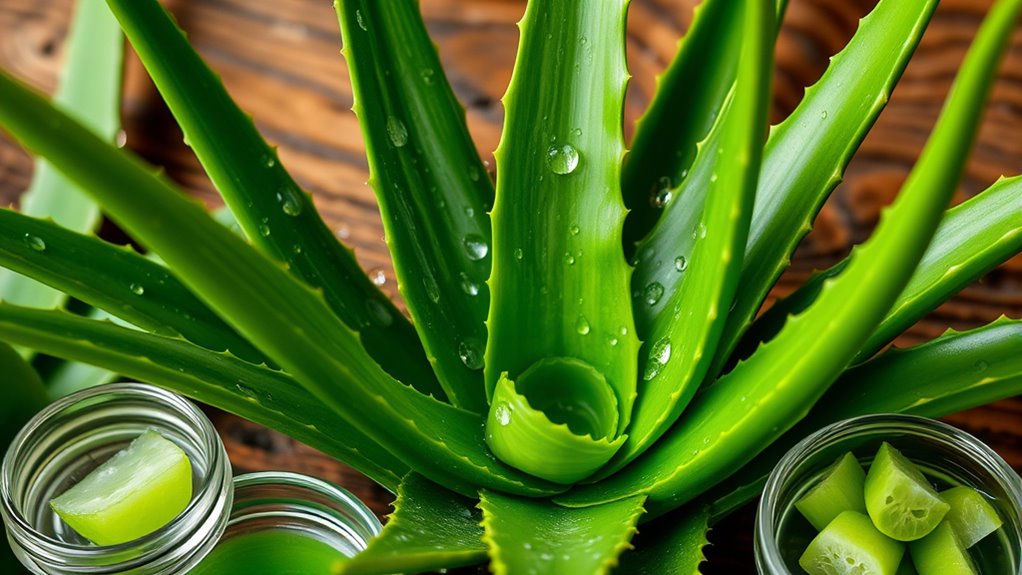

To care for aloe vera at home, place it in a sunny spot with well-draining soil and water sparingly, about every three weeks. When harvesting, use sharp tools and let the yellow latex drain before extracting the gel. Aloe vera is great for soothing skin, reducing redness, and hydrating dryness. Regularly caring for your plant guarantees a steady supply of gel. Keep exploring to discover even more ways to use this versatile plant effectively.
Key Takeaways
- Place aloe vera in a sunny spot with well-draining soil and water sparingly every three weeks.
- Harvest leaves carefully with a sharp knife, letting yellow latex drain before extracting gel.
- Apply fresh aloe vera gel directly to skin for soothing, hydration, and healing minor cuts or sunburns.
- Store harvested gel in the refrigerator and use within a week for maximum freshness and benefits.
- Regularly care for the plant by avoiding overwatering and providing indirect sunlight to ensure healthy growth.
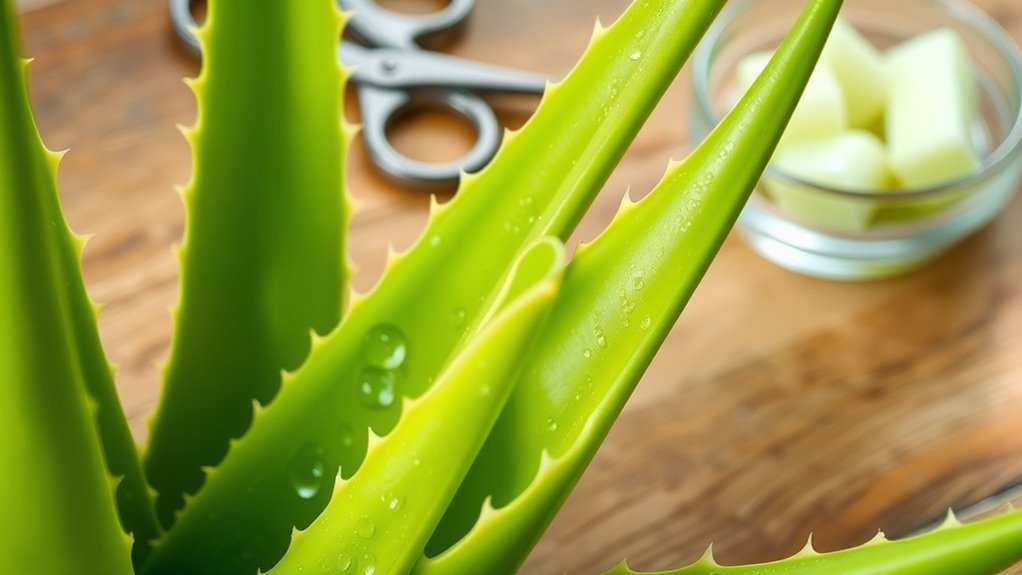
Ever wondered how to effortlessly incorporate aloe vera into your daily routine? It’s easier than you might think. Growing your own aloe vera plant at home is a simple process that can reward you with fresh, natural gel whenever you need it. To start, focus on basic aloe vera cultivation tips to ensure your plant thrives. Place your aloe vera in a sunny spot, preferably near a window that gets plenty of indirect sunlight. Aloe vera prefers well-draining soil; a cactus or succulent mix works well. Water it sparingly—about every three weeks—allowing the soil to dry out completely between waterings. Overwatering can lead to root rot, so be cautious. When your plant is healthy and mature, you can begin harvesting the leaves for use. Always use a sharp knife to cut a leaf close to the base, and let the yellow latex (aloin) drain away to avoid skin irritation. Extract the gel from inside the leaf, and store it in a clean container for daily use. Incorporating aloe vera into your skincare routines can be a game-changer, especially if you prefer natural remedies. The gel is known for its soothing, anti-inflammatory properties, making it perfect for calming irritated skin, reducing redness, and hydrating dryness. To optimize your aloe vera skincare routines, apply a thin layer of fresh gel directly onto your face after cleansing, or mix it with your favorite moisturizer for added hydration. For sunburns or minor cuts, a dab of pure aloe vera gel can provide instant relief and promote healing. You might also consider incorporating aloe vera into homemade masks, toners, or serums. Just remember, consistency is key—regular use helps your skin reap the full benefits. If you want to boost your skincare routine, combine aloe vera with natural ingredients like honey or tea tree oil for extra hydration and antibacterial effects. Keep in mind, fresh aloe vera gel should be stored in the refrigerator and used within a week to maintain its potency. When harvesting leaves, always use sharp tools to prevent damage to the plant, and avoid over-harvesting leaves to keep your aloe vera healthy and productive. Using proper watering techniques can help ensure your aloe vera remains healthy and vibrant. With a little care and patience, you’ll soon have a sustainable supply of aloe vera gel at your fingertips, making it easy to incorporate this versatile plant into your daily health and beauty regimen. Whether you’re using it to soothe skin or just enjoy the calming effects, growing and caring for your aloe vera at home is a rewarding way to embrace natural wellness.
Frequently Asked Questions
Can Aloe Vera Be Grown Indoors Successfully?
Yes, you can grow aloe vera indoors successfully. Place it in bright, indirect indoor light to keep it healthy. Make sure you use well-draining soil to prevent root rot, and avoid overwatering—wait until the soil dries out completely before watering again. With proper light and soil drainage, your aloe vera will thrive indoors, providing you with its soothing gel and low-maintenance beauty.
How Often Should I Water My Aloe Vera Plant?
You should water your aloe vera plant every three weeks or when the soil moisture feels dry to the touch. Stick to a consistent watering schedule, but avoid overwatering, as aloe vera prefers dry conditions. Check the soil regularly, and only water when it’s completely dry. This way, your plant stays healthy and thriving, with roots that don’t sit in soggy soil.
Is Aloe Vera Safe for Pets?
Aloe vera isn’t safe for pets; ingestion can cause upset stomach, vomiting, or diarrhea. Did you know that aloe toxicity affects dogs and cats differently? If your pet ingests aloe vera, it’s essential to seek vet help immediately. Keep your plants out of reach, and avoid using aloe vera on your pets’ skin, as it can cause irritation. Better safe than sorry with aloe and your furry friends.
What Are Common Pests That Attack Aloe Vera?
You’ll often see pests like aphids, mealybugs, and spider mites attacking your aloe vera. To prevent these issues, practice pest prevention by regularly inspecting your plant and keeping it healthy. If pests appear, use natural remedies like neem oil or insecticidal soap to eliminate them without harming your aloe vera. Consistent care helps keep pests at bay, ensuring your plant stays vibrant and pest-free.
How Do I Propagate Aloe Vera Easily at Home?
To propagate aloe vera easily at home, you can use Aloe vera leaf cuttings or Aloe vera seed propagation. For leaf cuttings, let a healthy leaf callus for a few days, then plant it in well-draining soil, watering sparingly until roots develop. If you prefer seed propagation, sow seeds in soil, keep moist, and guarantee bright, indirect light. Both methods are simple and effective.
Conclusion
Now that you know how to nurture your nourishing aloe vera, embrace its amazing applications and adapt it easily into your everyday routine. With consistent care and clever use, you’ll cultivate a comforting cure-all, boosting your beauty, banishing blemishes, and soothing skin setbacks. Remember, with patience and passion, your simple succulent can serve, soothe, and support your health from home, making every day a delightful demonstration of nature’s generous gift.