
TL;DR
Gardening Know How reports that six kitchen scraps, including dried coffee grounds and finely ground eggshells, can provide modest supplemental benefits when prepared properly. The guidance warns against adding wet or chunky food directly to pots because it can encourage mold, gnats and rot; scraps are not a substitute for potting mix or balanced fertilizer.
Gardening Know How has outlined six kitchen scraps that may be used as modest supplements for houseplant soil when properly prepared, while warning that wet or chunky scraps placed directly in pots can encourage mold, gnats and other problems. The advice matters to indoor gardeners looking to reuse household waste without treating it as a replacement for potting mix or a balanced fertilizer.

Get garden gear delivered free with Prime
- Fast, free delivery on millions of items
- Prime Video, Amazon Music and more included
- Member-only deals all year
The report identifies used coffee grounds, eggshells and banana or plantain peels among the scraps that may offer trace nutrients or organic matter. It also names vegetable scraps, tea leaves and aquarium water as options, with preparation and small quantities central to its recommendations. The supplied material gives detailed instructions for the first three; it does not provide specific preparation steps for the other three.
For coffee grounds, the report recommends using plain, unflavored grounds, drying them first and mixing only a small amount—5% to 10% of the total volume—into fresh potting mix, or processing them through a worm bin. It cautions that grounds should not be spread damp and thickly over soil, and says brewed grounds will not reliably acidify potting mix.
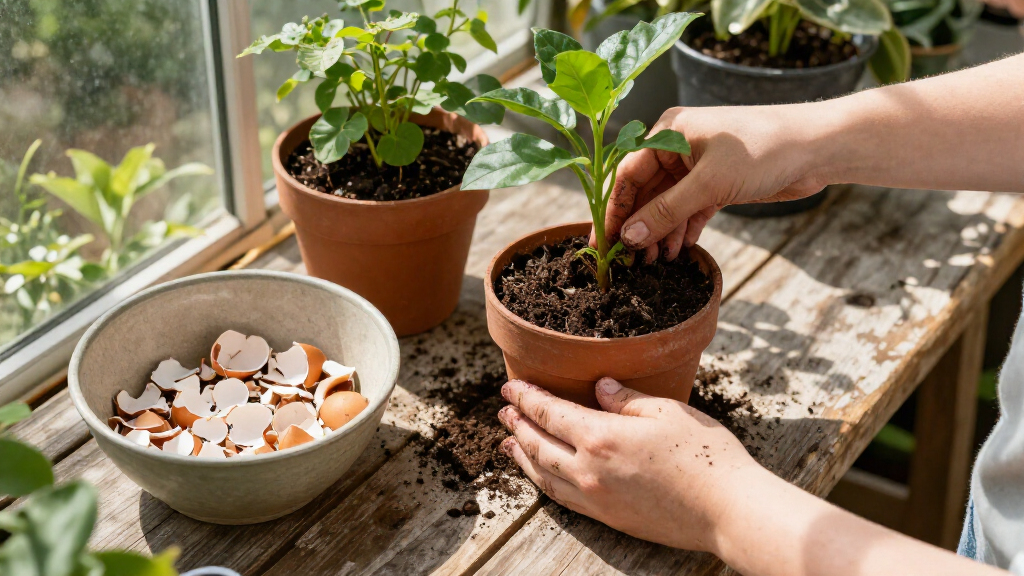
Eggshells should be rinsed, dried for 48 hours and ground to a fine powder, rather than added as large pieces. The report says a light pinch can be worked into soil once or twice a year, but advises skipping acid-loving plants such as African violets because shells may gradually raise soil pH. Banana peels should be composted or processed in a worm farm, or dried and ground; burying raw pieces can attract fruit flies and encourage root-rotting pathogens.
Keeping Kitchen Scraps Safe for Pots
The guidance addresses a common indoor-gardening trade-off: reusing organic waste can add some nutrients or organic matter, but a houseplant pot is not the same as an outdoor compost pile. The report says scraps break down more slowly in pots, and unprocessed food can hold moisture or decay where roots and household pests are close by.
For readers, the practical takeaway is to treat scraps as optional, gentle supplements, not a dependable feeding plan. The report recommends maintaining quality potting soil and a balanced seasonal feeding routine, using only small amounts of prepared material, and watching treated pots for changes.
Products Worth Considering

eufy Security eufyCam C37 4-Camera Kit with 360° Pan and Tilt, Auto Tracking, 2K Color Night Vision, and Solar Panels

Dyson V15 Detect Origin Cordless Vacuum

Hisense 40-Inch QD4SR Series Hi-QLED Full HD Smart Roku TV
As an affiliate, we earn on qualifying purchases.
Preparation Matters More Than the Scrap
The report says scraps can be air- or oven-dried, ground into powder, brewed, or processed in an indoor compost or worm bin. It advises working small amounts into the top inch of potting mix rather than leaving food on the surface. It also recommends checking that pots have unobstructed drainage holes.
Because houseplants generally slow down as days get shorter, the report says they need less extra food before spring. That seasonal timing gives gardeners time to dry or compost scraps rather than applying them fresh. The source presents these steps as gardening guidance, not as results from a trial described in the supplied material.
Limits of the Scrap Advice
The supplied report does not provide comparative trial data showing how much each scrap improves plant growth, nor does it specify application amounts for all six options. Its detailed instructions cover coffee grounds, eggshells and banana or plantain peels; the preparation and use of vegetable scraps, tea leaves and aquarium water are not explained in the material provided.
Results may also depend on the plant, potting mix and how the scraps are processed. The source warns readers to monitor treated pots for two to three weeks and to act if white fuzz appears, but it does not establish that every prepared scrap is suitable for every houseplant.
Monitor Pots After Adding Scraps
Gardeners who choose to try the advice can begin with a small amount of properly prepared material, confirm that the pot drains freely and watch the soil for two to three weeks. If white fuzz appears, the report advises scraping it away and letting the top layer dry. Raw, wet or chunky scraps should not be placed on the soil surface.
The report offers no follow-up testing or scheduled update. Its recommendations point instead to ongoing observation: stop adding scraps if mold or pests appear, and continue using suitable potting mix and a balanced seasonal fertilizer routine.
Key Questions
Can I put used coffee grounds directly on houseplant soil?
The report advises against spreading damp grounds thickly over soil because they can mold or form a crust. Dry plain grounds first and use a small amount mixed into fresh potting mix or processed in a worm bin.
Are eggshells useful in houseplant pots?
They may supply calcium, but the report says shells break down slowly, especially in neutral or alkaline mixes. Rinse, dry for 48 hours and grind them finely; avoid using them with acid-loving plants such as African violets.
Can I bury banana peels in a houseplant pot?
No. The report warns that raw banana or plantain peels decay slowly in pots and can attract fruit flies or encourage root-rotting pathogens. Compost or worm-process them, or dry and grind them first.
Do kitchen scraps replace houseplant fertilizer?
No. The report describes scraps as gentle supplemental boosters, not replacements for quality potting soil or a balanced seasonal feeding routine.
Source: gardeningknowhow.com