TL;DR
Northern cardinals may repeatedly strike windows because their reflections look like territorial rivals, particularly during breeding season. Ornithologists recommend reducing the reflection with exterior decals or screens, and placing feeders either within three feet of a window or more than 10 feet away.
Northern cardinals that repeatedly peck at windows may be reacting to their own reflections as if they were rival birds, according to ornithologists cited by Homes and Gardens. The behavior can fatigue or injure the birds, so experts recommend breaking up the reflective surface and taking steps to reduce window collisions.

Get garden gear delivered free with Prime
- Fast, free delivery on millions of items
- Prime Video, Amazon Music and more included
- Member-only deals all year
Maria Kincaid, an ornithology research specialist at FeatherSnap, told Homes and Gardens that cardinals are highly territorial and may treat a reflection as an intruder. The bird can keep returning because the apparent rival never leaves. The behavior is reported most often during the breeding season, typically March through August, though it can persist into colder months.
Repeated visits, fluttering at the glass and aggressive postures can help distinguish territorial behavior from an occasional tap, Kincaid said. Both male and female cardinals may defend territory. Homes and Gardens reported that repeated strikes can be fatiguing and harmful, and forceful impacts may kill a bird.
To reduce the trigger, Kincaid and Mary Mack Gray, an ornithologist at Birdbuddy, recommend exterior window decals or screens that break up reflections. Closing blinds or curtains may help, while screens can also provide a barrier. For feeders near windows, Kincaid recommends placing them either within three feet or more than 10 feet away; a nearby feeder limits a bird’s room to build up speed, while greater distance gives it more space to maneuver.
Reducing Window Strikes at Home
Reflection-driven pecking is not the only danger windows pose: birds may also fly toward glass they perceive as open space. The report cites Kincaid’s estimate that 1 billion to 2 billion birds are killed by window strikes each year. That figure is attributed to the expert and is presented as a broad annual estimate, not a count of cardinal deaths or of reflection-related attacks alone.
Making glass more visible to birds can address both problems. The practical steps are relevant beyond cardinals: decals and exterior screens can interrupt reflections and reduce the chance that other birds mistake a window for a clear flight path. The report does not quantify how much any one measure reduces collisions, so results may vary by window and setting.
Bird-friendly measures can be paired with basic habitat care. Gray recommends high-fat foods such as black oil sunflower seed, suet or safflower seed on a platform feeder, along with clean water. Dense shrubs and brush piles can provide places to rest and shelter from predators. These options support backyard birds but do not replace fixing a reflective window that is prompting repeated strikes.
Products Worth Considering

Dyson V9 Motorbar Cordless Vacuum

Bose TV Speaker Compact Soundbar with Bluetooth and HDMI-ARC, Black

Roborock Q7 M5+ Robot Vacuum and Mop with Self-Emptying Dock
As an affiliate, we earn on qualifying purchases.
When Territorial Displays Occur
Northern cardinals are common backyard birds and may visit feeders and sheltered areas. According to Kincaid, window attacks often occur when a bird sees its image on glass or another shiny surface and responds defensively. Because the reflection remains visible, the bird may return repeatedly rather than resolving the encounter.
The Homes and Gardens report says the behavior is most common during the breeding season, generally March through August, but it can also occur in fall and winter. Not every tap indicates an aggressive display: repeated visits and flight or posturing directed at the glass are more suggestive, Kincaid said. The report offers advice from two bird experts; it does not describe a new scientific study or a newly announced policy.
“Apply decals to windows breaks up the clean reflective surface that confuses cardinals.”
— Mary Mack Gray, ornithologist at Birdbuddy, as quoted by Homes and Gardens
What the Report Does Not Establish
The report does not say how many cardinals are affected, how often attacks cause injury, or how quickly a bird will stop after a window’s reflection is altered. It also does not provide comparative testing of decals, screens, curtains or other fixes, so it cannot establish which option works best in every home.
The cited estimate of 1 billion to 2 billion annual bird deaths concerns window strikes broadly. The report does not identify its underlying study or give a separate estimate for cardinal deaths or birds attacking reflections. Readers should treat the figure as an attributed estimate, not a measured count specific to this behavior.
Steps for Homeowners to Take
If a cardinal is making repeated trips to a window, the experts’ immediate advice is to interrupt the reflection: apply decals to the outside of the glass, add an exterior screen, or close curtains or blinds. Watch for whether visits decline, while remembering the report provides no fixed timeline for a response. Feeders should be set either very close to the window or more than 10 feet away, rather than in the intermediate range described by Kincaid.
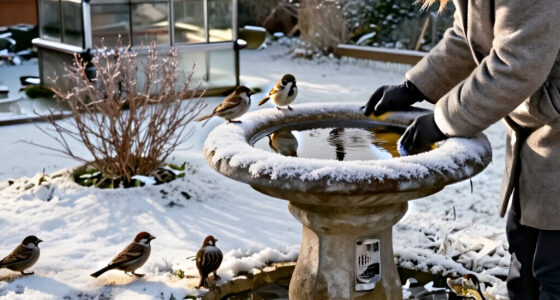
For ongoing backyard support, Gray recommends a platform feeder with suitable food and a source of clean water; she advises cleaning bird baths at least weekly in winter. Kincaid also suggests dense shrubs or brush piles for shelter. If strikes continue or a bird appears injured, the report does not provide a specialist referral protocol; local wildlife rehabilitators or wildlife authorities may be able to advise on appropriate next steps.
Key Questions
Why does a Northern cardinal peck at a window?
Ornithologist Maria Kincaid says a cardinal may mistake its reflection for a rival and act territorially. The reflection can make it seem as though the rival is still present.
When is this behavior most common?
The report says it is most common during the breeding season, typically March through August, but it may continue into fall and winter.
How can I stop a cardinal from striking the glass?
Experts quoted by Homes and Gardens recommend breaking up the reflection with exterior decals or screens. Closing blinds or curtains may also help.
How far from a window should I place a bird feeder?
Kincaid recommends placing a feeder either within three feet of a window or more than 10 feet away. A nearby feeder limits the distance a bird can build up speed; a more distant feeder gives it room to maneuver.
What else can help cardinals in winter?
Gray recommends high-fat foods such as black oil sunflower seed, suet or safflower seed, along with clean water. The report also suggests dense shrubs or brush piles as shelter. These measures support birds but do not substitute for reducing a window’s reflection.
Source: homesandgardens.com