TL;DR
A Gardening Know How report describes four likely reasons birds peck windows in fall: searching for insects or window putty, investigating reflections, young birds learning their surroundings, and territorial adults attacking their reflections. The behavior can be harmless when occasional, but repeated pecking may injure birds; making glass more visible can also reduce collision risks.
A Gardening Know How report, citing bird organizations and research, identifies four likely reasons birds peck windows in fall: foraging for insects or putty, investigating reflections, young birds learning their surroundings, and territorial birds confronting what they mistake for rivals. The behavior can be more than a nuisance: repeated attacks may damage birds’ beaks or waste energy, while reflective glass also poses a collision risk.

Get garden gear delivered free with Prime
- Fast, free delivery on millions of items
- Prime Video, Amazon Music and more included
- Member-only deals all year
As temperatures fall and insects become scarcer, birds may search window frames for food. The report says small gaps, drainage holes and sliding tracks can shelter insects, while spiders may leave webs and eggs in window corners. It also cites the British Trust for Ornithology (BTO), which reports more food-related window pecking in fall and winter, particularly among tits, a bird family that includes chickadees and titmice. Birds may also pick at traditional putty made with fish or linseed oil, which can provide energy.
Another possible cause is reflection confusion. Research by the Cornell Lab of Ornithology, as summarized in the report, found that fall’s lower sun angle can make windows more reflective. Birds may perceive the reflected scene as habitat and the glass as an obstacle they cannot see. Their side-facing eyes provide a wide field of view but do not give them the same forward vision as humans, the report explains.
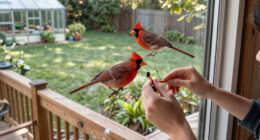
Seasonal changes in bird populations may also play a part. Juvenile birds disperse in fall and are still learning about their surroundings; the report cites data from the American Bird Conservancy and U.S. Fish & Wildlife Service showing a fall rise in glass interactions, including collisions and possible pecking. Meanwhile, some resident species defend territories in fall and winter. The National Audubon Society is cited for territorial behavior in species including northern cardinals, mockingbirds, towhees and bluebirds. A bird may mistake its reflection for a competitor.
Reducing Pecking and Window Strikes
Identifying the likely cause can help homeowners choose a response. The report says occasional, gentle pecking for food may not harm either the bird or people, but persistent attacks can cause beak injuries and consume energy. Reflection-driven behavior can also signal a broader danger: birds may collide with glass they do not recognize as a barrier.
Making a targeted window less reflective or more visible can address both repeated pecking and collision risk. The source recommends moving houseplants away from affected windows as an initial step, since greenery on a sill may look like inviting habitat to a young bird. The supplied source excerpt ends during that advice, so it does not provide a complete list of further measures.
Products Worth Considering

Hisense 40-Inch QD4SR Series Hi-QLED Full HD Smart Roku TV

Levoit EverestAir-P Smart Air Purifier for Large Rooms

Philips Hue Festavia Permanent Outdoor String Lights, 80 Lights, 150 ft
As an affiliate, we earn on qualifying purchases.
Why Fall Changes the Pattern
Fall brings cooler temperatures, fewer insects and dispersing young birds, while low-angle sunlight can alter how glass looks from outside. These seasonal conditions may make windows attractive as foraging spots or confusing as reflections. Territorial disputes can continue beyond spring for resident birds defending access to food as new birds seek places to settle.
The report presents several explanations rather than a single cause for every instance. A bird pecking at a window may be looking for food, reacting to a reflection, exploring unfamiliar surroundings or defending territory; behavior alone does not establish which explanation applies.
“The organization reports a rise in birds pecking at windows for food in fall and winter, particularly among tits.”
— British Trust for Ornithology, as cited by Gardening Know How
Which Cause Fits Each Window
The source does not quantify how often each explanation accounts for pecking, or provide a way to determine the cause in an individual case. It describes evidence and observations from several organizations, but does not establish that every reported behavior has one confirmed cause. It also does not give details such as study dates, sample sizes or the size of the increase in fall glass interactions.
The supplied article excerpt cuts off while describing prevention, after recommending moving houseplants away from targeted windows. It is unclear from the available material what other specific deterrents the full report recommends or how effective different methods are.
Practical Steps for Homeowners
Homeowners can start by observing where and when the pecking occurs, then consider whether food, plants or a strong reflection might be attracting or confusing the bird. The report’s stated first measure is to move houseplants away from the affected windowsill. If pecking is persistent, making the glass more visible is a practical way to address reflection-related confusion and reduce collision risk, though the supplied excerpt does not specify particular products or methods.
Watch for whether the behavior continues and whether birds are striking the glass as well as pecking it. The source does not identify a planned follow-up study or an official next milestone; further advice would depend on the complete article or guidance from relevant bird-conservation organizations.
Key Questions
Why do birds peck windows more in fall?
Several factors may coincide: birds search for insects and other food as temperatures fall, young birds explore unfamiliar surroundings, low-angle sunlight can make glass reflective, and some resident birds defend territories.
Are birds trying to get inside the house?
Not necessarily. The report says reflections can look like habitat or a rival, and birds may also be pecking at insects or putty around the window. The behavior alone does not confirm a single cause.
Can window pecking hurt a bird?
The report says occasional gentle pecking for food may be harmless, but persistent attacks can damage beaks and waste energy. Birds may also be at risk of colliding with glass.
What is one step to discourage birds from pecking?
The source recommends moving houseplants away from the targeted windowsill. Making glass more visible may also help address reflection confusion and reduce collision risk, although the supplied excerpt does not specify particular materials or methods.
Source: gardeningknowhow.com