
TL;DR

Get garden gear delivered free with Prime
- Fast, free delivery on millions of items
- Prime Video, Amazon Music and more included
- Member-only deals all year
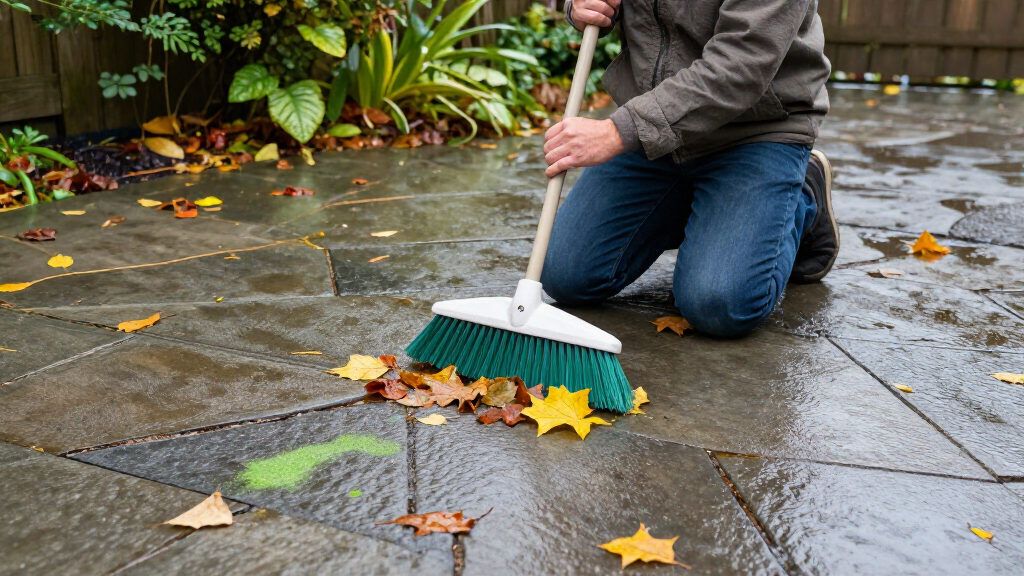
Garden experts say wet leaves on patios can create slippery surfaces and, as they break down, may stain porous paving and encourage moss and algae. They recommend sweeping leaves up regularly, especially after heavy rain, and suggest composting or making leaf mould with the collected leaves.
Garden experts are advising homeowners to clear wet leaves from patios, saying accumulated leaves can make paving slippery and may contribute to stains, moss and algae. The advice, reported by Ideal Home, focuses on patios and paths after rain, where damp leaves can create both a safety concern and a maintenance problem.
Amber Tunney, a plant buyer at Cherry Lane Garden Centres, said wet leaves can make patios very slippery and recommended sweeping them up regularly, particularly after heavy rain. The report does not provide injury figures or quantify how quickly the risk develops, but identifies wet-weather leaf buildup as a hazard worth addressing.
Leaves can also affect the appearance and condition of paving. Andrew White, an outdoor expert at Harbour Lifestyle, said decomposing wet leaves can stain porous paving and encourage moss and algae to develop. The report links those problems to moisture trapped beneath leaf cover during damp months; it does not say that every type of paving will stain or develop growth.
Homeowners can collect leaves by sweeping or raking them, or use a suitable leaf collector or vacuum. The article notes that wet leaves can be harder to clear with a blower or vacuum than dry ones. It also recommends putting collected leaves to use in the garden rather than discarding them: Tunney suggested adding them to compost or making leaf mould to improve garden soil.
Reducing Slips and Paving Damage
The advice matters because patio leaves can create two different problems at once: a slippery walking surface and gradual cosmetic changes to paving. Clearing leaves soon after wet weather may reduce the time they remain underfoot and limit the period during which damp organic matter sits against porous surfaces.
The report offers practical seasonal guidance, not a guarantee that sweeping will prevent every slip or stain. Patio condition, paving material, weather and how long leaves remain in place can all affect the outcome. Still, regular clearing is a straightforward maintenance step, especially on paths used frequently or by people who may be more vulnerable to falls.
Products Worth Considering

Roborock F25 GT Set Cordless Wet Dry Vacuum Cleaner and Mop with 2 Brushes

Shark HydroVac MessMaster Corded Wet/Dry Vacuum, Mop & Self-Clean (WD161)

Roborock F25 Ultra Steam Wet Dry Vacuum Mop
As an affiliate, we earn on qualifying purchases.
Autumn Leaves on Patio Surfaces
The report frames the issue around autumn, when fallen leaves combine with wind and rain and can collect on outdoor paving. It distinguishes patio maintenance from the broader question of whether to clear leaves from a garden: leaves may be useful in some garden areas, while the advice is to remove them from patios and paths where they can become slippery or retain moisture against paving.
Both experts cited practical actions rather than a specialist treatment. Tunney recommended regular sweeping, and White described potential effects as leaves break down. The report also mentions leaf rakes, grabbers and garden vacuums as collection options, while noting that wet leaves are more difficult for some blowers and vacuums to handle.
“Wet leaves can make patios very slippery, so it’s best to sweep them up regularly, especially after heavy rain.”
— Amber Tunney, plant buyer at Cherry Lane Garden Centres
How Damage Varies by Patio
The report does not quantify the risk of slipping, identify how long leaves need to sit before staining occurs, or compare different paving materials. It specifically refers to porous paving when discussing stains, so the potential effect should not be assumed to apply equally to every patio surface. No product test or independent comparison of leaf-clearing tools is provided.
It is also unclear how much moss or algae growth can be attributed to leaves alone, since the report does not separate their contribution from other damp-weather conditions. The experts’ comments are practical advice, not a measured study of injuries or paving damage.
Clear Leaves After Rain
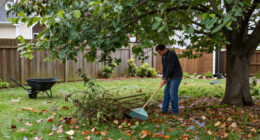
The recommended next step is to check patios and paths after storms or heavy rain and remove visible leaf buildup. A broom or rake can be used for manual collection; a leaf vacuum or grabber may suit other users, although wet leaves can be harder to collect mechanically. The report does not prescribe a specific schedule, so frequency will depend on how many leaves accumulate and how often the patio is used.
Once collected, leaves can be placed in a compost heap or kept to make leaf mould, according to Tunney. Homeowners concerned about staining or surface growth can monitor their paving as leaves break down and seek advice suited to the material if marks appear.
Key Questions
Why should wet leaves be cleared from a patio?
Experts quoted by Ideal Home say wet leaves can make patio surfaces slippery. As they break down, they may also stain porous paving and encourage moss or algae.
When should patio leaves be swept up?
Amber Tunney recommends regular sweeping, especially after heavy rain. The report does not set a fixed timetable; the amount of buildup and patio use will affect how often clearing is needed.
Can wet leaves stain every kind of patio?
The cited expert specifically warns that wet leaves can stain porous paving. The report does not compare materials, so it does not establish that all patio surfaces are affected in the same way.
What can be done with leaves after they are collected?
Tunney suggests adding them to a compost heap or collecting them to make leaf mould, which she says can improve garden soil.
Source: idealhome.co.uk