
TL;DR
A Gardening Know How report recommends crushed oyster-shell poultry grit as a way to deter animals from digging up fall-planted tulip and crocus bulbs. The report says grit can also improve drainage and add calcium, but it provides no trial data establishing how reliably the method works compared with chicken wire or other barriers.
Gardening Know How recommends crushed oyster-shell poultry grit as a barrier for tulip and crocus bulbs planted in fall, offering gardeners an alternative to covering beds with chicken wire. The report says the sharp shell pieces may discourage squirrels and underground rodents from digging, but it does not provide comparative test results showing the method works better than wire or other deterrents.

Get garden gear delivered free with Prime
- Fast, free delivery on millions of items
- Prime Video, Amazon Music and more included
- Member-only deals all year
The report describes freshly planted bulbs as vulnerable to animals before they have time to establish roots. It identifies tulips and crocuses as targets for squirrels and chipmunks, and says voles and other burrowing rodents can also eat bulbs underground. These are the article’s descriptions of common garden problems; it does not quantify how often bulbs are lost or how many gardens are affected.
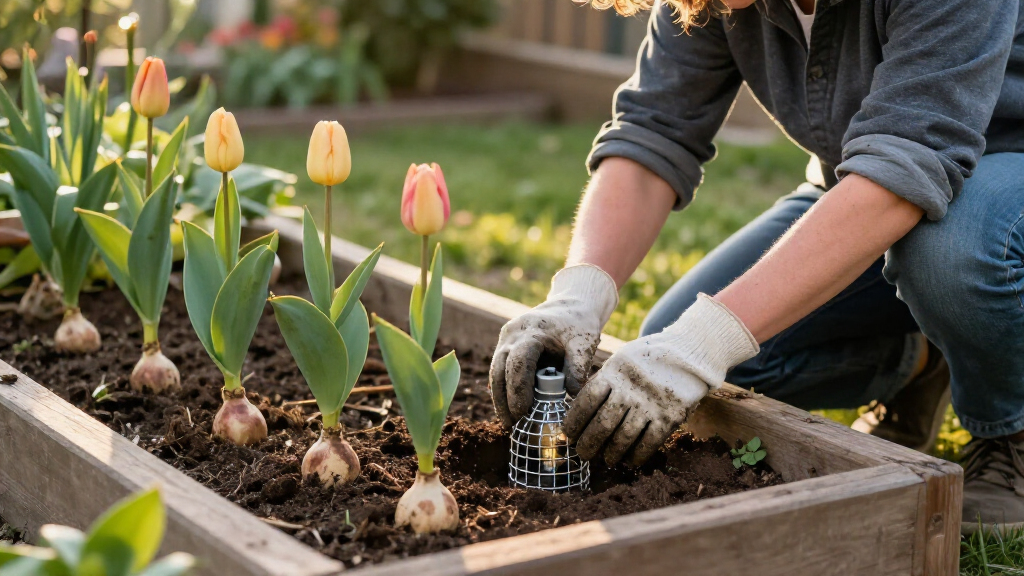
For bulbs in pots, the article suggests adding an inch-thick surface layer of crushed oyster-shell grit. For bulbs planted in the ground, it recommends an inch of grit at the bottom of the planting hole, with the bulb set on top, and a second layer about one or two inches below the soil surface. It says gardeners dealing with voles, field mice or pocket gophers can also place a shallow layer around each bulb.
The source cautions that poultry grit products differ: its recommendation is for crushed oyster shells, not a blend with other materials such as limestone, and it distinguishes crushed shells from flakes. The report also says the shells may improve drainage and slowly release calcium. It notes that a large amount could affect soil pH over time, particularly in already alkaline soil.
A Barrier Beneath the Bulbs
The suggested placement addresses two routes by which bulbs may be dug up: animals can approach from above, while burrowing rodents may reach them from below. Used in a bed or pot, grit could offer a physical deterrent without placing a sheet of mesh across the soil surface. That may appeal to gardeners who find chicken wire awkward to fit around plantings or difficult to remove as shoots emerge.
The proposal also combines pest deterrence with potential soil benefits. According to Gardening Know How, shell grit can create air spaces in heavy soil, support drainage and supply calcium as it breaks down. Those are claims in the source, not measured outcomes reported from a controlled comparison. Gardeners should not treat them as a guarantee that bulbs will be protected or that soil conditions will improve in every garden.
The practical stakes are seasonal: bulbs planted in fall are intended to flower in spring, and damage before rooting can mean a lost planting and the cost of replacing it. The report presents grit as an economical option, but gives no price comparison, application cost or evidence that it beats chicken wire “every time.”
Products Worth Considering

Philips Hue Play Floor Lamp, RGBWWIC LED, 53 Inch, Black

Roborock F25 XT Cordless Wet-Dry Vacuum Mop

Sonos Era 100 SL Compact Microphone-Free Speaker, Black
As an affiliate, we earn on qualifying purchases.
Fall Planting and Existing Defenses
Gardeners commonly try to protect newly planted bulbs with steel mesh or chicken wire, by planting less palatable alliums nearby, or by using bulb baskets, according to the report. These approaches aim to prevent animals from reaching bulbs or to make them less appealing. The oyster-shell suggestion is presented as another physical barrier, rather than a new kind of bulb or a change to planting season.
The source frames the method for fall planting, when animals seek food and bulbs are newly placed in the soil. Its instructions differ by setting: a surface layer for containers and two layers around bulbs in the ground. It also advises checking the grit’s composition and testing soil pH if the garden is suspected to be highly alkaline, since shell material releases calcium slowly and may affect pH over time.
How Reliable Is the Grit?
The supplied report does not cite a field trial, controlled study or measured success rate for oyster-shell grit. It does not establish how often the method stops squirrels, whether results vary with animal species or soil conditions, or whether it outperforms chicken wire, baskets or other defenses. Its headline makes a stronger comparative promise than the evidence included in the supplied article.
There is also no specific guidance in the source on how much grit to use across a whole bed, how long a barrier remains effective, or whether repeated applications are needed. The report says crushed shells break down slowly, but does not give a timeframe. Its discussion of soil effects is similarly general: gardeners with alkaline soil may want to check pH, but the article provides no threshold or application limit.
Check the Product and Soil
Gardeners considering the method can follow the source’s basic planting instructions while checking that the product is made from crushed oyster shells rather than a mixed grit. The report suggests a soil pH test where alkalinity is a concern. The supplied material does not announce a formal trial or further evaluation, so whether the approach performs better than wire remains unverified.
After planting, the practical test will be whether bulbs remain undisturbed through the fall and winter and emerge in spring. Gardeners who try the method can compare their results with previous seasons or with a protected section of the same bed, while recognizing that animal activity and soil conditions may differ. No independent results are included in the source.
Key Questions
What is the suggested way to use oyster-shell grit around tulip bulbs?
Gardening Know How recommends an inch-thick layer at the bottom of each in-ground planting hole, with the bulb placed on top, plus another layer one or two inches below the soil surface. For pots, it suggests an inch-thick layer on top of the soil.
Does the report prove oyster-shell grit works better than chicken wire?
No. The supplied report recommends grit but provides no comparative trial data or success rates showing that it outperforms chicken wire or other deterrents.
Which poultry grit does the article recommend?
It recommends grit made from crushed oyster shells and cautions that some products are mixed with other materials, such as limestone. It also says to choose crushed shells rather than flakes.
Can oyster-shell grit affect garden soil?
The report says the shells may improve drainage and release calcium as they slowly break down. It also cautions that large amounts can affect soil pH over time, particularly in already alkaline soil.
Source: gardeningknowhow.com