TL;DR
A gardening article outlines three items commonly found at home—used CDs, plastic bottles and chicken wire—that may help deter squirrels or shield plants from digging. The suggestions rely on movement or physical barriers; no evidence or guarantee of effectiveness is provided.
Used CDs, empty plastic bottles and chicken wire can be repurposed to help deter squirrels or protect vulnerable plants, according to gardening advice from Ideal Home. The methods use reflected movement or physical barriers to address digging around newly planted bulbs and young plants, though the advice does not establish that any method will keep squirrels away in every garden.

Get garden gear delivered free with Prime
- Fast, free delivery on millions of items
- Prime Video, Amazon Music and more included
- Member-only deals all year
Old CDs can be hung from trees, pergolas or fences, where movement in the wind and reflected light may discourage squirrels, said Julian Palphramand, head of plants at British Garden Centres. The advice also notes that the discs may help protect vegetable patches from birds. It does not specify how many CDs to use, how close together to hang them or how reliably they deter wildlife.
Plastic bottles can be cut in half and placed over young plants as small cloches. Palphramand said the covers can help protect plants from digging. The article presents them as a reuse option for empty bottles, rather than a tested guarantee against squirrel damage.
For pots and planted areas, chicken wire can be shaped into a cover. The instructions describe cutting a sheet slightly larger than the pot, securing it around the rim and tucking away sharp ends. Gardening gloves and pliers are recommended when handling and fastening the wire. Westland Horticulture also shared a chicken-wire cloche idea in an Instagram reel, saying it could help stop squirrels digging up planted bulbs.
Three household items to protect garden plants
Used CDs, plastic bottles and chicken wire may help deter squirrels or shield vulnerable plants. The advice offers practical ideas, not proven guarantees.
Three ways to reuse household items
Choose a method to suit the plant and the problem.
Hang used CDs
Hang them from trees, pergolas or fences; movement and reflected light may discourage squirrels.
Reuse plastic bottles
Cut a bottle in half and place it over a young plant as a small cloche.
Shape chicken wire
Fit a wire cover over a pot or planted area to help protect bulbs from digging.
Fit a wire cover safely
For a pot, cut the wire slightly larger than the rim.
Make the sheet slightly larger than the pot.
Fasten it around the rim and tuck away sharp ends.
Wear gloves and use pliers when handling wire; check that the cover stays secure and does not press on plants.
Match the barrier to the risk
- CDs: visual movement near vulnerable areas
- Bottle cloches: young plants
- Wire covers: pots and planted bulbs
- Check covers regularly
- Keep wire edges tucked away
- Make sure covers do not restrict growth
Protecting Bulbs and Young Plants
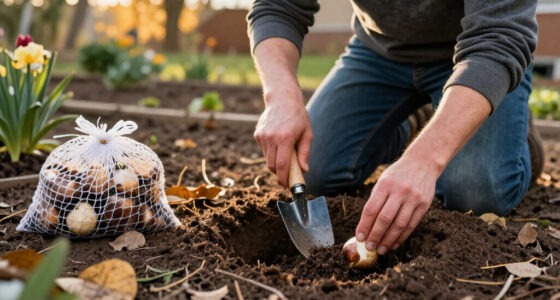
Squirrels can dig in garden beds and pots, disturbing newly planted bulbs and young plants. For gardeners facing that problem, simple covers may provide a way to protect specific plants without relying on a chemical repellent. The suggestions are particularly relevant during spring planting, when bulbs and seedlings may be vulnerable.
The methods also make use of items that might otherwise be discarded or stored unused. But they address different problems: hanging CDs act as a visual deterrent, while bottle covers and wire cloches physically shield soil or plants. Gardeners may need to select a barrier suited to the plant and location, and check that covers stay secure and do not damage growth.
Products Worth Considering

Roborock Qrevo 2 Pro Robot Vacuum and Mop

Bose QuietComfort Headphones (2nd Generation), Wireless Over‑Ear Noise‑Cancelling with Mic, USB‑C Charging, Lossless Audio, up to 24 h Playb

Dyson Airwrap i.d. Multi-Styler with Bluetooth Connectivity
As an affiliate, we earn on qualifying purchases.
Three Reuse Ideas for Gardens
The recommendations appear in an Ideal Home gardening advice article about humane ways to deter squirrels. It describes squirrels as potential visitors that may disturb plants or dig up bulbs, and focuses on household reuse and physical protection rather than trapping or harming animals.
The wire-cover suggestion was also featured in a Westland Horticulture Instagram reel. Its caption described the idea as a way to stop squirrels digging up bulbs planted for a spring display. The article mentions ready-made cloches and squirrel baffles for bird-feeding stations as other options, but its three main household suggestions are CDs, plastic bottles and chicken wire.
“Upcycled hacks to get rid of squirrels include used CDs hanging from trees, pergolas and fences.”
— Julian Palphramand, head of plants at British Garden Centres
How Well the Barriers Work
The advice does not provide trials, success rates or comparisons among the three methods. How effective the deterrents are may depend on the garden and the squirrels’ behaviour; the material does not say whether the methods work consistently or for how long.
It also gives limited detail on safe placement beyond recommending gloves and pliers for chicken wire and tucking away sharp ends. Gardeners should avoid leaving exposed wire edges and should make sure covers do not restrict plant growth. No specific guidance is given on installation spacing or maintenance, and the article does not establish that these measures prevent all digging or plant damage.
Choosing and Checking a Deterrent
Gardeners can try a method suited to the plant at risk: hang CDs near vulnerable areas, place bottle cloches over small plants, or fit chicken wire over pots and beds. Check covers regularly to keep them in place and make sure they are not pressing on growing plants. When working with wire, wear gloves and use pliers, then inspect the edges for sharp points.
The advice does not announce a follow-up test or evaluation. Whether these household measures are sufficient will depend on what happens in each garden; the recommendations offer practical options, not a promise of squirrel-proof results.
Source: rss
Key Questions
What household items may help deter squirrels?
Used CDs, empty plastic bottles and chicken wire are the three items highlighted. CDs may deter through movement and reflected light; bottles and wire can act as physical covers.
How can plastic bottles protect plants?
Cut a bottle in half and place it over a young plant as a small cloche. The advice says this can help protect plants from digging, but does not guarantee it will prevent damage.
How do you make a chicken-wire cover for a pot?
Cut wire slightly larger than the pot, secure it around the rim and tuck away sharp ends. Wear gardening gloves and use pliers to reduce the risk of injury while handling the wire.
Are these methods proven to keep squirrels away?
The article provides no test results or success rates. It describes the items as possible deterrents and barriers, so results may vary by garden and situation.
Source: idealhome.co.uk