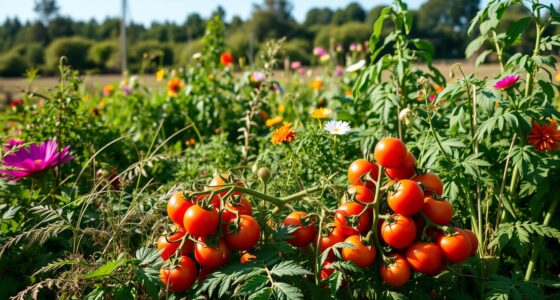
The Three Sisters method organizes planting corn, beans, and squash together for a thriving, sustainable garden. You plant corn first, which provides a trellis for beans to climb. Then, you add beans around the corn to fix nitrogen, and squash is spread nearby to cover the ground, suppress weeds, and retain moisture. This strategic pairing boosts yield and resilience. Keep exploring to discover how planning and care turn these crops into a harmonious ecosystem.
Key Takeaways
- The Three Sisters method organizes planting of corn, beans, and squash to support each other and improve yield.
- Corn provides a trellis for climbing beans, while squash sprawls to suppress weeds and retain moisture.
- Planning involves strategic layout to optimize plant interactions and resource use for a resilient garden.
- Crop diversity reduces pest and disease risks, promoting healthier, sustainable growth.
- Prioritizing plant needs ensures proper timing for planting and care, maximizing overall garden productivity.
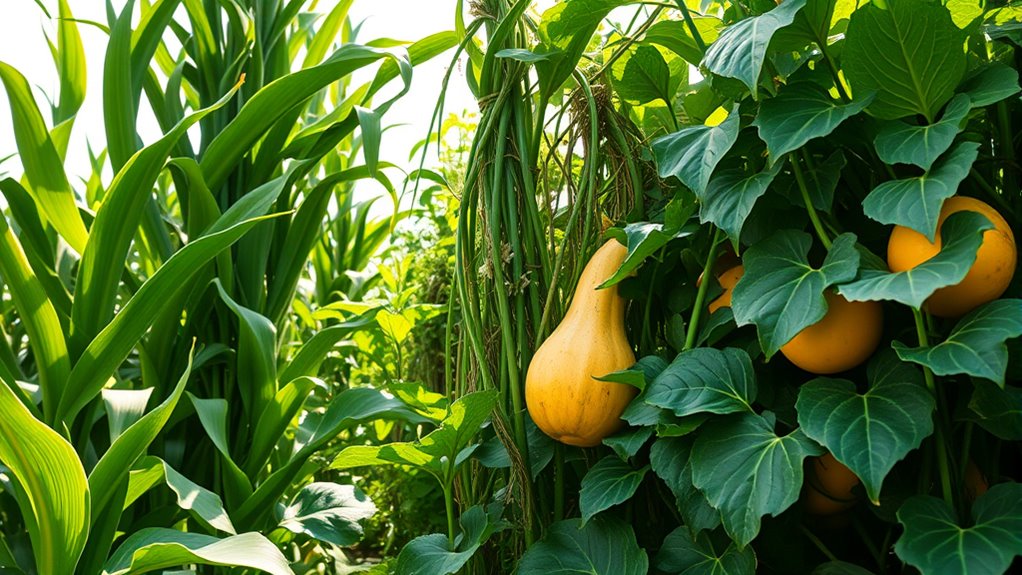
The Three Sisters Method is a time-tested approach that helps you organize your tasks efficiently by focusing on three key areas: planning, prioritizing, and executing. When it comes to gardening, this method shines by encouraging you to utilize companion planting, which involves growing crops that benefit each other side by side. The classic trio—corn, beans, and squash—demonstrates how crop diversity can lead to healthier, more productive gardens. By understanding their roles and interactions, you can optimize your planting strategy for maximum yield and sustainability.
Starting with planning, you’ll want to map out where each of the Three Sisters will grow. Corn acts as a natural trellis for the beans, which climb upward to reach sunlight, while the squash sprawls along the ground, providing ground cover that suppresses weeds and retains moisture. By planning your layout carefully, you ensure these plants complement each other rather than compete for resources. Incorporating crop diversity through this trio reduces the risk of pests and diseases spreading, as each plant has different vulnerabilities. This diversity creates a resilient garden ecosystem, making your efforts more sustainable. Additionally, understanding plant interactions helps you create a balanced and thriving garden environment.
Map your garden to let corn, beans, and squash support each other and thrive together.
Prioritizing involves understanding the needs of each plant during different growth stages. Corn requires early attention to ensure it gets enough space and nutrients for sturdy stalks. Beans, which fix nitrogen in the soil, thrive when planted alongside the corn, benefiting from its initial growth. Squash, with its sprawling nature, needs space to spread out and should be prioritized after the corn and beans are established. By focusing on these key needs, you improve the overall health of your garden and reduce the chances of resource competition. Proper prioritization helps you allocate your time and resources efficiently, avoiding unnecessary interventions and ensuring each plant reaches its full potential.
Executing the Three Sisters planting involves planting at the right time and providing proper care. You’ll plant the corn first, allowing it to establish itself before adding the beans and squash. As the corn grows, the beans are sown around its base, ready to climb once the stalks are tall enough. The squash is planted around the perimeter, where it can spread without crowding the other plants. Maintaining this setup, you’ll regularly monitor water, nutrients, and pest control, ensuring each plant’s needs are met. The synergy between these crops makes their combined growth more than the sum of its parts, resulting in a thriving, diverse garden.

(2026 Upgrade) Aiper Scuba S1 Robotic Pool Cleaner, Wall & Waterline Cleaning, Dual Filtration, Extended 240-Min Battery Life, Smarter Navigation with High-Precision Sensors, App Support, OTA Upgrade
Extended Runtime & Flexible Cleaning Modes: Switch to Eco Mode via the app for up to 240 minutes...
As an affiliate, we earn on qualifying purchases.
Frequently Asked Questions
Can the Three Sisters Method Be Used With Modern Crops?
Yes, you can use the three sisters method with modern crops. It works well because of crop compatibility and strategic planting timing. By planting compatible plants together, like corn, beans, and squash, you maximize space and nutrients. Adjust your planting timing based on your climate and crop growth cycles to guarantee they thrive together. This traditional approach still offers benefits for sustainable gardening and efficient use of your garden space today.
What Are the Best Soil Conditions for Planting the Three Sisters?
You should look for soil with good fertility and moisture retention to guarantee successful planting. Enrich your soil with organic matter like compost to boost nutrients, and make sure it drains well yet retains enough moisture for the plants to thrive. Avoid overly sandy or compacted soils, as they can hinder root growth. Proper soil conditions promote healthy growth of corn, beans, and squash together, maximizing your garden’s productivity.
How Do I Prevent Pests in a Three Sisters Garden?
Pest prevention is key to keeping your garden thriving. You can deter pests by practicing effective companion planting, which naturally repels unwanted critters. Plant aromatic herbs like basil or marigolds alongside your vegetables to create a pest-proof perimeter. Regularly inspect your plants, remove diseased or damaged leaves, and encourage beneficial insects like ladybugs. With consistent care and clever companion planting, you’ll cultivate a pest-resistant, prosperous garden that flourishes naturally.
Is the Three Sisters Method Suitable for Small Urban Gardens?
You can definitely adapt this method for urban gardening and container planting. It’s suitable because you can customize your space, using pots or raised beds to grow corn, beans, and squash together. Just guarantee your containers are large enough for healthy root growth and provide ample sunlight. This approach maximizes space, promotes natural pest control, and creates a productive, sustainable garden even in small urban environments.
How Long Does It Take for the Three Sisters to Mature?
Think of your garden as a symphony, where timing is everything. Typically, corn matures in about 60-100 days, beans in 50-70 days, and squash in 75-100 days. By practicing crop rotation and companion planting, you help your plants grow stronger and healthier. Keep in mind, weather and variety affect these timelines, so stay attentive and patient. Your garden’s harmony depends on understanding these growth cycles.

iGarden Robotic Pool Cleaner K Series, Cordless Pool Vacuum Robot for Inground & Above Ground Pools, Smart Navigation, Touchscreen, Self-Parking, Cleans Floor, Wall & Waterline, 220 Min
Robust Cleaning Capability: Engineered with a turbine-grade impeller, an optimized flow system, and 3 brushless motors, the cordless...
As an affiliate, we earn on qualifying purchases.
Conclusion
By planting corn, beans, and squash together, you create a thriving, symbiotic garden that boosts yields and promotes sustainability. Did you know that this ancient method can produce up to 30% more food than planting them separately? Imagine your garden flourishing with vibrant colors and abundant harvests, all thanks to this simple, time-tested technique. Embrace the Three Sisters Method, and watch your garden thrive while honoring centuries of indigenous wisdom.

(2026 Upgrade) WYBOT C1 Cordless Robotic Pool Vacuum for Inground Pools, Above Ground Pool Cleaner 4-in-1 Wall & Waterline Cleaning Up to 1,614sq.ft, 150mins Smart Navigation, App Support
Powerful Suction with Dual Brushes: Built with an upgraded independent water pump motor delivering up to 3,038 GPH...
As an affiliate, we earn on qualifying purchases.

(2026 New) AIPER Scuba V3 AI Vision Cordless Robotic Pool Cleaner, 10x Faster Pool Cleaning with AI Patrol, 24/7 Auto Cleaning, Smart Waterline Parking & Multi-Layer Filtration
10x Faster Pool Cleaning with AI Patrol System: Single front-facing AI camera detects over 20 debris types and...
As an affiliate, we earn on qualifying purchases.