
TL;DR
A report by Amateur Gardening describes two Japanese winter-pruning practices that gardeners can adapt: sukashi, which thins selected branches to create open space, and momiage, which removes old pine needles by hand. The techniques are generally timed for winter, but the source advises studying each tree first and avoiding stubs, uneven thinning and shears for needle removal.
Amateur Gardening has reported on two Japanese winter-pruning techniques that can be adapted to gardens in the UK: sukashi, which selectively thins branches to create gaps, and momiage, which removes older pine needles by hand. The guidance, drawing on Tokyo-based arborist Isaki Kasahara and the Japanese Garden Society, stresses that both methods depend on choosing what to remove rather than cutting a tree into a uniform shape.

Get garden gear delivered free with Prime
- Fast, free delivery on millions of items
- Prime Video, Amazon Music and more included
- Member-only deals all year
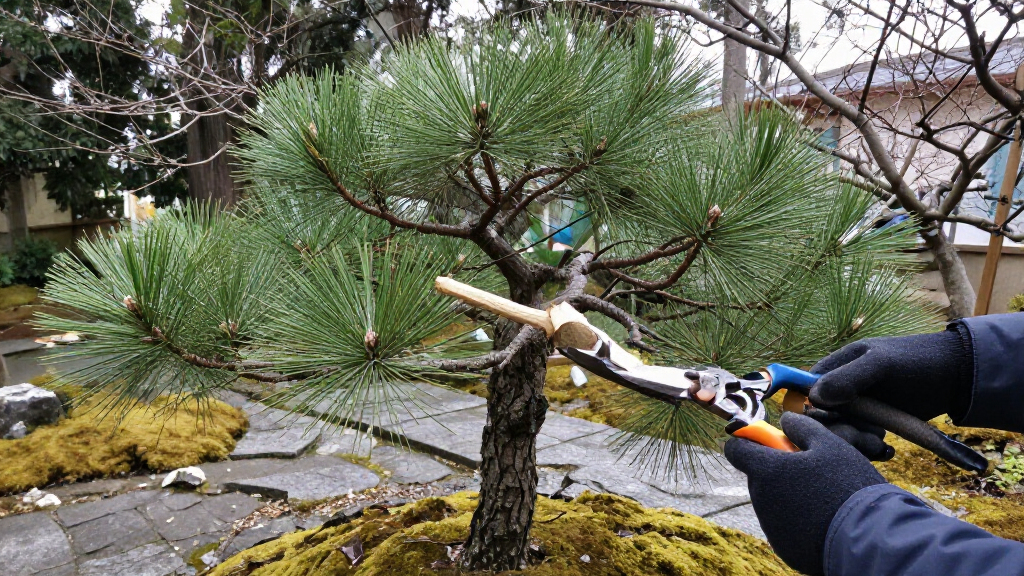
Sukashi is used on garden trees that are normally pruned in winter, alongside other plants for winter beauty. Kasahara describes it as pruning to create “see-through space” within a tree. Rather than trimming the outside to an even outline, the gardener selects and removes branches that are unnecessary. The report gives November to February, after deciduous trees such as Japanese maples have shed their leaves, as a general window for the work.
The report advises gardeners to study the tree before cutting and begin with dead, crossing and inward-growing branches, as well as vigorous water shoots. Kasahara says cuts should be made at a fork rather than leaving a stub, which can produce new shoots and disrupt the shape. He also cautions against hollowing out the centre: thinning should be spread across the tree.
Momiage is specific to pines and takes place from late autumn into winter. It means removing the previous year’s needles by hand while leaving the current year’s needles at the branch tips, according to Kasahara. He recommends removing crowded branches at their bases first, then taking off old needles. The report names Scots pine (Pinus sylvestris), Japanese white pine (Pinus parviflora) and black pine (Pinus nigra) as examples found in UK gardens where the technique can be tried, including among plants that provide structure in winter.
How Selective Pruning Changes Tree Shape
The techniques offer gardeners a way to manage density and light without treating pruning as a simple reduction in size. Sukashi aims to open space among branches while retaining the tree’s structure; momiage removes older pine needles so light can reach lower branches, Kasahara says. The report presents these as practices that can be adapted outside Japan, rather than as a requirement for every garden or tree.
For readers considering winter work, the practical consequence is that the order and selectivity of cuts matter. Removing too much from one area, leaving stubs or cutting pine needles with shears may undermine the intended appearance. The advice is to pause and assess the tree as work progresses, leaving branches and needles that contribute to its form.
Products Worth Considering

Dyson V8 Cyclone Cordless Vacuum

Coway Airmega 250S WiFi Air Purifier for Large Rooms

Philips Hue Amarant Outdoor Smart Light Bar, Black
As an affiliate, we earn on qualifying purchases.
From Kyoto Gardens to UK Trees
The report traces sukashi to the Japanese verb sukasu, meaning to thin out. It says the term appears in Sansui narabi ni yagyo no zu, a garden-making manual from the Muromachi period (1336–1573). Kasahara describes several styles developed for different settings: palace sukashi for large grounds, finer pruning for compact Kyoto townhouse gardens, and a temple style used around temple halls.
Momiage is one of two seasonal pine-care tasks described in the report. The other is midori-tsumi, carried out in spring by snapping off new shoots by hand. A 1928 book, Gardens of Japan, characterized hand-removing pine needles as tedious work, but the current report frames it as a deliberate way to manage the tree’s appearance and light access.
“Sukashi means pruning a tree to create ‘see-through space’ within it.”
— Isaki Kasahara, Tokyo-based arborist and COO of Toshi Landscape Inc.
Limits of the Pruning Advice
The report gives general seasonal guidance, not a tree-by-tree pruning prescription. It does not specify how many branches or needles to remove, how to adapt the methods to every species or local condition, or how to handle damaged or unusually mature trees. Its examples describe techniques and common mistakes, but do not establish that every pine or garden tree will respond in the same way.
The source also does not provide a detailed assessment of the risks of pruning or a complete set of tools and safety instructions. Gardeners should treat the suggested timing and method as broad guidance and seek advice suited to the particular tree if they are unsure.
Plan Cuts Before Winter Work
For gardeners following the report, the next step is to identify the tree and inspect its structure before making cuts. For sukashi, start with the clearly unwanted branches and thin across the canopy rather than opening a single hollow. For momiage, remove crowded branches first and then pull out old needles by hand, preserving the current year’s growth.
The report gives no follow-up schedule or announced next development. Its immediate recommendation is practical: step back frequently and judge the tree’s overall shape as work proceeds, rather than removing material simply to make the pruning faster.
Key Questions
What is sukashi pruning?
Sukashi is selective thinning that creates open, see-through spaces within a tree. It differs from shearing, which trims branches to form an even outer outline.
When can UK gardeners try sukashi?
The report gives November to February as a general winter window, particularly for deciduous trees such as Japanese maples after leaf fall. The timing is broad guidance, not a species-specific schedule for every tree.
What does momiage remove?
Momiage removes a pine’s previous-year needles by hand, while leaving the current year’s needles at the branch tips. The report advises against cutting the needles with shears.
Which pines does the report mention?
It lists Pinus sylvestris, Pinus parviflora and Pinus nigra as examples of common UK pines on which gardeners can try the technique.
What mistakes should gardeners avoid?
The report advises against starting without studying the tree, leaving stubs, hollowing out only the centre, thinning unevenly or using shears to remove pine needles. Kasahara recommends working selectively and stepping back to review the shape.
Source: amateurgardening.com