
TL;DR
Costa Farms horticulturist Justin Hancock says golden-leaved houseplants have been gradually gaining popularity and expects the trend to continue into 2027. He points to their bright foliage as a way to add contrast indoors, while noting that individual plants have different light and care needs.
Golden-leaved houseplants are gaining interest among indoor plant owners, according to Justin Hancock, a Costa Farms horticulturist who says he has seen the trend develop over the past year and expects it to continue into 2027. The brighter foliage stands out against familiar deep-green plants and can add color to interiors, though suitable light and care depend on the variety.

Get garden gear delivered free with Prime
- Fast, free delivery on millions of items
- Prime Video, Amazon Music and more included
- Member-only deals all year
Hancock told Homes and Gardens that golden foliage is becoming more visible in household plant collections. He said the color can be especially noticeable in darker rooms, where deep-green leaves may blend into the surroundings. The report describes the trend as a gradual rise in popularity rather than a sudden shift, and provides no sales figures or other market data to measure its scale.
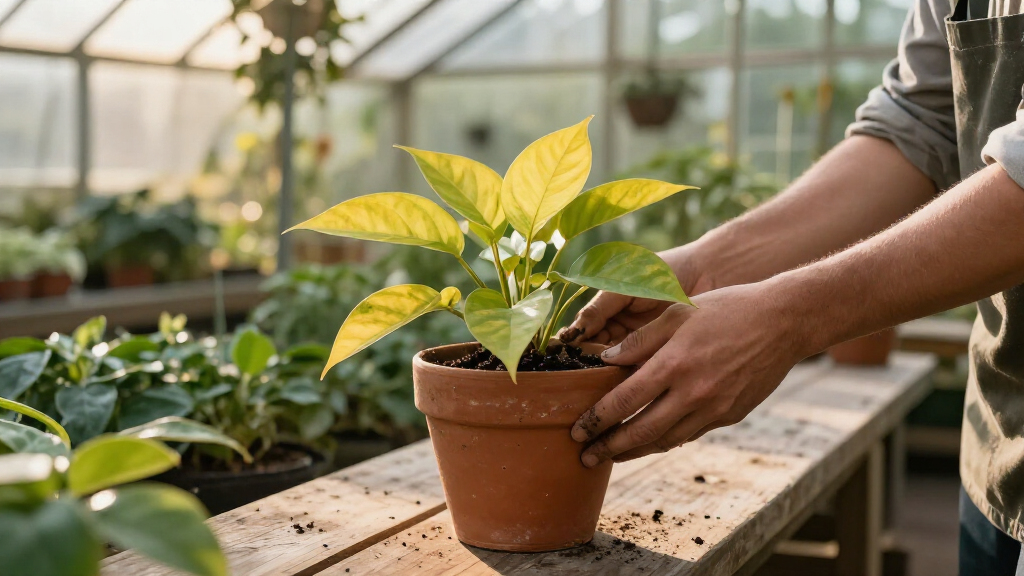
Among his suggested plants, Hancock called Neon pothos a classic choice, citing its chartreuse leaves, trailing growth and relatively straightforward care. The report advises placing it in bright to medium indirect light, away from direct sun, and watering after the top two inches of soil dry. Hancock also named Philodendron ‘Golden Crocodile’ as a favorite, describing its long, narrow, toothed leaves; it does best in bright light without direct sun or cold drafts.
For a larger plant, the article recommends Dracaena ‘Limelight,’ which it says can grow to about five to seven feet. It needs brighter light to maintain its color and warm conditions, listed as 65 to 85 degrees Fahrenheit. The article suggests checking soil moisture and watering when the upper one to two inches have dried. These are care notes for the named varieties, not a single set of requirements for every golden-leaved plant.
Bright Leaves Bring Indoor Contrast
The trend offers plant owners another way to add color and contrast without relying on flowers or patterned foliage. Golden and chartreuse leaves may be easier to notice in rooms where darker foliage is less distinct, making them a possible choice for shelves, corners or workspaces—provided the plant receives conditions suited to its needs.
Hancock also connects the appeal to the pleasure people can get from having plants nearby. He described taking a moment to look at leaves during work as something that can soothe the eyes. That is his personal observation, not evidence that golden plants produce a specific mental-health benefit. The source provides no research establishing that this foliage trend itself improves mood.
Products Worth Considering

Philips Hue Play HDMI Sync Box 4K

Bose TV Speaker Compact Soundbar with Bluetooth and HDMI-ARC, Black

iRobot Roomba 105 Combo Robot Vacuum & Mop with AutoEmpty Dock
As an affiliate, we earn on qualifying purchases.
From Variegation to Golden Foliage
Homes and Gardens places golden-leaved plants alongside recent interest in variegated houseplants, whose leaves display multiple colors or patterns. Hancock said he has seen gold varieties slowly rise in popularity and believes their visibility helps explain the appeal, particularly in less-bright homes.
The report notes that some golden plants, including pothos varieties, can tolerate lower light, but generally grow best in bright, indirect light. That distinction matters: “low-light tolerant” does not mean a plant will maintain its strongest color or grow equally well in a dim spot. Hancock is a horticulturist with Costa Farms and has more than 25 years of industry experience, according to the source. His book, The New Complete Guide to Houseplants, is listed for release on December 1, 2026.
“The stereotypical deep green leaves of popular houseplants are starting to fade into the background, while golden foliage calls your attention and can’t be ignored.”
— Justin Hancock, Costa Farms horticulturist, speaking to Homes and Gardens
Scale and Mood Effects Unmeasured
The source offers Hancock’s professional observation that golden houseplants are gaining popularity, but it does not provide sales data, survey results or a measured timeframe that would show how widespread the trend is. Its expectation that interest will continue into 2027 is a forecast, not a confirmed market outcome.
The report also does not establish that golden foliage has a distinct effect on mood. Hancock describes the visual experience of looking at plants as soothing, but no study or evidence specific to golden-leaved varieties is cited. Care outcomes will also vary with a plant’s variety, room conditions and maintenance.
Watch for Wider Retail Interest
Hancock expects golden foliage to remain a growing houseplant interest into 2027. The source does not identify a formal industry forecast, upcoming launch schedule or sales milestone, so whether the trend expands will need to be judged by future availability and consumer demand.
For readers choosing a plant now, the practical next step is to match the variety to the home: check its light requirements, avoid direct sun where the leaves may scorch, and follow watering guidance for that plant. The report says Hancock’s houseplant guide is scheduled for December 1, 2026; it does not provide further details about future updates to the trend report.
Key Questions
What are golden houseplants?
They are houseplants with yellow, gold, lime or chartreuse foliage. The article’s examples include Neon pothos, Philodendron ‘Golden Crocodile’ and Dracaena ‘Limelight.’
Do golden houseplants grow in low light?
Some, including certain pothos, can tolerate lower light, but the article says they generally grow best in bright, indirect light. Needs vary by plant, and brighter conditions can help some varieties retain their color.
Which golden houseplant is easiest to care for?
Hancock describes Neon pothos as straightforward to care for. The source advises keeping it out of direct sun and watering when the top two inches of soil have dried.
Are golden houseplants proven to boost mood?
The report does not cite research showing that golden foliage itself improves mood. Hancock shares a personal view that taking a moment to look at houseplants can soothe the eyes.
How long is the trend expected to last?
Hancock says he expects interest in golden foliage to continue into 2027. That is his forecast; the source provides no market data confirming how widespread or durable the trend will be.
Source: homesandgardens.com