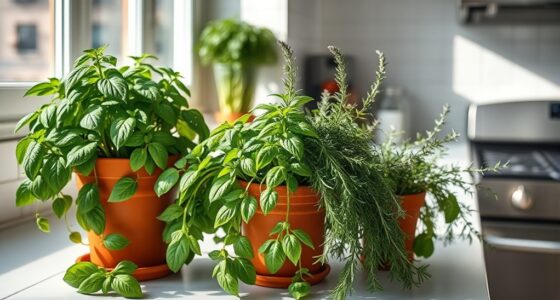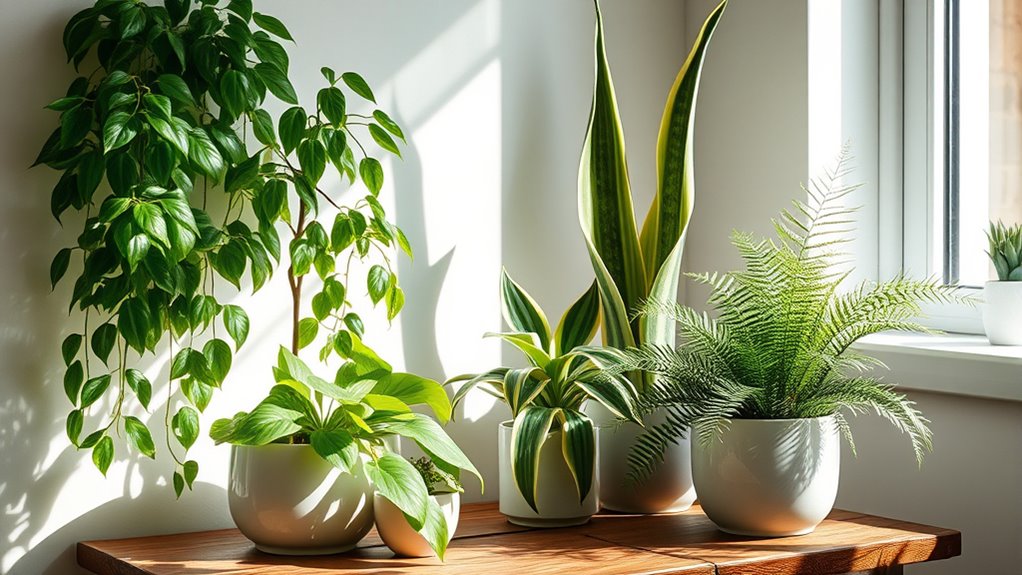

If you want to improve your indoor air quality, choosing the right houseplants can make a big difference. Opt for pet-friendly options like spider plants, Boston ferns, or areca palms that filter out pollutants like formaldehyde and benzene. Low light plants such as snake plants and pothos are also effective and easy to care for. Incorporating these plants will help create a healthier, more vibrant home—keep exploring to learn how to select and care for the best options.
Key Takeaways
- Many indoor plants filter common pollutants like formaldehyde, benzene, and trichloroethylene naturally.
- Pet-friendly plants such as areca palm and spider plant improve air quality safely.
- Low light houseplants like snake plant and pothos effectively purify air in shaded spaces.
- Regular care and dusting maintain plant health and maximize their air-purifying benefits.
- Incorporating a variety of indoor plants enhances air quality and creates a healthier living environment.
Indoor air quality can profoundly impact your health, especially since many people spend most of their time indoors. When your environment is filled with pollutants, allergens, and toxins, it’s easy to feel sluggish, suffer from allergies, or even experience long-term health issues. That’s where houseplants come in. Not only do they add a touch of nature and beauty to your home, but they also actively improve the air you breathe. Certain plants are especially effective at filtering out airborne pollutants like formaldehyde, benzene, and trichloroethylene, making your living space healthier and more comfortable.
Indoor plants improve air quality and promote health by filtering pollutants and toxins naturally.
If you’re concerned about pet safety, you’ll want to choose pet friendly plants. Many common houseplants can be toxic to animals, so selecting pet-friendly options ensures your furry friends stay safe while you enjoy the benefits of cleaner indoor air. Plants like areca palm, Boston fern, and spider plant are non-toxic to cats and dogs and are known for their air-purifying qualities. They help remove volatile organic compounds (VOCs) and increase humidity, which can reduce respiratory irritation. Incorporating pet friendly plants into your space allows you to create a healthier environment without risking your pets’ health.
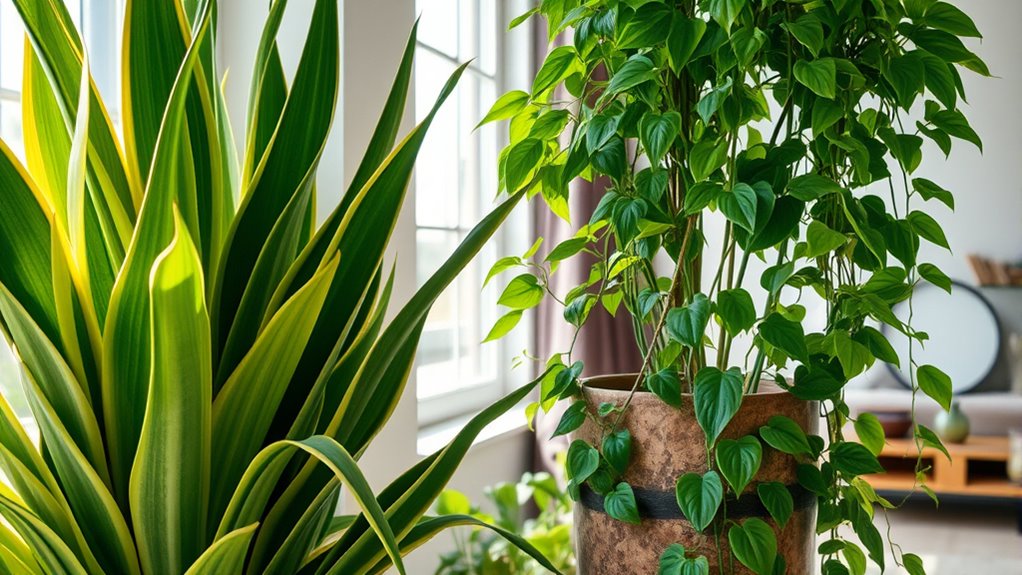
Low light houseplants are another excellent choice, especially if your home doesn’t get much natural sunlight. Many indoor spaces lack direct sunlight, making it challenging to grow traditional houseplants. Fortunately, there are plenty of options that thrive in low light conditions. For example, the snake plant and pothos are hardy, require minimal sunlight, and are highly effective at filtering indoor air pollutants. These plants are forgiving if you forget to water them occasionally, making them ideal for busy or less sunny homes. By choosing low light houseplants, you ensure your indoor environment benefits from cleaner air, even in darker corners or rooms with limited windows.
Adding these plants to your home isn’t just about aesthetics; it’s about creating a healthier living space. They can absorb airborne toxins, increase humidity, and even boost your mood. When selecting plants, consider your pet’s safety and the amount of natural light available. Understanding indoor air quality can help you make better choices for your space. With pet friendly plants and low light houseplants, you can craft an indoor oasis that’s both beautiful and beneficial. Keep in mind that regular care, like watering and occasional dusting, will keep your plants healthy and functioning at their best. With the right choices, you’ll breathe easier, feel better, and enjoy a more vibrant, toxin-free home environment.
indoor air purifying houseplants
As an affiliate, we earn on qualifying purchases.
As an affiliate, we earn on qualifying purchases.
Frequently Asked Questions
Do Houseplants Remove All Types of Indoor Pollutants?
No, houseplants don’t remove all types of indoor pollutants. While they excel at pollutant removal, certain harmful substances like volatile organic compounds and radon may require additional measures. You should diversify your plant selection to maximize pollutant removal, as plant diversity ensures a broader range of pollutants gets filtered. Keep in mind that regular ventilation and cleaning also play vital roles in maintaining healthy indoor air quality.
How Many Houseplants Are Needed for Substantial Air Purification?
You’d need dozens of plants to make a real difference in air quality, enough to turn your space into an indoor jungle! To maximize purification, focus on strategic plant placement, ensuring each plant gets proper light and air circulation. Spread them around your home, especially in areas with poor ventilation, to help filter pollutants effectively. Remember, more plants mean better air, but balance is key for a healthy, breathable environment.
Are There Any Plants Safe for Pets Indoors?
Yes, there are pet-friendly plants you can keep indoors. Look for pet-friendly plants like spider plants, Boston ferns, and areca palms, which are safe around pets. To guarantee your pets’ safety, avoid toxic plant avoidance by steering clear of plants like pothos, dieffenbachia, and philodendrons. Always double-check plant labels and consult reliable sources before bringing new plants home. This way, you enjoy greenery without risking your furry friends’ health.
How Often Should Indoor Plants Be Cleaned to Maximize Air Quality?
You should clean your indoor plants weekly to maximize air quality. Regular cleaning removes dust and dirt, which can block leaf pores and hinder the plant’s ability to filter air effectively. Use a damp cloth or gentle spray to wipe down leaves, ensuring they stay healthy and efficient at improving air quality. Consistent cleaning frequency keeps your plants looking vibrant and supports a cleaner, fresher indoor environment.
Can Houseplants Help Reduce Indoor Humidity Levels?
Yes, houseplants can help with humidity control through plant transpiration. As your plants absorb water and release moisture into the air, they naturally reduce excess humidity. To maximize this effect, choose plants like peace lilies or Boston ferns, which are effective at transpiration. Regularly monitor your indoor humidity levels and make sure your plants are healthy, so they continue to help create a more comfortable environment.
Conclusion
By bringing these houseplants into your home, you’ll turn your space into a breathing paradise so pure, even the air will thank you! Say goodbye to sneezing fits and stuffy noses—your indoor air will be cleaner than a mountain stream. With just a few greens, you’ll transform your home into a fortress against pollution, making your indoor air so fresh, it’s almost like living in a rainforest. Get ready to breathe easier than ever before!