Starting seeds in small spaces is easy if you use containers with drainage and quality seed-starting mix. Place them near a south-facing window or use grow lights for 12-16 hours daily, and keep temperatures around 65-75°F. Water regularly and thin seedlings to prevent overcrowding. Harden off plants gradually before transplanting to maximize limited space. Want tips on making the most of tiny gardens? Keep exploring for more helpful ideas.
Key Takeaways
- Use small containers with drainage holes filled with seed-starting mix for optimal growth.
- Place containers near south-facing windows or under grow lights for sufficient light.
- Maintain consistent moisture and temperature (65-75°F) to promote germination and healthy seedlings.
- Thin seedlings to prevent overcrowding and ensure proper spacing for strong development.
- Gradually harden seedlings outdoors before transplanting into limited garden or balcony space.
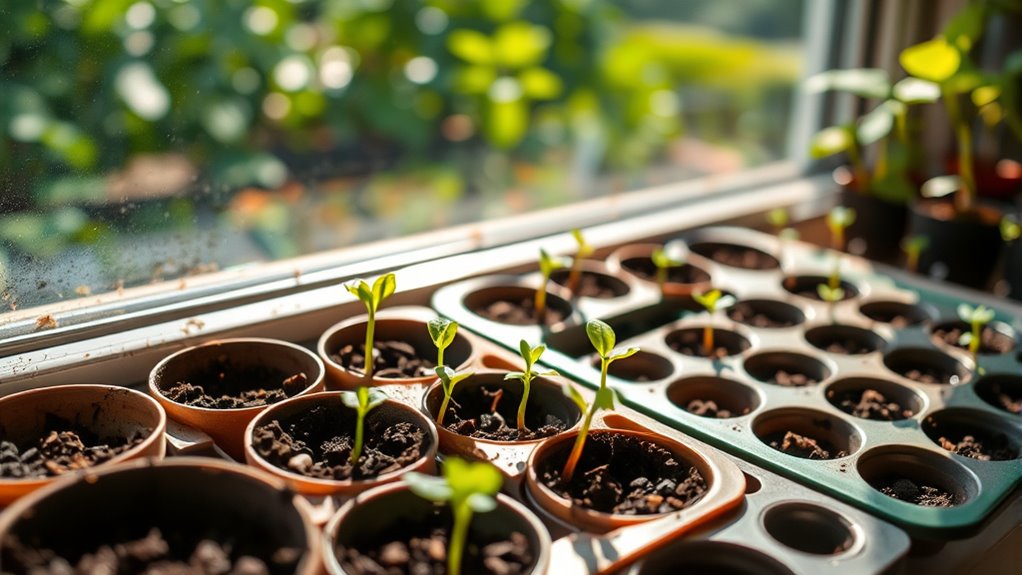
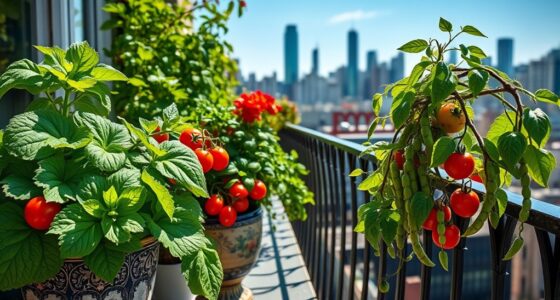
Have you ever wondered how to grow a lush garden even in a tiny apartment or limited backyard? The secret lies in mastering seed starting techniques and applying smart container gardening tips. When space is tight, growing your own plants requires careful planning and a little creativity, but it’s absolutely doable. You just need to understand how to make the most of small areas and optimize every inch for healthy seed growth.
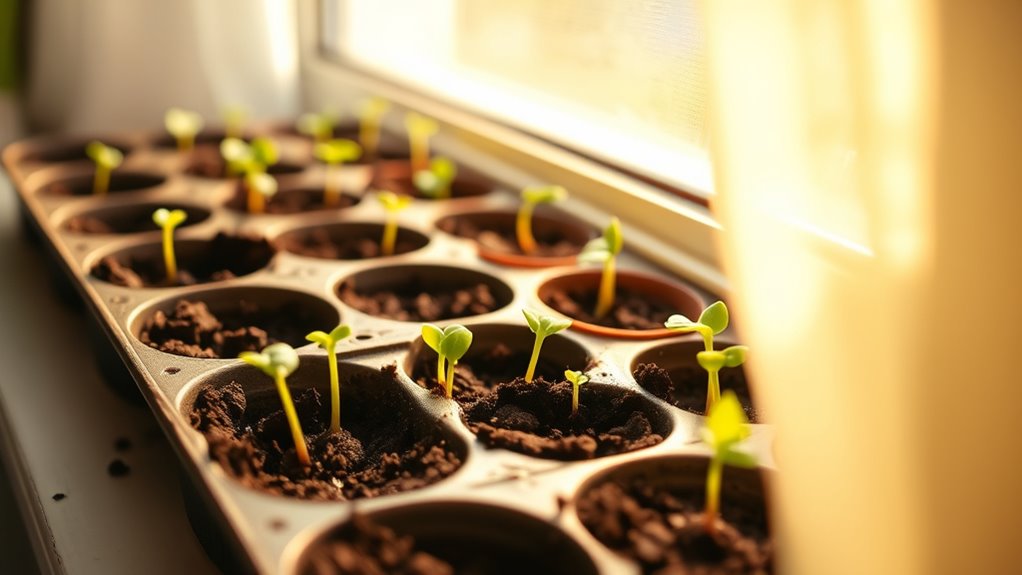
Start with choosing the right containers. Use small pots, trays, or repurposed containers with drainage holes to prevent waterlogging. The key to successful seed starting is providing proper drainage and consistent moisture. Fill your containers with quality seed-starting mix, which is lighter and drains better than regular garden soil. This promotes healthy root development and reduces the risk of disease. When planting your seeds, follow the depth instructions on the packet—planting too deep or too shallow can hinder germination. Cover the seeds lightly with soil, then gently water to keep the soil moist but not soaked. Incorporating appropriate soil is essential because it enhances seed germination success and healthy growth.
Choose containers with drainage, use quality seed-starting mix, and follow proper planting depths.
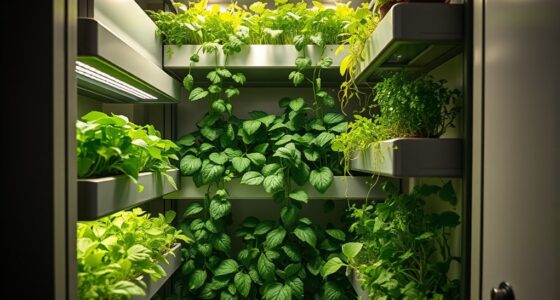
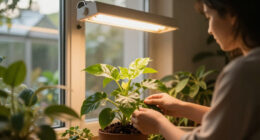
Lighting is essential when starting seeds indoors. Place your containers near a south-facing window that gets plenty of sunlight, or use grow lights if natural light is limited. Seedlings need about 12-16 hours of light daily to grow strong and healthy. Keep the temperature consistent, ideally around 65-75°F, to encourage germination. Using clear plastic covers or plastic wrap can help create a mini greenhouse effect, maintaining humidity and warmth. Just remember to remove the cover once sprouts appear to prevent mold and damping-off disease.
Container gardening tips also emphasize the importance of spacing. Even in small containers, give your seedlings enough room to grow by thinning them out if necessary. This prevents overcrowding, which can lead to competition for nutrients and increased disease risk. Water your seedlings regularly, keeping the soil evenly moist but not waterlogged. Fertilize lightly once your seedlings develop their first true leaves, using a diluted, balanced liquid fertilizer.
Finally, when your seedlings are strong enough and the weather permits, harden them off gradually by exposing them to outdoor conditions for a few hours daily. This prepares your plants for transplanting into your limited garden space or balcony. With patience and attention to detail, you’ll turn even a tiny spot into a thriving green oasis. Growing from seed in small spaces isn’t just about saving space; it’s about maximizing potential and enjoying the rewarding process of nurturing life from the very beginning.

TAQIXI 100 Packs 4 5 6 Inch Nursery Pots, Plastic Nursery Pots for Plants with Drainage Holes, Seed Starting Garden Pots of Flower Plant Container for Succulents, Transplanting (100, 4 Inch)
- Pack Quantity: 100 nursery pots per pack
- Size: 4-inch diameter pots
- Material: Lightweight, durable plastic
As an affiliate, we earn on qualifying purchases.
As an affiliate, we earn on qualifying purchases.
Frequently Asked Questions
What Are the Best Seed-Starting Containers for Small Spaces?
You should choose compact seed tray options like mini trays or multi-cell inserts that fit well in small spaces. Reusable containers, such as plastic or biodegradable pots, are great for sustainability and easy reuse. These options provide good drainage and space efficiency, making it easier for you to start seeds indoors or on a windowsill. Opt for stackable or modular designs to maximize your limited space while giving your seedlings room to grow.
How Do I Prevent Pests When Starting Seeds Indoors?
To prevent pests when starting seeds indoors, you should maintain cleanliness and monitor your seedlings regularly. Use pest prevention techniques like keeping the area dry and removing any debris. Incorporate organic controls such as neem oil or insecticidal soap if pests appear. Quarantining new plants before introducing them to your seedlings also helps prevent infestations. By staying vigilant and using organic controls, you can keep pests at bay and ensure healthy seed growth.
What Lighting Options Are Most Effective for Seed Germination?
Imagine you’re a pioneer, and grow light options are your new frontier. For seed germination, LED grow lights are highly effective because they provide the specific spectrum seeds need to sprout strong. Natural sunlight benefits are undeniable, so place your seedlings near south-facing windows for ideal light. Combining grow lights with natural sunlight creates the perfect environment, ensuring quick, healthy germination and vigorous growth.
How Often Should I Water My Seedlings in Limited Space?
You should water your seedlings when the topsoil feels dry, typically every 1-3 days depending on your space’s humidity and temperature. Maintain proper moisture management by avoiding overwatering, which can cause damping-off, and underwatering, which stunts growth. Keep the soil consistently moist but not soaked. Adjust your watering frequency as seedlings grow and conditions change to guarantee healthy development in your limited space.
When Is the Ideal Time to Transplant Seedlings Outdoors?
They say, “Timing is everything,” and that’s true for transplanting seedlings outdoors. You should wait until the seasonal timing aligns with your area’s last frost date, typically in spring. Transplant seedlings once the weather warms, and the risk of frost has passed. Make sure they’re strong enough to handle the outdoors, usually after 6-8 weeks. This way, your plants thrive and grow healthy, giving you a bountiful harvest.
Conclusion
So, there you have it—your tiny urban jungle is now a thriving seed-starting paradise. Who knew that limited space could breed such big dreams? Just remember, whether your plants flourish or flop, you’re now officially a “green thumb” in the making. So go ahead, get those seeds in the dirt, and embrace the chaos. After all, even the smallest spaces can grow the biggest personalities—and maybe a salad or two.