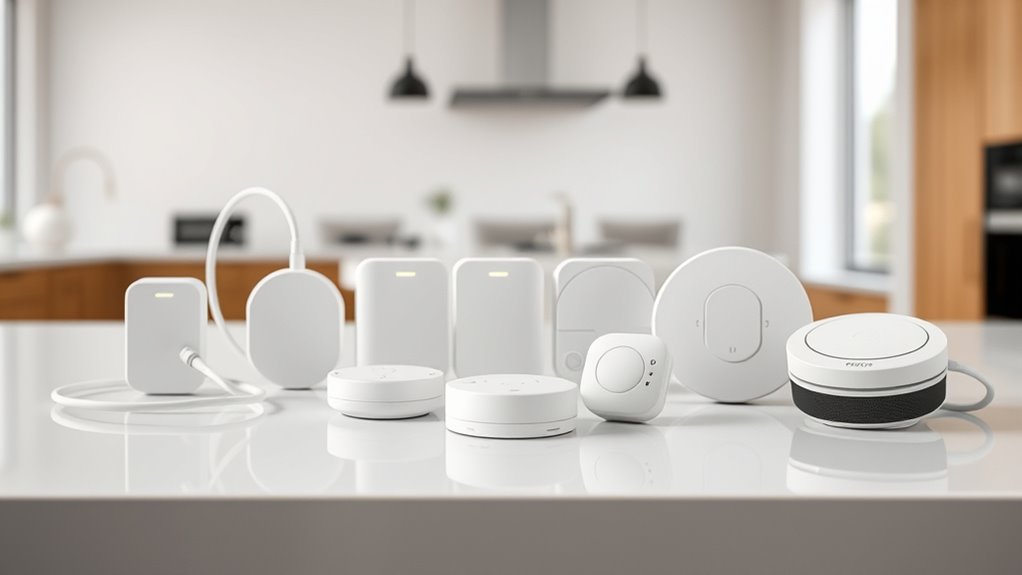

If you’re comparing smart water leak detectors, the biggest divide in this category is between hub-based long-range systems and standalone Wi-Fi sensors, and that choice shapes everything else — cost, reliability, and how many rooms you can cover. The YoLink Water Leak Sensor 4 Kit with Hub earns my best overall pick because its LoRa connection reaches sensors hundreds of feet away, works during internet outages, and supports app, SMS, and email alerts — the most dependable alerting chain in this lineup. For budget-conscious buyers, the GoveeLife Smart Water Leak Detector 5 Pack delivers whole-home coverage at a low per-sensor cost, while the Aqara Zigbee Water Leak Sensor 3-Pack is the pick for smart home enthusiasts already running Home Assistant or an Aqara hub. The tradeoffs come down to whether you want maximum coverage per dollar or maximum reliability when your Wi-Fi stumbles. Read on for the full breakdown of all 15 detectors and which one fits your home.

Get garden gear delivered free with Prime
- Fast, free delivery on millions of items
- Prime Video, Amazon Music and more included
- Member-only deals all year
Complete the kit



Key Takeaways
- YoLink‘s LoRa-based sensors consistently outperform Wi-Fi-only detectors like the Govee and Winees models when sensors sit far from the router, in basements, or behind appliances — that range advantage is why YoLink kits dominate the top of the ranking.
- Wi-Fi-only detectors (GoveeLife, Winees, X-Sense) are cheaper per sensor and simpler to set up, but they lose alerting if your internet drops — a real risk during storms, which is exactly when leaks happen.
- Models with an onboard hub and base station (YoLink, X-Sense SWS54) offer offline local alarms and louder sirens, making them better for large or multi-floor homes than standalone puck-style sensors.
- The GoveeLife detector with the 4.92 ft cable sensor solves a problem no other pick addresses well: monitoring tight sump pits, washing machine drains, and hard-to-reach spaces where a full sensor unit can’t fit.
- Five-packs from GoveeLife undercut three-packs from nearly every competitor on per-sensor cost, which is why they dominate the value tier — but they typically lack a hub, adjustable alarm volume, and third-party integrations.
| GoveeLife Premium Smart Water Leak Detector 2 (6 Pack) |  | Best Overall for Whole-Home Coverage | Power Source: Battery (12 AAA included) | Wireless Range: Up to 1968 ft | Sensor Technology: LoRa | VIEW ON AMAZON | See Our Full Breakdown |
| YoLink Water Leak Sensor 2 with 1/4 Mile Range and Built-In Siren |  | Best for Awkward Spaces and Outbuildings | Wireless Range: 1/4 mile open-air | Sensing Type: 4.2 ft rope-style cable | Connectivity: LoRa (requires YoLink Hub) | VIEW ON AMAZON | See Our Full Breakdown |
| Govee WiFi Water Leak Detector 3-Pack |  | Best Budget Starter Set | Sensors Included: 3 | Connectivity: Wi-Fi (2.4G only) | Alarm Volume: 100 dB, adjustable with mute | VIEW ON AMAZON | See Our Full Breakdown |
| YoLink Water Leak Sensor 4 Kit with Hub, 6-Pack |  | Best Complete System for Big Properties | Included: 1 hub + 6 sensors | Wireless Range: Up to 2,034 ft open air | Alarm Volume: 105 dB per sensor | VIEW ON AMAZON | See Our Full Breakdown |
| GoveeLife Upgraded Smart Water Leak Detector (3 Pack) with 105dB Alarm |  | Best Rugged Pick for Wet Zones | Pack Size: 3 detectors | Wireless Range: 1804 ft through up to 5 walls | Wireless Technology: Sub-1G long-range | VIEW ON AMAZON | See Our Full Breakdown |
| GoveeLife Upgraded Smart Water Leak Detector with 4.92 ft Cable, 1 Pack |  | Best for Hidden Leak Zones | Power Source: Battery (6 AAA, included) | Cable Length: 4.92 ft | Connectivity Range: 1804 ft (550 m) via 915 MHz Sub-1G | VIEW ON AMAZON | See Our Full Breakdown |
| GoveeLife Smart Water Leak Detector, 5 Pack |  | Best Value Multi-Pack | Pack Size: 5 sensors | Connectivity Range: Up to 1,804 ft (550 m) | Alarm Volume: Up to 105 dB, adjustable across 4 levels | VIEW ON AMAZON | See Our Full Breakdown |
| Aqara Zigbee Water Leak Sensor, 3-Pack |  | Best for Smart Home Integrators | Pack Size: 3 sensors | Connectivity: Zigbee | Minimum Detection Level: 0.5 mm (0.02 in) | VIEW ON AMAZON | See Our Full Breakdown |
| X-Sense Wi-Fi Water Leak Detector Kit with 3 Sensors and Base Station | 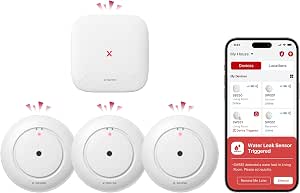 | Best Alarm System for Heavy Sleepers | Sensors: 3 (plus base station) | Alarm Volume: 120 dB | Detection Probes: 6 per sensor: 2 upper, 4 bottom | VIEW ON AMAZON | See Our Full Breakdown |
| GoveeLife Water Leak Detector 5 Pack with 105dB Adjustable Alarm and Dual Sensor Probes |  | Best Detection Sensitivity in Bulk | Pack Size: 5 sensors | Alarm Volume: 105 dB, adjustable | Sensor Probes: Dual sets per sensor | VIEW ON AMAZON | See Our Full Breakdown |
| YoLink Water Leak Starter Kit: Hub + 4 Leak Sensors |  | Best for Large or Multi-Floor Homes | Connectivity: LoRa | Range: Up to 1/4 mile (open air) | Battery Life: Up to 5 years | VIEW ON AMAZON | See Our Full Breakdown |
| GoveeLife Water Leak Detectors 5 Pack |  | Best Value for Multi-Room Coverage | Alarm Volume: 100 dB adjustable | Number of Units: 5 | Connectivity: Wireless; gateway required for mobile monitoring | VIEW ON AMAZON | See Our Full Breakdown |
| Winees WiFi Water Leak Detector 3-Pack |  | Best Plug-and-Play Wi-Fi Pick | Power Source: Battery powered (3 lithium-ion, included) | Connectivity: Wi-Fi (2.4GHz) | Alarm Volume: 100 dB adjustable | VIEW ON AMAZON | See Our Full Breakdown |
| X-Sense Wi-Fi Water Leak Detector Kit with 4 Sensors and Base Station |  | Best for Tight Spaces | Sensors: 4 water sensors | Base Station Alarm Volume: Up to 100 dB | Connection Range: 1700 ft (500 m) | VIEW ON AMAZON | See Our Full Breakdown |
| YoLink Water Leak Sensor 4-Pack with Hub, 105 dB Alarm |  | Best Overall | Includes: 1 Hub + 4 leak sensors | Alarm Volume: 105 dB | Sensor Technology: LoRa | VIEW ON AMAZON | See Our Full Breakdown |
| water leak smart sensors review | Alarm Volume | Alerts | Battery Life |
|---|---|---|---|
| GoveeLife Premium Smart Water | 100 dB | SMS, email, app | 5 years |
| YoLink Water Leak Sensor 2 wit | — | — | 2+ years |
| Govee WiFi Water Leak Detector | 100 dB, adjustable with mute | Email, app push, sound alarm | — |
| YoLink Water Leak Sensor 4 Kit | 105 dB per sensor | App, email, SMS | — |
| GoveeLife Upgraded Smart Water | Up to 105 dB, 4 levels | SMS, app push, email | 5 years |
| GoveeLife Upgraded Smart Water | — | — | 5 years |
| GoveeLife Smart Water Leak Det | Up to 105 dB, adjustable across 4 levels | App, SMS, and email | Up to 5 years |
| Aqara Zigbee Water Leak Sensor | — | — | — |
| X-Sense Wi-Fi Water Leak Detec | 120 dB | — | — |
| GoveeLife Water Leak Detector | 105 dB, adjustable | — | 5 years (claimed) |
| YoLink Water Leak Starter Kit: | — | — | Up to 5 years |
| GoveeLife Water Leak Detectors | 100 dB adjustable | — | — |
| Winees WiFi Water Leak Detecto | 100 dB adjustable | App, email, SMS | — |
| X-Sense Wi-Fi Water Leak Detec | — | App alerts plus audible alarm | — |
| YoLink Water Leak Sensor 4-Pac | 105 dB | App, email, SMS | Up to 5 years (8 AAA batteries, included) |
More Details on Our Top Picks
GoveeLife Premium Smart Water Leak Detector 2 (6 Pack)
This six-pack earns the top spot because it solves the two problems that sink most leak detector setups: spotty range in large homes and batteries that die quietly. The LoRa-based connection reaches up to 1968 feet, which matters when a sensor sits in a basement sump pit three floors away from your router — something the standard Govee WiFi Water Leak Detector 3-Pack struggles with since it leans entirely on 2.4G Wi-Fi at each sensor. With a five-year battery life and alerts through SMS, email, and the app, the maintenance burden stays near zero.
The tradeoff is the same one Govee repeats across its lineup: the gateway only accepts 2.4G Wi-Fi, so dual-band router owners need to split their bands first. Twelve AAA batteries are included, but replacing that many cells down the road is a real cost.
Pros:- LoRa range up to 1968 feet penetrates large homes where Wi-Fi sensors drop off
- Five-year battery life means near-zero maintenance after installation
- Triple alert channels: SMS, email, and app push
- Works with Alexa, Google Assistant, and IFTTT for automation
Cons:- Gateway only supports 2.4G Wi-Fi, which trips up modern dual-band routers
- 12 AAA batteries total adds long-term replacement cost and waste
Best for: Homeowners covering large or multi-floor properties who want six detectors, long range, and years of battery life without monthly fees
Not ideal for: Buyers with only 5G Wi-Fi networks, or anyone wanting a complete kit out of the box — the gateway ecosystem assumes you already have or buy the right hub hardware
- Power Source:Battery (12 AAA included)
- Wireless Range:Up to 1968 ft
- Sensor Technology:LoRa
- Alarm Volume:100 dB
- Alerts:SMS, email, app
- Compatibility:Alexa, Google Assistant, IFTTT
- Battery Life:5 years
- Pack Size:6 detectors
Our verdict“The most balanced pick for whole-home leak detection if you can live with a 2.4G-only gateway.”
YoLink Water Leak Sensor 2 with 1/4 Mile Range and Built-In Siren
Most leak detectors are pucks that only catch water directly beneath them. This one takes a different approach with a 4.2-foot rope-style sensing cable, so it can trace the length of a water heater seam, wrap a pipe run, or lie along a basement wall and catch a leak anywhere along that line. The quarter-mile open-air LoRa range also makes it the pick for detached garages, sheds, or crawlspaces far beyond what the GoveeLife Premium Smart Water Leak Detector 2 reliably covers indoors.
Two caveats shape who should buy it. It requires a YoLink Hub that isn’t included, unlike the bundled YoLink Water Leak Sensor 4 Kit, so it makes the most sense as an add-on to an existing YoLink system rather than a starter purchase. Battery life is also shorter than Govee’s five-year claims at two-plus years.
Pros:- Rope sensing cable detects leaks along an entire line, not just one spot
- 1/4 mile open-air range reaches outbuildings and remote structures
- Operates independently of Wi-Fi and internet for detection and local alarms
- QR-code installation makes pairing fast even for beginners
Cons:- YoLink Hub required and sold separately
- Battery life of 2+ years is shorter than competing LoRa sensors
Best for: Existing YoLink owners, and anyone monitoring long pipe runs, water heaters, or detached outbuildings beyond normal Wi-Fi reach
Not ideal for: First-time buyers starting from scratch — without the hub this sensor can’t deliver smart alerts at all
- Wireless Range:1/4 mile open-air
- Sensing Type:4.2 ft rope-style cable
- Connectivity:LoRa (requires YoLink Hub)
- Battery Life:2+ years
- Built-In Alarm:Yes, siren
- Internet Required:No, works independently for detection
Our verdict“A specialized add-on whose sensing cable and extreme range fill gaps puck-style detectors can’t.”
Govee WiFi Water Leak Detector 3-Pack
For a first dip into leak detection, this three-pack keeps things simple: each sensor connects over Wi-Fi, fires a 100dB adjustable alarm, and pushes alerts by email and app without a separate hub purchase. That direct-to-Wi-Fi design is what keeps the entry cost down compared with the YoLink Water Leak Sensor 4 Kit, which requires its hub hardware as part of the package. The system supports up to 20 sensors total, so coverage can grow room by room.
The limitations are real, though. Sensors are locked to 2.4G Wi-Fi, and pairing only works with the specific Govee H5054 sensor family, which narrows upgrade paths. Compared with the GoveeLife Upgraded Smart Water Leak Detector, there’s no stated battery life figure and no waterproofing rating — acceptable for a starter set, but not for a set-and-forget installation.
Pros:- No hub needed — sensors connect directly to Wi-Fi
- Adjustable 100dB alarm with mute function
- Scales up to 20 sensors on one account
- Email and app alerts included free
Cons:- 2.4G Wi-Fi only, and range depends entirely on your home network
- Only pairs with Govee H5054 sensors, limiting future expansion
- No published battery life or waterproof rating
Best for: First-time buyers and renters who want app alerts in three key spots (under sinks, behind a washer, near a water heater) without hub complexity
Not ideal for: Large homes with thick walls or distant basements — Wi-Fi at each sensor is less dependable than the LoRa options in this roundup
- Sensors Included:3
- Connectivity:Wi-Fi (2.4G only)
- Alarm Volume:100 dB, adjustable with mute
- Detection Probes:2 backwater, 1 front per sensor
- Max Sensors Supported:20
- Alerts:Email, app push, sound alarm
Our verdict“A sensible low-commitment entry point for small homes, as long as your Wi-Fi reaches every sensor location.”
YoLink Water Leak Sensor 4 Kit with Hub, 6-Pack
This kit is the most turnkey option here for large-scale coverage: six sensors, a hub, and 105dB alarms on every unit, all in one box. The standout feature is YoLink Control-D2D, which lets sensors trigger compatible YoLink devices locally even when your internet goes down — a resilience angle no Govee kit in this roundup matches, since Govee’s smart alerts die with the connection. The hub also supports 300+ YoLink devices, so this becomes the backbone of a broader smart home rather than a one-off leak system.
The cost of that ecosystem depth is complexity: you’re buying into YoLink’s platform, whereas the GoveeLife Premium Smart Water Leak Detector 2 plays nicer with Alexa, Google, and IFTTT out of the gate. The 2,034-foot range is an open-air figure, so expect less through concrete and flooring, and the dozen AAA batteries will eventually need swapping.
Pros:- Hub and six sensors included — truly plug and play
- Local D2D control keeps automations alive during internet outages
- 105dB per-sensor alarms for immediate on-site warning
- Hub supports 300+ devices for future expansion
Cons:- Adds another hub and app to your smart home stack
- Advertised range is open-air and drops indoors
- 12 AAA batteries across the fleet require eventual replacement
Best for: Owners of large homes or small rental properties who want six sensors, a hub, and alerts that keep working during outages
Not ideal for: Households already invested in Alexa- or HomeKit-centered setups who want a single-app experience without a second hub
- Included:1 hub + 6 sensors
- Wireless Range:Up to 2,034 ft open air
- Alarm Volume:105 dB per sensor
- Alerts:App, email, SMS
- Offline Capability:YoLink Control-D2D local triggers
- Battery:2 AAA per sensor (up to 5 years)
- Hub Capacity:300+ YoLink devices
Our verdict“The strongest choice if you want maximum sensor count and outage-proof operation in a single purchase.”
GoveeLife Upgraded Smart Water Leak Detector (3 Pack) with 105dB Alarm
What separates this three-pack is durability. The IP67 waterproof housing means a detector that takes a direct soaking during a real flood can be dried out and reused — a genuine advantage over standard detectors that often end up in the trash after their first activation. Pair that with Sub-1G connectivity that holds signal through up to five walls at 1804 feet, and this kit suits damp basements and utility rooms where the cheaper Govee WiFi Water Leak Detector 3-Pack would both drop signal and risk water damage to the sensor itself.
The alarm reaches 105dB across four adjustable levels, and the five-year battery life matches Govee’s best. But the ecosystem walls are the catch: it only works with the GoveeLife H5059/H5830 gateway line, and that gateway is again 2.4G Wi-Fi only, so buyers outside the GoveeLife ecosystem should check compatibility before committing.
Pros:- IP67 waterproof and reusable after drying out
- Sub-1G signal penetrates up to 5 walls at 1804 ft
- 105dB alarm with 4 adjustable levels
- 5-year battery life with free SMS, app, and email alerts
Cons:- Locked to GoveeLife H5059/H5830 gateway sensors
- Gateway supports 2.4G Wi-Fi only
Best for: Anyone placing detectors in flood-prone basements, sump areas, or laundry rooms where sensors may actually get wet
Not ideal for: Buyers who want cross-brand flexibility or whose routers can’t provide a 2.4G network for the required gateway
- Pack Size:3 detectors
- Wireless Range:1804 ft through up to 5 walls
- Wireless Technology:Sub-1G long-range
- Alarm Volume:Up to 105 dB, 4 levels
- Battery Life:5 years
- Alerts:SMS, app push, email
- Gateway Requirement:GoveeLife H5059/H5830, 2.4G Wi-Fi
Our verdict“The pick for genuinely wet locations, thanks to waterproofing that cheaper detectors simply don’t offer.”
GoveeLife Upgraded Smart Water Leak Detector with 4.92 ft Cable, 1 Pack
Most leak detectors in this roundup only sense water that reaches their base — but leaks often start where you cannot slide a puck. This model stands out for its 4.92 ft flexible cable probe, which reaches behind water heaters, into sump pits, and under built-in appliances where a flat sensor like the Aqara Zigbee 3-Pack simply cannot fit. Dual modes let it act as either a leak alarm or a water level detector, a flexibility no other pick here matches. Compared with the X-Sense SWS54, its 1804 ft Sub-1G range is similar, but this single-sensor package trades coverage for precision in one tricky spot. The tradeoffs are real: it needs a 2.4 GHz network and only pairs with GoveeLife H5059/H5830 sensors, so buyers starting from scratch may find a multi-pack more economical.
Pros:- 4.92 ft cable probe reaches behind appliances and into sump pits
- Dual modes for leak alarms and water level monitoring
- Free SMS alerts plus email, app push, and a 105 dB alarm
- 5-year battery life and IP67 waterproof housing
Cons:- Only compatible with GoveeLife H5059/H5830 water sensors
- Gateway limited to 2.4 GHz Wi-Fi
Best for: Homeowners with a specific trouble spot like a sump pit, crawlspace, or the back of a water heater where a standard puck sensor cannot reach
Not ideal for: Buyers outfitting a whole home on a first pass — a single cable probe covers one zone, while a 5-pack like the GoveeLife B0DQLFC3Q6 blankets multiple rooms for less
- Power Source:Battery (6 AAA, included)
- Cable Length:4.92 ft
- Connectivity Range:1804 ft (550 m) via 915 MHz Sub-1G
- Alarm Loudness:105 dB
- Battery Life:5 years
- Wi-Fi Requirement:2.4 GHz (gateway only)
- Compatible Devices:Alexa, Google, Smartphone
Our verdict“This is the pick for anyone who needs to monitor one hard-to-reach leak zone that flat puck sensors cannot physically cover.”
GoveeLife Smart Water Leak Detector, 5 Pack
When the job is blanketing a house — under every sink, the washer, the fridge line, the water heater — per-sensor cost matters more than any single feature. This five-sensor kit delivers whole-home coverage with the same 1804 ft range and IP67 rating as GoveeLife’s single-unit offerings, plus adjustable alarm volume across four levels, which is handy for bedrooms where 105 dB at full blast is jarring. Compared with the Aqara Zigbee 3-Pack, you get two more sensors and a much longer effective range, though the Aqara units detect shallower water at 0.5 mm. Note that the five-year battery life and maximum range are manufacturer claims that can shrink with thick walls or weak Wi-Fi. It also depends on a GoveeLife gateway with 2.4 GHz Wi-Fi, so check your router before committing.
Pros:- Five sensors for whole-home coverage in one purchase
- Adjustable alarm volume across four levels
- App, SMS, and email alerts included
- IP67 waterproof housing and long-range connectivity
Cons:- Requires a compatible GoveeLife gateway and 2.4 GHz Wi-Fi
- Battery life and range figures are stated claims and vary with conditions
Best for: Budget-conscious homeowners who want to cover five or more leak-prone spots in one purchase without paying premium-kit prices
Not ideal for: Smart-home enthusiasts running Home Assistant or third-party hubs — these sensors only work within the GoveeLife gateway ecosystem
- Pack Size:5 sensors
- Connectivity Range:Up to 1,804 ft (550 m)
- Alarm Volume:Up to 105 dB, adjustable across 4 levels
- Alerts:App, SMS, and email
- Battery Life:Up to 5 years
- Power Source:10 included AAA batteries
- Compatibility:GoveeLife H5059/H5830 gateway; 2.4 GHz Wi-Fi
Our verdict“The most sensible way to cover an entire home in leak detectors without buying multiple starter kits.”
Aqara Zigbee Water Leak Sensor, 3-Pack
These are the smallest detectors in this lineup, and that compactness changes where you can deploy them — inside a sink cabinet, behind a toilet, under a dishwasher edge. The standout capability is sensitivity: they detect water as shallow as 0.5 mm, finer than the X-Sense SWS54’s 0.4 mm pooling threshold approaches but with no wiring or screws at all. As Zigbee devices, they suit buyers already running an Aqara Hub who want detectors that tie into scenes and automations rather than living in a standalone app like the GoveeLife five-pack. The tradeoffs are structural: the hub is sold separately, third-party hubs and USB dongles are not officially supported, and recommended placement is within 10 m of the hub — far shorter than GoveeLife’s or X-Sense’s thousand-foot ranges, which matters in large homes.
Pros:- Detects water as shallow as 0.5 mm
- Compact, wire-free design fits inside cabinets and tight spots
- Triggers phone alerts and hub alarms
- IP67-rated housing
Cons:- Aqara Hub required and sold separately
- No official third-party hub or USB dongle support
- Recommended placement within 10 m of the hub
Best for: Households already invested in the Aqara ecosystem who want compact, highly sensitive detectors that integrate with existing automations
Not ideal for: Owners of large properties or outbuildings — the 10 m hub range and lack of official third-party hub support make long-distance coverage impractical
- Pack Size:3 sensors
- Connectivity:Zigbee
- Minimum Detection Level:0.5 mm (0.02 in)
- Water Resistance:IP67
- Max Distance from Hub:10 m (33 ft)
- Hub Requirement:Aqara Hub required; sold separately
Our verdict“A natural add-on for existing Aqara households that value tight smart-home integration over raw range and standalone simplicity.”
X-Sense Wi-Fi Water Leak Detector Kit with 3 Sensors and Base Station
Every other pick here tops out at 105 dB — this kit pushes a 120 dB alarm on both the sensor and the included base station, making it the loudest option in this roundup and the one most likely to wake a sleeping household before water spreads. Its detection design is also more sophisticated: each sensor carries six probes — two upper and four bottom — so it catches both dripping from above and pooling below, a dual approach the flat GoveeLife 5-pack cannot replicate. Sharing with up to 12 users suits landlords or family groups, and adjustable reminder intervals (10 minutes to 12 hours) prevent alert fatigue. The downsides: no 5 GHz Wi-Fi support, and the 1,804 ft range figure applies to open areas, so expect less through multiple floors and walls. The IP66 rating also trails the IP67 sealing on the GoveeLife units.
Pros:- 120 dB alarms on both sensors and base station
- Six probes per sensor detect both drips and pooling water down to 0.4 mm
- App sharing with up to 12 users
- Flexible alert reminder intervals from 10 minutes to 12 hours
Cons:- No 5 GHz Wi-Fi support
- Range specified for open areas only
- IP66 rating is lower than the IP67 on rival GoveeLife sensors
Best for: Families and landlords who need the loudest possible alert chain — dual 120 dB alarms plus shared app access for up to 12 people
Not ideal for: Homes with dense construction or multiple floors — the quoted range assumes open areas, and IP66 sealing is a step below the IP67 competition for perpetually damp spots
- Sensors:3 (plus base station)
- Alarm Volume:120 dB
- Detection Probes:6 per sensor: 2 upper, 4 bottom
- Minimum Pooling Detection:0.4 mm
- Wireless Range:Up to 1,804 ft (550 m) in open areas
- Wi-Fi:2.4 GHz; 5 GHz not supported
- Ingress Protection:IP66
- Shared App Access:Up to 12 users
Our verdict“The strongest choice when audible alarm volume is non-negotiable and multiple people need to receive and respond to alerts.”
GoveeLife Water Leak Detector 5 Pack with 105dB Adjustable Alarm and Dual Sensor Probes
This kit occupies a middle ground between GoveeLife’s other five-pack and the X-Sense kit. Its distinguishing feature is the dual sensor probe design on every unit, giving each detector two independent sensing points for earlier alerts across basements, kitchens, and bathrooms — a sensitivity edge over the single-contact design in the GoveeLife 5-Pack (B0DQLFC3Q6), which costs the ecosystem constraint instead. Compared with the X-Sense SWS54, you get five sensors instead of three and the same 105 dB adjustable alarm, but you give up the base station and the 120 dB output. The bigger catch is connectivity: the gateway is not included and cannot be skipped, so without it these function as local alarms only — no app alerts at all. Factor that add-on cost into the real price before assuming this is the value pick.
Pros:- Dual sensor probes on each of the five detectors for earlier detection
- Loud adjustable 105 dB alarm
- 5-year claimed battery life
- IP67 waterproof durability
Cons:- Gateway required for app connectivity and not included
- Cannot connect directly to Wi-Fi
- Locked to the GoveeLife H5044 gateway
Best for: Buyers who already own a GoveeLife H5044 gateway and want maximum sensor coverage with dual-probe early detection
Not ideal for: First-time buyers — the required gateway ships separately, so out-of-the-box you get no phone alerts, just local alarms
- Pack Size:5 sensors
- Alarm Volume:105 dB, adjustable
- Sensor Probes:Dual sets per sensor
- Battery Life:5 years (claimed)
- Durability:IP67 waterproof
- Connectivity:Requires GoveeLife H5044 gateway (not included)
Our verdict“A strong five-sensor buy for existing GoveeLife gateway owners who want dual-probe sensitivity across the whole house.”
YoLink Water Leak Starter Kit: Hub + 4 Leak Sensors
This kit stands out for its quarter-mile LoRa range, which is the reason it earns its spot for bigger properties. Where Wi-Fi detectors like the Winees WiFi 3-Pack can lose connection across a house or into a deep basement, LoRa punches through floors and distance without drama. The offline Device-to-Device triggers mean a leak under a sink can still shut off a valve or trip a siren even when the internet is down — a layer of protection most budget detectors simply don’t offer. The tradeoff is honest: these sensors are silent on their own, so anyone who wants an audible alarm at the point of the leak should step up to the YoLink 4-Pack with built-in 105 dB sirens instead. Compared with the GoveeLife 5 Pack, scalability here is far stronger, supporting 300+ devices on one hub.
Pros:- Quarter-mile LoRa range reaches basements, attics, and detached structures where Wi-Fi fails
- Device-to-Device triggers keep protection working during internet outages
- Scales to 300+ devices on a single hub for whole-home expansion
- Up to 5-year AAA battery life minimizes maintenance
Cons:- Sensors produce no sound on their own — audible alerts require add-on sirens
- Full smart features depend on the hub and compatible platforms
- Leak detection only; no other sensor types included
Best for: Owners of large homes, basements, or outbuildings who need reliable long-range coverage and want to build a whole-property detection system over time
Not ideal for: Renters or apartment dwellers who want a plug-and-play audible alarm without buying extra sirens or integrating a hub
- Connectivity:LoRa
- Range:Up to 1/4 mile (open air)
- Battery Life:Up to 5 years
- Power Source:2 AAA batteries per sensor
- Compatibility:Alexa, IFTTT, Home Assistant
- Scalability:Supports 300+ devices
- Offline Functionality:Yes, with D2D triggers
Our verdict“This is the pick for spread-out properties where range and outage-proof reliability matter more than a built-in alarm.”
GoveeLife Water Leak Detectors 5 Pack
Five detectors at this positioning make this the cheapest per-sensor way to blanket a home — under every sink, behind the toilet, and next to the water heater in one purchase. The 100dB adjustable alarm fires locally without any hub, so unlike the YoLink Starter Kit, you get sound at the point of the leak right out of the box. The catch is connectivity: mobile app alerts require a separately purchased gateway, whereas the Winees 3-Pack talks to your phone over Wi-Fi directly. Battery life is also unspecified, which means more uncertainty about long-term maintenance than YoLink’s clearly stated 5-year figure. For buyers who prioritize local alarms and coverage density over remote notifications, this set makes more sense than pricier hub-based kits.
Pros:- Five sensors in one pack covers an entire home’s leak-prone spots affordably
- Loud 100dB local alarm works without any hub or gateway
- Wireless, tool-free installation with low battery alerts and a snooze function
Cons:- Mobile app monitoring requires a gateway sold separately
- Battery life is not specified, creating maintenance uncertainty
- No smart home ecosystem integration compared with YoLink or Aqara options
Best for: Budget-conscious homeowners who want loud local alarms in many spots at once and can add a gateway later
Not ideal for: Frequent travelers or remote landlords who need phone alerts out of the box without buying extra hardware
- Alarm Volume:100 dB adjustable
- Number of Units:5
- Connectivity:Wireless; gateway required for mobile monitoring
- Battery Alert:Yes
- Application:Home, bedrooms, basement, warehouse, cabin/RV
Our verdict“The most coverage per dollar for buyers satisfied with loud in-home alarms rather than remote notifications.”
Winees WiFi Water Leak Detector 3-Pack
This option is built around frictionless setup: pre-paired sensors connect straight to your 2.4GHz Wi-Fi with no hub to buy or configure, which is a real advantage over the YoLink kits that are useless without their base station. Alerts arrive through app, email, and SMS, matching more expensive systems, and the adjustable alarm with mute gives flexibility the fixed-volume GoveeLife 5 Pack lacks. The waterproof housing makes it a natural fit for bathrooms and laundry rooms where humidity kills lesser detectors. Tradeoffs are real, though — 2.4GHz-only compatibility will frustrate households on modern mesh networks, and the roughly 100-meter range ceiling is dramatically shorter than YoLink’s LoRa reach, limiting placement in larger homes. Undocumented battery life adds a maintenance question mark.
Pros:- Hub-free Wi-Fi setup with pre-paired sensors ready in minutes
- Triple alert channels via app, email, and SMS
- Waterproof housing suited to humid bathrooms and basements
- Adjustable alarm volume with mute option
Cons:- 2.4GHz Wi-Fi only; incompatible with 5GHz networks
- 100-meter maximum range restricts placement in larger properties
- Battery life not specified, with no clear replacement interval
Best for: Apartment dwellers and small-home owners who want hub-free Wi-Fi alerts with app, email, and SMS redundancy
Not ideal for: Large homes or users on 5GHz-only networks — the range and band limits will bite quickly
- Power Source:Battery powered (3 lithium-ion, included)
- Connectivity:Wi-Fi (2.4GHz)
- Alarm Volume:100 dB adjustable
- Maximum Range:100 meters
- Control Method:Mobile app
- Alerts:App, email, SMS
- Waterproofing:Waterproof housing for humid areas
Our verdict“The easiest path to phone-based leak alerts for compact homes, as long as your Wi-Fi and floor plan cooperate.”
X-Sense Wi-Fi Water Leak Detector Kit with 4 Sensors and Base Station
The defining feature here is physical: at 0.7 inches thick, these pucks slide under appliances, behind water heaters, and inside cramped cabinet gaps where the bulkier Winees tabletop units simply won’t fit. The base station architecture also splits the difference between hub-dependent and standalone designs — sensors relay to a station that blasts up to 100dB, so the alarm is louder and better positioned than a small sensor chirping under a sink. With a 1700-foot connection range, it out-reaches the Winees 3-Pack by a wide margin, though it still can’t match LoRa’s wall-penetrating reliability in the YoLink kits. Note that app alerts depend entirely on Wi-Fi, and there’s no offline device-to-device triggering like YoLink’s D2D — an internet outage means alerts go silent even if the local alarm still fires.
Pros:- Ultra-slim 0.7-inch profile fits under appliances and in tight gaps
- 1700 ft connection range comfortably covers most homes
- Base station delivers a loud centralized 100 dB alarm
- Four sensors plus base station provide broad coverage out of the box
Cons:- App alerts require a working Wi-Fi connection with no offline automation
- Base station alarm may be uncomfortably loud in living spaces
Best for: Homeowners who need detectors tucked under washing machines, dishwashers, and tight cabinet corners where ordinary sensors don’t fit
Not ideal for: Buyers wanting outage-proof automation like automatic valve shutoff during internet failures
- Sensors:4 water sensors
- Base Station Alarm Volume:Up to 100 dB
- Connection Range:1700 ft (500 m)
- Device Thickness:0.7 in (17 mm)
- Device Diameter:3 in (77 mm)
- Alerts:App alerts plus audible alarm
Our verdict“The go-to choice when sensor clearance is measured in inches rather than feet, with solid range to back it up.”
YoLink Water Leak Sensor 4-Pack with Hub, 105 dB Alarm
This kit fixes the one glaring weakness of the YoLink Starter Kit — silent sensors — by building a 105 dB siren into every unit, so you get both a local alarm at the leak and remote app, email, and SMS alerts through the hub. That dual-layer protection is why it earns the top slot as a detector: it covers you whether you’re home asleep or away on vacation. The quarter-mile LoRa range beats every Wi-Fi option here, the IP67 rating survives the very leaks it’s detecting, and D2D linking lets sensors trip sirens or shutoff valves without internet. Compared with the GoveeLife 5 Pack, you trade sensor count for alarms, range, and a stated 5-year battery life. The drawback is ecosystem lock-in — smart features live inside YoLink/Alexa territory, with no support for IFTTT or Home Assistant like the Starter Kit offers.
Pros:- Built-in 105 dB alarms on every sensor combine local and remote protection
- Quarter-mile LoRa range reaches anywhere in and around a large home
- IP67 water resistance and 5-year AAA battery life cut maintenance worries
- Device-to-Device linking triggers sirens and shutoff valves even offline
Cons:- Hub adds cost and setup compared with standalone Wi-Fi sensors
- Smart home integration limited to the YoLink/Alexa ecosystem
Best for: Homeowners who want the most complete detector package — local alarms, remote alerts, long range, and outage-proof operation in one box
Not ideal for: Smart home enthusiasts invested in Home Assistant, IFTTT, or non-Alexa ecosystems, since integration is limited to YoLink and Alexa
- Includes:1 Hub + 4 leak sensors
- Alarm Volume:105 dB
- Sensor Technology:LoRa
- Maximum Range:Up to 2034 ft (1/4-mile open air)
- Battery Life:Up to 5 years (8 AAA batteries, included)
- Water Resistance:IP67
- Alerts:App, email, SMS
- Smart Home Compatibility:Works with Alexa; 300+ YoLink devices per hub
Our verdict“The most complete leak detection package in this lineup — ideal for anyone who refuses to choose between a loud alarm and a phone alert.”

How We Picked
I evaluated every detector across five factors that actually determine whether a leak sensor saves your floors: alert reliability (Wi-Fi vs. hub-based LoRa vs. Zigbee, and what happens when the internet goes down), range and coverage (how far sensors can sit from the router or hub without dropping), alert channels (app push, SMS, email, siren loudness in dB, and smart home integrations), ease of setup and battery life, and value per sensor across the pack sizes offered. Because this roundup is built around detectors, I weighted detection responsiveness and alert redundancy most heavily — a sensor that notices water but fails to notify you is worthless.
The ranking logic follows directly from those weights. Hub-based systems with multi-channel alerts and offline functionality (the YoLink kits, X-Sense base station kits) rank above standalone Wi-Fi sensors because they close the two biggest failure points: dead zones and internet outages. Within each connectivity tier, I then sorted by per-sensor value and practical features like adjustable alarms, cable probes for tight spaces, and multi-pack flexibility. Detectors that repeat the same hardware under slightly different pack configurations were ranked by which specific kit offers the best configuration for most homes, with variants noted for specialized uses.
| water leak smart sensors review | Alerts |
|---|---|
| GoveeLife Premium Smart Water | SMS, email, app |
| YoLink Water Leak Sensor 2 wit | — |
| Govee WiFi Water Leak Detector | Email, app push, sound alarm |
| YoLink Water Leak Sensor 4 Kit | App, email, SMS |
| GoveeLife Upgraded Smart Water | SMS, app push, email |
| GoveeLife Upgraded Smart Water | — |
| GoveeLife Smart Water Leak Det | App, SMS, and email |
| Aqara Zigbee Water Leak Sensor | — |
| X-Sense Wi-Fi Water Leak Detec | — |
| GoveeLife Water Leak Detector | — |
| YoLink Water Leak Starter Kit: | — |
| GoveeLife Water Leak Detectors | — |
| Winees WiFi Water Leak Detecto | App, email, SMS |
| X-Sense Wi-Fi Water Leak Detec | App alerts plus audible alarm |
| YoLink Water Leak Sensor 4-Pac | App, email, SMS |
Factors to Consider When Choosing Water Leak Smart Sensors Review
Before picking a specific kit, it helps to understand the structural choices in this category — connectivity architecture, hub requirements, and sensor form factor — because these decisions matter far more than minor spec differences between models.Wi-Fi, LoRa, or Zigbee: Match the Connection to Your Home
The single biggest decision is connectivity, and it’s where most buyers go wrong. Wi-Fi detectors like the standard GoveeLife packs connect directly to your router with no extra hardware, but they depend entirely on your internet connection staying up — and each sensor needs decent router signal, which is exactly what basements and utility closets often lack. LoRa-based systems like YoLink use a small hub but push sensor signals a quarter mile through walls and floors, so they work in concrete basements and detached garages where Wi-Fi sensors simply can’t hold a connection. Zigbee sensors like the Aqara only make sense if you already own a compatible hub or run Home Assistant; buying a hub just for leak sensors rarely justifies the cost. My advice: if any sensor will live below grade or far from your router, budget for a hub-based system from the start rather than discovering dead zones after installation.
What Happens When Your Internet Goes Down
Leaks don’t schedule themselves around your connectivity, and power outages often precede or accompany plumbing failures. Most Wi-Fi-only detectors in this roundup go silent — no app notifications — the moment your internet drops, though their onboard sirens still sound if the sensor itself has battery power. Hub-based YoLink systems go further, triggering alerts locally and queuing notifications so nothing is lost during an outage. Offline functionality is the most overlooked spec on the box and one of the hardest to live without once you need it. A common mistake is assuming an app notification equals a reliable alert chain; check whether the system supports SMS and email as backup channels, not just push notifications that vanish when your phone is on Do Not Disturb at 3 a.m. If you live somewhere with flaky internet, treat this as a dealbreaker, not a nice-to-have.
Sensor Count and Placement Math
Almost everyone underestimates how many sensors a house actually needs. The minimum viable setup covers the water heater, washing machine, sump pit, under the kitchen sink, and behind the toilet — that’s five spots before you touch a second bathroom, a fridge ice maker line, or a HVAC condensate pan. This is why the five-packs from GoveeLife and the four-sensor YoLink kits rank so well on value: buying sensors in bulk cuts the per-unit cost dramatically compared to adding single units later. A common purchasing mistake is grabbing a three-pack because it’s cheaper upfront, then paying a premium for individual add-on sensors. Map your risk points before shopping, add one or two spare sensors to that count, and buy the pack size that covers it in a single purchase.
Alarm Loudness and Alert Channels
An 85–100 dB onboard siren matters more than most buyers expect, because it’s the only alert that works when you’re home but your phone is elsewhere — or when the alert goes to a family member who isn’t near their device. The GoveeLife models with 105 dB adjustable alarms and the YoLink sensors with built-in sirens are the loudest in this lineup, and adjustable volume is genuinely useful for placing sensors near bedrooms. On the notification side, more channels is almost always better: app push is the baseline, but SMS and email (standard on YoLink) survive app updates, deleted apps, and logged-out sessions. Smart home integration via Alexa, IFTTT, or Home Assistant adds a further layer, letting you trigger routines like shutting off a smart water valve — a combination that turns detection into actual damage prevention.
Form Factor and Probe Sensors for Tight Spaces
Not every leak point can fit a hockey-puck sensor. Sump pits, the gap behind a washing machine drain hose, and the drip pan under a suspended water heater often have room only for a thin probe on a cable — which is exactly what the GoveeLife detector with the 4.92 ft cable sensor is built for. Standard puck sensors work best on flat floors where water pools, but they can miss slow drips that travel along a pipe or wall before reaching the floor. Some models in this roundup pair dual sensor probes with the base unit for this reason, detecting moisture at two points simultaneously. Before buying, look at where each sensor will actually sit: if more than one location is cramped, elevated, or vertical, prioritize a kit with cable probes over a pure puck-only pack, even if the per-sensor cost is slightly higher.
Battery Life and Long-Term Maintenance
Leaks sensors are install-and-forget devices, which makes battery life a quiet differentiator. Wi-Fi sensors typically drain batteries faster because they maintain a constant network connection, while LoRa and Zigbee sensors sip power and can run for years on coin cells or AAAs — one reason YoLink and Aqara units tend to outlast the Wi-Fi competition. Check what battery type each kit uses, because proprietary cells are annoying to replace, while standard CR123A or AAA batteries are a five-minute swap. Look for low-battery alerts in the app; a sensor that dies silently is worse than no sensor at all because it creates false confidence. And since maintenance visits are rare, pick a system whose app shows battery status for every sensor on one screen rather than requiring you to tap into each device individually.
Frequently Asked Questions
Do I need a hub, or are Wi-Fi-only leak detectors good enough?
It depends entirely on where your sensors will live and how reliable your internet is. Wi-Fi-only detectors like the GoveeLife and Winees packs are perfectly adequate for sensors placed near your router on the same floor — under sinks, behind toilets, next to the kitchen fridge. A hub becomes worth the extra cost when sensors go into basements, crawl spaces, or anywhere with weak router signal, because hub-based systems like YoLink’s LoRa or X-Sense’s base station maintain strong connections through walls and floors. The other deciding factor is outage behavior: hub systems can queue and deliver alerts through alternative channels even when your home internet fails, while Wi-Fi sensors go dark until the connection returns. If your home has a basement, a tank water heater, or a history of internet drops, the hub pays for itself the first time it matters.
How many leak sensors does a typical house need?
Most homes need between five and eight sensors for genuine coverage, though many buyers start with three and regret it. The core risk points are the water heater, washing machine, sump pit or basement floor drain, under the kitchen sink, and behind at least one toilet — that’s five before adding a second bathroom, an ice maker line, or an HVAC condensate pan. Because per-sensor pricing drops sharply in larger packs, the five-packs from GoveeLife and the four-sensor YoLink kits usually deliver better value than buying a three-pack and adding singles later. My practical suggestion is to walk your home with a notepad, list every water connection or appliance, and buy the pack size that covers that list plus one spare. Unplaced spares cost little; an uncovered water heater can cost a flooring replacement.
Why do several GoveeLife models appear in this roundup — which one should I choose?
GoveeLife sells multiple variants of essentially the same detector in different pack sizes and configurations, and the right one depends on your coverage plan. The five-packs offer the lowest per-sensor cost and suit whole-home deployment, while the three-packs fit smaller homes or first-time buyers testing the category. The variant with the 4.92 ft cable probe solves a different problem entirely — monitoring sump pits, drains, and cramped spaces where a puck sensor physically can’t sit — so some buyers pair a standard multi-pack with one cabled unit. The premium and upgraded models add louder adjustable alarms, which matters if a sensor will sit far from where you sleep. Pick based on count and placement first; alarm volume and probe type are refinements, not the starting point.
Can these leak sensors automatically shut off my water?
On their own, no — every sensor in this roundup detects and alerts, but none closes a valve by itself. However, several systems can trigger an automatic shutoff when paired with a compatible smart water valve. YoLink is the strongest option here because its IFTTT, Alexa, and Home Assistant integrations let you build routines that close a smart valve the moment a sensor detects moisture, and YoLink also sells its own shutoff valve designed to pair directly with its sensors. X-Sense and GoveeLife support similar automation through their apps and IFTTT, though the integration path is less direct. If automatic shutoff is your end goal, plan the purchase as a system — sensors plus valve plus hub — and verify compatibility before buying, because mixing brands across an automation chain is where these setups usually break down.
Are Aqara Zigbee leak sensors a good choice if I don’t already have a smart home setup?
Generally no — Aqara’s Zigbee sensors are excellent hardware, but they require an Aqara hub or another Zigbee coordinator to function, and buying a hub solely for leak detection rarely makes financial sense compared to a Wi-Fi multi-pack. Where Aqara shines is inside an existing ecosystem: if you already run an Aqara hub for cameras, door sensors, or lighting, adding the leak sensor three-pack is inexpensive and integrates cleanly with your existing automations. Home Assistant users get particular value from Zigbee sensors because of the deep local control and custom automation the platform provides. The tradeoff for non-tinkerers is that Zigbee adds a layer of setup complexity and another device to maintain. If you’re starting from zero smart home equipment, a Wi-Fi kit or a YoLink hub system will get you protected faster with fewer moving parts.
Conclusion
After comparing all 15 detectors, the right pick comes down to your home’s layout and how much redundancy you want in your alert chain. Best overall goes to the YoLink Water Leak Sensor 4 Kit with Hub: its long-range LoRa connection, multi-channel alerts, and offline reliability make it the most trustworthy detection system in the lineup, and it’s the one I’d trust under a water heater in a concrete basement. Best premium is the YoLink Water Leak Starter Kit with Hub, which layers SMS, email, IFTTT, and Home Assistant support on top of that same bulletproof connectivity for buyers who want full automation. Best value belongs to the GoveeLife Smart Water Leak Detector 5 Pack — nothing else covers five leak points for less, provided your Wi-Fi reaches the sensors. Best for beginners is the Govee WiFi Water Leak Detector 3-Pack, the simplest plug-in-and-scan setup for a first home or apartment. For specific needs: choose the GoveeLife cabled detector for sump pits and tight spaces, the Aqara Zigbee 3-Pack if you already run a smart home hub, and the X-Sense base station kits for loud local alarms in larger homes. Whatever you choose, place sensors at your highest-risk points first — a mid-range detector under the water heater beats a premium one sitting in a drawer.
Fall yard work Picks
leaf blowers
As an affiliate, we earn on qualifying purchases.