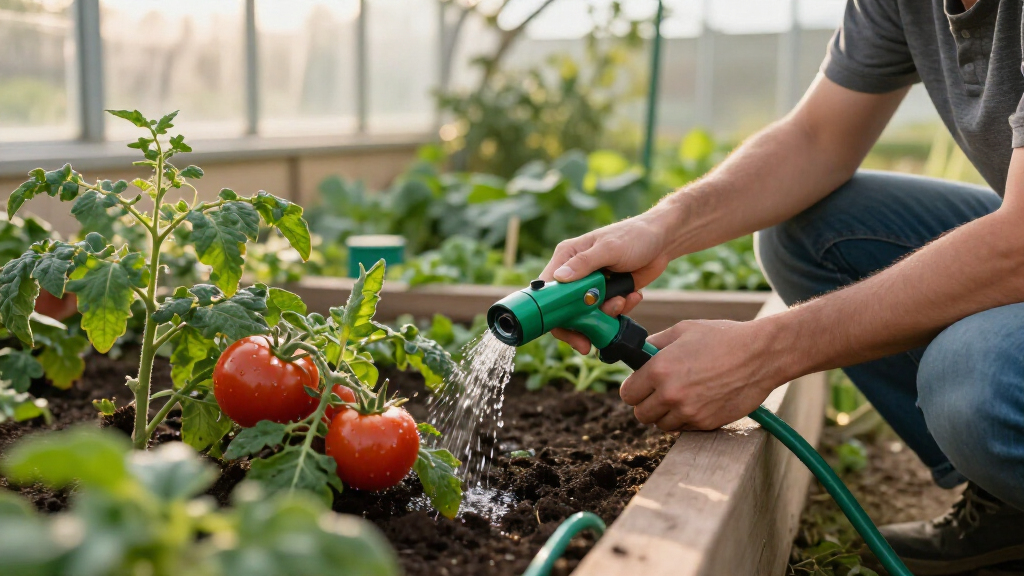
This checklist is for home gardeners who want to use water thoughtfully without making garden care more complicated. It covers tools for collecting rainwater, directing water to plants, checking soil moisture, and limiting evaporation. The goal is to help you build a setup around your garden’s layout and watering needs, rather than assume every product belongs in every yard.

Get garden gear delivered free — and shop member deals
- Fast, free delivery on millions of items
- Access to Prime Big Deal Days deals on October 6–7
- Prime Video, Amazon Music and more included
The sections are organized by role: rain barrel, drip irrigation kit, soaker hose, soil moisture meter, garden mulch, and watering timer. Each section explains why that category can matter, what to check before choosing, and how the listed pick fits the slot. The soaker-hose section is advice only, with no product pick.
Use the checklist as a series of practical checks, not a shopping mandate. Start with the parts of watering you want to improve, then confirm dimensions, connections, coverage, and care requirements before buying. A few compatible, well-placed tools can be more useful than adding equipment your garden cannot readily use.
Rain Barrel
A rain barrel can give roof runoff a place to collect for later garden use. The key is to plan around the downspout and the location where you can safely position the barrel; the diverter must suit the downspout’s shape and size. This pick is the EarthMinded Rain Barrel Downspout Diverter Kit for 3×4 Downspouts, so check that your downspout is 3 by 4 inches before choosing it. A similar-looking downspout is not enough—measure it and confirm the connection details against the product instructions.
Common mistakes include buying a diverter without checking downspout dimensions, overlooking how the barrel will sit beneath the outlet, and assuming a collection setup will work without considering overflow and access. Think through where water can go when the barrel is full, how you will reach the stored water, and whether the installation location is practical for your garden. Follow the kit’s instructions and check that the components and placement suit your home. A measurement-first approach helps avoid a mismatched part or an awkward installation.
What to look for:
- Measure the downspout and confirm it is 3×4 inches.
- Check the diverter’s connection and installation instructions.
- Plan a stable, accessible location for the barrel.
- Consider where overflow will go when the barrel is full.
- Make sure the collected water can be reached conveniently for your garden.
EarthMinded Rain Barrel Downspout Diverter Kit for 3×4 Downspouts

A downspout diverter kit that channels rainwater from a 3×4 downspout into a rain barrel for reuse on lawns, gardens, or indoor plants. The kit installs without removing the downspout and can convert nearly any plastic container into a rain collection barrel, with overflow directed back into the downspout.
Pros:
- Installs without removing the downspout
- Universal fit converts nearly any plastic container into a rain barrel
- Overflow automatically redirects back to the downspout
- Environmentally friendly water conservation
Cons:
- Winter cover only available in white
- Designed specifically for 3×4 downspouts only
Best for: Gardeners with a measured 3×4 downspout and a planned barrel location
Not ideal for: Homes with a different downspout size or no practical barrel placement
Bottom line: Choose this diverter only after confirming your downspout measures 3×4 inches and planning the barrel’s placement.
Drip Irrigation Kit
A drip irrigation kit can help organize watering around the plants and beds you actually have. Before choosing a kit, map the garden: note the number of beds, where plants sit, and how far the water source is from each area. The listed pick is the Vego Garden Irrigation Kit – Drip Irrigation System for Raised Garden, making raised-bed use the central fit to assess. Check the kit’s stated components, layout requirements, and compatibility with your water source rather than assuming its name guarantees coverage for every bed or arrangement.
A frequent buying mistake is focusing on the kit title while skipping the practical details: tubing reach, connection type, placement, and whether the included parts match the garden’s layout. Measure beds and sketch likely tubing routes before ordering. Also consider how you will inspect the lines and adjust watering as plants grow or beds change. If your garden is not raised, or has a more complicated layout, verify suitability instead of assuming the system will adapt. A thoughtful plan supports even, manageable coverage and makes setup less frustrating.
What to look for:
- Confirm the product’s stated fit for raised gardens.
- Measure beds and estimate the tubing route to each area.
- Check included components and connection requirements.
- Compare the planned layout with the kit’s coverage guidance.
- Leave access to inspect and adjust tubing after installation.
Vego Garden Irrigation Kit – Drip Irrigation System for Raised Garden Beds, Easy
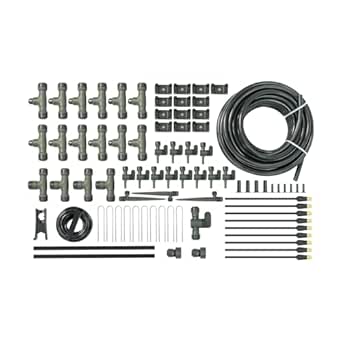
The Vego Garden Irrigation Kit provides efficient, targeted watering for raised garden beds, promoting healthy plant growth while reducing water waste. Easy to install with durable, flexible tubing, it is suitable for vegetables, flowers, and other plants, making gardening more sustainable and hassle-free.
Pros:
- Efficient watering that reduces water waste
- Easy to install with all necessary components included
- Durable and flexible tubing suitable for various garden layouts
- Promotes healthy plant growth
Cons:
- Limited to raised garden beds
- May require additional components for larger setups
Best for: Gardeners planning drip watering for raised garden beds
Not ideal for: Anyone who has not checked bed dimensions, connections, or kit coverage
Bottom line: Map your raised beds and verify the kit’s components and coverage before committing to an installation.
Soaker Hose
A soaker hose is an option to consider when you want water delivered along a planting row or bed rather than by hand at individual plants. Its usefulness depends on the shape of the garden, the route from the water source, and the hose’s specified length and connection. Because this checklist includes no product pick for this slot, compare available options against your own measurements and the manufacturer’s setup guidance.
Common mistakes include buying a hose that is too short for the route, planning tight turns that do not suit the product, or assuming one line will serve beds with very different layouts. Measure the path, identify where the hose can lie, and check connection requirements before buying. Consider whether the hose can be arranged without crossing walkways or interfering with planting and maintenance. Follow product instructions for setup and care, and check the arrangement as the garden changes. The best choice is the one that fits your bed shape and watering plan, not simply the one that looks easiest to install.
What to look for:
- Measure the full route from the water source to the bed.
- Check hose length, connection type, and setup instructions.
- Plan turns and placement around paths and planted areas.
- Consider whether separate beds need separate hose runs.
- Choose an arrangement you can inspect and reposition as needed.
Soil Moisture Meter
A soil moisture meter can help you check conditions in the soil before deciding whether a plant needs water. It is most useful when you use it consistently and interpret its reading alongside the plant, soil, and growing conditions. The pick here is the Reotemp 15 Inch Garden and Compost Moisture Meter. Its listed 15-inch length makes reach an important detail to consider: think about the depth you want to check and follow the product’s guidance for using the probe.
A common mistake is treating a single reading as a complete watering decision. Soil can differ from one spot to another, so check representative areas and avoid relying on a reading taken only at the surface or in one location. Before buying, consider whether the meter’s length suits your beds or containers and whether you also plan to use it with compost. Use and care for the instrument as directed, and compare readings with your garden’s actual conditions over time. A repeatable checking routine is more useful than expecting any meter to replace observation.
What to look for:
- Check whether a 15-inch probe suits the depth you want to assess.
- Review the product’s instructions for soil and compost use.
- Consider reach and access in beds, containers, and compost.
- Plan to check more than one representative spot.
- Use readings alongside observation of plants and growing conditions.
Reotemp 15 Inch Garden and Compost Moisture Meter

This moisture meter features a long stainless steel stem for accurate soil, plant, farm, and lawn moisture testing. It is easy to operate, durable, and provides instant readings, making it ideal for gardening, composting, and educational use.
Pros:
- Durable stainless steel construction
- Long stem for deep soil testing
- Easy to calibrate and use
Cons:
- Requires battery replacement over time
- Limited to moisture testing only
Best for: Gardeners who want a probe-style moisture check for garden or compost
Not ideal for: Anyone expecting one reading to determine every watering decision
Bottom line: Check that the 15-inch length suits your growing areas and use readings as one part of watering decisions.
Garden Mulch
Mulch can cover exposed soil as part of a garden’s water-saving plan, but the right material and application depend on the planting area and product directions. This checklist’s pick is Double Tree Cedar Wood Chips for Plants, Garden & Pet Bedding, 16 Qt. Before buying, decide where you intend to use the chips and check the packaging for directions and suitability for that area. The listed capacity is 16 quarts, so estimate the area you want to cover and use product guidance to judge how much you need.
A common mistake is purchasing a bag without estimating coverage or applying material without checking the plant’s needs and the product instructions. Consider the bed’s shape, existing plants, and how much area you plan to cover; a small garden bed and a broad planting area may call for different quantities. Keep mulch placement appropriate to the plants, and follow the product’s directions rather than assuming one application method suits every garden. For a practical coverage plan, measure first, check the label, and buy only what fits the intended use.
What to look for:
- Confirm the product is appropriate for the intended garden area.
- Check packaging directions before spreading the wood chips.
- Measure the area and estimate coverage before purchasing.
- Consider plant placement and the shape of the bed.
- Plan to apply and maintain the mulch according to product guidance.
Double Tree Cedar Wood Chips for Plants, Garden & Pet Bedding, 16 Qt

Double Tree Cedar Wood Chips are high-quality, natural cedar shavings suitable for landscaping, gardening, and pet bedding. They help control odors, retain soil moisture, promote plant health, and create a clean, aromatic environment indoors and outdoors.
Pros:
- Made from 100% natural cedar shavings, environmentally friendly
- Effective odor absorption and soil moisture retention
- Suitable for plants, garden beds, pathways, and pet bedding
Cons:
- May not be suitable for all pet types due to aromatic scent
- Limited to 16-quart size, which may not be enough for large projects
Best for: Gardeners considering cedar wood chips for a measured planting area
Not ideal for: Anyone who has not checked the product directions or estimated coverage
Bottom line: Measure the area and confirm the product’s directions before using these cedar wood chips in your garden.
Watering Timer
A watering timer can help schedule garden watering, but the right setup depends on the water source, hose connections, and number of zones you intend to manage. The listed pick is the WiFi Water Timer 4 Zone for Garden Hose. Before choosing it, check that your garden hose connection suits the timer and decide whether a four-zone arrangement matches your beds or watering areas. Also confirm the product’s setup requirements and instructions for WiFi use rather than assuming it will work with every home network or watering layout.
A frequent mistake is buying a timer based only on the zone count, without planning what each zone will serve or checking compatibility with the garden hose. Sketch the areas you want to schedule and consider whether they have different watering needs. Review the timer’s instructions for connection, scheduling, and operation, and make sure the controls are practical for the person maintaining the garden. Set a schedule that you can review and adjust as conditions change. The aim is convenient, deliberate scheduling, not leaving a timer unchecked once it is installed.
What to look for:
- Confirm that your hose connection suits the timer.
- Decide whether four zones match your garden layout.
- Map the beds or areas each zone would serve.
- Review WiFi setup and operating requirements.
- Choose a schedule you can monitor and adjust.
WiFi Water Timer 4 Zone for Garden Hose

This WiFi water timer allows remote control via the Smart Life/Tuya app, supporting 4 independent zones with customizable schedules and modes. It features long-range WiFi connectivity, durable waterproof construction, and manual control options, making it ideal for large gardens and multi-zone irrigation.
Pros:
- Supports remote control via app and voice commands
- Long-range WiFi connectivity for large areas
- Durable waterproof and leakproof design
- Supports multiple zones with customizable schedules
Cons:
- Requires 2.4GHz WiFi network
- Setup may be complex for some users
- Limited to outdoor use with IP55 rating
Best for: Gardeners who want to schedule watering across four mapped areas
Not ideal for: Anyone whose hose connection or WiFi setup has not been checked
Bottom line: Verify hose and WiFi compatibility, then map your garden before assigning the timer’s four zones.
If you are building a setup gradually, prioritize the basics that address your garden’s biggest water-use challenge: check fit and placement before choosing a rain-barrel diverter, then plan the watering system or hose route around measured beds. Add a moisture meter if checking soil is part of your routine, and consider mulch after confirming the intended area and product directions. Leave a timer until you have decided which areas it should control. This fit-first buying order helps keep each purchase purposeful.
You do not need every item on this checklist to make thoughtful changes. Start with one garden area, measure carefully, and choose tools that suit its layout and your habits. Revisit the setup as plants and beds change, and follow each product’s instructions. With a little planning, water-wise garden care can feel practical and manageable.
Fall yard work Picks
leaf blowers
As an affiliate, we earn on qualifying purchases.