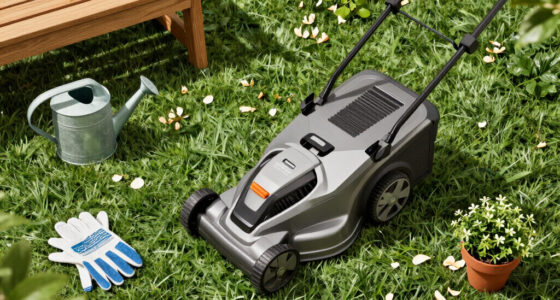
The best smart plant sensors turn soil readings into useful alerts, but the right choice depends on your plants, Wi-Fi coverage, and willingness to use a hub. I’d rank the ThirdReality Smart Soil Moisture Sensor Gen2 as the best overall for its capacitive monitoring and broad smart-home compatibility. The RainPoint wireless meter with Wi-Fi hub is a stronger fit if you want alerts without building around a Zigbee ecosystem, while the Netro solar-powered sensor stands out for outdoor lawn monitoring. Hub-based models can offer steadier integrations, while direct Wi-Fi or Bluetooth options may be simpler but vary in range and features. Read on for the full breakdown and help matching a sensor to your setup.

Get garden gear delivered free with Prime
- Fast, free delivery on millions of items
- Prime Video, Amazon Music and more included
- Member-only deals all year
Complete the kit


Key Takeaways
- Hub compatibility separates the lineup: ThirdReality and the Haozee Zigbee models suit buyers who already run a compatible hub; they are less convenient as stand-alone purchases.
- Wi-Fi options trade ecosystem control for simpler setup: Mcbazel and the 2-in-1 Wi-Fi meter avoid a separate hub, but buyers should check app, network, and band requirements before ordering.
- RainPoint has the broadest range of distinct use cases here: its Wi-Fi hub model emphasizes remote alerts, while its Bluetooth model adds air-temperature monitoring and links to compatible RainPoint gear.
- Extra readings are not the same as better watering advice: temperature and fertility measurements can add context, but soil moisture remains the key signal for most routine watering decisions.
- Outdoor placement changes the shortlist: Netro’s solar-powered design targets lawn use, while indoor-focused app monitors may be less suited to exposed, wide-area installations.
| Haozee Intelligent Soil Moisture Sensor, 3 Pack, Zigbee Hub Required |  | Best Multi-Plant Zigbee Pack | Measurements: Soil moisture, air temperature, and humidity | Connectivity: Zigbee hub or gateway required | Pack size: 3 sensors | VIEW LATEST PRICE | See Our Full Breakdown |
| ThirdReality Smart Soil Moisture Sensor Gen2, Zigbee Hub Required, Enhanced Signal Stability, Capacitive Monitoring, Compatible with Hubitat, SmartThings, Home Assistant, Homey |  | Best for Smart-Home Integration | Sensing method: Capacitive soil moisture monitoring | Connectivity: Zigbee hub required | Compatible platforms: Hubitat, SmartThings, Home Assistant, and Homey | VIEW LATEST PRICE | See Our Full Breakdown |
| RainPoint Smart Digital Wireless Plant Moisture Meter with Wi-Fi Hub and Alerts |  | Best Starter Kit for Remote Alerts | Connectivity: 2.4 GHz Wi-Fi | Included hub: Mini WiFi Hub Gen2 | Monitoring: Soil moisture with customizable high- and low-moisture alerts | VIEW LATEST PRICE | See Our Full Breakdown |
| Smart WiFi Soil Moisture Meter for Plants, 2-in-1 Sensor with App Alerts | 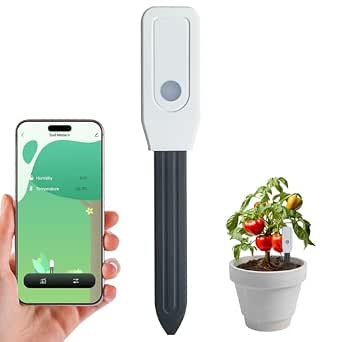 | Best for Temperature Range | Measurements: Soil moisture and temperature | Soil moisture range: 0–100% RH | Temperature range: -40°F to 176°F / -40°C to 80°C | VIEW LATEST PRICE | See Our Full Breakdown |
| Rainpoint 2027 Bluetooth Soil Moisture Meter & Air Temp Sensor, 2-in-1 Smart Plant Monitor with App Control, Compatible with WiFi Hub TWG009 & Water Timer ITV102B (Not Included) |  | Best for Automated Watering | Measurements: Soil moisture and air temperature | Connectivity: Bluetooth | Control: App control | VIEW LATEST PRICE | See Our Full Breakdown |
| Mcbazel WiFi Smart Soil Tester, No Hub Needed, Tuya/Smart Life App |  | Best Hub-Free WiFi Pick | Connectivity: 2.4GHz WiFi | App compatibility: Tuya / Smart Life | Measurements: Soil moisture and air temperature | VIEW LATEST PRICE | See Our Full Breakdown |
| Rainpoint Smart Soil Moisture Meter for Plants, Soil Hygrometer Sensor, Real-time Monitor Humidity Tester for Gardening and Indoor/Outdoor Use |  | Best for Automatic-Watering Systems | Connectivity: WiFi via HWG023 or HWG040 hub | Measurement: Soil moisture | Stated sensor accuracy: ±5% | VIEW LATEST PRICE | See Our Full Breakdown |
| Haozee Smart Soil Moisture Sensor with Zigbee Hub Compatibility |  | Best for Zigbee Smart-Home Setups | Dimensions: 1.18W x 6.3H inches | Sensor type: Capacitive soil moisture, temperature, and light | Light sensor range: Up to 15,000 lux | VIEW LATEST PRICE | See Our Full Breakdown |
| Smart 3-in-1 Soil Moisture, Temperature, and Fertility Meter with WiFi App Control |  | Best for Larger Gardens and Soil Testing | Dimensions: 3.6 x 3.6 x 6 inches | Weight: 10.9 ounces | Connectivity: 2.4GHz WiFi | VIEW LATEST PRICE | See Our Full Breakdown |
| Netro Solar Powered Outdoor Smart Plant Sensor 2.4G WiFi APP-Based for Lawn |  | Best Solar Pick for Outdoor Lawns | Soil data: Moisture, temperature, and ambient light | Connectivity: 2.4GHz WiFi | Charging: Solar panel and Type-C cable | VIEW LATEST PRICE | See Our Full Breakdown |
| smart plant sensor | Connectivity | Measurements | Dimensions |
|---|---|---|---|
| Haozee Intelligent Soil Moistu | Zigbee hub or gateway required | Soil moisture, air temperature, and humidity | 0.98 in W x 6.1 in H |
| ThirdReality Smart Soil Moistu | Zigbee hub required | — | 7.17 in W x 1.18 in H |
| RainPoint Smart Digital Wirele | 2.4 GHz Wi-Fi | — | — |
| Smart WiFi Soil Moisture Meter | 2.4 GHz Wi-Fi | Soil moisture and temperature | — |
| Rainpoint 2027 Bluetooth Soil | Bluetooth | Soil moisture and air temperature | — |
| Mcbazel WiFi Smart Soil Tester | 2.4GHz WiFi | Soil moisture and air temperature | — |
| Rainpoint Smart Soil Moisture | WiFi via HWG023 or HWG040 hub | — | — |
| Haozee Smart Soil Moisture Sen | Zigbee; hub required | — | 1.18W x 6.3H inches |
| Smart 3-in-1 Soil Moisture | 2.4GHz WiFi | Soil moisture, temperature, and fertility (EC) | 3.6 x 3.6 x 6 inches |
| Netro Solar Powered Outdoor Sm | 2.4GHz WiFi | — | 11 x 3.5 x 2.5 inches |
More Details on Our Top Picks
Haozee Intelligent Soil Moisture Sensor, 3 Pack, Zigbee Hub Required
The three-sensor pack makes this Haozee a practical choice for gardeners who want to compare conditions across several pots, beds, or greenhouse zones without buying sensors one at a time. It tracks soil moisture, air temperature, and humidity, giving more context than the RainPoint 2027, which reports soil moisture and air temperature. Its stated temperature accuracy of 0.5°C is also tighter than the ThirdReality Gen2’s ±1.5°C figure. The tradeoff is the smart-home setup: a Zigbee hub or gateway is required, so this is a better fit for an existing Zigbee system than for someone seeking a simple Wi-Fi sensor. Keep the sensor surface clean to support accurate readings, and expect to manage two AAA batteries per sensor.
Pros:- Three sensors cover multiple plants or garden zones in one pack.
- Measures soil moisture, air temperature, and humidity.
- Stated temperature accuracy of 0.5°C.
- Impact-resistant construction suits varied gardening locations.
Cons:- Requires a compatible Zigbee hub or gateway.
- Sensor surface needs to stay clean for accurate readings.
- Uses two AAA alkaline batteries per sensor.
Best for: Gardeners with an existing Zigbee hub who want moisture, temperature, and humidity readings at several planting locations.
Not ideal for: Buyers without a Zigbee gateway or anyone who wants a Wi-Fi-first monitor with remote app access built in.
- Measurements:Soil moisture, air temperature, and humidity
- Connectivity:Zigbee hub or gateway required
- Pack size:3 sensors
- Battery:2 AAA alkaline batteries
- Upper temperature range:55 °C
- Temperature accuracy:0.5°C
- Dimensions:0.98 in W x 6.1 in H
Our verdict“Choose this Haozee pack if you already use Zigbee and want three-location monitoring with humidity readings; skip it if you need a standalone Wi-Fi setup.”
ThirdReality Smart Soil Moisture Sensor Gen2, Zigbee Hub Required, Enhanced Signal Stability, Capacitive Monitoring, Compatible with Hubitat, SmartThings, Home Assistant, Homey
The ThirdReality Gen2 suits gardeners who want a moisture sensor to join an established smart-home system rather than operate as a separate app gadget. Its capacitive sensing is designed to be less affected by soil salinity and pH than some sensing approaches, while the enhanced antenna is intended to help maintain a connection across gardens or complex indoor layouts. It supports platforms including Hubitat, SmartThings, Home Assistant, and Homey, giving it a broader integration pitch than the Haozee three-pack, which is more compelling for buyers prioritizing multiple measurement points and humidity data. The cost of that flexibility is setup: a Zigbee hub is required, and configuring smart-home automations may take more effort than using the RainPoint Wi-Fi-hub kit.
Pros:- Capacitive sensing is less affected by soil salinity and pH.
- Enhanced antenna is designed for more stable connectivity.
- Supports Hubitat, SmartThings, Home Assistant, and Homey.
- Can feed readings into remote monitoring and irrigation automations.
Cons:- Requires a compatible Zigbee hub.
- Setup can be challenging for users new to smart-home systems.
- Battery-life details are not specified.
Best for: Smart-home users with a compatible Zigbee hub who want soil moisture readings tied into existing platforms and irrigation automations.
Not ideal for: Newcomers seeking a straightforward standalone monitor, or gardeners who need humidity readings and a multi-sensor pack.
- Sensing method:Capacitive soil moisture monitoring
- Connectivity:Zigbee hub required
- Compatible platforms:Hubitat, SmartThings, Home Assistant, and Homey
- Operating humidity:0% to 100%
- Upper temperature range:50 °C
- Temperature reading accuracy:±1.5°C
- Dimensions:7.17 in W x 1.18 in H
- Weight:2.4 ounces
Our verdict“Pick the ThirdReality Gen2 if smart-home platform compatibility matters more than an included hub or extra environmental readings.”
RainPoint Smart Digital Wireless Plant Moisture Meter with Wi-Fi Hub and Alerts
For buyers who want remote moisture checks without sourcing a gateway separately, this RainPoint bundle has a clear advantage: it includes a Mini WiFi Hub Gen2 and supports customizable high- and low-moisture alerts through the app. That makes it a more ready-made remote-monitoring option than the ThirdReality Gen2, which depends on a Zigbee hub you already own. The meter can also work independently, while the hub adds remote access and smart-watering potential. Its 2.4 GHz Wi-Fi limit may rule it out for networks configured only for other bands, and the battery is not included. Compared with the Smart WiFi Soil Moisture Meter, it supplies a hub in the listed package but does not provide a stated temperature range or temperature accuracy.
Pros:- Includes a Mini WiFi Hub Gen2 for remote monitoring.
- Customizable alerts can flag high or low soil moisture.
- Can be used independently or paired with smart watering.
- Waterproof design supports indoor and outdoor placement.
Cons:- Remote features rely on the included Wi-Fi hub.
- Battery is not included.
- Wi-Fi connection is limited to 2.4 GHz.
Best for: Plant owners who want app alerts and remote checks, especially those who prefer a bundle with its Wi-Fi hub included.
Not ideal for: Buyers whose networks do not support 2.4 GHz Wi-Fi or who want soil-temperature readings with published accuracy figures.
- Connectivity:2.4 GHz Wi-Fi
- Included hub:Mini WiFi Hub Gen2
- Monitoring:Soil moisture with customizable high- and low-moisture alerts
- Waterproof:Yes
- Battery:Not included
- Included accessories:Moisture meter, Mini WiFi Hub Gen2, pH test strips, screwdriver
- Model:026+023
Our verdict“Choose this RainPoint kit for hub-assisted remote moisture alerts, but choose the Smart WiFi Soil Moisture Meter if published temperature monitoring matters more.”
Smart WiFi Soil Moisture Meter for Plants, 2-in-1 Sensor with App Alerts
This two-in-one sensor is the strongest fit here for buyers who want soil moisture and temperature data in one app-connected probe. Its listed temperature span runs from -40°F to 176°F, and the stated 0.5°C accuracy gives temperature-conscious growers a concrete specification to compare. Unlike the Haozee and ThirdReality models, it uses Wi-Fi rather than requiring a Zigbee hub; the RainPoint kit includes its own Wi-Fi hub, while this model’s listing does not specify one. It also supports Alexa and Google Assistant, adding voice-control options. The tradeoffs are a 2.4 GHz network requirement, setup that may take patience, and two AA batteries that are not included. Its six-inch probe may also be less suited to very shallow containers.
Pros:- Tracks soil moisture and temperature through a mobile app.
- Wide stated temperature range from -40°F to 176°F.
- Supports Alexa and Google Assistant voice control.
- Waterproof construction is suited to indoor and outdoor gardening.
Cons:- Two AA batteries are required and not included.
- Limited to 2.4 GHz Wi-Fi.
- Setup may be difficult for some users.
Best for: Indoor and outdoor growers who want app-based moisture and temperature monitoring, voice-assistant support, and a wide stated temperature range.
Not ideal for: Buyers who need a sensor bundle with a hub included, use a Wi-Fi network without 2.4 GHz support, or grow in shallow pots that cannot accommodate a six-inch probe.
- Measurements:Soil moisture and temperature
- Soil moisture range:0–100% RH
- Temperature range:-40°F to 176°F / -40°C to 80°C
- Temperature accuracy:0.5°C
- Probe length:6 in (15 cm)
- Power:2 AA batteries, not included
- Battery life:Up to 10–12 months
- Connectivity:2.4 GHz Wi-Fi
Our verdict“Choose this model for Wi-Fi app alerts, voice control, and broad temperature coverage; prefer the RainPoint kit if you want a Wi-Fi hub included.”
Rainpoint 2027 Bluetooth Soil Moisture Meter & Air Temp Sensor, 2-in-1 Smart Plant Monitor with App Control, Compatible with WiFi Hub TWG009 & Water Timer ITV102B (Not Included)
The Rainpoint 2027 is aimed at growers who want monitoring to become part of a watering setup, not just a source of readings. It tracks soil moisture and air temperature, supports custom plant profiles, and is designed to connect with the TWG009 Wi-Fi hub and ITV102B water timer for automated watering. Its stated two-second data refresh gives users frequent updates, though actual system usefulness depends on adding those compatible devices. That makes it less complete as a standalone remote monitor than the RainPoint Digital Wireless kit, which lists a Wi-Fi hub in its package. Bluetooth and app control also mean it is not the pick for gardeners who want manual-only checks or built-in Wi-Fi. The main draw is the path from plant-specific monitoring to timer-based action.
Pros:- Tracks soil moisture and air temperature in real time.
- Supports custom plant profiles and care settings.
- Stated two-second data refresh rate.
- Compatible with the TWG009 Wi-Fi hub and ITV102B water timer.
Cons:- Wi-Fi hub and water timer are not included.
- Bluetooth and app-based control may not suit manual-monitoring preferences.
- Remote and automated features depend on additional compatible devices.
Best for: Gardeners building a compatible Rainpoint hub-and-timer system who want plant profiles and moisture readings linked to automated watering.
Not ideal for: Buyers who want a complete remote-monitoring kit, standalone Wi-Fi connectivity, or a manual meter without app-based control.
- Measurements:Soil moisture and air temperature
- Connectivity:Bluetooth
- Control:App control
- Data refresh rate:2 seconds
- Compatible Wi-Fi hub:TWG009, not included
- Compatible water timer:ITV102B, not included
- Item weight:4.2 ounces
- Package dimensions:8.31 x 2.17 x 1.46 in
Our verdict“Choose the Rainpoint 2027 if you plan to build its compatible timer system; choose the Digital Wireless kit if you want a hub included for remote alerts.”
Mcbazel WiFi Smart Soil Tester, No Hub Needed, Tuya/Smart Life App
The Mcbazel stands out for buyers who want remote soil readings without a separate hub. It connects directly to 2.4GHz WiFi and tracks moisture and air temperature in Tuya or Smart Life, with measurement history for spotting changes over time. That makes setup simpler than the Rainpoint HCS026FRF-2, which needs a compatible hub for remote monitoring, though Rainpoint adds automatic-watering integration. Mcbazel’s IP66 protection suits damp garden conditions, but its 3.7-inch probe needs soil at least 4.7 inches deep, so shallow pots are a poor fit. It also stops short of measuring light or nutrients, and the two AA batteries are not included. I’d choose it for straightforward monitoring, not hydroponics or full-spectrum plant diagnostics.
Pros:- Connects directly to 2.4GHz WiFi without a hub
- Tracks soil moisture and air temperature in real time
- IP66 waterproof rating suits wet gardening environments
- Measurement history helps track changing conditions
Cons:- Needs soil depth of at least 4.7 inches to cover the probe
- Two AA batteries are required and not included
- Does not support hydroponic setups or measure light and nutrients
Best for: Plant owners who already use Tuya or Smart Life and want remote moisture and air-temperature readings without buying a hub.
Not ideal for: People with shallow pots, hydroponic systems, or a preference for sensors that track light or soil nutrients.
- Connectivity:2.4GHz WiFi
- App compatibility:Tuya / Smart Life
- Measurements:Soil moisture and air temperature
- Moisture range:0–100%
- Air temperature range:-10°C to 60°C (14°F–140°F)
- Probe length:3.7 inches (9.3 cm)
- Power:2 AA batteries (not included)
- Battery life:3–6 months
- Water resistance:IP66
Our verdict“Choose Mcbazel for hub-free Tuya or Smart Life monitoring in deeper pots, but skip it if your plants need shallow-container or hydroponic sensing.”
Rainpoint Smart Soil Moisture Meter for Plants, Soil Hygrometer Sensor, Real-time Monitor Humidity Tester for Gardening and Indoor/Outdoor Use
Rainpoint makes the most sense when a moisture sensor is part of a larger watering setup, rather than a standalone plant monitor. It supports manual and automatic readings, remote app checks, customizable alerts, and integration with automatic watering systems. Its stated ±5% accuracy gives buyers a clear measurement benchmark that the Mcbazel listing does not provide. The tradeoff is the hub: remote features require a compatible HWG023 or HWG040, and watering timers are separate purchases. That adds setup steps and components compared with Mcbazel’s direct WiFi connection. The waterproof, corrosion-resistant build suits indoor and outdoor use, but buyers who only want a simple app-connected moisture check may find the hub dependency and system integration unnecessary.
Pros:- Stated soil moisture accuracy of ±5%
- App-based remote monitoring with customizable alerts
- Supports integration with automatic watering systems
- Waterproof and corrosion-resistant for indoor and outdoor use
Cons:- Remote monitoring requires a separate HWG023 or HWG040 hub
- Timers and other watering components are sold separately
- Setup may be more involved than using a direct-WiFi sensor such as Mcbazel
Best for: Gardeners building a Rainpoint-compatible remote monitoring and automatic-watering setup who want alerts and a stated moisture accuracy.
Not ideal for: Buyers seeking a standalone WiFi sensor or a ready-to-use watering kit without a separate hub and timer.
- Connectivity:WiFi via HWG023 or HWG040 hub
- Measurement:Soil moisture
- Stated sensor accuracy:±5%
- Measurement methods:Manual and automatic
- Product dimensions:2 x 1 x 8 inches
- Item weight:4.8 ounces
- Model number:HCS026FRF-2
- Use:Indoor and outdoor
Our verdict“Pick Rainpoint when you want moisture sensing tied to compatible automatic watering, and choose Mcbazel instead for a simpler hub-free connection.”
Haozee Smart Soil Moisture Sensor with Zigbee Hub Compatibility
For a home already running Zigbee, Haozee offers a compact sensor with more than moisture data: it also measures temperature and light, with compatibility listed for Home Assistant, Zigbee2MQTT, and ZHA. The light reading can help distinguish a watering issue from a placement problem, while the single AAA battery keeps the sensor self-contained. Compared with the WiFi-connected Mcbazel, Haozee can fit into a Zigbee-based smart-home routine but cannot operate without a compatible hub. Its splash-proof housing is suitable for ordinary garden exposure, not submersion, so it calls for more care around heavy water exposure than Mcbazel’s IP66-rated design. I’d favor this model for ecosystem integration and added light data, not for buyers who want a direct-to-WiFi sensor.
Pros:- Measures soil moisture, ambient temperature, and light
- Works with Home Assistant, Zigbee2MQTT, and ZHA
- Compact form suits a range of pots
- Runs on a single AAA battery
Cons:- Requires a Zigbee hub to operate
- Splash-proof only and not suitable for submersion
- Battery-powered wireless setup may not suit buyers seeking wired power
Best for: Smart-home owners using Home Assistant, Zigbee2MQTT, or ZHA who want moisture, temperature, and light readings in a compact sensor.
Not ideal for: People without a Zigbee hub or gardeners who need a sensor safe for submersion or prolonged heavy water exposure.
- Dimensions:1.18W x 6.3H inches
- Sensor type:Capacitive soil moisture, temperature, and light
- Light sensor range:Up to 15,000 lux
- Power:1 AAA battery
- Compatibility:Home Assistant, Zigbee2MQTT, ZHA
- Connectivity:Zigbee; hub required
- Water resistance:Splash-proof; not for submersion
Our verdict“Choose Haozee if your Zigbee system can use its three types of readings, but pick Mcbazel if you want WiFi without a hub.”
Smart 3-in-1 Soil Moisture, Temperature, and Fertility Meter with WiFi App Control
This three-probe tester is the lineup’s clearest choice for buyers who want soil readings beyond moisture. Along with moisture and temperature, it measures fertility through EC, giving gardeners and growers another data point when tending larger plots, greenhouses, lawns, or parks. It connects over 2.4GHz WiFi to Tuya or Smart Life, much like the Mcbazel, but its larger form and three probes make it a better fit for outdoor beds than small houseplant pots. That breadth comes with a practical compromise: the product data specifically advises against indoor potted plants, and buyers will need to handle initial app setup and battery replacement. Choose it for broader soil monitoring, not a compact sensor for a windowsill collection.
Pros:- Measures soil moisture, temperature, and fertility through EC
- Three probes provide a broader soil-testing setup
- 2.4GHz WiFi and Tuya or Smart Life app support remote monitoring
- Designed for gardens, greenhouses, lawns, parks, and farms
Cons:- Not recommended for indoor potted plants because of its probe size
- Requires initial app and WiFi setup
- Battery replacement may be needed
Best for: Gardeners, greenhouse growers, and small-scale farmers who want app access to moisture, temperature, and EC soil readings across outdoor areas.
Not ideal for: Houseplant owners with small pots or anyone seeking a compact, simple moisture-only monitor.
- Dimensions:3.6 x 3.6 x 6 inches
- Weight:10.9 ounces
- Connectivity:2.4GHz WiFi
- App compatibility:Tuya / Smart Life
- Measurements:Soil moisture, temperature, and fertility (EC)
- Probes:Three soil-testing probes
- Supported areas:Farms, greenhouses, lawns, parks, and gardens
Our verdict“Select this model for multi-measurement outdoor soil monitoring, while Mcbazel is a more practical fit for deeper individual pots.”
Netro Solar Powered Outdoor Smart Plant Sensor 2.4G WiFi APP-Based for Lawn
Netro is tailored to outdoor monitoring where regular battery swaps are inconvenient. It tracks soil moisture, temperature, and ambient light, then adds weather forecasting and community-sharing features through its app. Solar charging, with USB-C as a backup, offers a different power approach from the AA-powered Mcbazel or AAA-powered Haozee. The tradeoff is that its stated battery life is 2–4 weeks per full charge, so solar assistance does not mean buyers can ignore charging altogether. Its 11-inch length and outdoor focus also make it less suited to indoor pots than the compact Haozee. I’d choose Netro for lawn and garden care where weather context and light readings are useful, provided app access and charging are acceptable parts of the routine.
Pros:- Monitors soil moisture, temperature, and ambient light
- Solar panel and USB-C charging options
- App includes weather forecasting and community features
- Waterproof design is suited to outdoor use
Cons:- Requires the smartphone app for full functionality
- Designed for outdoor use rather than indoor pots
- Battery life is listed as 2–4 weeks per full charge
Best for: Outdoor gardeners and lawn owners who want moisture, temperature, light, and weather information in an app with solar and USB-C charging options.
Not ideal for: Indoor plant owners or buyers who want a sensor that works without a smartphone app or periodic charging.
- Soil data:Moisture, temperature, and ambient light
- Connectivity:2.4GHz WiFi
- Charging:Solar panel and Type-C cable
- Battery life:2–4 weeks per full charge
- App compatibility:iOS 8.3+ and Android 5.0+
- Dimensions:11 x 3.5 x 2.5 inches
- Weight:9.6 ounces
- Waterproof:Yes
Our verdict“Choose Netro for outdoor lawn and garden monitoring with solar-assisted charging, but pick the compact Haozee for indoor Zigbee plant care.”
How We Picked
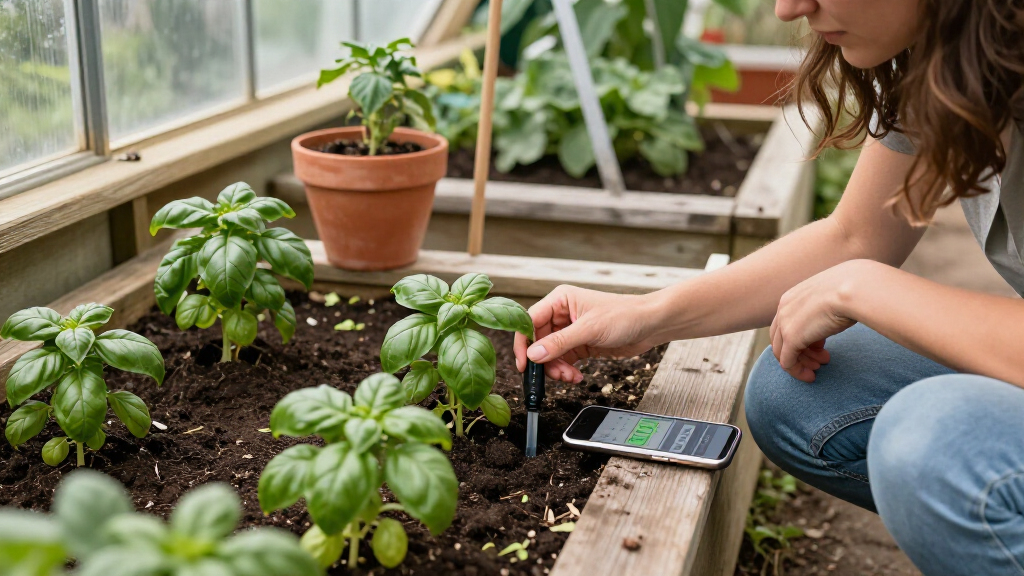
I compared the ten listed sensors by how directly they answer a plant-care question: whether the soil is dry enough to need attention. I also weighed the connection method, hub requirements, alert options, stated monitoring measurements, intended indoor or outdoor use, and how easily a buyer can fit each model into an existing smart-home setup. A sensor that reports more readings did not automatically rank higher; the added data needs to be useful and understandable for the plants being monitored.
The ranking favors practical coverage and flexibility over feature count alone. The ThirdReality Gen2 leads because its capacitive monitoring and compatibility with several named smart-home platforms make it a strong fit for connected homes, though its Zigbee hub requirement keeps it from being a universal plug-and-play pick. RainPoint’s Wi-Fi hub model and the no-hub Wi-Fi options appeal to different setup preferences, while the Bluetooth, multi-reading, and solar-powered models earn places for more specific needs. Product details supplied for this roundup do not establish comparative accuracy, battery life, or weatherproof ratings, so I avoid treating those as proven advantages.
| smart plant sensor | Measurements |
|---|---|
| Haozee Intelligent Soil Moistu | Soil moisture, air temperature, and humidity |
| ThirdReality Smart Soil Moistu | — |
| RainPoint Smart Digital Wirele | — |
| Smart WiFi Soil Moisture Meter | Soil moisture and temperature |
| Rainpoint 2027 Bluetooth Soil | Soil moisture and air temperature |
| Mcbazel WiFi Smart Soil Tester | Soil moisture and air temperature |
| Rainpoint Smart Soil Moisture | — |
| Haozee Smart Soil Moisture Sen | — |
| Smart 3-in-1 Soil Moisture | Soil moisture, temperature, and fertility (EC) |
| Netro Solar Powered Outdoor Sm | — |
Factors to Consider When Choosing Best Smart Plant Sensors
Choosing a plant sensor is less about collecting the most readings and more about getting a signal you can act on. Before buying, match the sensor to the way you water, the location of your plants, and the network or smart-home system you already use.
Choose the connection before comparing app features
A sensor’s connection type affects where alerts can reach you and how much setup it takes. Zigbee models need a compatible hub, which can be a good fit if you already use a system such as SmartThings or Home Assistant, but an extra hub is a poor surprise for a first-time buyer. Wi-Fi models avoid that separate hub in some cases, though they still depend on a suitable home network and app. Bluetooth sensors may work well nearby but can be less convenient for checking plants when you are away. Confirm the exact hub, router, and app requirements before comparing feature lists.
Match the sensor to the plant and pot
One moisture reading does not mean the same thing for every plant or growing medium. A small pot can dry quickly, while a large planter may have damp soil deeper down even when its surface looks dry. Sensor placement and probe depth can shape the reading, so think about whether the design suits your container and whether you can position it consistently. For a collection with different watering needs, several simple sensors may be more useful than one device moved from pot to pot. Avoid treating an alert as an automatic instruction to water without checking the plant’s usual care needs.
Decide whether extra measurements will change your routine
Temperature, fertility, or air-temperature readings can add context, but they also create more information to interpret. These extras help most when you have a specific question, such as whether a plant’s location gets too cold or whether you want to track soil conditions over time. If your main challenge is remembering to water, moisture alerts may be enough. Fertility readings should not replace a plant-specific feeding schedule unless the device explains how to interpret them. Paying for additional measurements makes sense when you will use them to change placement or care, not just collect numbers.
Plan for signal range and plant locations
Indoor shelves, thick walls, greenhouses, and distant garden beds can all affect whether a sensor can communicate reliably. A hub may extend or organize a Zigbee setup, but the sensor still needs to reach that network. Bluetooth is usually best for nearby monitoring, while Wi-Fi designs suit buyers who want app access through their home network. For a lawn or far outdoor area, a sensor designed for that setting is a more natural starting point than a compact houseplant monitor. Check the manufacturer’s placement and coverage guidance, especially before buying sensors for several rooms or outdoor zones.
Treat alerts as prompts, not automatic watering rules
Smart alerts can help you notice dry soil, but they do not know every detail of a plant’s needs. Plant type, season, pot material, light, and soil mix all affect how often watering is appropriate. Start with conservative alert thresholds and observe how readings relate to the soil and plant rather than responding to every notification with water. Frequent alerts can lead to overwatering if the sensor sits in a damp pocket or is placed inconsistently. A useful system is one that gives you a timely prompt without replacing your judgment.
Pay extra for fit, not for a longer feature list
A higher-feature sensor is worthwhile when its connection, coverage, or extra readings solve a real problem in your home or garden. A premium outdoor design may make more sense for a lawn than a basic indoor probe, while a multi-pack can be practical when you need to monitor several pots at once. On the other hand, a buyer with one houseplant may gain little from a hub ecosystem or multiple measurement types. Factor in any required hub and compatible accessories, not just the sensor itself. The best value is the model that gives useful readings in the place you need them with the least avoidable setup.
Frequently Asked Questions
Do I need a hub to use a smart plant sensor?
Not always. The ThirdReality and Haozee Zigbee models require a compatible hub, so they make the most sense if you already own one or plan to build a Zigbee setup. Some Wi-Fi models are described as not needing a separate hub, while the RainPoint wireless model includes a Wi-Fi hub as part of its setup. Bluetooth options may connect directly to a phone but suit closer-range monitoring. Check what is included and which apps or platforms are supported before buying.
Can I use one sensor for several plants?
You can move a sensor between pots, but that gives you readings for only one location at a time. Plants in different pots, soil mixes, or light conditions may dry at different rates, so a reading from one cannot reliably stand in for the others. A three-pack such as the Haozee Zigbee set can suit a small group of plants, provided you have the required hub. For a larger collection, decide whether you need ongoing alerts for every pot or only want occasional spot checks.
Are smart plant sensors suitable for outdoor use?
Some are intended for outdoor or lawn monitoring, but do not assume every app-connected probe can stay outside. The Netro solar-powered model is specifically positioned for lawn use, and a RainPoint listing also describes gardening and indoor/outdoor use. Even then, verify the stated weather resistance, placement limits, and wireless coverage in the product documentation. A sensor exposed to rain, direct sun, or cold needs more than a moisture-reading feature to be a dependable outdoor choice. Match the device to the exact location rather than relying on the word “smart.”
Do temperature and fertility readings make a sensor more useful?
They can, but only when those readings answer a question you have. Temperature information may help explain why a plant struggles in a particular spot, while fertility readings can offer extra context about soil conditions. Neither automatically tells you how much to water or when to fertilize, and measurement labels do not guarantee a clear care recommendation. If your main goal is avoiding missed watering, a dependable moisture alert may be easier to act on. Choose extra measurements for a defined use, not just because the feature list is longer.
Should I choose Zigbee, Wi-Fi, or Bluetooth for plant monitoring?
Choose based on where your plants are and how you want to receive readings. Zigbee suits buyers with a compatible hub and a smart-home system they want to integrate; Wi-Fi can be more direct for app alerts but depends on network coverage. Bluetooth is a reasonable fit for nearby plants when phone-based access is enough, though it is less suited to checking remote locations. For sensors spread around a house or garden, coverage and the stated hub arrangement matter more than the connection label alone. Check compatibility before purchase, since similar-looking sensors can rely on different apps and hardware.
Conclusion
For most connected homes, I’d choose the ThirdReality Smart Soil Moisture Sensor Gen2 as the best overall, especially if a compatible Zigbee hub is already part of the setup. The Haozee three-pack is my best value-style pick for monitoring several pots, though its hub requirement makes it less convenient for a single-plant beginner. If you are new to smart plant care and want a simpler no-hub route, start with a Wi-Fi model such as the Mcbazel WiFi Smart Soil Tester, after checking app and network compatibility. For buyers who want a more connected watering setup, the RainPoint Wi-Fi hub meter is the standout; for lawn monitoring, choose the Netro solar-powered sensor. I’d pay for added readings or ecosystem features only when they match a specific plant-care need.
Halloween Picks

Star Wars Yoda and R2-D2 Inflatable Halloween Decor, 6 ft with LEDs, Indoor/Outdoor

Govee Outdoor Halloween Projector Light, 3D Dynamic Visual Holiday Decor

Panefright Halloween Window Projector – Scary Projector for Spooky Decor
As an affiliate, we earn on qualifying purchases.