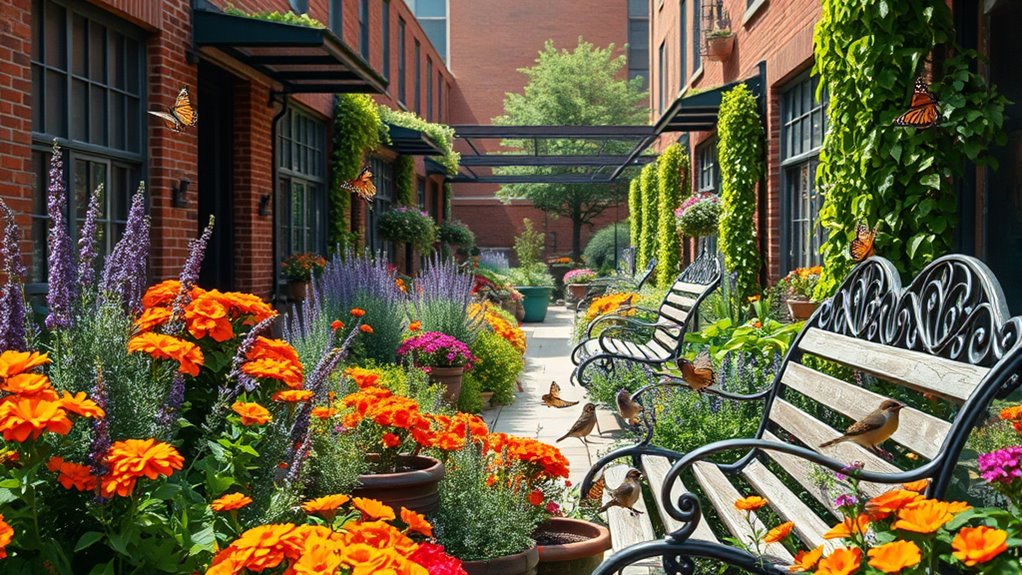

To create bird and butterfly havens in your urban space, focus on planting native species that bloom year-round to provide continuous food and shelter. Connect green areas with pollinator corridors to enable safe movement and reduce habitat fragmentation. Incorporate diverse native plants along sidewalks and vacant lots to support local wildlife and promote biodiversity. Small actions like these turn cities into vibrant ecosystems, and if you continue exploring, you’ll discover more ways to make a lasting impact.
Key Takeaways
- Incorporate native plants that provide year-round food and shelter for birds and butterflies.
- Establish pollinator corridors connecting green spaces to facilitate safe movement and habitat connectivity.
- Design urban landscapes with continuous blooming native species to support pollinator health and biodiversity.
- Avoid invasive species, and focus on native plants suited to local climate and soil conditions.
- Create interconnected green spaces and habitat strips to enhance urban ecosystem resilience and wildlife support.
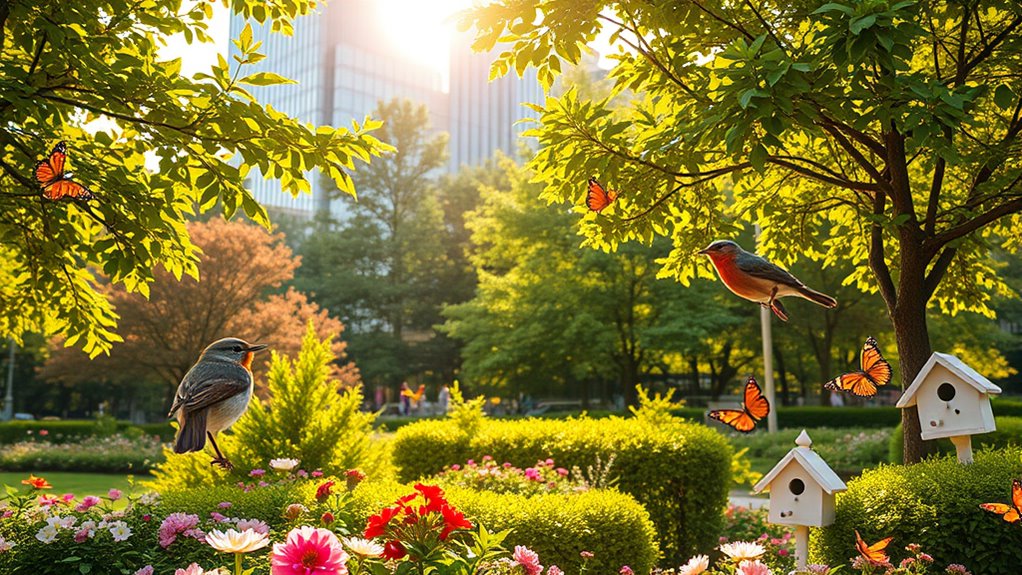
Have you ever noticed wildlife thriving amidst the concrete and steel of city life? It’s more common than you might think. Urban areas, often seen as concrete jungles, can actually become thriving habitats for birds, butterflies, and other pollinators. The secret lies in thoughtful planning—like selecting the right native plants and creating pollinator corridors. These strategies transform urban spaces into vibrant havens that support local wildlife and enrich your community.
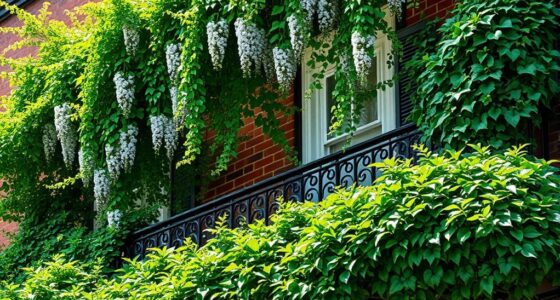
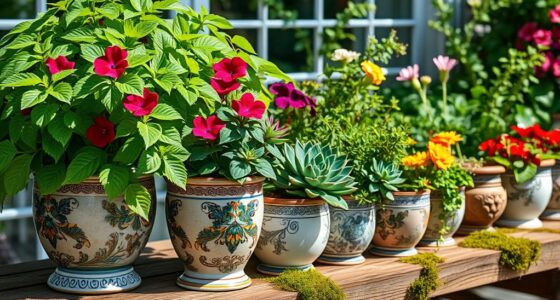
Starting with native plant selection is essential. Native plants are well-adapted to your region’s climate and soil, making them easier to grow and maintain. They also provide the ideal food and shelter for local pollinators, including bees, butterflies, and hummingbirds. When you plant native species—such as milkweed for monarchs, coneflowers for butterflies, or serviceberries for birds—you create a sustainable source of nourishment and habitat. Avoid invasive species that can outcompete native plants and diminish the local ecosystem’s health. Instead, choose a diverse mix of flowering plants that bloom at different times of the year, ensuring a continuous food supply for wildlife. This not only benefits pollinators but also helps control pests naturally, reducing the need for chemical interventions.
Native plants support local pollinators and create sustainable habitats year-round.
Incorporating pollinator corridors into your urban landscape further enhances wildlife support. These corridors are strips of habitat that connect isolated green spaces, allowing animals to move safely across busy streets and developed areas. You can establish these corridors by planting continuous rows of native flora along sidewalks, fences, or vacant lots. Over time, these pathways become essential routes for pollinators seeking resources or migrating. They also serve as safe corridors for birds and small mammals, facilitating genetic diversity and reducing habitat fragmentation. By designing your yard or community space around these corridors, you create a network that encourages wildlife movement and sustains local populations.
Creating bird and butterfly havens isn’t just about individual plants or patches of land; it’s about building interconnected spaces that work together. Your efforts in native plant selection and establishing pollinator corridors can turn an ordinary cityscape into a lively, resilient ecosystem. These small actions have a big impact, supporting pollinators that are critical for plant reproduction and food production. Plus, they offer you the joy of observing nature’s beauty right outside your door. With a little planning and care, you can help urban wildlife flourish, making your city a richer, more vibrant place for everyone. Additionally, utilizing community support features can boost your efforts and connect you with like-minded neighbors dedicated to urban conservation.
Frequently Asked Questions
How Can I Attract Specific Bird Species to My Garden?
To attract specific bird species, start with native plant selection that provides natural food and shelter. Place bird feeders strategically near these plants, ensuring they’re visible but safe from predators. Use the right seed types for your target birds, and maintain feeders regularly. Creating a welcoming environment with native plants and thoughtful feeder placement encourages your desired species to visit and stay in your garden.
What Plants Are Best for Butterfly Habitats in Urban Areas?
Irony strikes—you want butterflies, but your urban space often lacks their favorite plants. To attract them, plant native species that serve as crucial nectar sources, like milkweed, coneflowers, and bee balm. These native plants not only support local ecosystems but also thrive in city conditions. By choosing the right nectar sources, you turn your garden into a butterfly haven, even amidst concrete and chaos.
How Do I Prevent Invasive Species From Taking Over My Wildlife Haven?
To prevent invasive species from taking over your wildlife haven, focus on native plant selection and invasive species management. Regularly inspect your garden for unwanted plants and remove them promptly. Choose native plants that support local wildlife, which helps maintain ecological balance. Mulch and healthy plantings can also deter invasives. Staying vigilant and practicing consistent invasive species management guarantees your habitat remains a thriving, balanced environment for birds and butterflies.
Are There Safety Concerns When Attracting Wildlife to Urban Spaces?
When attracting wildlife to urban spaces, safety concerns like wildlife safety and urban predator management come into play. You should make certain feeders and habitats are maintained properly to prevent disease and reduce attracting predators. Keep an eye on local predators and avoid creating hiding spots for them. By managing these risks thoughtfully, you create a safe environment for both the wildlife and yourself, encouraging a thriving, balanced urban ecosystem.
What Maintenance Is Required to Keep Bird and Butterfly Habitats Healthy?
Did you know that properly maintained habitats can support up to 80% more wildlife? To keep bird and butterfly habitats healthy, you should follow regular pruning schedules to prevent overgrowth and maintain plant health. Additionally, water management is essential—ensure clean, accessible water sources without stagnation. Regularly check for pests and invasive species, and remove debris to create a safe, inviting environment that encourages wildlife to thrive.
Conclusion
By creating bird and butterfly havens in your urban space, you become a gardener of life amid concrete jungles. Your efforts transform your surroundings into a vibrant oasis, a symphony of nature’s delicate dance. Every feeder you hang and plant you nurture acts as a beacon of hope for these creatures. Together, you weave a tapestry of coexistence—reminding us that even in the busiest cities, nature’s beauty can flourish like a hidden treasure waiting to be discovered.