To save rainwater with a DIY barrel, start by choosing a food-grade barrel and placing it on a stable, elevated surface. Drill a large inlet near the top, adding a mesh filter to block debris, and install a spigot at the bottom for easy access. Attach an overflow outlet to handle excess water. Cover the top to prevent leaves and pests. If you keep exploring, you’ll discover simple tips to maximize your rainwater harvesting system’s efficiency and longevity.
Key Takeaways
- Use a food-grade barrel, preferably HDPE, to ensure safe water storage for rainwater harvesting.
- Install a mesh screen or fabric filter at the inlet to prevent debris and insects from contaminating the water.
- Drill a large opening near the top for the inlet, and add a spigot near the bottom for easy water access.
- Position the barrel on a stable, elevated platform and cover the top to protect against debris and evaporation.
- Regularly clean filters, check for leaks, and ensure the overflow system functions properly to maintain water quality and system longevity.
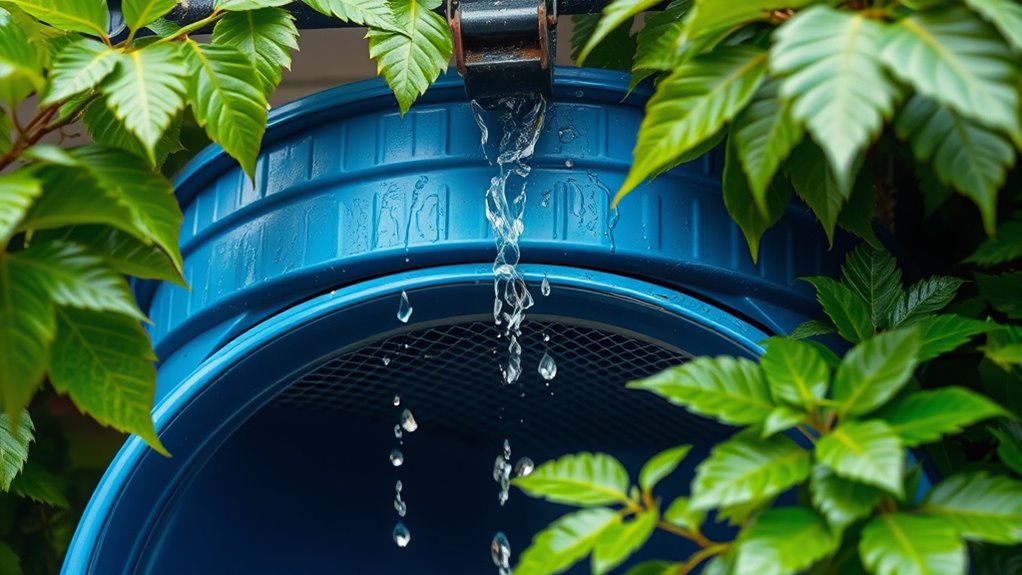
Collecting rainwater is an easy and eco-friendly way to reduce your water bills and conserve resources. Building your own rainwater harvesting barrel allows you to capture and reuse rainwater efficiently. When setting up your system, one of the most important aspects to consider is water filtration. Proper filtration ensures that debris, leaves, and contaminants don’t clog your pipes or damage your plants. You can incorporate simple filters at the inlet of your barrel, such as mesh screens or fabric filters, to keep unwanted particles out of your stored water. This step is essential for maintaining clean water and extending the lifespan of your harvesting system.
Proper water filtration keeps your rainwater clean and your system lasting longer.
Choosing the right barrel materials is also crucial. Food-grade barrels are recommended because they won’t leach chemicals into the water, keeping it safe for plants and non-potable uses. Common materials include high-density polyethylene (HDPE), which is durable, UV-resistant, and readily available at hardware stores or online. Avoid barrels made from recycled plastics that may contain harmful substances, as these could contaminate your water. If you’re looking for a more sustainable option, consider barrels made from recycled materials, but always verify they are food-safe and suitable for water storage.
Once you’ve selected your barrel, it’s important to prepare it properly. Drill a large hole near the top for an inlet that connects to your downspout, ensuring you incorporate a water filtration system at this point. Attach a screen or filter to prevent debris from entering. To control overflow, install an overflow outlet higher up on the barrel, directing excess water away from your foundation. You’ll also want to cut a spigot near the bottom for easy access to the stored water. Seal all openings tightly to prevent mosquitoes from breeding inside and to keep debris out.
Position your barrel on a stable, elevated platform to facilitate gravity-fed water flow and easy access for watering plants or filling containers. Cover the top with a lid to prevent debris from falling in and to minimize evaporation and contamination. Regular maintenance is essential; clean the filter regularly, check for leaks, and ensure the overflow system is functioning properly. With these simple steps, your DIY rainwater harvesting barrel becomes a reliable, eco-friendly source of water that can support your garden, reduce reliance on municipal supplies, and promote sustainable living.
Frequently Asked Questions
Can I Use Rainwater for Drinking Purposes?
You can use rainwater for drinking, but you must guarantee proper water purification and storage safety. First, collect rainwater in a clean, covered barrel to prevent contamination. Then, treat the water with filters or purification tablets to remove bacteria and debris. Always test the water regularly for safety. With careful storage safety and effective purification, rainwater can be a safe, sustainable drinking source.
How Often Should I Clean the Harvesting Barrel?
You should clean your rainwater harvesting barrel regularly to keep it in good shape. For maintenance tips, clean the barrel at least once every three to four months, or more often if you notice debris or algae buildup. Always rinse out the interior thoroughly, remove any leaves or dirt, and sanitize it periodically. Proper cleaning frequency guarantees high-quality water and prevents mosquito breeding, keeping your system safe and efficient.
What Is the Ideal Location for Installation?
Position your perfect placement by pondering roof placement and shade considerations. You should install your barrel in a spot that’s sheltered from direct sunlight to prevent algae growth, while still capturing maximum rainwater from your roof. Look for a shady, sturdy space that’s accessible for maintenance. This strategic spot guarantees efficient collection, safeguards your barrel from weather, and makes harvesting hassle-free, helping your DIY project thrive.
Are There Any Legal Restrictions on Rainwater Harvesting?
You should check local regulations before setting up your rainwater harvesting barrel. Legal compliance varies by area, and some locations have specific permitting requirements you must follow. It’s important to research your city or county’s rules to avoid fines or issues. Generally, many places encourage rainwater harvesting but may impose restrictions on storage size, usage, or connection to stormwater systems. Always verify with local authorities to stay compliant.
How Much Water Can a Typical Barrel Collect Annually?
A typical barrel can collect about 30 to 50 gallons of water per inch of rainfall, depending on its capacity. If you experience frequent urban runoff, your barrel’s collection might be higher during storms. On average, in a year with 30 inches of rain, you could gather around 900 to 1,500 gallons. Your barrel’s capacity and local rainfall patterns determine how much water you can harvest annually.
Conclusion
By building your own rainwater barrel, you’re turning a simple downpour into a treasure chest of nature’s gift. Imagine harnessing the sky’s tears, transforming them into a lifeline for your garden. Every drop you collect is like capturing a piece of the clouds’ whisper, saving it for a sunny day. So, get your hands dirty, and let your DIY spirit turn rain into a sustainable symphony for your home.