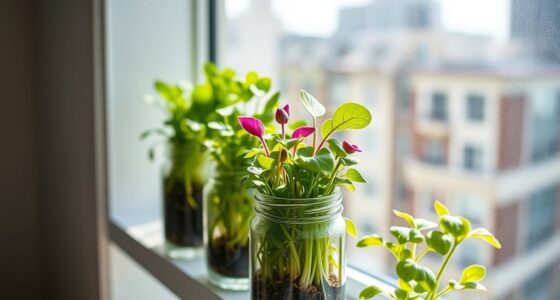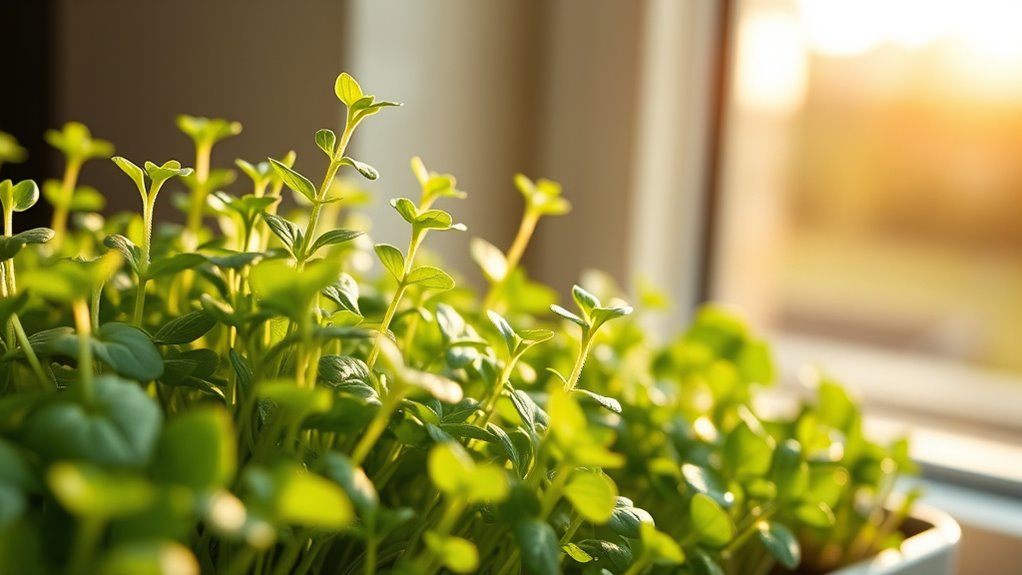
Growing microgreens on a windowsill lets you harvest fresh, nutrient-packed greens in just one to two weeks. By placing containers in a sunny spot and keeping soil consistently moist, you can enjoy a continuous supply of tasty, healthy greens year-round. South-facing windows offer ideal light, but grow lights can help if sunlight is limited. Want to make the most of your space and time? Keep exploring for tips to grow thriving microgreens at home.
Key Takeaways
- Use south-facing windows for maximum direct sunlight to promote rapid microgreen growth.
- Sow seeds densely for quicker germination and harvest within 7-14 days.
- Maintain consistent moisture to prevent mold and ensure healthy, fast-growing microgreens.
- Choose nutrient-rich soil or hydroponic setups to accelerate growth and improve harvest speed.
- Harvest microgreens early when they are 1-2 inches tall for maximum nutrient density and swift yields.
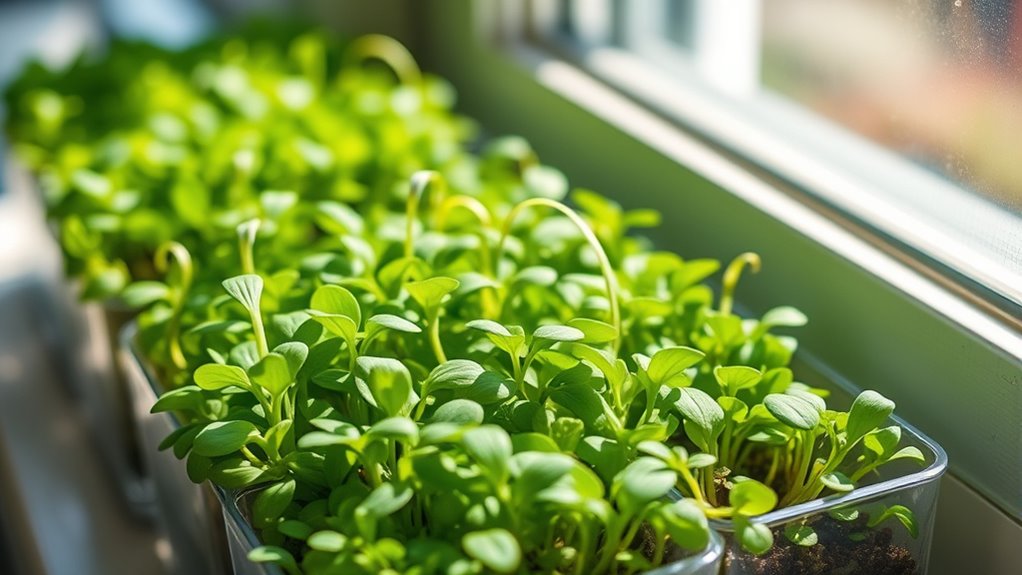
Growing microgreens on a windowsill is an easy and rewarding way to enjoy fresh, nutrient-rich greens year-round. If you’re into urban gardening, this method fits perfectly into small spaces, making it possible to cultivate a vibrant, healthy supply of greens without a yard or balcony. Microgreens are packed with nutrients, often more concentrated than mature vegetables, giving you maximum health benefits in minimal time. By growing them indoors, you bypass the need for soil preparation, weeding, or dealing with unpredictable weather, making the process straightforward and accessible.
When you choose to grow microgreens on a windowsill, you leverage the natural sunlight that filters through your window. Most microgreens thrive with just a few hours of direct sunlight daily, so positioning your containers near a south-facing window is ideal. If sunlight’s limited, you can supplement with grow lights to ensure your greens develop properly and reach peak nutrient density. The key is providing consistent light, which encourages lush, healthy growth and maximizes the nutritional content of your microgreens.
Using containers or trays designed for microgreens, you can start with simple soil mixes or even hydroponic setups, depending on your preference. The soil needs to be well-draining but rich in organic matter to support rapid growth. Once you’ve sown your seeds—be it radish, kale, basil, or other varieties—you’ll see sprouts emerge within a few days. Microgreens are remarkably fast, often ready for harvest in just 7 to 14 days, which means you get quick satisfaction and a continuous supply if you plant successive batches.
The speed of growth and high nutrient density make microgreens an ideal choice for busy urban dwellers. You can harvest fresh greens for salads, sandwiches, or garnishes, adding flavor, crunch, and health benefits to your meals. Because they’re harvested so young, they retain most of their nutrients, making every handful a concentrated dose of vitamins, minerals, and antioxidants. This quick turnaround also means you can experiment with different varieties, constantly rotating crops to keep your microgreens diverse and exciting.
Incorporating microgreens into your daily routine boosts your overall diet and supports your health goals. Plus, cultivating them on your windowsill connects you with the basics of urban gardening, demonstrating how small, simple efforts can yield significant nutritional rewards. With minimal effort and space, you turn your home into a thriving mini-farm, enjoying fresh greens whenever you want, all while enriching your lifestyle with sustainable, nutrient-dense food.
Additionally, understanding the importance of consistent moisture in microgreen cultivation ensures healthy, vigorous growth and prevents issues like mold or drying out.
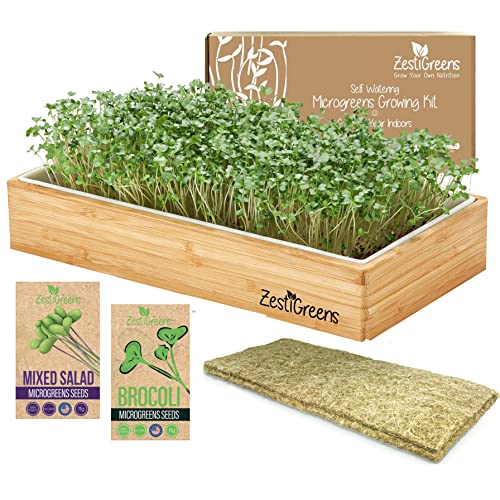
ZESTIGREENS Organic Self-Watering Microgreens Growing Kit – Reusable Indoor Grow Tray with Organic Seeds, Grow Mats & Bamboo Frame – Easy No-Soil Microgreens Starter Kit (Broccoli & Salad Mix)
INTRODUCING THE EXCITING WAY TO GROW FRESH MICROGREENS EVERY WEEK. No soil, no mess, just add water! Harvest…
As an affiliate, we earn on qualifying purchases.
As an affiliate, we earn on qualifying purchases.
Frequently Asked Questions
Can Microgreens Be Grown Year-Round Indoors?
Yes, you can grow microgreens indoors year-round. With proper indoor lighting, you’ll provide the necessary light for healthy seed germination and rapid growth. Keep your microgreens near a sunny window or use grow lights to make sure they get enough light. Maintain consistent watering and temperature, and you’ll enjoy fresh microgreens any season. This setup makes it easy to have a continuous harvest without relying on outdoor conditions.
What Are the Best Microgreen Varieties for Beginners?
For beginners, some of the best microgreen varieties include radish, sunflower, basil, and arugula because they grow quickly and are easy to manage. You should focus on soilless cultivation and use proper seed germination techniques, like keeping seeds moist and providing adequate light. These steps help guarantee successful growth and a speedy harvest, making your microgreen journey enjoyable and rewarding.
How Often Should I Water My Windowsill Microgreens?
You should water your windowsill microgreens daily to maintain proper soil moisture. Keep an eye on the soil, making sure it stays damp but not soggy. During warmer or sunnier days, you might need to water more frequently, while cooler days may require less. Consistent watering ensures healthy growth, prevents wilting, and helps you attain a quick, bountiful harvest. Always check soil moisture before watering to avoid overwatering.
Do Microgreens Require Special Lighting Conditions?
Your microgreens need the right lighting to thrive, so don’t put all your eggs in one basket. While natural sunlight benefits their growth, grow light requirements are essential, especially on a windowsill that might not get consistent sun. Use a full-spectrum grow light for 12-16 hours daily, ensuring your microgreens get the energy they need. This way, you’ll have lush, flavorful microgreens in no time.
How Long Do Microgreens Typically Take to Harvest?
You can typically harvest microgreens in about 7 to 21 days, depending on the type and your growth conditions. During the early growth stages, you’ll notice the tiny leaves and stems developing, which signals it’s almost time for harvest. Keep an eye on the size and color of your microgreens, as they’re ready when they reach about 1-3 inches tall, with vibrant leaves.

SDOVUERC Full Spectrum 768 LEDs Grow Lights, Plant Grow Lights for Indoor Plants with Daisy Chain Function, Sunlike Spectrum,4/8/12/16/20H Timer for Seed Starting(Pack4)
[Modular Grow Light Panel with Daisy Chain]-Link up to 10 panels in series or parallel with even brightness…
As an affiliate, we earn on qualifying purchases.
As an affiliate, we earn on qualifying purchases.
Conclusion
Growing microgreens on your windowsill is quick, easy, and rewarding. Imagine you start with basil, harvesting fresh greens in just a week, adding vibrant flavor to your salads. Like Sarah, who began her windowsill garden last month, now she enjoys daily boosts of nutrition and a touch of greenery in her kitchen. With minimal space and effort, you can enjoy abundant, fresh microgreens anytime, transforming your little corner into a thriving, healthy oasis.
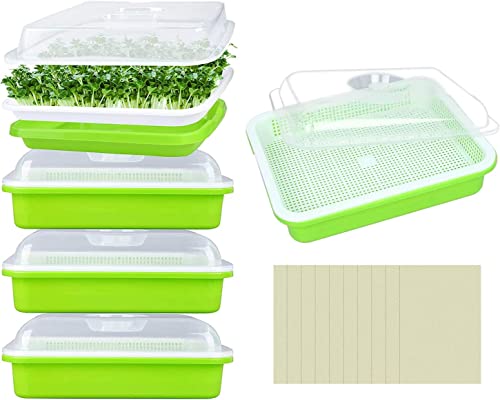
Legigo 5 Pack Seed Sprouter Trays with Lids- Soil-Free Cultivation Germination Tray, BPA Free Micro Greens Growing Trays Seed Sprouting Trays Kit with Germinating Paper for Wheatgrass, Beans and More
Microgreens Growing Trays: You will receive 5 pcs seed starter tray, comes with 10 planting papers, the size…
As an affiliate, we earn on qualifying purchases.
As an affiliate, we earn on qualifying purchases.

100% Natural Organic Microgreens Premium Potting Mix by Gardenera: Ideal Balance of Air, Moisture, and Nutrients – 2 Quart
✅ Meticulously Crafted Blend (10 QUART): Carefully curated selection of Canadian peat moss, cococoir, perlite, worm castings, and…
As an affiliate, we earn on qualifying purchases.
As an affiliate, we earn on qualifying purchases.