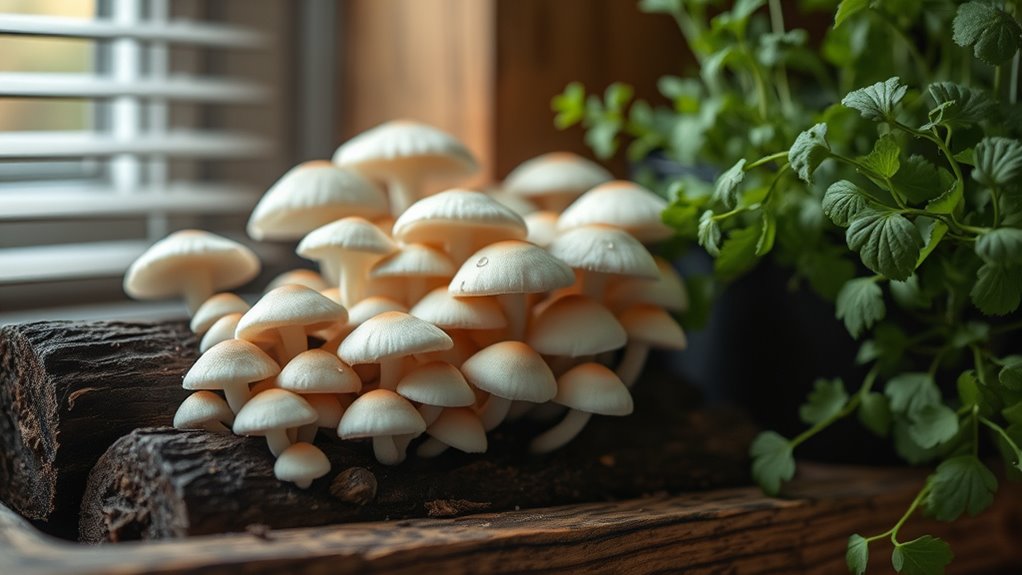

Setting up an indoor micro-farm to grow mushrooms at home is simple and eco-friendly. You’ll need a small space like a closet or basement, along with mushroom spawn and growing materials such as straw or coffee grounds. Maintain proper humidity, light, and airflow for healthy growth. Regular care and harvesting ensure a steady supply of fresh mushrooms year-round. Keep exploring to discover more tips on optimizing your mushroom cultivation journey.
Key Takeaways
- Set up a controlled environment with proper humidity, temperature, and darkness for optimal mushroom growth indoors.
- Use affordable materials like straw, sawdust, or coffee grounds combined with mushroom spawn for cultivation.
- Regularly monitor moisture and airflow to prevent mold and promote healthy development.
- Harvest mushrooms at maturity by picking caps when fully developed for continuous production.
- Indoor mushroom farming reduces food miles, packaging waste, and supports sustainable, eco-friendly living.
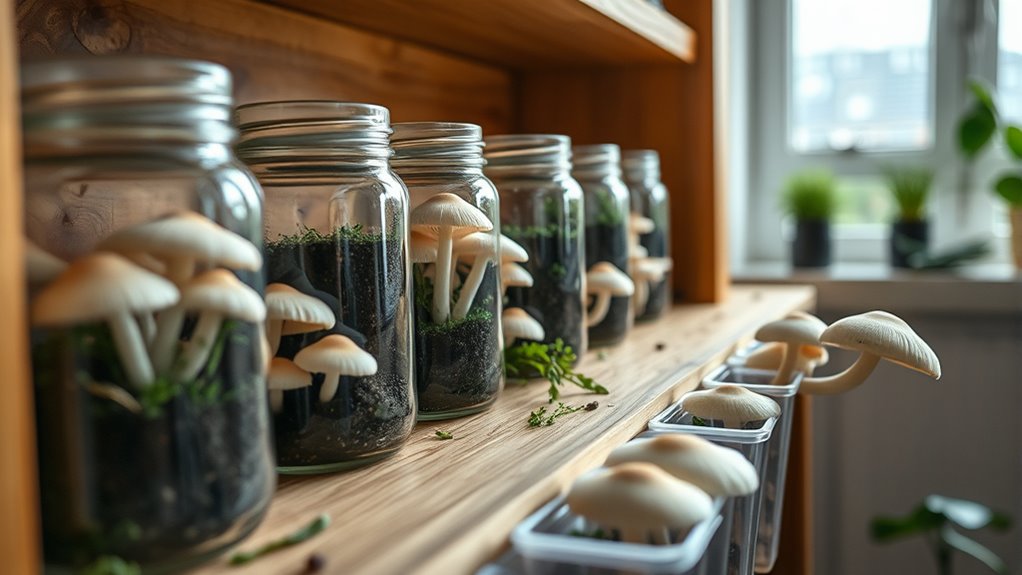
An indoor micro-farm allows you to grow fresh vegetables, herbs, and even small fruits right inside your home, making healthy eating more accessible and sustainable. If you’re interested in sustainable farming and urban agriculture, cultivating mushrooms at home is an excellent choice. Mushrooms require minimal space, water, and resources, making them an eco-friendly addition to your indoor garden. Plus, growing your own mushrooms reduces reliance on store-bought varieties, which often involve long transportation routes and packaging waste. This aligns perfectly with the principles of sustainable farming, promoting local food production and reducing your carbon footprint.
To get started, you’ll need a dedicated space with controlled humidity, light, and temperature. Mushrooms thrive in dark, damp environments, so a basement, closet, or even a cabinet can work well. When choosing mushroom varieties, consider popular options like oyster, shiitake, or button mushrooms. These are relatively easy for beginners and don’t require complex setups. You’ll also need mushroom spawn, which acts as the seed for your fungi, and a growing medium such as straw, sawdust, or coffee grounds, depending on the mushroom type. These materials are often inexpensive and readily available, making your indoor micro-farm both sustainable and cost-effective.
Maintaining your mushroom micro-farm involves monitoring moisture levels and ensuring proper airflow. Unlike traditional farming, indoor setups allow you to control environmental conditions precisely, which speeds up growth and reduces waste. This precision aligns with the goals of urban agriculture, where maximizing yield in limited space is essential. As your mushrooms grow, you’ll notice they need regular misting to keep the environment humid enough for healthy development. Harvesting is straightforward—simply pick the mature caps, and you’ll be rewarded with fresh, nutritious fungi that can elevate your meals.
Growing mushrooms indoors also encourages a more sustainable lifestyle by reducing food miles and packaging waste. It’s a form of urban agriculture that brings food production into your living space, making it easier to incorporate into daily routines. Plus, mushrooms are packed with nutrients, providing a healthy addition to your diet without the need for pesticides or chemical fertilizers. This makes your indoor micro-farm not just a fun project, but a meaningful step toward more sustainable living. As you refine your setup and gain experience, you’ll find that mushroom cultivation becomes an efficient, eco-friendly way to enjoy fresh, homegrown produce year-round. Additionally, utilizing advanced environmental controls can help optimize growth conditions and boost yields further.
Frequently Asked Questions
How Much Space Do I Need for a Micro-Farm?
You’ll need enough space to comfortably set up your micro-farm, considering space requirements for equipment essentials like shelves, grow containers, and ventilation. Typically, a small corner or a 4×4-foot area can suffice for a beginner setup. Make sure your space allows good airflow, easy access, and proper lighting. Keep in mind, as your mushroom cultivation grows, you might need to expand or reconfigure your space for ideal growth.
What Is the Average Time From Spawn to Harvest?
You’ll typically see mushroom spawn develop into harvest-ready mushrooms in about 2 to 4 weeks. The exact harvest timing depends on the mushroom type and growing conditions, like temperature and humidity. Keep an eye on the mushrooms, and once they reach the desired size, it’s time to harvest. Regular monitoring guarantees you get the best yield, making your micro-farm a success from spawn to harvest.
Are There Specific Mushrooms Best for Beginners?
When choosing mushroom varieties, you want beginner-friendly species that are easy to grow and forgiving. Some of the best options include oyster mushrooms, which grow quickly and are quite resilient, and shiitake mushrooms, known for their straightforward cultivation process. These beginner-friendly species require minimal maintenance, making them perfect for new growers. Starting with these mushroom varieties helps guarantee a successful, enjoyable growing experience as you learn the basics.
How Do I Prevent Mold and Pests?
Oh, the joys of mold prevention and pest management—because nothing says fun like battling tiny invaders! To keep pests out, guarantee your growing environment stays clean and dry, and use gentle barriers. For mold prevention, maintain proper humidity and avoid overwatering. Ventilate your space regularly, and keep an eye out for early signs of trouble. A little vigilance goes a long way in keeping your mushroom micro-farm pristine and pest-free!
Can I Grow Mushrooms Year-Round Indoors?
You can definitely grow mushrooms year-round indoors by maintaining proper conditions. Make sure your mushroom nutrition is balanced, providing the right substrate for healthy growth. Use indoor lighting that mimics natural light cycles, but avoid direct sunlight, which can harm them. Keep humidity levels consistent and monitor temperature. With these considerations, you’ll create an ideal environment to enjoy fresh mushrooms all year long.
Conclusion
Now that you know how easy it is to grow mushrooms at home, why not give it a try? Your indoor micro-farm can provide fresh, delicious fungi whenever you want, all from the comfort of your space. With just a little effort and some simple supplies, you’re on your way to becoming a mushroom master. Isn’t it rewarding to see your own mini farm thrive right in your living room? Start growing today and enjoy the tasty results!