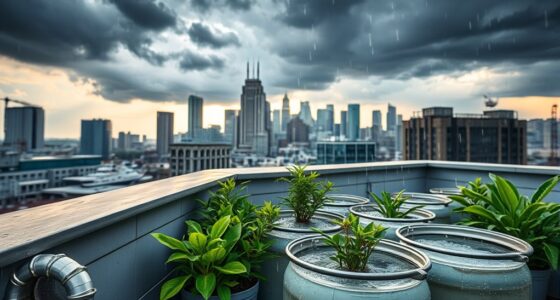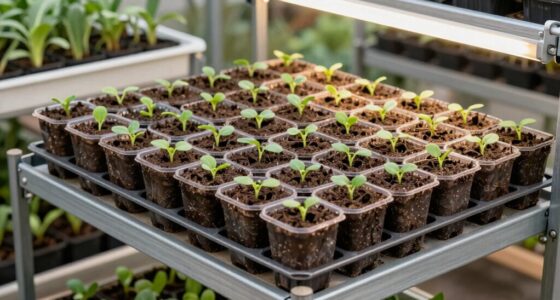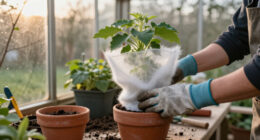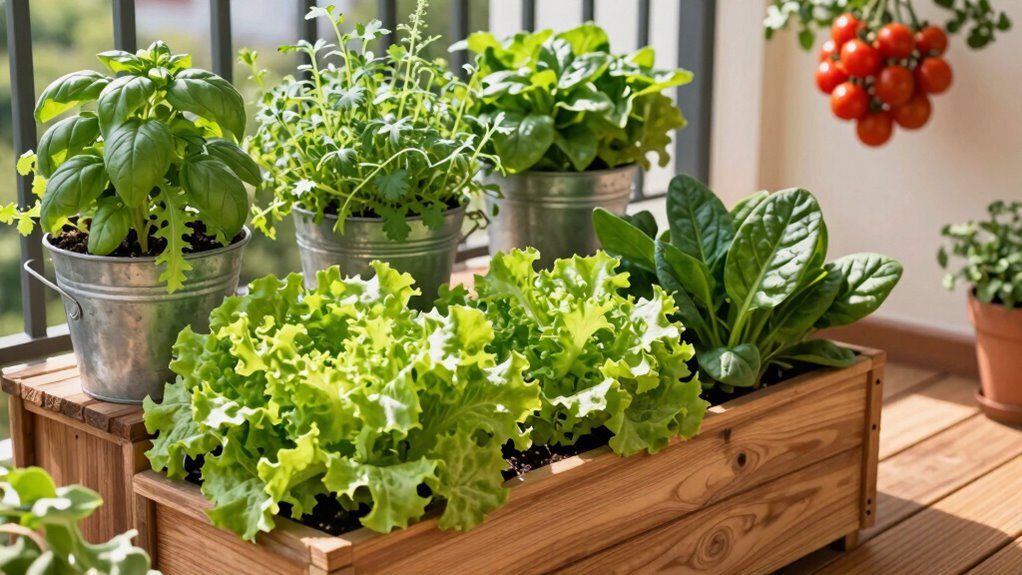

To grow salad greens on your balcony, choose containers with drainage holes and fill them with high-quality, well-draining soil enriched with organic matter. Place the containers where they get plenty of sunlight, and water regularly to keep the soil moist but not soggy. Use organic fertilizers and keep an eye out for pests. Proper spacing and airflow help prevent disease, and harvesting early guarantees fresh greens. For more tips on successful balcony gardening, explore the full guide.

Get garden gear delivered free with Prime
- Fast, free delivery on millions of items
- Prime Video, Amazon Music and more included
- Member-only deals all year
Key Takeaways
- Choose containers with drainage and use high-quality, well-draining soil enriched with organic matter for healthy greens.
- Select fast-growing, shade-tolerant greens like lettuce, arugula, and spinach suitable for limited space.
- Ensure your balcony receives adequate sunlight; supplement with grow lights if natural light is insufficient.
- Water consistently to keep soil moist, fertilize biweekly with balanced nutrients, and monitor for pests regularly.
- Harvest leaves carefully with scissors, store properly, and experiment with different varieties to maximize yield.
As an affiliate, we earn on qualifying purchases.
How to Choose the Best Containers for Balcony Salad Greens
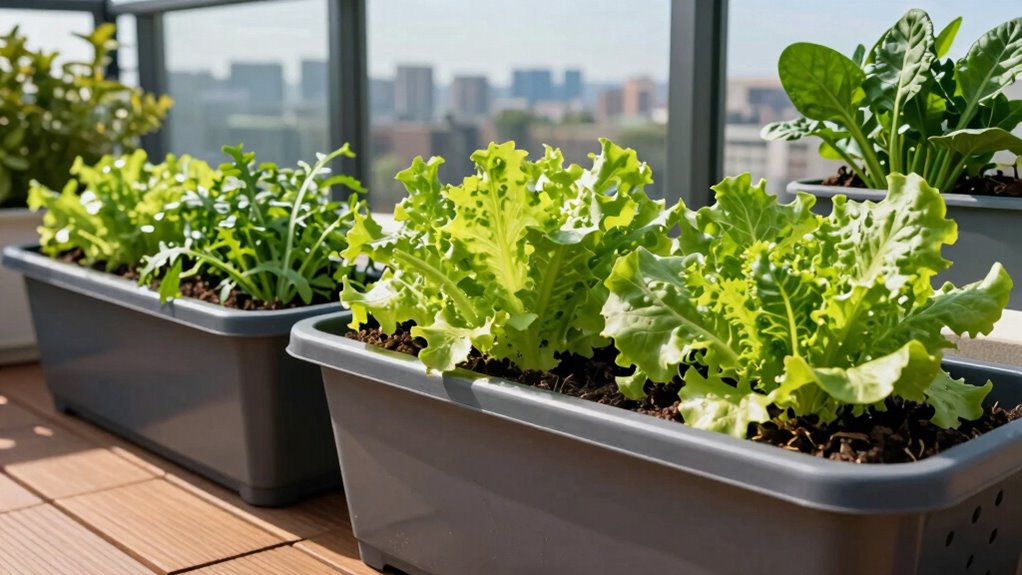
Choosing the right containers is essential for growing healthy salad greens on your balcony. You want containers with good container drainage to prevent water from pooling and causing root rot. Look for pots with drainage holes or consider adding a layer of gravel at the bottom. Material durability is also important—choose containers made from sturdy materials like ceramic, plastic, or metal that won’t crack or degrade easily under weather conditions. Lightweight options make handling easier, especially if you need to move your plants frequently. Guarantee the size suits your greens; larger containers provide more space for roots and promote healthy growth. Proper drainage management is crucial to prevent overwatering and ensure your salad greens thrive. Additionally, selecting weather-resistant materials can help prolong the lifespan of your containers in varying outdoor conditions. Using containers with adequate size ensures your greens have enough room to develop strong roots and flourish. To further support healthy growth, consider containers with insulating properties to protect roots from temperature fluctuations. Choosing containers with proper drainage and durable materials will also help prevent issues caused by excess moisture and weather exposure, giving your salad greens the best start for a thriving balcony garden.
Which Salad Greens Grow Well in Balcony Gardens?
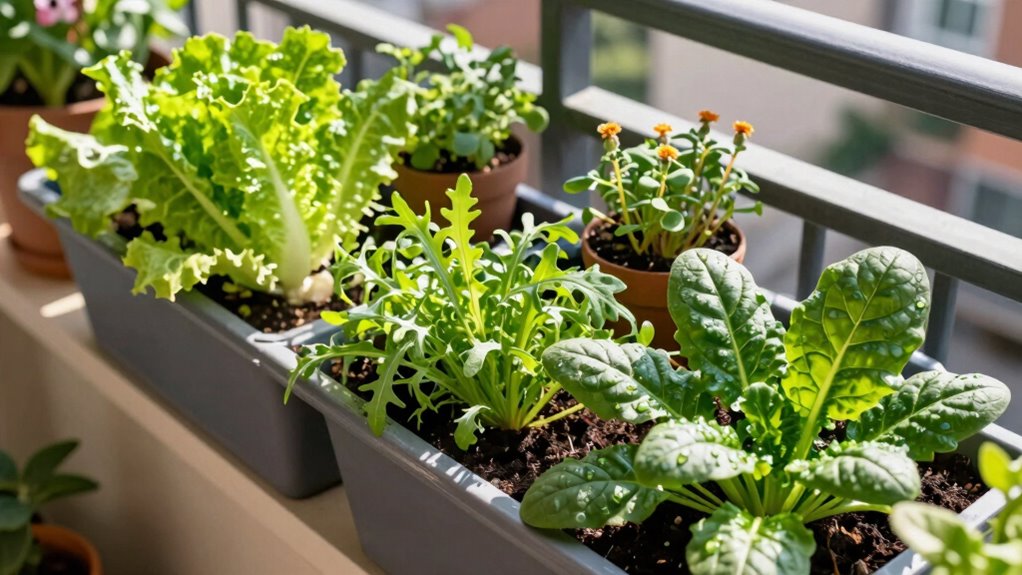
Many salad greens thrive in balcony gardens because they are quick-growing, adaptable, and require minimal space. Leafy greens like lettuce, arugula, and spinach are excellent choices, as they grow fast and suit container life. Consider companion planting to improve growth and deter pests naturally. You can plant radishes or herbs alongside these greens to promote healthy development. Additionally, pest management is easier with these crops since regular inspection and organic deterrents can keep pests at bay. Choosing greens with similar sunlight needs helps optimize space and growth. Remember to rotate your greens seasonally to prevent disease. These greens’ versatility and resilience make them perfect for balcony gardening, ensuring fresh, nutritious salads from your small but productive space. Incorporating proper water chemistry management can also enhance plant health and yield. By paying attention to crypto liquidity trends, you can better understand how to manage water and nutrients for optimal plant growth. Maintaining proper soil nutrients and plant health practices further supports sustainable balcony gardening success. Understanding soil conditions is also crucial for preventing disease and promoting healthy root development. Regularly monitoring soil pH levels helps ensure your greens thrive in the right environment.
Preparing Your Balcony Space for Growing Salad Greens
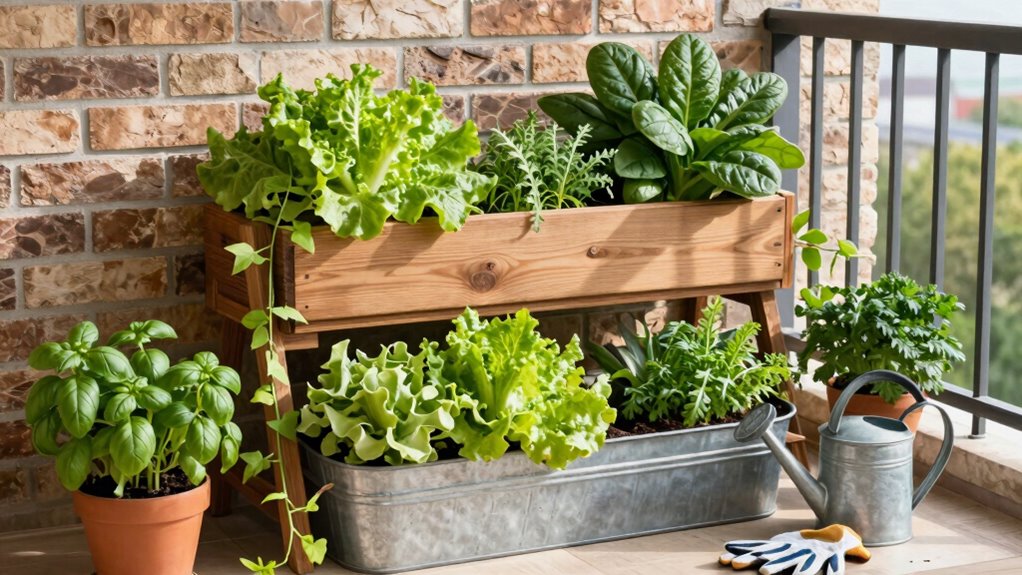
First, evaluate how much sunlight your balcony receives each day to choose the right salad greens. Next, clear away any debris or clutter to create a clean, safe space for planting. Additionally, consider incorporating landscaping elements to enhance your garden’s natural appeal and support your greens’ growth. Including soil quality considerations can also improve plant health and yield. Ensuring proper watering practices is essential for maintaining healthy greens and maximizing growth. A thorough understanding of auditory processing can help you recognize when your plants need more attention or adjustments, leading to better results. Finally, prepare your area by leveling the ground or setting up containers, so your greens have a stable environment to grow. You can also discover a free tool to transform text capitalization styles to help format your garden plans more effectively.
Assess Sunlight Availability
Understanding how much sunlight your balcony receives is essential for growing healthy salad greens. By observing sunlight patterns throughout the day, you can determine the best spots for planting. Pay attention to how sunlight shifts from morning to afternoon, as this affects shade management.
To accurately assess sunlight availability, consider these factors:
- Duration of direct sunlight: How many hours of direct sun does each area get?
- Intensity of sunlight: Is the sunlight strong enough for photosynthesis?
- Shade zones: Where do shadows from nearby buildings or structures fall, and during what times?
Knowing these details helps you place your salad greens where they’ll thrive, avoiding areas with too much shade or intense sun. Proper shade management guarantees your greens get ideal sunlight, promoting healthy growth.
Clear and Prepare Area
Before you start planting, it’s important to clear and prepare your balcony space to create a clean and organized environment for your salad greens. Remove any debris, old pots, or clutter that could harbor pests or obstruct sunlight. Make certain your indoor lighting setup is sufficient; supplement with grow lights if natural light is limited. This light management is crucial for ensuring your greens get the necessary power protection for optimal growth and health. Regularly inspecting your environment helps catch potential issues early, including pest control needs, which is essential to prevent infestations from spreading. Check for pests regularly and implement pest control measures early to prevent infestations. Clear space for your containers or raised beds, making sure they’re stable and accessible. Proper preparation minimizes problems later and encourages healthy growth. Additionally, using airless paint sprayers for quick and even application of soil amendments or treatments can streamline this process. Keeping your balcony tidy and well-lit creates an ideal environment for salad greens to flourish, setting a strong foundation for your balcony garden. Discover Must-See Destinations and Travel Tips for Your Next Adventure.
How to Plant and Sow Salad Greens on Your Balcony
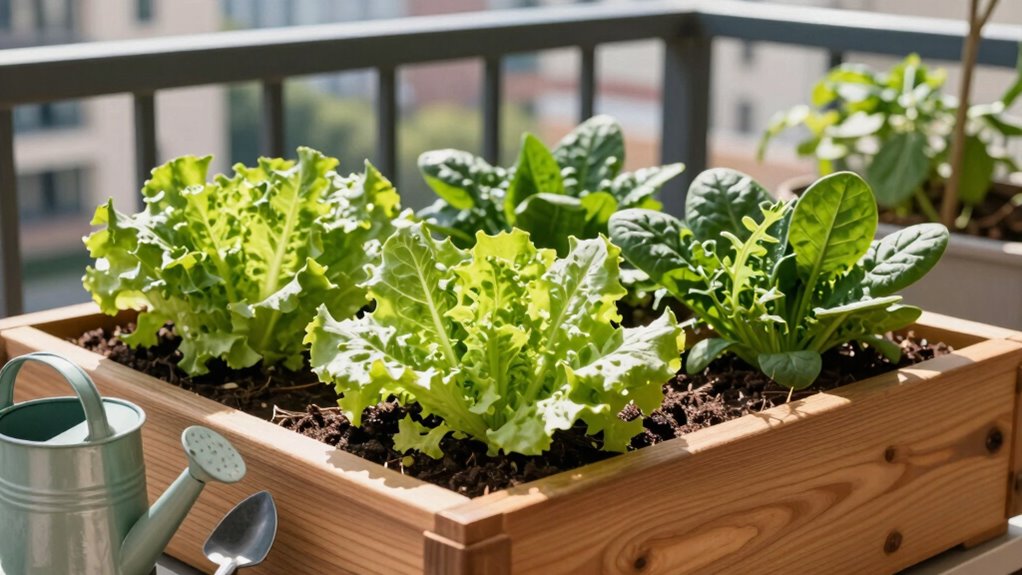
When planting salad greens on your balcony, choose containers with good drainage and appropriate size for your plants. Select nutrient-rich soil, and follow recommended sowing and spacing techniques to guarantee healthy growth. Properly setting up your containers and seeds will give your greens the best start. Understanding fandom’s past, present, and future can inspire you to experiment with different varieties and grow your own greens with enthusiasm. Regularly monitoring your watering and cleaning practices will help maintain healthy plants and prevent common issues like mold or pests. Staying informed about urban gardening techniques can enhance your balcony garden’s success and sustainability. Incorporating proper knife handling techniques into your gardening routine can also improve your safety and efficiency while working outdoors. Being aware of everyday safety tips can also help you create a secure environment for your gardening activities.
Selecting Suitable Containers
Choosing the right containers is essential for successful salad greens on your balcony. You want containers that provide proper container drainage to prevent waterlogging and root rot. Durability is also key; select materials that can withstand weather changes without cracking or degrading. When choosing your containers, consider:
- Material durability: Options like ceramic, plastic, or metal, each with different lifespan and weather resistance.
- Container drainage: Ensure there are drainage holes to allow excess water to escape.
- Size and depth: Containers should be deep enough to accommodate root growth and provide stability.
Opt for sturdy, well-ventilated containers that balance durability with effective drainage. This creates the ideal environment for your greens to thrive and makes maintenance easier.
Choosing the Right Soil
Selecting the right soil is essential for healthy salad greens, as it provides the nutrients and structure your plants need to grow strong. Use a high-quality, well-draining potting mix with organic matter. Incorporate soil amendments like compost or aged manure to boost fertility naturally. Organic fertilizers, such as fish emulsion or bone meal, can also help keep your greens nourished without chemicals. Choose soil that retains moisture but drains well to prevent root rot. Here’s a quick guide:
| Soil Type | Best For | Key Additions |
|---|---|---|
| Potting Mix | Container planting | Organic fertilizers |
| Compost | Nutrient boost | Soil amendments |
| Peat-based | Moisture retention | Organic matter |
| Loamy | Balance of drainage and nutrients | Compost |
| Sandy | Good drainage | Soil amendments |
Proper soil guarantees vibrant, tasty greens on your balcony.
Sowing and Spacing Techniques
Getting your salad greens started requires careful sowing and spacing to guarantee healthy growth. You should sow seeds directly into your containers, following the depth instructions on the packet. Space your seeds evenly to prevent overcrowding, which can hinder growth and increase pest vulnerability. Consider companion planting by pairing greens with herbs like basil or chives, which can help with pest control and promote healthy development. Keep these tips in mind:
- Use a light, well-draining soil mix to support root growth
- Thin seedlings once they sprout to maintain proper spacing
- Rotate crops seasonally for better pest control and soil health
Proper sowing and spacing ensure your salad greens grow strong and vibrant, making your balcony garden both productive and pest-resistant.
Watering and Fertilizing Tips for Healthy Salad Greens
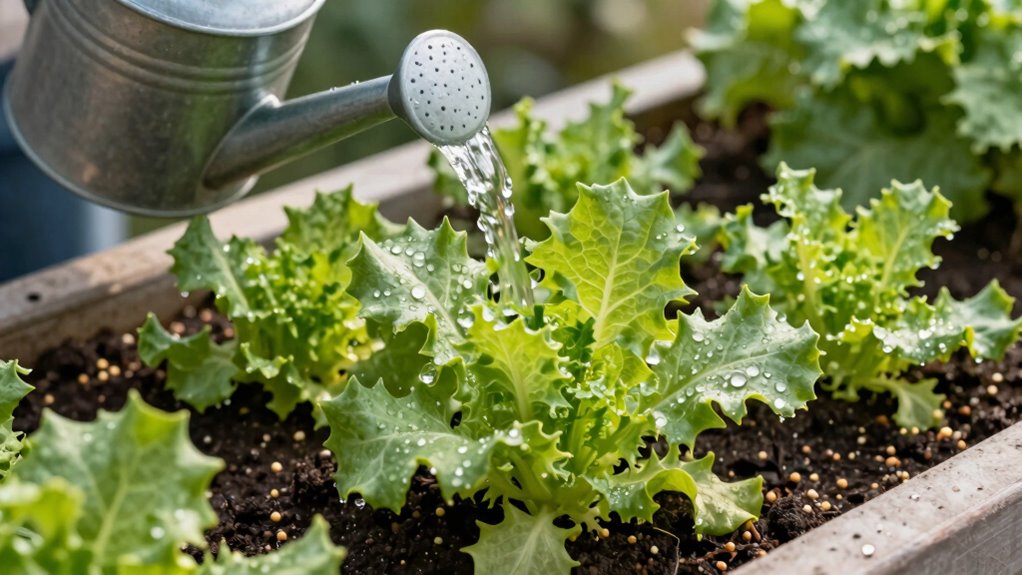
Proper watering and fertilizing are essential for healthy salad greens on your balcony. Keep the soil consistently moist but not waterlogged to prevent stress and promote steady growth. Use a balanced, water-soluble fertilizer every couple of weeks to supply necessary nutrients. Incorporate companion planting, such as basil or radishes, to naturally deter pests and reduce the need for chemical pest management. This approach supports healthy roots and vibrant greens while minimizing pest problems. Avoid over-fertilizing, which can lead to excessive foliage and weak plants. Regularly check soil moisture and adjust watering accordingly, especially during hot or dry periods. Proper care guarantees your salad greens stay lush, flavorful, and pest-free, making your balcony garden more productive and enjoyable.
Controlling Light, Temperature, and Airflow for Salad Greens

Controlling light, temperature, and airflow is essential for guaranteeing your salad greens thrive on a balcony. Proper light exposure encourages healthy growth, which you can achieve with natural sunlight or supplemental artificial lighting during cloudy days or short winters. Temperature regulation helps prevent stress; aim for a steady 60-70°F, using shade or heating mats as needed. Good airflow reduces humidity and prevents disease; make sure your greens aren’t crowded and consider using fans if air feels stagnant.
Controlling light, temperature, and airflow ensures healthy, thriving salad greens on your balcony.
To optimize conditions:
- Use artificial lighting to supplement sunlight
- Adjust shading or heating to maintain consistent temperatures
- Make certain of proper spacing for airflow and prevent mold or rot
Troubleshooting Common Salad Green Problems
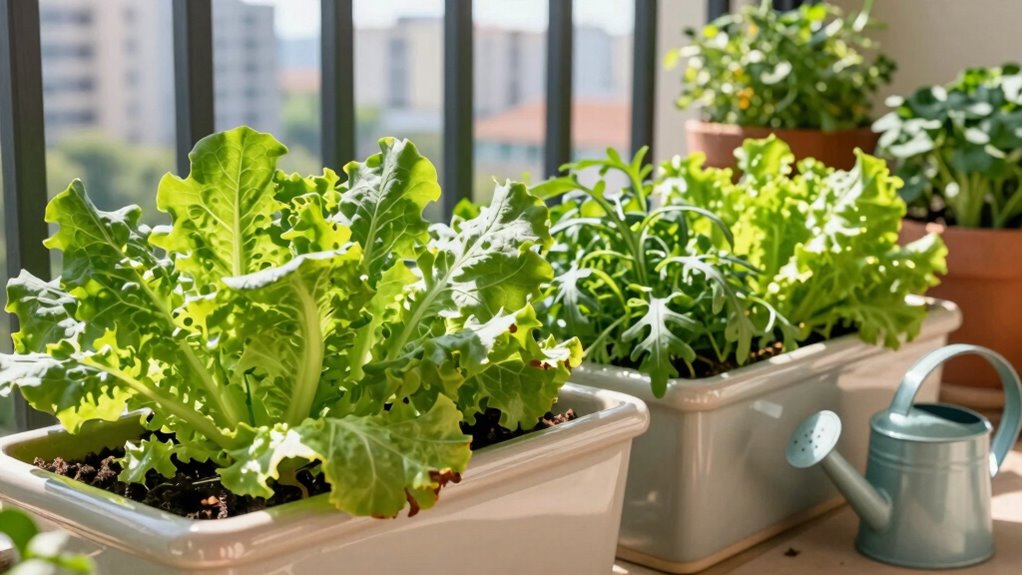
Even with the right environment, salad greens can still face common issues that threaten their growth and quality. Pests like aphids and slugs may appear, and diseases such as mildew can develop if you’re not vigilant. To address these, effective pest management and disease prevention are essential. Regularly inspect your plants and remove affected leaves. Use organic insecticides when needed, and encourage natural predators like ladybugs. Improve airflow around your greens and avoid overwatering to prevent fungal diseases. Here’s a quick guide:
| Problem | Solution |
|---|---|
| Pests (aphids, slugs) | Use organic pest management, handpick |
| Fungal diseases | Guarantee good airflow, avoid excess moisture |
| Yellowing leaves | Check nutrient levels, adjust fertilization |
| Wilting | Confirm proper watering, avoid drought stress |
| Mold or mildew | Improve ventilation, remove infected debris |
How to Harvest and Store Your Balcony-Grown Salad Greens
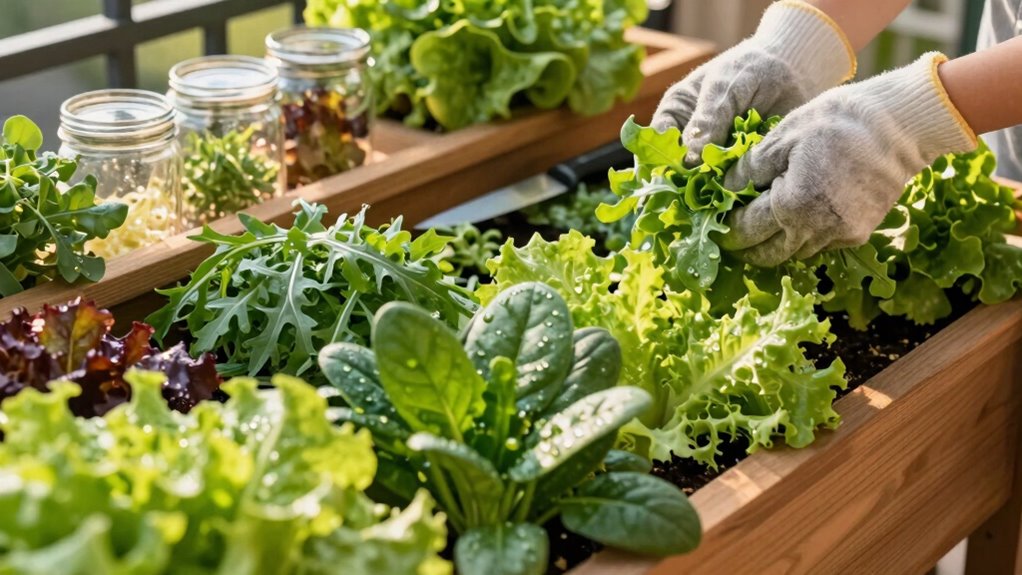
Knowing the right way to harvest and store your balcony-grown salad greens guarantees they stay fresh and flavorful longer. When harvesting, use sharp scissors to cut leaves at the base, avoiding damage to the plant. For ideal storage:
- Rinse greens gently in cold water and dry thoroughly to prevent spoilage
- Store in airtight containers or plastic bags with a paper towel to absorb excess moisture
- Keep greens in the crisper drawer, maintaining consistent humidity and temperature
Implement companion planting to naturally deter pests, reducing the need for pest management treatments that could affect freshness. Regularly check your greens for signs of pests or disease. Proper harvesting and storage techniques, combined with pest management strategies, ensure your greens stay crisp and flavorful from your balcony to your plate.
Tips to Extend Your Salad Greens’ Growing Season
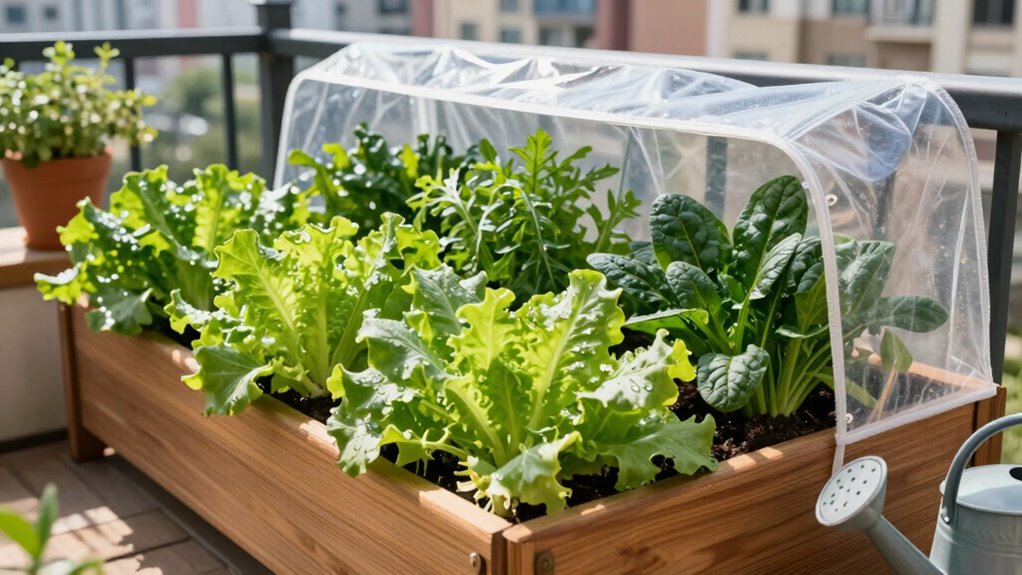
To extend your salad greens’ growing season, start by choosing hardy varieties like lettuce, arugula, or spinach that can tolerate cooler temperatures. Use protective coverings such as row covers or cloches to shield plants from frost. Incorporate composting techniques to improve soil health, providing nutrients needed for continuous growth. Regularly monitor your greens for pests and practice pest management by removing insects early or using natural deterrents. Mulching helps retain soil warmth and moisture, further extending the growing period. Keep your balcony environment stable by avoiding sudden temperature drops and maintaining good airflow. By combining these strategies, you can prolong your salad greens’ productivity, enjoying fresh harvests well into the cooler months.
Frequently Asked Questions
Can I Grow Salad Greens Indoors on a Balcony During Winter?
Yes, you can grow salad greens indoors on your balcony during winter. To do this successfully, guarantee they get enough indoor lighting, such as grow lights or bright windows. Keep the temperature steady, ideally between 60-70°F, by controlling drafts and using space heaters if needed. Proper indoor lighting and temperature control help your salad greens thrive, even in colder months, giving you fresh greens year-round.
What Are the Best Organic Fertilizers for Balcony Salad Greens?
The best organic fertilizers for balcony salad greens include organic compost, which enriches your soil naturally, and fish emulsion for a quick nutrient boost. Use natural pest control methods like neem oil or insecticidal soap to protect your greens without chemicals. These options support healthy growth and are safe for your balcony environment. Regular feeding with organic compost and natural pest control keeps your salad greens vibrant and productive.
How Do I Prevent Pests on My Balcony Salad Greens?
Think of your balcony garden as a fortress, keeping pests at bay. Choose pest-resistant varieties that stand strong against invaders, and use natural pest deterrents like neem oil or garlic spray to protect your greens. Regularly inspect your plants, removing any pests early before they spread. Creating a healthy, balanced environment makes it less inviting for pests, helping your salad greens thrive without harmful chemicals.
Are There Low-Maintenance Salad Greens Suitable for Busy Gardeners?
Yes, you can grow low-maintenance, pest-resistant salad greens suitable for busy gardeners. Opt for varieties like lettuce and spinach, which are hardy and quick to grow. Use herb companion planting, such as basil or chives, to naturally deter pests and reduce the need for pest control. These strategies help keep your balcony garden thriving with minimal effort, so you can enjoy fresh greens without much hassle.
How Do I Compost Kitchen Scraps on a Balcony?
You can compost kitchen scraps on your balcony by choosing a compact compost bin, ideally placed in a shaded, well-ventilated spot. Use kitchen scrap selection wisely—avoid oily or meat products, and include fruit and vegetable peels, coffee grounds, and eggshells. Turn the compost regularly to speed decomposition, and keep it moist. This way, you’ll turn scraps into rich soil for your balcony garden efficiently.
Conclusion
With a little care and attention, your balcony transforms into a lush oasis, where salad greens flourish like a vibrant tapestry. By choosing the right containers, nurturing your plants with love, and tuning into their needs, you’ll cultivate a bountiful harvest that dances in harmony with the breeze. Each leaf you pick is a small victory, a proof to your green thumb’s gentle song, turning your balcony into a paradise of fresh, homegrown goodness.
Halloween Picks
halloween
As an affiliate, we earn on qualifying purchases.