In small yards, edible landscaping lets you combine beauty and food by carefully placing herbs, vegetables, and flowers for visual interest and pest control. Use companion planting, like basil near tomatoes and marigolds to repel pests, to maximize space and health. Mix colors, textures, and heights for a stunning look, attracting pollinators and beneficial insects. Soon, you’ll discover more tips to turn your limited space into a vibrant, productive outdoor haven.
Key Takeaways
- Incorporate colorful flowering plants and herbs to enhance visual appeal while attracting pollinators.
- Use vertical gardening techniques with taller vegetables and trailing herbs to maximize limited space.
- Apply companion planting strategies to naturally repel pests and support plant health, reducing chemical use.
- Design with diverse textures, colors, and heights for a visually engaging and harmonious outdoor environment.
- Regularly observe and adapt plant arrangements to optimize growth, aesthetics, and edible yield in small yard spaces.
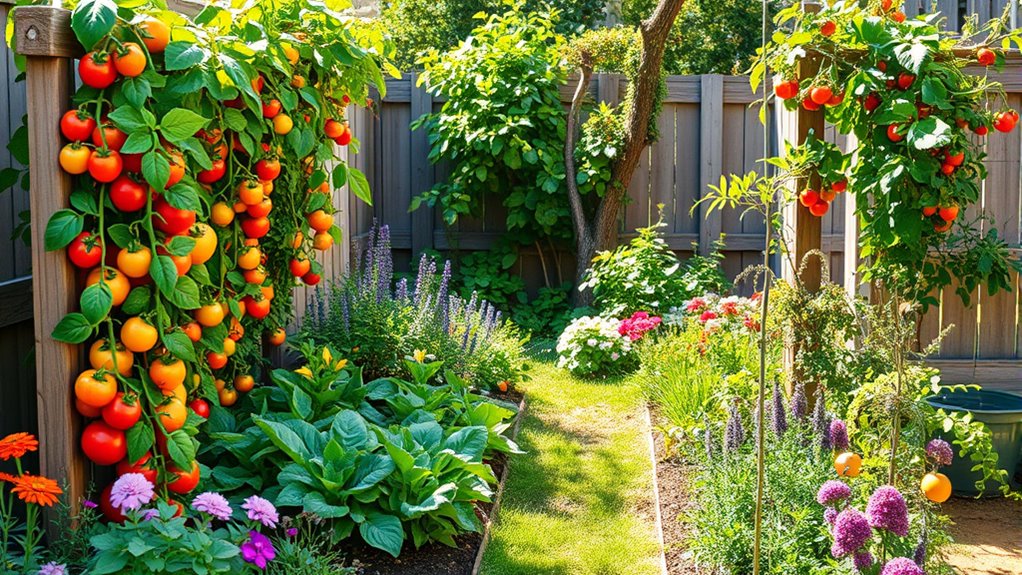
Transforming a small yard into an edible landscape is a practical way to maximize space and enjoy fresh, homegrown produce. When you approach this transformation, thinking strategically about plant placement is essential. Companion planting becomes your best friend here, allowing you to pair plants that naturally support each other’s growth. For example, planting basil near tomatoes can improve flavor and repel pests, while marigolds can deter nematodes and aphids. By mixing herbs, vegetables, and flowers thoughtfully, you create a thriving ecosystem that minimizes the need for chemical pest control. This harmonious planting reduces pest populations naturally and keeps your edible landscape healthy.
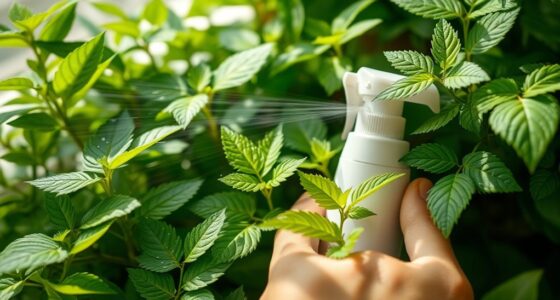
In a small yard, pest management is vital because pests can quickly overwhelm limited space. Instead of relying solely on chemical solutions, you can use companion planting to keep pests in check. Certain plants emit aromas or chemicals that repel unwanted insects, protecting your edible crops. For instance, planting nasturtiums with your greens can ward off aphids, while garlic and onions can deter beetles and other pests. Incorporate diversity into your garden to confuse pests, making it harder for them to find their preferred plants. This method not only maintains plant health but also reduces the need for pesticides, making your garden safer and more sustainable.
Designing your small yard with companion planting in mind also enhances the beauty of your edible landscape. Mixing colors, textures, and heights creates visual interest, turning your yard into a colorful, inviting space. You can plant trailing herbs like thyme or oregano along borders, while taller vegetables like peppers or beans add vertical interest. Flowering plants such as calendula or lavender serve dual purposes: they attract pollinators and contribute to pest management. The key is to think of your garden as a cohesive design where beauty and function go hand in hand. This approach not only yields fresh food but also transforms your yard into a charming outdoor retreat.
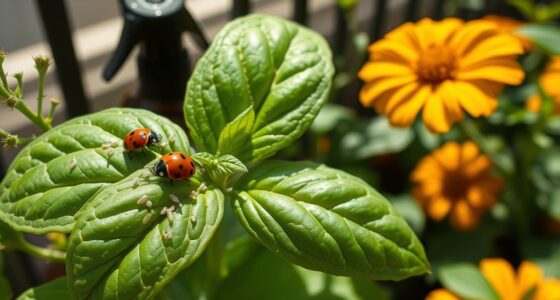
Lastly, always observe and adapt your planting strategies. Keep an eye on how your plants interact and adjust as needed. If you notice pests becoming a problem, consider introducing new companion plants or adding natural barriers. Maintain a balance that supports beneficial insects like ladybugs and pollinators, which help control pests naturally. Additionally, understanding the importance of color accuracy in your garden’s visual appeal can help you select plants that complement each other aesthetically. By integrating companion planting and effective pest management, you’re creating a small yard that’s both beautiful and productive. Your efforts will reward you with a lush, edible landscape that offers fresh food and visual pleasure, proving that even tiny spaces can produce big results.

Big City Small Spaces-Urban Farming Guide For Beginners: VERTICAL GARDENING-The High Yield Technique to Grow a Bounty of Fruits, Vegetables, Herbs & … (Urban Farms, Gardens & Backyard Homesteads)
As an affiliate, we earn on qualifying purchases.
As an affiliate, we earn on qualifying purchases.
Frequently Asked Questions
How Do I Prevent Pests in Edible Landscaping?
To prevent pests, you should start by choosing pest-resistant varieties of your plants, which naturally deter common pests. Additionally, use companion planting strategies to keep pests away; for example, planting marigolds near vegetables can repel insects. Keep your yard clean and healthy, remove pests promptly, and encourage beneficial insects like ladybugs. These proactive steps create a balanced ecosystem, reducing the need for chemical treatments and helping your edible garden thrive.
What Are the Best Edible Plants for Shady Yards?
Think of your shady yard as a secret garden where you can thrive like a woodland nymph. You should plant shade-tolerant herbs like mint and chives, which flourish in low light. Edible ground covers such as strawberries and creeping thyme also work well, spreading easily and providing food and beauty. These plants turn even the shadiest corners into productive, lush spaces, making your yard both functional and enchanting.
How Can I Maximize Space in a Small Yard?
To maximize space in your small yard, consider vertical gardening to make the most of limited ground area. Use wall-mounted planters or trellises for climbing plants. Container planting is also effective; choose versatile pots for herbs and vegetables, and place them strategically around your yard. Combining these methods lets you create a lush, productive space without sacrificing beauty or functionality, making your small yard feel abundant and inviting.
Are There Edible Landscaping Options Suitable for Drought-Prone Areas?
You’re wondering if there are edible landscaping options for drought-prone areas. Yes, you can grow drought-tolerant crops like certain herbs, native fruits, and vegetables suited for dry conditions. Use water-efficient irrigation methods, such as drip systems, to conserve water. Incorporate mulch to retain soil moisture and select plants adapted to your climate. These strategies help create a productive, beautiful landscape that thrives despite limited water resources.
How Do I Maintain Soil Health for Edible Plants?
To maintain soil health for your edible plants, start with soil testing methods to identify nutrient levels and pH balance. Incorporate composting techniques like adding organic waste to enrich the soil naturally. Regularly aerate and avoid over-tilling to keep the soil loose and oxygenated. This proactive approach guarantees your plants thrive, providing healthy growth and abundant harvests while promoting sustainable gardening practices.

Flower Seeds Garden Kit – 36 Packs of Annual & Perennial Flowers for Planting – with Wildflowers for Pollinators, Bees, Butterflies | Heirloom Non-GMO Seed Starter Pack – Survival Garden Seeds
36 HEIRLOOM FLOWER AND WILDFLOWER SEED VARIETIES – Annual and perennial mix with zinnia, lavender, poppy, echinacea, milkweed,…
As an affiliate, we earn on qualifying purchases.
As an affiliate, we earn on qualifying purchases.
Conclusion
By transforming your small yard into an edible landscape, you’re planting more than just food—you’re cultivating a vibrant tapestry of flavor and beauty. Think of your garden as a living mosaic, where each plant adds a splash of color and a burst of taste. With a little creativity, your tiny outdoor space can become a lush, edible paradise, turning everyday moments into a harvest of joy and nourishment. Let your yard flourish like a garden of endless possibilities.

Growing an Edible Landscape: How to Transform Your Outdoor Space into a Food Garden
As an affiliate, we earn on qualifying purchases.
As an affiliate, we earn on qualifying purchases.

Kate's Home & Garden Peppermint Oil Spray for Bugs, Ants, Insects, Spiders, Roaches, Stink Bug. Pesticide and Insecticide Indoor Repellent Pest Control with Cedar Oil (16oz, Natural, Non Toxic)
PEPPERMINT SPRAY FOR BUGS: This natural bug repellent for home is made with peppermint and cedarwood oil for…
As an affiliate, we earn on qualifying purchases.
As an affiliate, we earn on qualifying purchases.