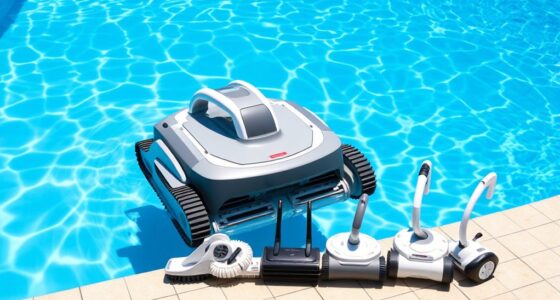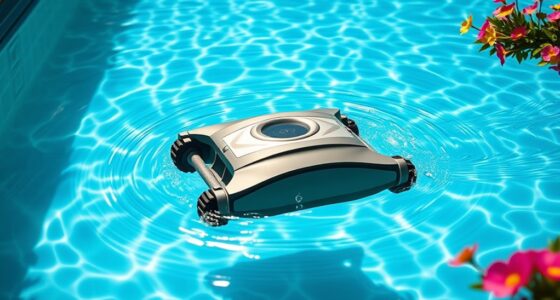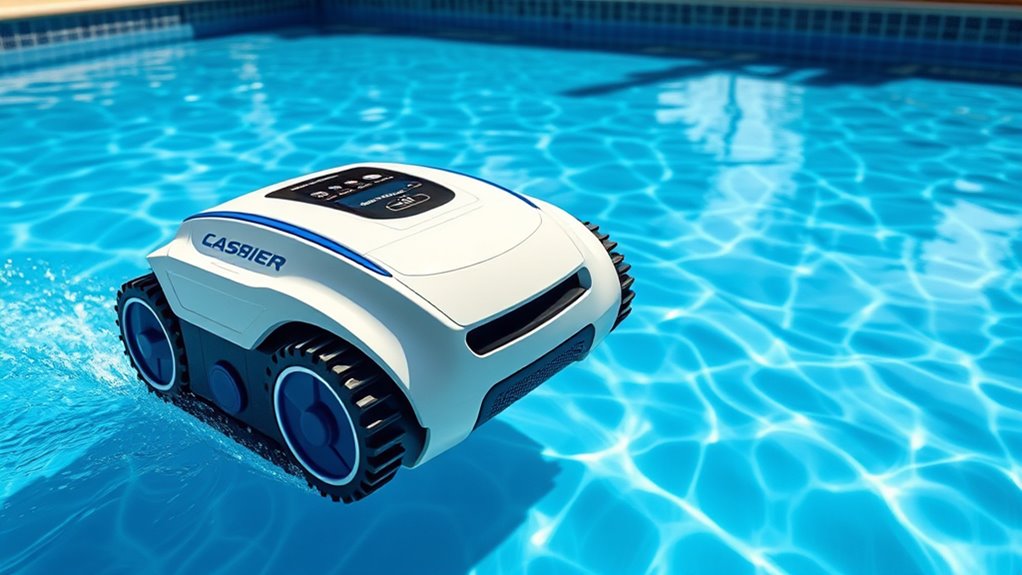

To maximize your pool robot’s efficiency, set a consistent cleaning schedule that matches your pool’s needs, like daily maintenance or weekly deep cleans. Use smart navigation features to guarantee thorough coverage and avoid obstacles, which saves energy and extends the device’s lifespan. Regularly inspect and maintain the robot’s components to keep it running smoothly. Keep an eye on battery health, and adjust your schedules accordingly for best results—more tips await if you continue exploring.
Key Takeaways
- Establish regular cleaning schedules, including deep and maintenance cycles, to ensure consistent pool cleanliness and robot performance.
- Utilize smart navigation features to optimize path planning, covering entire pool surfaces efficiently and avoiding obstacles.
- Adjust cleaning times to off-peak hours, improving robot maneuverability and energy efficiency during less crowded periods.
- Regularly monitor robot performance and update schedules based on pool usage, debris levels, and wear indicators.
- Maintain and calibrate the robot’s sensors and paths to enhance coverage, extend lifespan, and reduce manual cleaning efforts.
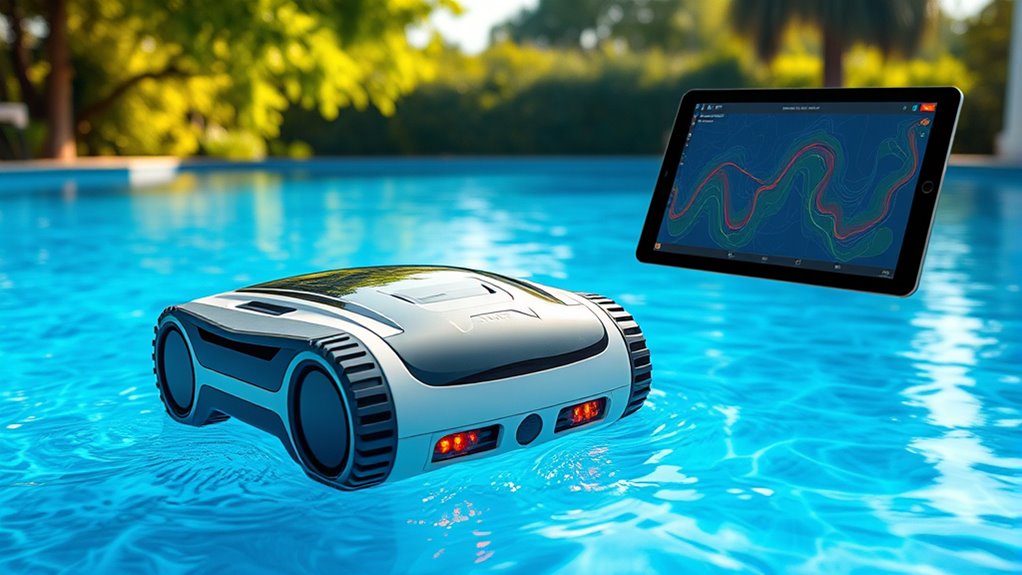
Maintaining a clean pool can be effortless when you set a proper pool robot schedule. The key to keeping your pool sparkling lies in consistent routines and understanding how your robot operates. When you schedule your robot to clean regularly, you reduce the chances of debris buildup, algae growth, and water quality issues. But to guarantee your robot performs at its best over time, you need to pay attention to robot maintenance. Regularly inspecting brushes, filters, and sensors prevents clogs and wear that can hinder cleaning efficiency. Maintaining your robot isn’t complicated, but neglecting it can shorten its lifespan and lead to more frequent repairs. Additionally, one of the most critical factors influencing your robot’s performance is battery life. Most pool robots rely on rechargeable batteries, and their capacity diminishes with frequent use and time. To maximize battery life, it’s essential to follow manufacturer recommendations, such as avoiding complete discharges and charging the robot promptly after each cleaning cycle. Properly managing your robot’s battery life ensures it has enough power to complete scheduled cleanings without interruption, saving you time and frustration.
When you set a routine, you also optimize your robot’s path. Many modern pool robots come equipped with smart navigation systems that map out the pool, avoiding obstacles and covering the entire surface efficiently. By scheduling cleaning during times when the pool is less occupied or when sunlight isn’t direct, you give the robot room to maneuver freely, reducing the chances of missed spots. Path optimization isn’t just about speed; it’s about thoroughness. When your robot plans its route intelligently, it cleans more effectively, saving energy and extending its operational lifespan. This also ties back into battery management, as a well-optimized path minimizes energy consumption, allowing the robot to complete more cycles before needing a recharge.
To get the most out of your pool robot, consider setting different schedules for different cleaning tasks—weekly deep cleans and daily light maintenance. This way, you maintain water quality without overtaxing the robot or draining the battery unnecessarily. Keep an eye on your robot’s performance, listen for unusual noises, and check for signs of wear regularly. A well-maintained robot with a thoughtfully planned schedule and optimized path will serve you reliably, keeping your pool pristine with minimal effort. With these simple steps, you’ll enjoy a cleaner pool, fewer repairs, and longer-lasting equipment, all while spending less time on manual cleaning chores.
Frequently Asked Questions
How Do Different Pool Sizes Affect Robot Scheduling?
Different pool sizes greatly impact robot scheduling because larger pools require longer cleaning times and more frequent coverage. You’ll need to adjust your robot schedule to guarantee the entire area gets cleaned efficiently. For smaller pools, scheduling can be more flexible and quicker, while bigger pools demand more strategic planning. By understanding your pool size, you can optimize your robot scheduling for better cleaning performance and reduced downtime.
Can Schedules Be Customized for Specific Cleaning Needs?
Think of your pool robot as a skilled chef customizing a recipe just for you. Yes, you can make manual adjustments to the schedule, tailoring it to your specific cleaning needs. You can create customized routines that focus on areas requiring extra attention or skip sections you don’t need cleaned. This flexibility guarantees your pool stays pristine, exactly how you want it, without unnecessary effort or wasted time.
Do Robots Learn and Adapt Their Cleaning Paths Over Time?
Yes, your pool robot can learn and adapt its cleaning paths over time. It uses machine learning and adaptive algorithms to analyze its past cleaning patterns, obstacles, and dirt accumulation. This allows the robot to optimize its routes, improve efficiency, and handle changing pool conditions more effectively. As a result, your robot becomes smarter, providing more thorough cleaning without you needing to manually adjust its schedule or path.
How Do Weather Conditions Influence Robot Operation Schedules?
Imagine your pool as a mirror reflecting the sky’s mood. Weather impact prompts you to adjust your robot’s schedule—rain, wind, or temperature swings cause it to pause or shift. On hot days, it works longer, battling evaporation’s effects. Cooler weather means less activity. Temperature adjustments help maintain ideal cleaning, ensuring your robot operates smoothly regardless of weather conditions, keeping your pool pristine and inviting no matter what the sky throws your way.
Are There Energy-Saving Modes Integrated Into Scheduling Options?
Yes, many pool robots include energy-efficient features and power management options. These settings help you save energy by automatically adjusting cleaning cycles based on usage or time of day. You can activate energy-saving modes through the schedule, allowing the robot to operate efficiently without wasting power. This not only reduces your energy bills but also extends the lifespan of your pool robot, making maintenance more sustainable and cost-effective.
Conclusion
By optimizing your pool robot’s schedule and path, you guarantee your pool stays clean efficiently. Proper planning saves time, energy, and effort, letting you enjoy a sparkling pool without the hassle. Remember, a stitch in time saves nine—addressing cleaning early prevents bigger problems later. Keep fine-tuning your robot’s routine, and you’ll always have crystal-clear water ready for fun. With smart scheduling, you’ll see that a well-planned path truly makes all the difference.